
BuddhistCatholicContemplativeEvangelicalGeneral ChristianHinduJewishLatter-day SaintMuslimNew VisionsProgressive Christian
Beliefs
- Buddhist
- Catholic
- Contemplative
- Evangelical
- General Christian
- Hindu
- Jewish
- Latter-day Saint
- More Voices
- Muslim
- New Visions
- Pagan
- Progressive Christian
Topics
- Religion News
- Food and Religion
- Sports and Religion
- Religious Art
- Religious Music and Entertainment
- Religious Events
- History and Religion
- Style and Religion
- Politics and Religion
- Women in Religion
- Recreation Outdoors and Religion
- Business Finance and Religion
- Careers Workplace and Religion
- Education and Religion
- Family Parenting and Religion
- Health Fitness and Religion
- Home and Religion
- Relationships and Religion
- Technology and Religion
- Travel and Religion
Columnists
- Buddhist Columnists
- Business Finance and Religion Columnists
- Careers Workplace and Religion Columnists
- Catholic Columnists
- Contemplative Columnists
- Education and Religion Columnists
- Evangelists Columnists
- Family Parenting and Religion Columnists
- General Christian Columnists
- Health Fitness and Religion Columnists
- Hindu Columnists
- History and Religion Columnists
- Home and Religion Columnists
- Jewish Columnists
- More Voices Columnists
- Latter Day Columnists
- Muslim Columnists
- New Visions Columnists
- Nonreligious Columnists
- Pagan Columnists
- Politics and Religion Columnists
- Progressive Columnists
- Recreation Outdoors and Religion Columnists
- Relationships and Religion Columnists
- Religion News Columnists
- Religious Art Columnists
- Religious Events Columnists
- Religious Music and Entertainment Columnists
- Sports and Religion Columnists
- Style and Religion Columnists
- Technology and Religion Columnists
- Travel and Religion Columnists
- Women in Religion Columnists
Resource Library
- 2026 Calendar
- Library of World Religions
- The 100 Most Holy Places on Earth
- Patheos Answers
- Podcasts
- Videos
- Faith Leaders Database
- Anglican Episcopalian
- Bahai
- Baptist
- Buddhism
- Christianity
- Confucianism
- Eastern Orthodoxy
- Hinduism
- Holiness and Pentecostal
- ISKCON
- Islam
- Judaism
- Lutheran
- Methodist
- The Church of Jesus Christ of Latter-day Saints
- New Age
- Paganism
- Presbytarian and Reformed
- Protestantism
- Religion Behind the Scenes
- Roman Catholic
- Scientology
- Shia Islam
- Sikhism
- Sufism
- Sunni Islam
- Taoism
- Zen
- See all religions
Research Tools
 Ad-Free & Subscriber Log-In Subscription Support
Ad-Free & Subscriber Log-In Subscription Support
Follow Patheos 

- Trending:
- Forgiveness
- |
- Marriage
- |
- Consciousness
- |
- Death Penalty
- |
- Election
- |
- Halloween
 By Athame and Stang
- Home
- Pagan
- American Witches: Bishop, Hobbs, and the Toothakers
American Witches: Bishop, Hobbs, and the Toothakers
Last updated on: December 2, 2018 at 11:37 am by Kelden
American Witches: Bishop, Hobbs, and the Toothakers 2018-12-02T11:37:27-05:00 Kelden
Patheos Explore the world's faith through different perspectives on religion and spirituality! Patheos has the views of the prevalent religions and spiritualities of the world.
Two months ago I wrote an article detailing three of my favorite folklore stories about Witchcraft in America. In general, folklore is one of the greatest loves of my life. Folklore regarding Witchcraft in America? Even better! It’s an area that has its own unique Witchlore, yet often gets overlooked in favor of the British Isles. People seemed to really enjoy the stories of American Witches that I shared in my previous article, so much so that I thought I’d share three more. This time around though, we are going to be focusing on three individuals who played a starring role in the Witch trials of Salem. These are three people who lived lives that fell far outside of the Puritan norm. They were individuals who were not afraid to rebel and to stand up for themselves. The stories of these three people stand out among the rest because the details that they contain seem to suggest that there may have been some veracity to the accusations lodged against them. You see, the individuals who we are about to meet might actually have been Witches.
….
If you are familiar at all with the Witch trials of Salem, you are likely also familiar with Bridget Bishop. Bridget was born in England, sometime between 1632 and 1635. She married her first husband, Samuel, in the year 1660. Bridget gave birth a baby boy named Benjamin in 1663, and some sources report that he died shortly thereafter. It’s unclear if Bridget and Samuel traveled to the new world together, or if Bridget came alone. In the year 1665, Samuel died and Bridget gave birth to their second daughter – Mary – who was recorded as being born in Massachusetts. Like her brother, Mary is believed to have passed away shortly after her birth.
Bridget remarried in 1666 to a man named Thomas Oliver and together they had one child, named Christian, who was born a year later. Oliver already had four kids from a previous relationship. The relationship between Bridget and her new husband was abusive, with verbal and physical altercations. Neighbors reported that Bridget would often appear with a bloodied or bruised face. Oliver it seems complained to his neighbors that his wife fought back. In 1670 they were both brought to court for their behavior and fined. Bridget was brought back to court 8 years later for calling her husband names. The following year Oliver passed away and Bridget inherited in estate, much to the displeasure of her step-children. In fact, they ended up accusing their step-mother of bewitching their father to death. Luckily for Bridget, the lack of evidence prevented the case from going to court.
In 1687 Bridget married her third husband, Edward Bishop.
Bridget was arrested on April 18th, 1692. She had been accused of Witchcraft by Mercy Lewis, Abigail Williams, Ann Putnam Jr., and Elizabeth Hubbard. During her trial, Bridget vehemently denied being a Witch. In the following court room exchange between Bridget and John Hathorne we can see just how obstinate and fierce she was.
Hathorne: Why do you seem to act witchcraft before us, by the motion of your body, which seems to have influence upon the afflicted.
Bishop: I know nothing of it. I am innocent to a witch. I know not what a witch is.
Hathorne: How do you know then that you are not a witch.
Bishop: I do not know what you say.
Hathorne: How can you know, you are no witch, and yet not know what a witch is.
Bishop: I am clear: if I were any such person you should know it.
Among the evidence condemning Bridget were testimonies that she had attacked and killed several people in spectral form and that she had sent familiars in the forms of a pig and deformed monkey to torment others. One of the most interesting pieces of testimony, in my opinion, came from John and William Blye. According to court documents, the Blyes were hired to do some work in the cellar of her old home. While taking down one of the walls, the two men reported that they found several poppets made from rags and stuck full of headless pins.
Bridget Bishop was hanged on June 10th, 1692.
Was Bridget really a Witch? According to her own testimony, absolutely not. But then again, I wouldn’t have confessed either. Did Bridget practice some sort of folk magic? Maybe. If those poppets did actually exist, I’d be curious to know who they were made in the image of. Perhaps of her deceased husbands? She certainly would have had motive for working magic against her second husband, Thomas Oliver. Regardless of whether she was an actual Witch, Bridget was a strong, powerful woman. She did her best to live in a time when women’s rights were almost entirely non-existent. She stood up to her husband and fought back against his abuse and later on, during her trials, she faced her accusers with an unparalleled bravery. Even if she wasn’t a Witch, in our modern sense of the word, Bridget Bishop is an inspirational historical figure.
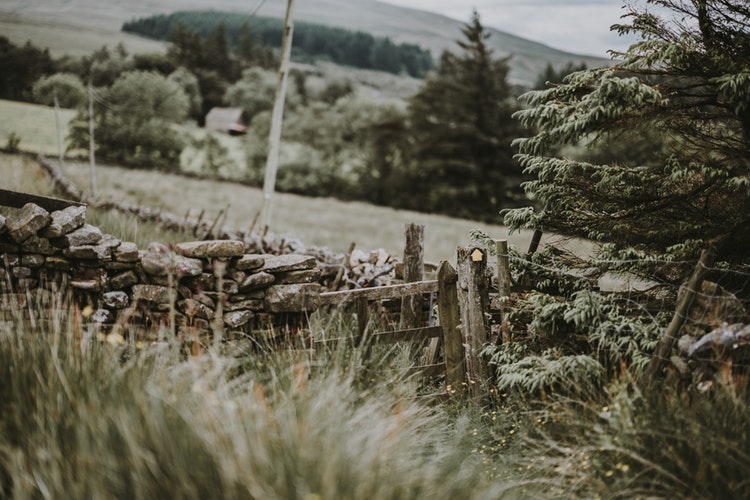
Photo by Annie Spratt on Unsplash
On the same day that Bridget Bishop was arrested, a young girl named Abigail Hobbs was also taken into custody. Abigail, along with her father and step-mother, had come to the Salem area as refugees seeking shelter from the attacks of the Wabanaki tribe. The family had originally lived in Casco Bay, Maine, which had been under frequent attack. Abigail had a sort of reputation for being a rebellious, snarky teenager (she was around 14 years-old at the time of her arrest). She was known to be wild in nature, supposedly spending nights in the woods and bragging that she wasn’t scared of anything. Abigail was said to have openly mocked the holy sacrament of baptism by sprinkling water over her step-mother’s head and mumbling words. All things which would help develop the idea that Abigail Hobbs was a Witch.
During her first examination, Abigail confessed to having met the devil 3 or 4 years prior in Casco Bay. She had encountered him the woods one day.
John Hathorne: What did he say to you?
Abigail Hobbs: He said he would give me fine things, if I did what he would have me.
Hathorne: What would he have you do?
Hobbs: Why, he would have me be a witch.
She further confessed to hurting Ann Putnam Jr., Mercy Lewis, and Abigail Williams by sticking poppets with thorns, both of which had been given to her by the devil. He would appear to her as man with a black hat, but she also noted that he would at times he would take on her appearance and torment the aforementioned girls by pinching them. Additionally, she admitted that she had attended the great meeting of Witches that took place in Samuel Parris’s pasture. At this meeting, Abigail and the other Witches met with the devil and took part of a sacrament composed of red bread and red wine.
Among those who offered testimony against Abigail was 17 year-old Lydia Nichols. Lydia told the court that at one point she had asked Abigail about her nocturnal wanderings in the woods…
“I asked abigaill hobs how She darst lie out a nights in the wods alone She told me she was not a fraid of any thing for She told me She had Sold her selfe boddy & Soull to the old boy…”
31 year-old Prescilla Chub told the court that she had once been lecturing Abigail about her disobedient behavior and the way she treated her parents. In response, Abigail told her that she did not care what anybody told her, “for she had seen the divell and had made a covenant or bargain with him.”
Abigail’s father and step-mother would also go on to be accused of Witchcraft. Fortunately for the family, in January of 1693 Governor William Phipps granted them all a reprieve, thus saving them from execution.
Was Abigail Hobbs really a Witch? I’d say that she is much more likely to have been an actual Witch than Bridget Bishop. Abigail was defiant of her parent’s, openly mocking of the Christian faith, and supposedly highly expressive of the fact that she had sold her soul to the “old boy.” Perhaps she was simply an angsty teenager who relished in shocking the uptight Puritans around her. You get a sense of this when reading her responses in the trial transcripts. I cannot help but picture her, on the stand with a slight smirk on her face while replying, “Why, he would have me be a Witch.”

Photo by Rosie Fraser on Unsplash
Roger Toothaker came to the Massachusetts Bay Colony in 1635 and that he eventually had a medical apprenticeship with a man named Samuel Eldred. His mentor was known for using “mystical” approaches in his medical practice. Roger later set up a medical practice in Salem. On May 18th, 1692, Roger was arrested on charges of Witchcraft. He had been accused by Ann Putnam Jr., Elizabeth Hubbard, and Mary Walcott. Roger was brought to court the same day for his pre-trial examination but no written account about took place during that examination. In fact, there are hardly any surviving documents about Roger Toothaker. However, the little documentation that does exist is enough to shed some light onto who this man was and perhaps why he was accused.
At some point during his trial, a man named Thomas Gage came forward to give testimony against Roger. Gage told the court that in the spring of the previous year he had been talking to Roger about two children who were known to be unwell. Roger reportedly told Gage that the children were “under an evil hand.” Apparently, Roger went on to say that his own daughter had once killed a Witch. Naturally curious, Gage asked him how she had managed to do so. Roger replied that he had taught his daughter to take the urine of someone who had bewitched and to put it inside a pot. The pot was then stopped shut and placed into a hot oven to be left overnight. In the morning, he explained, the Witch would be dead.
The trial went no further because Roger died in jail, of natural causes, on June 16th, 1692.
But that was not the end, for Roger’s wife Mary and their daughter Martha were soon accused of Witchcraft as well. Mary confessed to being a Witch and confirmed that her daughter had once talked about killing a Witch. She explained that she had met the devil in the guise of tawny man who promised to protect her from the Indians. Additionally, she told the court that she had been to two Witch meetings where they had bread and wine and that she had worked magic to harm a man named Timothy Swan. Years before, Swan had raped one of Mary’s relatives and was found not guilty by the court. Since that time, Swan had mysteriously fallen ill and it was believed that Mary had bewitched him.
Martha confessed to the court that she had indeed practiced counter-magic by keeping a suspected Witch’s urine in a stopped bottle.
Both Mary and Martha were later released due to insufficient evidence.
Were the Toothakers Witches? Probably not, but it sounds like they may have been practicing some form of folk magic. Roger appears to have had some amount of training in “mystical” medicine and openly discussed the fact that he taught his daughter techniques in counter-magic. I would be curious to know what prompted Martha to create her Witch bottle, whether it was for herself or for someone else. As for Mary, if the other two were versed in folk magic, she herself may have used those skills to bring justice to Timothy Swan.
….
There you have it, three more of my favorite stories regarding American Witchlore. While we will never know for sure if Bridget Bishop, Abigail Hobbs, or the Toothakers were actual Witches, we can learn a lot about Witch beliefs from their accounts. From the hidden poppets to the midnight strolls in the wood. From the red communion at the Witch meetings to the workings of counter-magic. And, putting the Witchcraft aside, we have three inspirational tales of people who were different from the rest of the flock, who lived their lives fearlessly, who take matters into their own hands when the system failed them. All empowering characteristics that I think many modern Witches would identify with themselves.
Previous Post
November 1, 2018
The Chilling Adventures of Sabrina and Representative Witchcraft
Next Post

December 8, 2018 Three Recommended Spellbooks for Traditional Witches
Browse Our Archives
Select a Category Uncategorized
Select a Month April 2020 February 2020 January 2020 December 2019 October 2019 September 2019 August 2019 July 2019 June 2019 May 2019 April 2019 February 2019 January 2019 December 2018 November 2018 October 2018 September 2018 August 2018 July 2018 June 2018 May 2018 April 2018 March 2018 February 2018 January 2018 December 2017 November 2017 October 2017 August 2017 May 2017 April 2017 March 2017 February 2017 January 2017 December 2016 November 2016 October 2016 September 2016 August 2016
Follow Us!
TAKE THE
Religious Wisdom Quiz
What Christian group is known for "confession" to a priest?
Select your answer to see how you score.
Baptists Presbyterians Catholics Methodists
Related posts from By Athame and Stang

A Walpurgisnacht Ritual of Transvection, Or A Journey...
Suspicious Witchy Authors: Community Reactions And My Final...
The Witch Father And Mother: Gender In Traditional...
I Spent A Week Becoming A Witch: A...
TRENDING AT PATHEOS Pagan

I was recently chatting with someone on Instagram. She asked me what...

While there are many people who share their results, the end of...

On July 23, I saw Christopher Nolan's The Odyssey which is Homer’s...

As I write this two big events have just finished up. One...

Restoring the Watershed of Divine Love
Perhaps cooperation is not something we manufacture through legislation, ideology, or moral...

Many UUs don’t pray because of bad experiences in a previous religion,...
view all Pagan blogs
Ad-Free & Subscriber Log-In Subscription Support
- About Us
- 2026 Calendar
- Videos
- Podcasts
- Library of World Religions
- Faith In Media Tracker
- Advertise With Us
- Write for Us
- Privacy Policy
- Terms of Service
- Do Not Sell My Data
- Contact Us
- Radiant Digital
- Manage Newsletter Subscriptions
- Unsubscribe From Notifications
- Sitemap
Copyright 2008-2026, Patheos. All rights reserved.
Subscription Support Ad-Free & Subscriber Log-In
Follow Patheos