
BuddhistCatholicContemplativeEvangelicalGeneral ChristianHinduJewishLatter-day SaintMuslimNew VisionsProgressive Christian
Beliefs
- Buddhist
- Catholic
- Contemplative
- Evangelical
- General Christian
- Hindu
- Jewish
- Latter-day Saint
- More Voices
- Muslim
- New Visions
- Pagan
- Progressive Christian
Topics
- Religion News
- Food and Religion
- Sports and Religion
- Religious Art
- Religious Music and Entertainment
- Religious Events
- History and Religion
- Style and Religion
- Politics and Religion
- Women in Religion
- Recreation Outdoors and Religion
- Business Finance and Religion
- Careers Workplace and Religion
- Education and Religion
- Family Parenting and Religion
- Health Fitness and Religion
- Home and Religion
- Relationships and Religion
- Technology and Religion
- Travel and Religion
Columnists
- Buddhist Columnists
- Business Finance and Religion Columnists
- Careers Workplace and Religion Columnists
- Catholic Columnists
- Contemplative Columnists
- Education and Religion Columnists
- Evangelists Columnists
- Family Parenting and Religion Columnists
- General Christian Columnists
- Health Fitness and Religion Columnists
- Hindu Columnists
- History and Religion Columnists
- Home and Religion Columnists
- Jewish Columnists
- More Voices Columnists
- Latter Day Columnists
- Muslim Columnists
- New Visions Columnists
- Nonreligious Columnists
- Pagan Columnists
- Politics and Religion Columnists
- Progressive Columnists
- Recreation Outdoors and Religion Columnists
- Relationships and Religion Columnists
- Religion News Columnists
- Religious Art Columnists
- Religious Events Columnists
- Religious Music and Entertainment Columnists
- Sports and Religion Columnists
- Style and Religion Columnists
- Technology and Religion Columnists
- Travel and Religion Columnists
- Women in Religion Columnists
Resource Library
- 2026 Calendar
- Library of World Religions
- The 100 Most Holy Places on Earth
- Patheos Answers
- Podcasts
- Videos
- Faith Leaders Database
- Anglican Episcopalian
- Bahai
- Baptist
- Buddhism
- Christianity
- Confucianism
- Eastern Orthodoxy
- Hinduism
- Holiness and Pentecostal
- ISKCON
- Islam
- Judaism
- Lutheran
- Methodist
- The Church of Jesus Christ of Latter-day Saints
- New Age
- Paganism
- Presbytarian and Reformed
- Protestantism
- Religion Behind the Scenes
- Roman Catholic
- Scientology
- Shia Islam
- Sikhism
- Sufism
- Sunni Islam
- Taoism
- Zen
- See all religions
Research Tools
 Ad-Free & Subscriber Log-In Subscription Support
Ad-Free & Subscriber Log-In Subscription Support
Follow Patheos 

- Trending:
- Forgiveness
- |
- Marriage
- |
- Consciousness
- |
- Death Penalty
- |
- Election
- |
- Halloween
 By Athame and Stang
- Home
- Pagan
- The Political Witch
The Political Witch
Last updated on: July 2, 2018 at 11:29 am by Kelden
The Political Witch 2018-07-02T11:29:21-05:00 Kelden
Patheos Explore the world's faith through different perspectives on religion and spirituality! Patheos has the views of the prevalent religions and spiritualities of the world.
Looking around the world, around the United States, and around our local communities, injustice is becoming more visible with each passing day. That’s not to say that these injustices haven’t always been there, or that people (namely people of color, women, and the LGBT community) haven’t been faced with them for years, but that the rest of the world is (finally) wakening up to their existence. The atrocities of the past are no longer distant memories that we can separate ourselves from, because they are being repeated in our present time. The same threats are being made to human rights, many of which are already being stripped away. Thankfully, many people are rising up and fighting back against injustice, channeling their fear and anger into a fuel for the fire of transformation.
You may be wondering how any of this relates to Witchcraft, Wicca, or Paganism? Well, I was highly inspired by an article written recently by our own Mat Auryn in which he explored the ways in which Witchcraft has always been political in nature. This of course causes a visceral reaction in some Witches, a recoil of sorts at the mention of Witchcraft having anything to do with politics. It reminds me of the things you hear at holiday dinners like, “Why do you have to make everything political?” The sentiment of course is that you’re just trying to have a good time and not worry about the world outside that is burning to the ground. But regardless of whether you choose to see it or not, the atrocities are happening and if you willingly sit by and do nothing, are you not complicit? Whether you want to accept it or not, everything is political because everything and everyone is affected by politics. Maybe you don’t feel it as much as someone else who is in a marginalized community, but does that make it okay to ignore what’s happening simply for the sake of your holiday dinner’s comfortability?

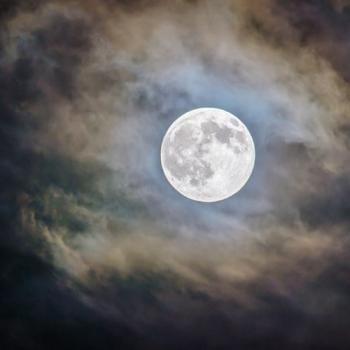
Photo by Nitish Meena on Unsplash
Okay, so Witchcraft? Mat really hit the nail on the head in his poetically written article. Witchcraft has always been political. The most obvious and commonly cited example, and that which a whole movement is based off (hey Tempest!), is Aradia. She, of course, was the daughter of Diana and Lucifer, sent to earth to teach the peasant class the ways of Witchcraft, which they could use to overthrow their oppressors. What a wonderful example, right? Witchcraft by its very nature is the Craft of the disenfranchised, the downtrodden, and the oppressed. Sure, there are historical examples of upper-class citizens using Witchcraft, but they are by far outnumbered by the lower-class people who rarely, if ever, benefited from the political and justice systems in place. Witchcraft was and is a means of gaining power that one otherwise wouldn’t have, power which is used to effect change, to secure survival. Even for those who were of the upper-class, their Witchcraft usually revolved around the same theme of trying to destroy their enemies and oppressors.
In the spirit of sharing stories, I’d like to tell one of my favorite tales of historical Witches working together to bring down a political leader. The veracity of the events I’m about to unfold is, of course, undetermined. But even as a semi-mythic, folkloric story, it contains seeds of inspiration from which we can loosely draw upon (LOOSELY, please not I’m not advocating violence). With that being said, this is the account of the North Berwick Witches…

Photo by Vlad Tchompalov on Unsplash
The story begins with King James VI of Scotland sailing to Denmark to retrieve his new bride, Princess Anne of Denmark. She had already tried once to sail to Scotland but was forced to stop in Norway due to severe storms. As an ironic foreshadowing of events to come, this storm was blamed on the wife of a high-ranking official in Copenhagen and subsequent Witch Trials took place in Denmark. And so, King James and Anne headed back to Scotland, but coincidentally were hit again by heavy storms that nearly capsized their ship. Meanwhile, back in Scotland, a maid named Gilly Duncan had come under the suspicion of her employer after his witnessed her sneaking out of the house at night. Duncan had already developed a local reputation for being a healer and so it was all too easy to accuse her of Witchcraft. Her employer and several other men proceeded to torture her, twisting ropes around her forehead and crushing her fingers in a vice. It wasn’t until after they had found a Witch Mark upon her neck and formally arrested her that she confessed. She admitted that not only was she a Witch, but that she belonged to a coven of Witches who she proceeded to name.
One of the accused women, Agnes Sampson, was another local healer who was known for her use of Catholic charms. She was arrested and actually brought before King James himself for questioning. At first, she denied having anything to do with Witchcraft but like Gilly Duncan, she was put to torture. After her ordeal she began to talk, admitting that she belonged to three covens, all of which had been actively working magic against the King. It had started at a meeting on Hallowmas, when the Devil told the Witches that King James was their greatest enemy and had to be destroyed. In response, Sampson and a few others sailed out to sea in a coracle and cast a spell to sink the King’s ship, this included raising a mist that would cause it to become lost and capsize. The Witches had tried other means of taking down James, including smearing a piece of linen he had worn with the secretions of a toad as a means of poisoning him. At another time, the Devil had instructed them to roast a toad over a fire and collect its venom in an oyster. This was then mixed with stale wine, the skin of an adder, and “the thing from the head of a newborn foal.” Once complete, the potion was to be placed in the path of the King so that he would walk over it and become infected.
After listening to Sampson for some time, King James lost his temper and accused her of being nothing more than a liar. In his mind, she was no Witch and had made the whole story up. But amazingly, Sampson rebuffed him and asserted that she was indeed a Witch and was willing to prove it to him. And so, it is said that she whispered in his ear the very words that had been exchanged between him and Anne of their wedding night. For the King this not only confirmed that Agnes Sampson was telling the truth, but also that Witches were real. Unfortunately, this meant that Sampson, along with many others, were put to death.

Photo by Alice Donovan Rouse on Unsplash
At this point you may be thinking, “Good God Kelden, how can you find this story inspirational?!” I admit, it’s a bit bleak with the torture, selling out of other Witches, and everyone dying in the end. But let’s take a moment to look at some of the other elements of this story. You have Witches uniting against a common enemy, working magic together to effect political change. This included the coming together of the upper and lower class. In addition to Sampson and Duncan, the coven included the widow of an Earl, the daughter of a Lord, and the King’s own cousin. Even after being caught, these Witches did their best to hold fast in the face of torture and death. Then there is Sampson who, when deemed a liar, stood by her title as Witch and the work she had done, despite the fact that doing so was a death sentence.
Despite the bleak ending, here is a potent tale of Witches acting politically. Of course, this is just one of many accounts of the Craft being used to effect political change. You cannot deny that the two go together any more than you can deny the injustice happening in the world around us. You can try to bury your head in the sand, and some people have an amazing talent for doing so. But if that’s what you’re going to do, ask yourself first: when future generations look back on these times, how do you want to be remembered? As the brave Witch who stood for what is right, or the Witch who hid away because politics made them feel uncomfortable? Politics is uncomfortable, but these are uncomfortable times and true comfortability will not come until there is justice and equality for all people. I’m not saying that everyone needs to be on the front-lines of every protest, because that isn’t realistic for all people. But there are many ways to be politically present, and as Witches we have a unique skill set that has, historically, been used in this way. And so, the next time someone makes the claim that Witchcraft isn’t or shouldn’t be political, remember the North Berwick coven, remember Aradia, remember Operation Cone of Power, remember the Witches League for Public Awareness, remember that there was a time when Witches were under attack. Think about our family and friends who are under attack now, who so desperately need all the support and help they can get. Think about the power there is in solidarity, when Witches unite and use their powers for something bigger and greater. Then ask yourself, why shouldn’t Witchcraft be political?
Previous Post

May 24, 2018
The Stereotypes of Trad Craft
Next Post

July 10, 2018 What Makes it Witchcraft?
Browse Our Archives
Select a Category Uncategorized
Select a Month April 2020 February 2020 January 2020 December 2019 October 2019 September 2019 August 2019 July 2019 June 2019 May 2019 April 2019 February 2019 January 2019 December 2018 November 2018 October 2018 September 2018 August 2018 July 2018 June 2018 May 2018 April 2018 March 2018 February 2018 January 2018 December 2017 November 2017 October 2017 August 2017 May 2017 April 2017 March 2017 February 2017 January 2017 December 2016 November 2016 October 2016 September 2016 August 2016
Follow Us!
TAKE THE
Religious Wisdom Quiz
True or False: Hebrews states that without holiness no one will see the Lord.
Select your answer to see how you score.
FALSE TRUE
Related posts from By Athame and Stang

A Walpurgisnacht Ritual of Transvection, Or A Journey...

Suspicious Witchy Authors: Community Reactions And My Final...
The Witch Father And Mother: Gender In Traditional...

I Spent A Week Becoming A Witch: A...
TRENDING AT PATHEOS Pagan

I was recently chatting with someone on Instagram. She asked me what...

While there are many people who share their results, the end of...

On July 23, I saw Christopher Nolan's The Odyssey which is Homer’s...

As I write this two big events have just finished up. One...

Restoring the Watershed of Divine Love
Perhaps cooperation is not something we manufacture through legislation, ideology, or moral...

Many UUs don’t pray because of bad experiences in a previous religion,...
view all Pagan blogs
Ad-Free & Subscriber Log-In Subscription Support
- About Us
- 2026 Calendar
- Videos
- Podcasts
- Library of World Religions
- Faith In Media Tracker
- Advertise With Us
- Write for Us
- Privacy Policy
- Terms of Service
- Do Not Sell My Data
- Contact Us
- Radiant Digital
- Manage Newsletter Subscriptions
- Unsubscribe From Notifications
- Sitemap
Copyright 2008-2026, Patheos. All rights reserved.
Subscription Support Ad-Free & Subscriber Log-In
Follow Patheos