
BuddhistCatholicContemplativeEvangelicalGeneral ChristianHinduJewishLatter-day SaintMuslimNew VisionsProgressive Christian
Beliefs
- Buddhist
- Catholic
- Contemplative
- Evangelical
- General Christian
- Hindu
- Jewish
- Latter-day Saint
- More Voices
- Muslim
- New Visions
- Pagan
- Progressive Christian
Topics
- Religion News
- Food and Religion
- Sports and Religion
- Religious Art
- Religious Music and Entertainment
- Religious Events
- History and Religion
- Style and Religion
- Politics and Religion
- Women in Religion
- Recreation Outdoors and Religion
- Business Finance and Religion
- Careers Workplace and Religion
- Education and Religion
- Family Parenting and Religion
- Health Fitness and Religion
- Home and Religion
- Relationships and Religion
- Technology and Religion
- Travel and Religion
Columnists
- Buddhist Columnists
- Business Finance and Religion Columnists
- Careers Workplace and Religion Columnists
- Catholic Columnists
- Contemplative Columnists
- Education and Religion Columnists
- Evangelists Columnists
- Family Parenting and Religion Columnists
- General Christian Columnists
- Health Fitness and Religion Columnists
- Hindu Columnists
- History and Religion Columnists
- Home and Religion Columnists
- Jewish Columnists
- More Voices Columnists
- Latter Day Columnists
- Muslim Columnists
- New Visions Columnists
- Nonreligious Columnists
- Pagan Columnists
- Politics and Religion Columnists
- Progressive Columnists
- Recreation Outdoors and Religion Columnists
- Relationships and Religion Columnists
- Religion News Columnists
- Religious Art Columnists
- Religious Events Columnists
- Religious Music and Entertainment Columnists
- Sports and Religion Columnists
- Style and Religion Columnists
- Technology and Religion Columnists
- Travel and Religion Columnists
- Women in Religion Columnists
Resource Library
- 2026 Calendar
- Library of World Religions
- The 100 Most Holy Places on Earth
- Patheos Answers
- Podcasts
- Videos
- Faith Leaders Database
- Anglican Episcopalian
- Bahai
- Baptist
- Buddhism
- Christianity
- Confucianism
- Eastern Orthodoxy
- Hinduism
- Holiness and Pentecostal
- ISKCON
- Islam
- Judaism
- Lutheran
- Methodist
- The Church of Jesus Christ of Latter-day Saints
- New Age
- Paganism
- Presbytarian and Reformed
- Protestantism
- Religion Behind the Scenes
- Roman Catholic
- Scientology
- Shia Islam
- Sikhism
- Sufism
- Sunni Islam
- Taoism
- Zen
- See all religions
Research Tools
 Ad-Free & Subscriber Log-In Subscription Support
Ad-Free & Subscriber Log-In Subscription Support
Follow Patheos 

- Trending:
- Forgiveness
- |
- Marriage
- |
- Consciousness
- |
- Death Penalty
- |
- Election
- |
- Halloween
 By Athame and Stang
- Home
- Pagan
- Rethinking the Sabbats
Rethinking the Sabbats
Last updated on: April 26, 2018 at 4:48 pm by Kelden
Rethinking the Sabbats 2018-04-26T16:48:13-05:00 Kelden
Patheos Explore the world's faith through different perspectives on religion and spirituality! Patheos has the views of the prevalent religions and spiritualities of the world.
When we look at Paganism, Wicca, and Witchcraft there is often an emphasis on the importance of nature and connecting with the land. The reason behind this importance and how that connection is achieved often varies, but one common practice among traditions is the observance of the Sabbats. These rituals are intended to celebrate the changing of the seasons and to reflect on the specific mysteries that come with those transitions (both within ourselves and without). However, one thing that I’ve noticed over the years is just how impractical the Sabbats are in terms of how they actually apply to one’s own landscape and our attempts to form a relationship with it.
Let’s begin by taking a step back and briefly looking at how the concept of the Sabbats has evolved over time. The idea of the Witches’ Sabbath came about in Europe during the Middle Ages and through the Renascence era. Author Thomas Hatsis notes that, “The Witches’ Sabbat was a composite idea fueled by the literate class’s appropriation and redefinitions of numerous templates.” This included concepts taken from Christian theology as well as local folklore and animistic beliefs. The Sabbath was described as a nocturnal gathering of Witches centered around the worship of the Devil and included elements of feasting, dancing, sex, and magic making. These gatherings were said to occur in special places like churchyards, fields, hilltops, and mountains. In terms of specific days of the year, throughout the Witch trials numerous dates were given here and there. However, these mentions were nothing like the concept of the Wheel of Year that we know today. In fact, out of all the confessions throughout Europe and America, there was only one mention that came close. This was when Isobel Smyth confessed in 1661 that her coven met at Candlemas (February 2nd), Rood Day (May 3rd), Lammas (August 1st), and Hallowmas (November 1st).
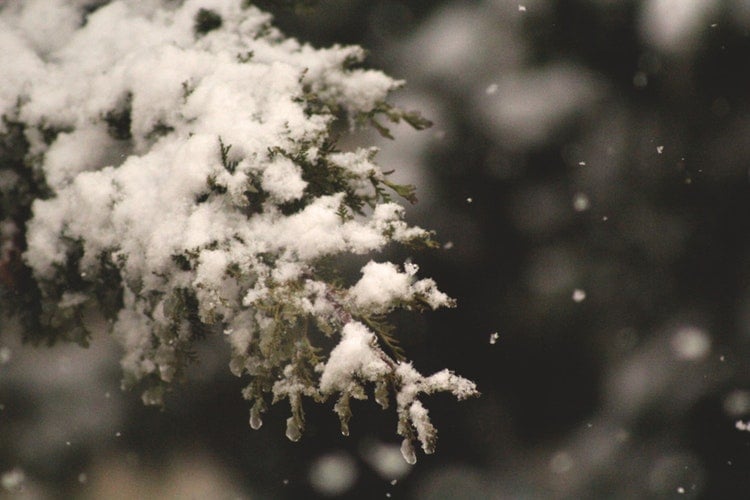
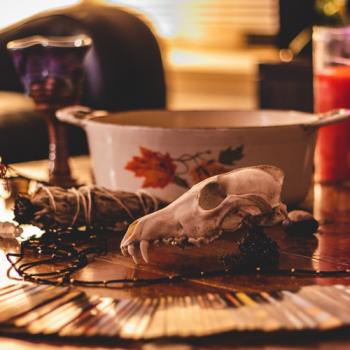
Photo by Christine Makhlouf on Unsplash
Flash forward two-hundred and sixty years to the publication of The Witch-Cult in Western Europe by Margaret Murray. In her book, which we know was highly influential on the modern Witchcraft revival, she uses the confession of Isobel Smyth as her primary evidence for the dates of the Witches’ Sabbats. In turn, Gerald Gardner (who was greatly inspired by Murray) incorporated these dates into his developing system of Witchcraft (what we know today as Wicca). Originally, Gardner only used the four Sabbats named by Murray. He notes in Witchcraft Today that “Witches observed four great festivals: May eve, August eve, November eve (Hallowe’en) and February eve.” He equates these Sabbats with the Gaelic fire festivals of Samhain, Imbolc, Beltaine, and Lughnasa. He would again compare the Witches’ Sabbats (which this time he refers to as Halloween, Candlemas, May Eve, and Lammas) with the Druidic festivals in his later book The Meaning of Witchcraft. In both books he does mention the solstices but they seem to be of less importance to him than the other four Sabbats. In fact, it would be a while before the solstices and equinoxes were incorporated. Skip forward a couple of decades to the 1960’s and 70’s when Aidan Kelley was developing the liturgy for his Wiccan tradition known as the New Reformed Orthodox Order of the Golden Dawn. As part of this work he gave new names to the solstices and equinoxes. Two of these names, Litha and Ostara, were taken from month-names given by a Christian Monk named Bede in his book The Reckoning of Time. The autumnal equinox was given the name Mabon, after the Mabon ap Modron, a character from Welsh mythology. And thus, the Sabbats that we know today came together: Samhain, Yule, Imbolc, Ostara, Beltane, Litha, Lughnasa, and Mabon.
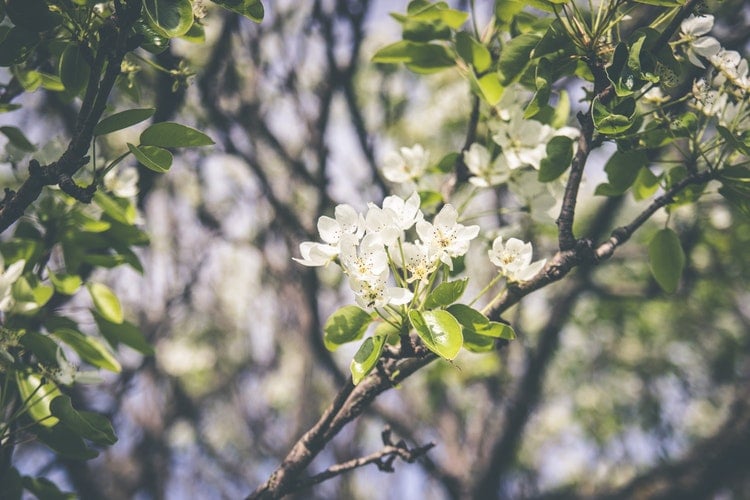
Photo by Giuseppe Murabito on Unsplash
Keeping this background information in mind, the underlying issue with the Sabbats is that they were originally based on a specific climate. This means that, as seasonal markers, they don’t quite line up with other regions of the world.
There seems to be a lot of emphasis placed on the exact date of each Sabbat. For example, people often get into debates on whether Samhain falls on October 31st, November 1st, or when the sun reaches 15 degrees Scorpio. While this shows that there is some wiggle room, we seem to have become accustomed to a fixed system of seasonal rites. On one hand, this makes sense considering that most holidays, across different cultural groups, tend to happen on the same day each year. But, if the Sabbats are specifically about observing seasonal tides, wouldn’t it make more sense for the specific dates to be more fluid? Of course, one could also look at this issue from an astronomical perspective, that the solstices and equinoxes mark the beginning/ending of each season while the cross-quarters days mark the in-between. However, ask yourself how well these dates actually reflect what’s going on in your local landscape? For some the answer may be that this system is quite efficient and that these specific dates accurately echo the seasonal changes of their land, but for others this is not always the case. For example, astronomically the first day of Winter occurs on the 21st (give or take) of December but the first snowfall where I live can happen as early as October. Additionally, when the Spring Equinox rolls it’s a sure thing that we have at least two more months of snow left. The point here is that if I’m attempting to force a fixed system that doesn’t fit the land upon which I live, how well am I actually forming a relationship with it?

Photo by Timothy Eberly on Unsplash
So, what do you do if the Sabbats don’t match with how the seasons occur where you live? You rethink them! This may seem quite radical in the face of the fixed Wheel of Year we have been indoctrinated with but remember that if you’re trying to connect with the land, its best to make that connection personal.
But how do we go about doing this? The first step is to pay attention to signs from nature. What I mean by this is that, throughout the year, notice that is happening in nature. Are there specific signs that signal the seasons are changing? For example, where I live one of the signs that Autumn has begun is when the geese begin to leave. Likewise, I know the Spring is coming when the geese begin to return. Are there animals, fish, insects in your area that act as harbingers of the seasons? Furthermore, consider the cycle of trees and other plants. What are the first plants to emerge after Winter, when do the first buds on the trees appear? What about weather patterns? Look to the forecast to figure out when the first frost is coming or when the temperatures are predicted to rise. I recommend recording these observations in a journal so that you can return to them later and see what patterns emerge over time.
The next step is to consider what these times of year mean to us, in other words what exactly are we celebrating? Some people get put off by the Sabbats because in some places there is an emphasis on agricultural fertility. But I think that there are many possible narratives behind the Sabbats and it’s important to find one that is personally relevant to both yourself and your landscape. For example, one could focus their rituals on psychological themes which are reflected in the seasons, deities/spirits, and ourselves. Winter is often associated with darker aspects of deity and self, therefore the Sabbats during those months could be focused on introspection, communing with lower parts of self, and exploring the Underworld.
Once you have these two aspects mapped out, you can start to form your own Wheel of Year. This may mean using the already existing Sabbats but shifting the dates. For example, where I live, at Beltane our weather is more in line with the themes of Ostara. Or it could mean reworking the theme behind the Sabbat (i.e. Beltane being the first days of Spring). You could do both or you could do away with the classical Sabbats altogether and create new ones. Based on the signals you’ve noticed, is there a specific occurrence that holds particular meaning and could be incorporated into a ritual celebration? I like to create ritual around the geese returning in the Spring, themed around the birds bringing the sun and warmth from the south.
….
The purpose of this article is to encourage further consideration about how we connect to the land through the Sabbats. It’s not to disparage the already existing Wheel of Year, but rather to rework it in a more personal way that fits with the climate where we each live. There are many possibilities for how to rethink the Sabbats, more than what was even covered in this article, but the best way to get started is to get outside and pay attention to what the landscape is telling you. Personally, I used to really struggle with the Sabbats, they felt scripted and unbearably generic. When I celebrated them, it felt like I was just going through the motions. However, I’ve found that once I started focusing them on my particular climate, the Sabbats became more personal and powerful experiences. Not only did my relationship with the land become stronger but I also began to learn a lot more about myself and my own internal cycles.
References:
The Witches’ Ointment by Thomas Hatsis
Rowan Tree and Red Thread by Thomas Davidson
The Meaning of Witchcraft by Gerald Gardner
Witchcraft Today by Gerald Gardner
The Witch-Cult in Western Europe by Margaret Murray
Modern Pagan Festivals: A Study in the Nature of Tradition by Ronald Hutton
Previous Post

April 1, 2018
Healing the Witch's Heart
Next Post

April 26, 2018 The Narcissistic Witch
Browse Our Archives
Select a Category Uncategorized
Select a Month April 2020 February 2020 January 2020 December 2019 October 2019 September 2019 August 2019 July 2019 June 2019 May 2019 April 2019 February 2019 January 2019 December 2018 November 2018 October 2018 September 2018 August 2018 July 2018 June 2018 May 2018 April 2018 March 2018 February 2018 January 2018 December 2017 November 2017 October 2017 August 2017 May 2017 April 2017 March 2017 February 2017 January 2017 December 2016 November 2016 October 2016 September 2016 August 2016
Follow Us!
TAKE THE
Religious Wisdom Quiz
Who came to Jesus at night to ask about being born again?
Select your answer to see how you score.
Cornelius Zacchaeus Simon Nicodemus
Related posts from By Athame and Stang
A Walpurgisnacht Ritual of Transvection, Or A Journey...

Suspicious Witchy Authors: Community Reactions And My Final...
The Witch Father And Mother: Gender In Traditional...
I Spent A Week Becoming A Witch: A...
TRENDING AT PATHEOS Pagan

I was recently chatting with someone on Instagram. She asked me what...

While there are many people who share their results, the end of...

On July 23, I saw Christopher Nolan's The Odyssey which is Homer’s...

As I write this two big events have just finished up. One...

Restoring the Watershed of Divine Love
Perhaps cooperation is not something we manufacture through legislation, ideology, or moral...

Many UUs don’t pray because of bad experiences in a previous religion,...
view all Pagan blogs
Ad-Free & Subscriber Log-In Subscription Support
- About Us
- 2026 Calendar
- Videos
- Podcasts
- Library of World Religions
- Faith In Media Tracker
- Advertise With Us
- Write for Us
- Privacy Policy
- Terms of Service
- Do Not Sell My Data
- Contact Us
- Radiant Digital
- Manage Newsletter Subscriptions
- Unsubscribe From Notifications
- Sitemap
Copyright 2008-2026, Patheos. All rights reserved.
Subscription Support Ad-Free & Subscriber Log-In
Follow Patheos