
BuddhistCatholicContemplativeEvangelicalGeneral ChristianHinduJewishLatter-day SaintMuslimNew VisionsProgressive Christian
Beliefs
- Buddhist
- Catholic
- Contemplative
- Evangelical
- General Christian
- Hindu
- Jewish
- Latter-day Saint
- More Voices
- Muslim
- New Visions
- Pagan
- Progressive Christian
Topics
- Religion News
- Food and Religion
- Sports and Religion
- Religious Art
- Religious Music and Entertainment
- Religious Events
- History and Religion
- Style and Religion
- Politics and Religion
- Women in Religion
- Recreation Outdoors and Religion
- Business Finance and Religion
- Careers Workplace and Religion
- Education and Religion
- Family Parenting and Religion
- Health Fitness and Religion
- Home and Religion
- Relationships and Religion
- Technology and Religion
- Travel and Religion
Columnists
- Buddhist Columnists
- Business Finance and Religion Columnists
- Careers Workplace and Religion Columnists
- Catholic Columnists
- Contemplative Columnists
- Education and Religion Columnists
- Evangelists Columnists
- Family Parenting and Religion Columnists
- General Christian Columnists
- Health Fitness and Religion Columnists
- Hindu Columnists
- History and Religion Columnists
- Home and Religion Columnists
- Jewish Columnists
- More Voices Columnists
- Latter Day Columnists
- Muslim Columnists
- New Visions Columnists
- Nonreligious Columnists
- Pagan Columnists
- Politics and Religion Columnists
- Progressive Columnists
- Recreation Outdoors and Religion Columnists
- Relationships and Religion Columnists
- Religion News Columnists
- Religious Art Columnists
- Religious Events Columnists
- Religious Music and Entertainment Columnists
- Sports and Religion Columnists
- Style and Religion Columnists
- Technology and Religion Columnists
- Travel and Religion Columnists
- Women in Religion Columnists
Resource Library
- 2026 Calendar
- Library of World Religions
- The 100 Most Holy Places on Earth
- Patheos Answers
- Podcasts
- Videos
- Faith Leaders Database
- Anglican Episcopalian
- Bahai
- Baptist
- Buddhism
- Christianity
- Confucianism
- Eastern Orthodoxy
- Hinduism
- Holiness and Pentecostal
- ISKCON
- Islam
- Judaism
- Lutheran
- Methodist
- The Church of Jesus Christ of Latter-day Saints
- New Age
- Paganism
- Presbytarian and Reformed
- Protestantism
- Religion Behind the Scenes
- Roman Catholic
- Scientology
- Shia Islam
- Sikhism
- Sufism
- Sunni Islam
- Taoism
- Zen
- See all religions
Research Tools
 Ad-Free & Subscriber Log-In Subscription Support
Ad-Free & Subscriber Log-In Subscription Support
Follow Patheos 

- Trending:
- Forgiveness
- |
- Marriage
- |
- Consciousness
- |
- Death Penalty
- |
- Election
- |
- Halloween
 By Athame and Stang
- Home
- Pagan
- Beginning Traditional Witchcraft
Beginning Traditional Witchcraft
Last updated on: February 6, 2018 at 5:48 pm by Kelden
Beginning Traditional Witchcraft 2018-02-06T17:48:39-05:00 Kelden
Patheos Explore the world's faith through different perspectives on religion and spirituality! Patheos has the views of the prevalent religions and spiritualities of the world.
In the first part of this article series we discussed the term ‘Traditional Witchcraft’ and laid out a working definition of what it entails. This was bolstered in the second article of this series in which we explored the historical basis of our definition. If you haven’t read these two previous posts, I highly recommend you do so now, before continuing to the third and final part.
Given what we have learned, in this article we will be discussing how one can work to develop their own Traditional Witchcraft practice.
….
As with many other paths, figuring out where to get started within Traditional Witchcraft can be difficult. Let’s begin by looking at the foundational building blocks of research and practice. As with just about everything else in life, a balance between book learning and practical experience is most beneficial. Within Traditional Witchcraft, learning from books is important but it will only take you so far. The same is true for practical experience, that it is incomplete on its own. Think of a surgeon, you wouldn’t want one operating on you if they have never read a medical text book. Nor would you want them operating on you if they have never picked up a scalpel. There needs to be a synthesis of both types of knowledge in order for the practitioner to grow.
That being said, I think that the best (or rather easiest) place to begin one’s exploration into Traditional Witchcraft is to pick up a book or two (or five) on the subject. Off the top of my head I would recommend Treading the Mill by Nigel Pearson. This is, in my opinion, probably the closest thing out there to a Traditional Witchcraft 101 book. Furthermore, you’ll want to read up on the history of Witchcraft both past and present. This may include considering the history and folklore of Witches in certain regions (we will come back to this later) as well as more modern figures such as Robert Cochrane and his tradition.
However, while there are more books being published on the topic, I will say that many of the books you’ll find most helpful are those that are found off the beaten trail. These are books that are not always marketed towards the Witchcraft community, including historical texts and folkloric anthologies.
And, as always, with any book make sure to use your critical thinking skills! Not all books are created equally, and you may have to do some sifting through misinformation to find what you’re looking for. Pay close attention to citations and source material. Not only does this inform you of the veracity of an author’s claims but their references can also be a good place to find further reading material.
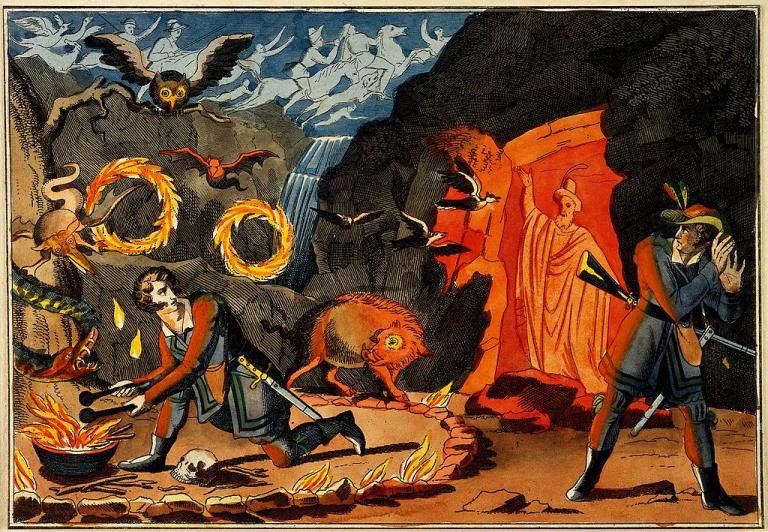
Credit: Wellcome Library, London. Wellcome Images
This brings us to the specifics of things you will want to focus on in your research. We established earlier that Traditional Witchcraft is flavored by cultural and regional influences. More precisely, influences from your ancestors and the landscape in which you live.
If you know or can find out, consider what areas your ancestors come from. First and foremost, this information gives you a well of inspiration from which to draw. You may find that this area has specific deities or folk magic practices that you’d like to explore. There may be folkloric stories that you feel drawn to or even music and food that call to you. These can all be fused into your Craft in various ways that that deepen your path. In addition to inspiration, when we include these aspects in our practice, we are honoring our ancestors who are powerful teachers and magical allies.
Here are some primary examples from my own practice:
- Working with the Scottish Goddess Nicnevin and other culturally specific beings.
- Incorporating Scottish Witchlore (found within folkloric and historical accounts). This includes charms, spells, and other magical customs.
- Cooking traditional Scottish foods (like the bannock) to use as offerings
If you’re not able to find out where your ancestors come from, that’s okay! Just as important, are the influences of the land on which you live. Many of the previous considerations apply here as well, such as if there are preexisting folkloric stories/traditions or specific deities/spirits associated with this land. With this, we enter territory where there is the potential for cultural appropriation. Without going into a lecture here, please remember to be contentious and respectful.
In addition, I recommend mindfully integrating pieces of your natural landscape into your practice. I’ve written about this in-depth previously, so I won’t go into much detail here but think about working with the native flora and fauna, as well as the climate/seasons of your region. The benefits to doing so are numerous, but the number one being that these practices honor the spirits of your land who (like our ancestors) are precious teachers and allies.
Examples from my own practice include:
- Identifying local herbs, such as blue Vervain, and using them in spellwork
- Honoring the spirits of my local trees, rivers, and rock structures
- Celebrating the changing seasons in a way that makes sense with the climate of my region.
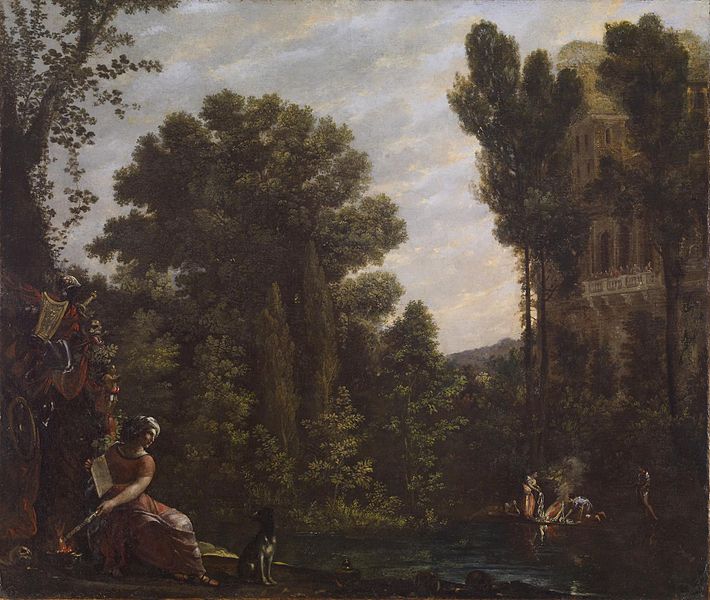
Acquired by Henry Walters with the Massarenti Collection, 1902
Once you feel comfortably saturated with new knowledge, begin to experiment. I often hear from Witches who are hesitant to begin practicing what they’ve been learning. This is normal and it’s best not to rush yourself into something if you’re feeling uncomfortable or anxious.
When you do feel ready, it’s best to start small and work your way up. Slowly, over time, begin to weave together the elements of your knowledge and practice. This may include mixing the cultural/regional influences with more ritualistic elements such as laying of a Compass and treading of the Mill. The key here is that you’re creating a tradition that is rooted in your landscape, which honors your ancestors, and carries on the folklore and history of Witchcraft.
In this sense, Traditional Witchcraft can be very eclectic which may seem like an oxymoron. But I encourage you to rethink the term ‘tradition’ as something that is not completely static but instead fluid and alive. We are building upon the narrative of Witchcraft, creating traditions based on traditions that are based on traditions.
So, go forth and research, explore, experiment, and practice. Read everything you can and find inspiration in folkloric stories and historical accounts of Witchcraft and magic. Revel in tales of Gods, and ghosts, and faeries but don’t be afraid to put the books down and get your hands dirty. Go out to the woods or cross the Hedge and meet with the Gods, or your ancestors, or with the spirits of the land. Give offerings, say prayers, and make pacts. Gather herbs and stones from your natural landscape to use in the casting of spells and crafting of charms. These are the steps to beginning your own Traditional Witchcraft practice.
Previous Post
January 23, 2018
Why Men Cannot be Witches
Next Post
March 15, 2018 The Traditional Witches' Deck
Browse Our Archives
Select a Category Uncategorized
Select a Month April 2020 February 2020 January 2020 December 2019 October 2019 September 2019 August 2019 July 2019 June 2019 May 2019 April 2019 February 2019 January 2019 December 2018 November 2018 October 2018 September 2018 August 2018 July 2018 June 2018 May 2018 April 2018 March 2018 February 2018 January 2018 December 2017 November 2017 October 2017 August 2017 May 2017 April 2017 March 2017 February 2017 January 2017 December 2016 November 2016 October 2016 September 2016 August 2016
Follow Us!
TAKE THE
Religious Wisdom Quiz
What did the Israelites put on their doorposts during Passover?
Select your answer to see how you score.
Olive oil Incense Gold dust Lamb’s blood
Related posts from By Athame and Stang

A Walpurgisnacht Ritual of Transvection, Or A Journey...

Suspicious Witchy Authors: Community Reactions And My Final...
The Witch Father And Mother: Gender In Traditional...

I Spent A Week Becoming A Witch: A...
TRENDING AT PATHEOS Pagan

I was recently chatting with someone on Instagram. She asked me what...

While there are many people who share their results, the end of...

On July 23, I saw Christopher Nolan's The Odyssey which is Homer’s...

As I write this two big events have just finished up. One...

Restoring the Watershed of Divine Love
Perhaps cooperation is not something we manufacture through legislation, ideology, or moral...

Many UUs don’t pray because of bad experiences in a previous religion,...
view all Pagan blogs
Ad-Free & Subscriber Log-In Subscription Support
- About Us
- 2026 Calendar
- Videos
- Podcasts
- Library of World Religions
- Faith In Media Tracker
- Advertise With Us
- Write for Us
- Privacy Policy
- Terms of Service
- Do Not Sell My Data
- Contact Us
- Radiant Digital
- Manage Newsletter Subscriptions
- Unsubscribe From Notifications
- Sitemap
Copyright 2008-2026, Patheos. All rights reserved.
Subscription Support Ad-Free & Subscriber Log-In
Follow Patheos