
BuddhistCatholicContemplativeEvangelicalGeneral ChristianHinduJewishLatter-day SaintMuslimNew VisionsProgressive Christian
Beliefs
- Buddhist
- Catholic
- Contemplative
- Evangelical
- General Christian
- Hindu
- Jewish
- Latter-day Saint
- More Voices
- Muslim
- New Visions
- Pagan
- Progressive Christian
Topics
- Religion News
- Food and Religion
- Sports and Religion
- Religious Art
- Religious Music and Entertainment
- Religious Events
- History and Religion
- Style and Religion
- Politics and Religion
- Women in Religion
- Recreation Outdoors and Religion
- Business Finance and Religion
- Careers Workplace and Religion
- Education and Religion
- Family Parenting and Religion
- Health Fitness and Religion
- Home and Religion
- Relationships and Religion
- Technology and Religion
- Travel and Religion
Columnists
- Buddhist Columnists
- Business Finance and Religion Columnists
- Careers Workplace and Religion Columnists
- Catholic Columnists
- Contemplative Columnists
- Education and Religion Columnists
- Evangelists Columnists
- Family Parenting and Religion Columnists
- General Christian Columnists
- Health Fitness and Religion Columnists
- Hindu Columnists
- History and Religion Columnists
- Home and Religion Columnists
- Jewish Columnists
- More Voices Columnists
- Latter Day Columnists
- Muslim Columnists
- New Visions Columnists
- Nonreligious Columnists
- Pagan Columnists
- Politics and Religion Columnists
- Progressive Columnists
- Recreation Outdoors and Religion Columnists
- Relationships and Religion Columnists
- Religion News Columnists
- Religious Art Columnists
- Religious Events Columnists
- Religious Music and Entertainment Columnists
- Sports and Religion Columnists
- Style and Religion Columnists
- Technology and Religion Columnists
- Travel and Religion Columnists
- Women in Religion Columnists
Resource Library
- 2026 Calendar
- Library of World Religions
- The 100 Most Holy Places on Earth
- Patheos Answers
- Podcasts
- Videos
- Faith Leaders Database
- Anglican Episcopalian
- Bahai
- Baptist
- Buddhism
- Christianity
- Confucianism
- Eastern Orthodoxy
- Hinduism
- Holiness and Pentecostal
- ISKCON
- Islam
- Judaism
- Lutheran
- Methodist
- The Church of Jesus Christ of Latter-day Saints
- New Age
- Paganism
- Presbytarian and Reformed
- Protestantism
- Religion Behind the Scenes
- Roman Catholic
- Scientology
- Shia Islam
- Sikhism
- Sufism
- Sunni Islam
- Taoism
- Zen
- See all religions
Research Tools
 Ad-Free & Subscriber Log-In Subscription Support
Ad-Free & Subscriber Log-In Subscription Support
Follow Patheos 

- Trending:
- Forgiveness
- |
- Marriage
- |
- Consciousness
- |
- Death Penalty
- |
- Election
- |
- Halloween
 Building Cathedrals
- Home
- Family, Parenting and Religion
- “Will There Be Faith?” – A Book Review
“Will There Be Faith?” – A Book Review
Last updated on: September 9, 2011 at 6:00 am by Katrina
“Will There Be Faith?” – A Book Review 2011-09-09T06:00:40-06:00 Katrina
Patheos Explore the world's faith through different perspectives on religion and spirituality! Patheos has the views of the prevalent religions and spiritualities of the world.
Dear Readers,
About a month ago, the Builders were asked to write a review of Thomas Groome’s latest book entitled “Will There Be Faith: A New Vision for Educating and Growing Disciples.” I decided that I was up to the task, and received a free copy of Groome’s book from the publisher. I have read the book and compiled my thoughts into a book review below – enjoy!
I have just finished reading Thomas Groome’s newest book, Will There Be Faith?, and my first reaction is that perhaps the last chapters of his book should have come first, with the remainder of the book following! Thomas Groome is a scholar, and clearly possesses a lot of knowledge about the Catholic faith. Throughout his book, he often quotes Scripture, the Catechism of the Catholic Church, the saints, particularly St. Thomas Aquinas and St. Augustine, and other religious scholars. It is quite clear the Professor Groome does not want to leave any stone unturned, or any subject unexplored, and thus he goes into great detail with each topic. As someone who appreciates scholarly pursuits, I very much appreciated Professor Groome’s in-depth discussions; as a mother and religious educator, I sometimes felt that his main ideas were lost amidst the myriad of Scriptural references, saint quotes, and academic tangents found throughout the book.
Professor Groome spends the first 259 pages of his book laying the foundation for his life to Faith to life approach to religious education, and the last 78 pages explaining this approach and giving practical suggestions for how parents, religious educators, and parishes can practically implement its ideas. In the first three chapters of his book, Professor Groome tries to answer many questions: First, what was Jesus’ teaching style, and how can we imitate Jesus in our efforts to teach (and learn) effectively? Second, who is doing all of this teaching and learning, and third, what faith are we trying to pass down and why?
In the fourth chapter, Groome begins to tackle the “how” of Christian educating by introducing the concept that he calls “liberating salvation,” stating that we must educate “for a faith that does justice” (pg 136). I found this section to be a bit out of place and confusing, and did not know whether Groome was referring to liberation theology or to something different. The latter part of chapter 4, however, was quite helpful; in it, Professor Groome focuses on just and unjust ways of teaching, cautioning teachers against robbing others of their ability to speak for themselves and discern their own decisions (pg 144).
Professor Groome has many interesting points about parish life and family life in chapters 5 and 6, and has clearly thought at great length about how churches and families can maximize their potential to be great learning environments for people of all ages. He speaks beautifully about family life, at one point using the image of the Good Shepherd and saying that “the family should be like a good shepherd to all its members, carrying each according to need at varied times” (pg 210). He goes on to say that “’favoring the poor’ needs to begin in our families. If not done at home, it is not likely to be done outside of it either” (pg 210). Groome makes some wonderful suggestions such as honoring the Sabbath as a family and creating family traditions and rituals that can strengthen the family’s faith life.
At this point, I must also mention that Professor Groome interjects certain statements throughout Will There Be Faith that caused me to take a step back and wonder what he was really trying to say. At various points, Groome refers to the Catholic Church’s “homophobia” and “sexism” as if they were realities, and not just people’s false perceptions. For example, in the Introduction Groome recounts a conversation with a young mother in which she conveys to Groome her reservations about bringing up her daughter in the Catholic faith, including “women priests, respect for gay people, birth control, clergy sex abuse, lack of lay voice, etc.” (pg 3). It is unclear whether Groome believes that these are actual problems within the Church (except for clergy sex abuse, which is a problem that the Church is dealing with), or whether he is merely stating that some people disagree with the Church’s teaching on these subjects. He says, “the stories I hear suggest that the difficulties posed [to faith on earth] are posed not only by the secular conditions of this postmodern age but, according to some perceptions at least, by the very Church itself” (pg 3). Does Groome mean that the Church’s teachings on these topics are problematic and that they should be changed? Another example comes when Groome states, with regards to gender roles and relations, that “the home, however, can stand for equality even when the society or church does not” (pg 217). Later on the same page, Groome states that “gender-favoring language…perpetuates the favoring of men in church and society,” as if the Church really did favor men over women (pg 217). While I respect Professor Groome’s right to critically reflect on the teachings of the Church, as all the baptized are invited and encouraged to do, his remarks are distracting and leave the reader wondering what he really means to say. Is Groome suspicious of the Church, or is he simply “thinking out loud”?
At other points, Professor Groome speaks beautifully about the Catholic faith. In speaking about Catholic liturgy, Groome says, “the Mass is the summit and source of the life of the Church and parish!” (178), and quotes the Constitution on Sacred Liturgy several times. Continuing his points on the Mass, Groome states that the songs chosen for Sunday Mass should reflect “good theology” (pg 181), and that likewise, all of the prayers must “reflect good theology…[because] what we pray is really the measure of what we believe—and teach” (pg 183). Clearly, Professor Groome has a deep understanding of and reverence for the Mass, which is heartening.
Finally, beginning in Chapter 8, Professor Groome lays out the principles of his life to Faith to life approach to Christian education. He states that his approach to faith education, following Jesus’ approach on the Road to Emmaus (Luke 24), does as follows:
“1) Engages people’s interests and what is meaningful for them;
2) has them reflect upon their own lives in the world;
3) gives them persuasive and ready access to Christian faith as meaningful to their lives;
4) prompts them to correlate and integrate these two sources of truth and spiritual wisdom – life and Faith; and
5) invites them to decide for lived Christian faith. This is precisely what the life to Faith to life approach can achieve in a systemic way.” (pg 271)
Groome takes the topic of religious education so seriously because he wants to “help to bridge the gap that Christians maintain between their lives and their faith…The only way to do so is to pedagogically engage both “life” and “Faith” in order to [integrate] them [with] each other” (pg 283). Indeed, all of us, whether we are parents, friends, or religious educators outside of the home, can appreciate this longing to help bring people closer to Faith and to help them bring Faith into their daily lives. Professor Groome is to be commended for all of the hard work and effort that he has put into writing this book. Although his writing can be tangential at times, and although I would caution readers against some of his confusing language regarding the Church’s authority to teach the Truth as revealed to Her by the Holy Spirit, Thomas Groome presents a compelling vision for how we can effectively teach the Catholic faith.
Previous Post

September 7, 2011
They're On Their Way...
Next Post
September 11, 2011 Ten years later, we remember...
Browse Our Archives
Select a Category Builders' Favorite Posts Children Education & Homeschool Food and Nutrition Health Home Organization Inside Our Inbox Keeping It Real Liturgical Seasons Marriage Miscellaneous Motherhood and Parenting Nature and the Environment NFP and Fertility Politics and Current Events Pregnancy Recipes Spiritual Life The Catholic Church Thoughts for Thursday Uncategorized
Select a Month April 2015 December 2014 November 2014 October 2014 September 2014 August 2014 July 2014 June 2014 May 2014 April 2014 March 2014 February 2014 January 2014 December 2013 November 2013 October 2013 September 2013 August 2013 July 2013 June 2013 May 2013 April 2013 March 2013 February 2013 January 2013 December 2012 November 2012 October 2012 September 2012 August 2012 July 2012 June 2012 May 2012 April 2012 March 2012 February 2012 January 2012 December 2011 November 2011 October 2011 September 2011 August 2011 July 2011 June 2011 May 2011 April 2011 March 2011 February 2011 January 2011 December 2010 November 2010 October 2010 September 2010 August 2010 July 2010 June 2010 May 2010 April 2010 March 2010 February 2010 January 2010 December 2009 November 2009 October 2009 September 2009 August 2009 July 2009 June 2009 May 2009 April 2009 March 2009 February 2009 January 2009 December 2008 November 2008 October 2008 September 2008 August 2008 July 2008 June 2008 May 2008 April 2008 March 2008 February 2008 January 2008
TAKE THE
Religious Wisdom Quiz
What was the name of the field bought with Judas' betrayal money?
Select your answer to see how you score.
Golgotha Potter's Field Field of Blood Aceldama
Related posts from Building Cathedrals



Land's End Warning: Order School Uniforms, Get Porn
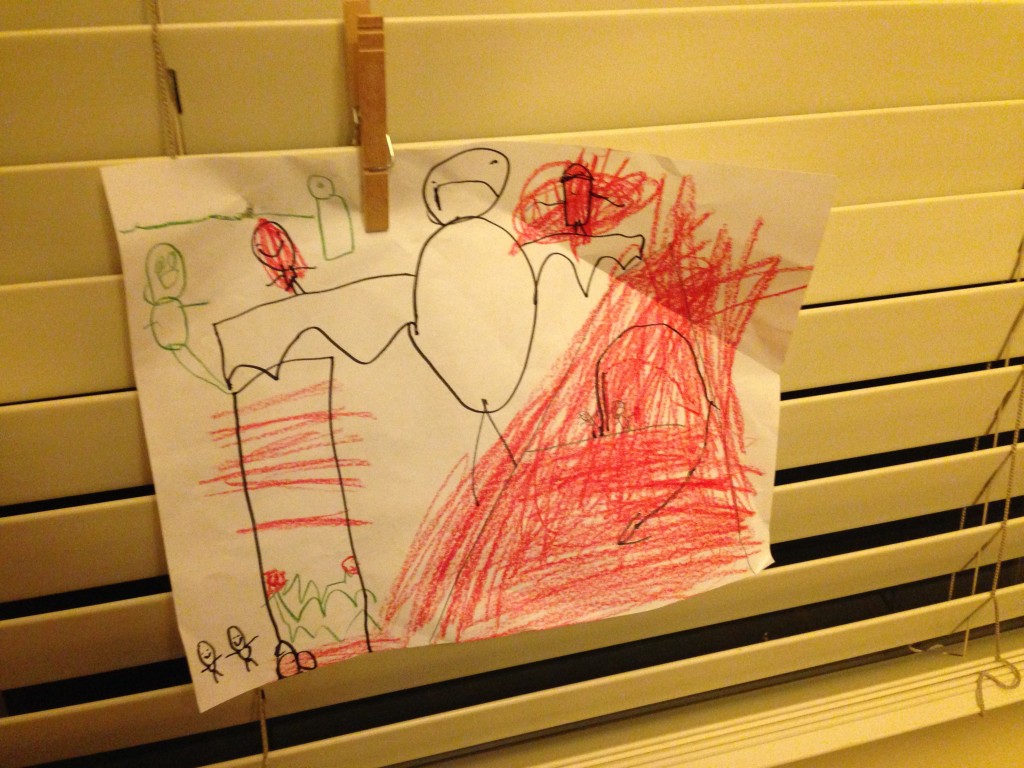
My Favorite Picture by a 5 year old
TRENDING AT PATHEOS Family, Parenting and Religion

Catholic Evangelization: Sharing Your Faith Every Day
Welcome back to the Graceful Awakening mini-series called, “From Faith to Mission.” ...

The Pillar of the Boatmen: the Ancient Monument...
The Pillar of the Boatmen is a Romano-Gaulish sculpture that dates from...

In one sense walking into Westminster Abbey is like walking down the...

'Super Scam Me' Exposes AI Jon Bon Jovi...
Leslie Pickett believed she was in a relationship with Jon Bon Jovi....

The Brazilian Remake of Kendricks' 'Flywheel' Opens in...
“Flywheel,” the story that launched the Kendrick Brothers’ filmmaking career is getting...

The Dangers of Gradual Accommodation (Winking at Sin)
Recently, the “law of gradualness” resurfaced during the opening of a weeklong,...
view all Family, Parenting and Religion blogs
Ad-Free & Subscriber Log-In Subscription Support
- About Us
- 2026 Calendar
- Videos
- Podcasts
- Library of World Religions
- Faith In Media Tracker
- Advertise With Us
- Write for Us
- Privacy Policy
- Terms of Service
- Do Not Sell My Data
- Contact Us
- Radiant Digital
- Manage Newsletter Subscriptions
- Unsubscribe From Notifications
- Sitemap
Copyright 2008-2026, Patheos. All rights reserved.
Subscription Support Ad-Free & Subscriber Log-In
Follow Patheos