
BuddhistCatholicContemplativeEvangelicalGeneral ChristianHinduJewishLatter-day SaintMuslimNew VisionsProgressive Christian
Beliefs
- Buddhist
- Catholic
- Contemplative
- Evangelical
- General Christian
- Hindu
- Jewish
- Latter-day Saint
- More Voices
- Muslim
- New Visions
- Pagan
- Progressive Christian
Topics
- Religion News
- Food and Religion
- Sports and Religion
- Religious Art
- Religious Music and Entertainment
- Religious Events
- History and Religion
- Style and Religion
- Politics and Religion
- Women in Religion
- Recreation Outdoors and Religion
- Business Finance and Religion
- Careers Workplace and Religion
- Education and Religion
- Family Parenting and Religion
- Health Fitness and Religion
- Home and Religion
- Relationships and Religion
- Technology and Religion
- Travel and Religion
Columnists
- Buddhist Columnists
- Business Finance and Religion Columnists
- Careers Workplace and Religion Columnists
- Catholic Columnists
- Contemplative Columnists
- Education and Religion Columnists
- Evangelists Columnists
- Family Parenting and Religion Columnists
- General Christian Columnists
- Health Fitness and Religion Columnists
- Hindu Columnists
- History and Religion Columnists
- Home and Religion Columnists
- Jewish Columnists
- More Voices Columnists
- Latter Day Columnists
- Muslim Columnists
- New Visions Columnists
- Nonreligious Columnists
- Pagan Columnists
- Politics and Religion Columnists
- Progressive Columnists
- Recreation Outdoors and Religion Columnists
- Relationships and Religion Columnists
- Religion News Columnists
- Religious Art Columnists
- Religious Events Columnists
- Religious Music and Entertainment Columnists
- Sports and Religion Columnists
- Style and Religion Columnists
- Technology and Religion Columnists
- Travel and Religion Columnists
- Women in Religion Columnists
Resource Library
- 2026 Calendar
- Library of World Religions
- The 100 Most Holy Places on Earth
- Patheos Answers
- Podcasts
- Videos
- Faith Leaders Database
- Anglican Episcopalian
- Bahai
- Baptist
- Buddhism
- Christianity
- Confucianism
- Eastern Orthodoxy
- Hinduism
- Holiness and Pentecostal
- ISKCON
- Islam
- Judaism
- Lutheran
- Methodist
- The Church of Jesus Christ of Latter-day Saints
- New Age
- Paganism
- Presbytarian and Reformed
- Protestantism
- Religion Behind the Scenes
- Roman Catholic
- Scientology
- Shia Islam
- Sikhism
- Sufism
- Sunni Islam
- Taoism
- Zen
- See all religions
Research Tools
 Ad-Free & Subscriber Log-In Subscription Support
Follow Patheos 

- Trending:
- Advent
- |
- Forgiveness
- |
- Thanksgiving
- |
- Election
- |
- Seasonal Holidays
- |
- Marriage

- Home
- Progressive Christian
- Travel and Religion
- Three Days Attempting to Reach Mary Magdalene’s Cave
Three Days Attempting to Reach Mary Magdalene’s Cave
Last updated on: August 13, 2026 at 1:53 pm by Neil Ghosh
Three Days Attempting to Reach Mary Magdalene’s Cave 2026-08-13T13:53:30-04:00 Neil Ghosh
Patheos Explore the world's faith through different perspectives on religion and spirituality! Patheos has the views of the prevalent religions and spiritualities of the world.
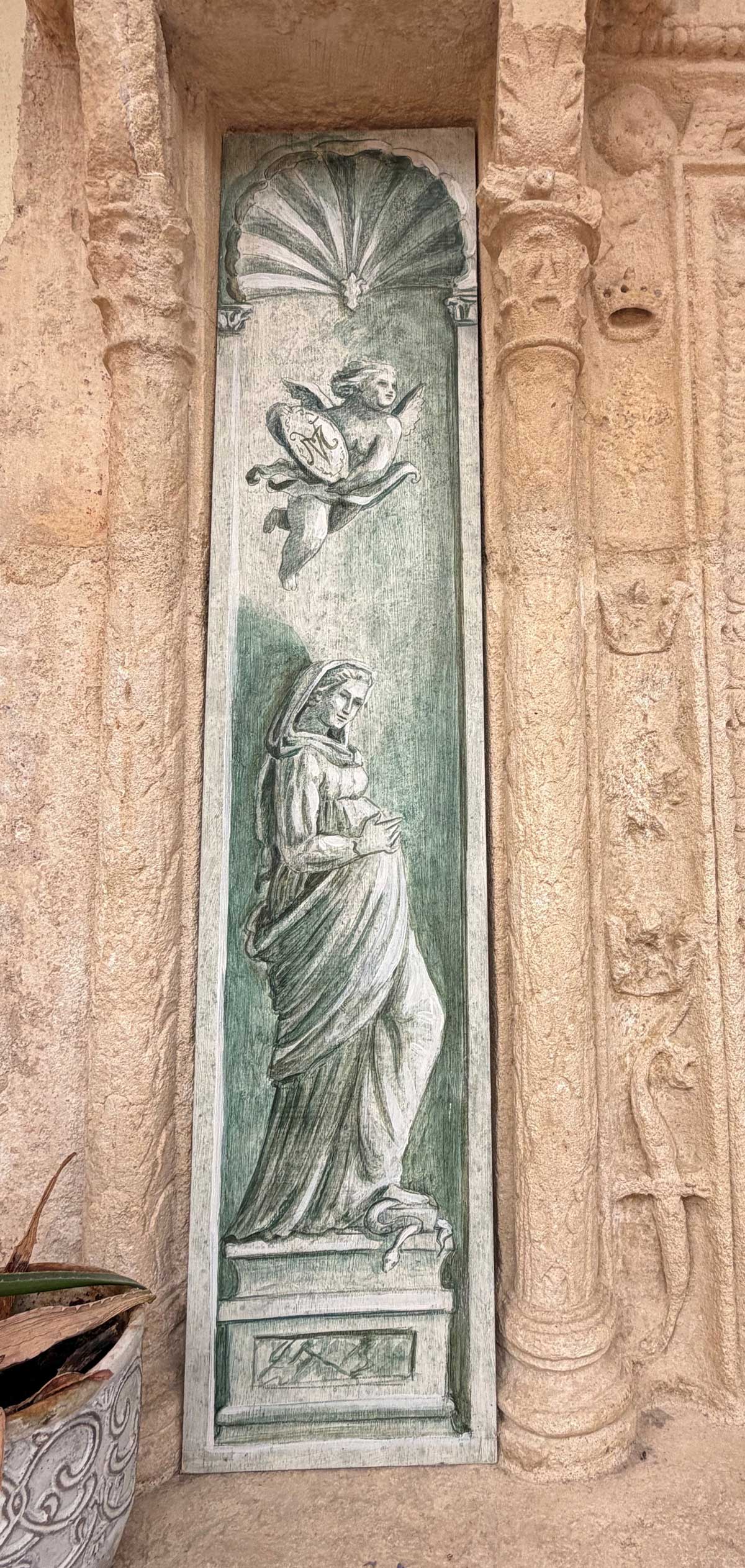
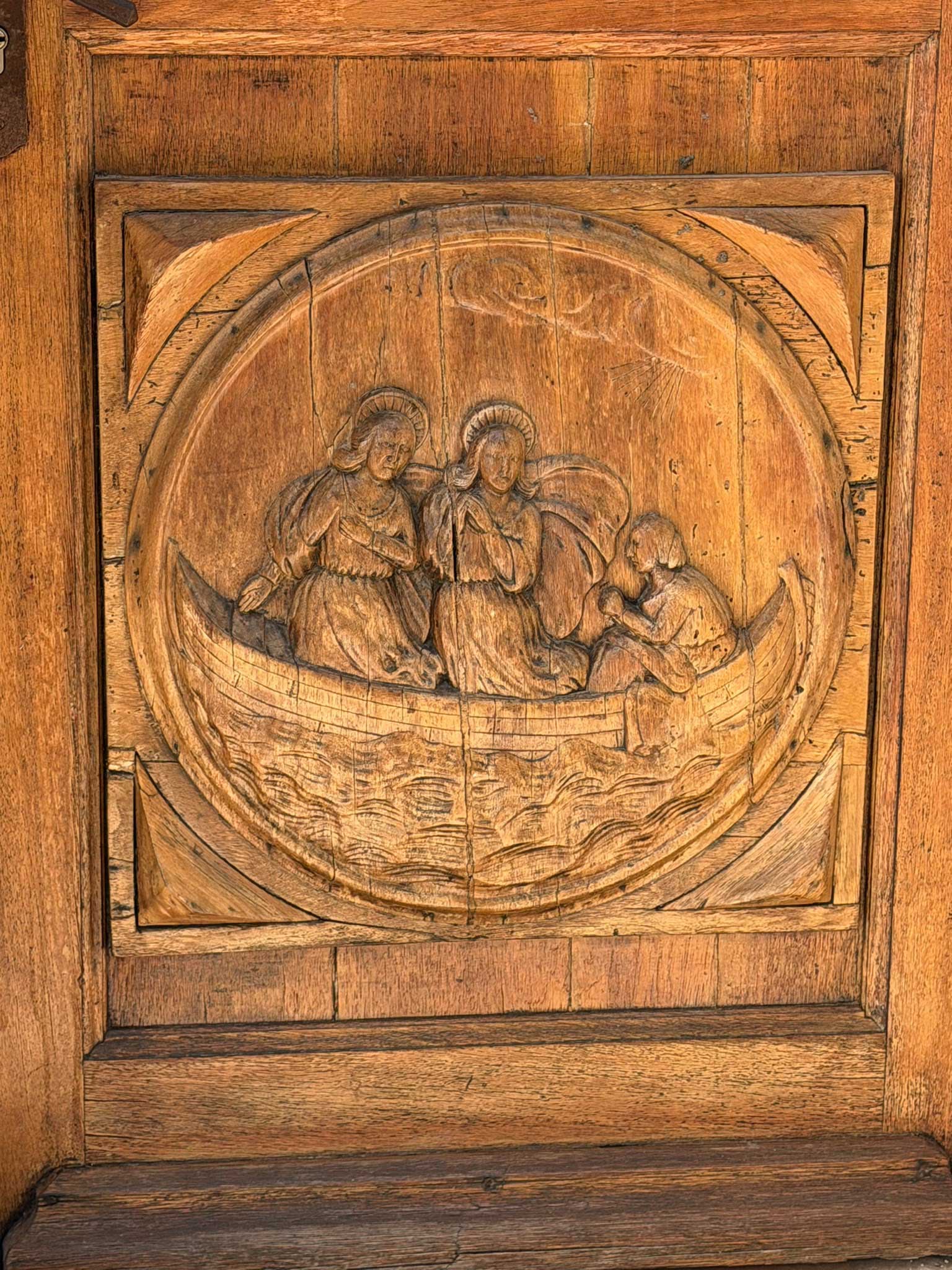
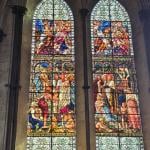
Mary Magdalene depicted at the chapel near Sainte-Baume, a reminder of the centuries of faith, legend, and pilgrimage that have shaped her story in Provence. Photo by Neil Ghosh, July 2026.
Lessons from a Pilgrimage in Southern France
It took me three days to reach Mary Magdalene.
Not because the cave was far.
Because it would not let me arrive.
I traveled from Maryland to southern France in July 2026, determined to visit the mountain sanctuary where, according to centuries-
old tradition, Mary Magdalene spent the final years of her life.
Before beginning my pilgrimage toward Sainte-Baume, I visited two of Marseille’s most significant Christian landmarks—the Cathédrale La Major and Notre-Dame de la Garde.
The journey:
Day 1 in Cassis — my Uber driver, Michel, became hopelessly lost among the winding mountain
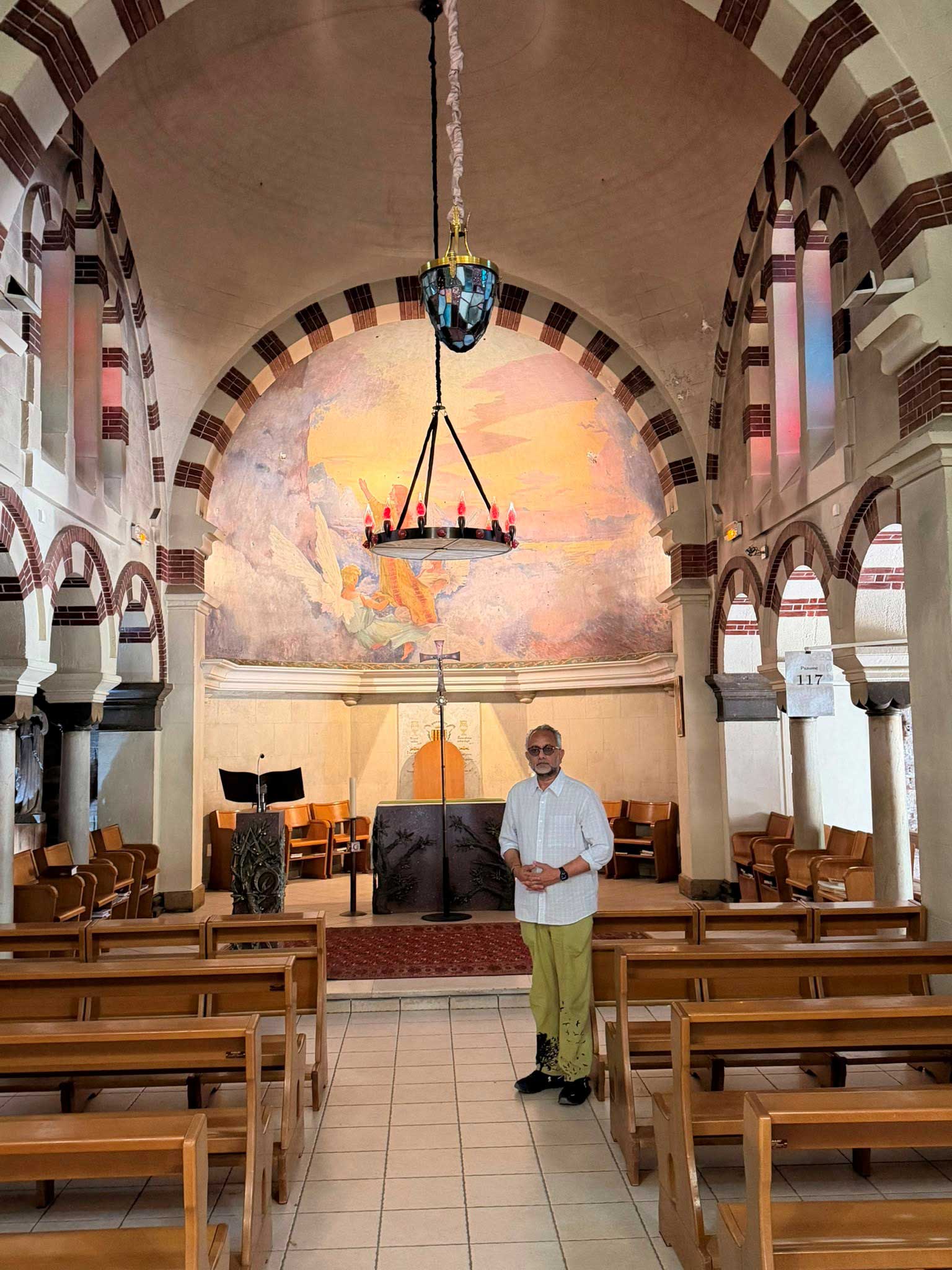
Author, inside the Chapel des Hotes at the base of Sainte Baume Massif.
roads of Provence. He spoke no English. I spoke only a handful of memorized French phrases. Eventually he stopped near Plan-d’Aups-Sainte-Baume, convinced we had gone as far as a car could go. Despite my repeated attempts to persuade him to try once more, he gently shook his head, turned the car around, and drove me back to Cassis.
Day 2 seemed more promising. My friend Viola, who lives near Cassis and knows the region well, generously offered to accompany me.
Then came the wildfire. The forests surrounding Sainte-Baume were closed. Pilgrims were turned away. It was Code Red. Again, Mary Magdalene remained beyond reach.
Day 3 — I was determined. The fires were still burning in the region. Roads remained restricted. Only with Viola’s help was I finally able to enter the forest and reach the sanctuary below the mountain.
We visited the Chapel des Hôtes at the base of the Sainte-Baume massif, but we never reached the cave.
Standing behind the chapel, I looked up at the tiny opening in the limestone cliffs, the cave where, according to centuries of Provençal tradition, Mary Magdalene spent her final years. It was close enough to see, yet still beyond my reach.
We never reached the cave. Looking back, I’m no longer sure we were supposed to. We begin believing the destination will change us. Instead, somewhere along the road, the journey quietly begins to do its work.
Who Was Mary Magdalene?
Few figures in Christian history have generated as much devotion, misunderstanding, speculation,
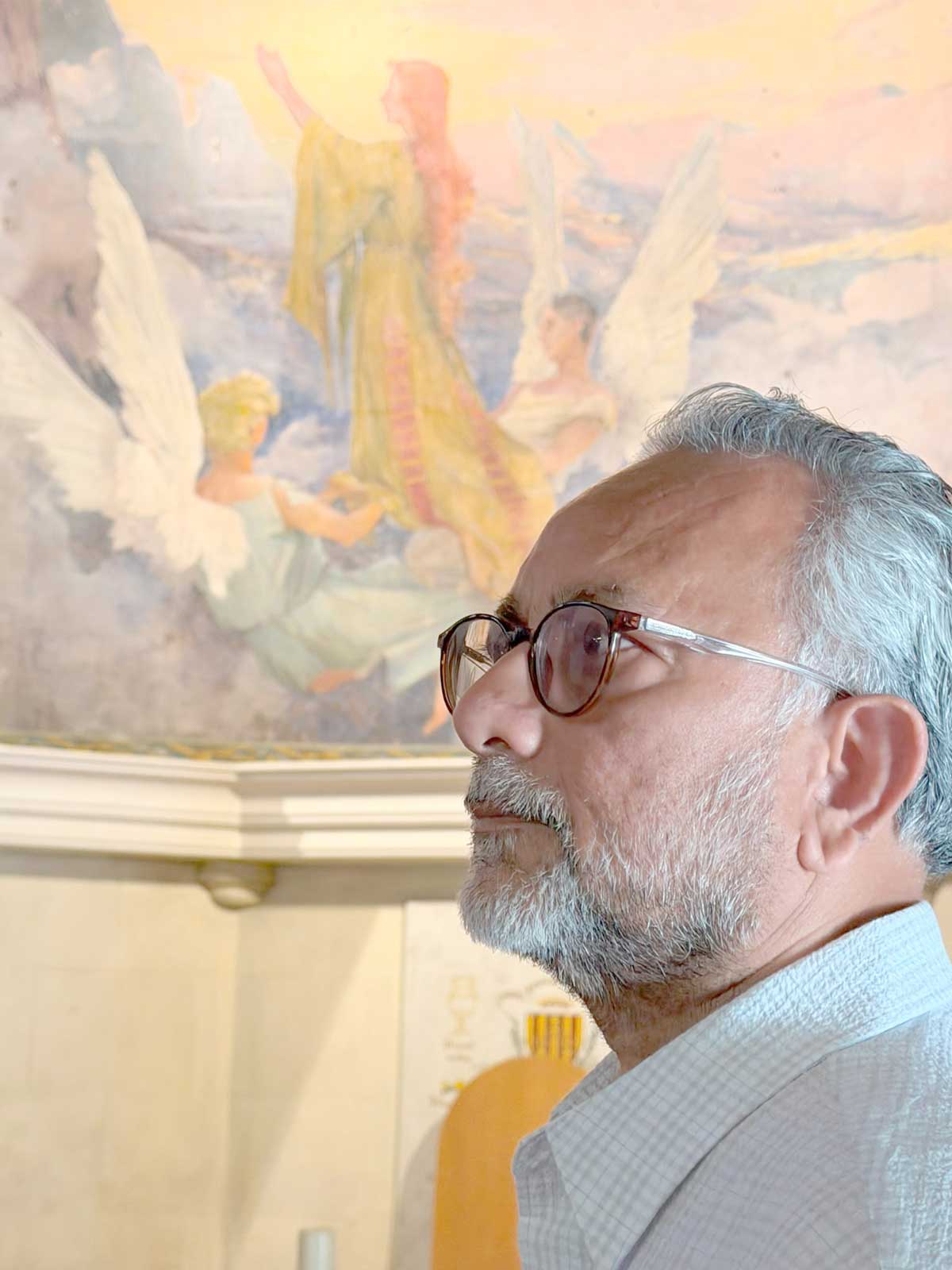
Author, inside the Chapel des Hotes at the base of Sainte Baume Massif; photo: Author
and scholarship as Mary Magdalene.
The biblical Mary Magdalene is remarkably different from the popular image many people have inherited.
The New Testament tells us she was one of Jesus’ closest followers. According to the Gospels, Jesus healed her, she accompanied him during his ministry, witnessed the Crucifixion, and became the first person to encounter the risen Christ. For that reason, many Christian traditions honor her as “the Apostle to the Apostles.”
Over the centuries, Mary Magdalene has been portrayed in many different ways. Western Christianity long identified her with the unnamed sinful woman in Luke’s Gospel, leading many to believe she had been a sex worker. Most contemporary biblical scholars reject that identification, noting that the New Testament never explicitly describes her that way. Other modern interpretations—including the suggestion that she was Jesus’ wife—have also attracted attention, though these claims remain outside mainstream historical scholarship.
Readers interested in exploring these debates further will find excellent discussions from several Patheos writers as well as Catholic and Orthodox scholars:
- A True History of Mary Magdalene (Patheos)
- Wonder Magdalene (Patheos)
- Mary Magdalene: Apostle to the Apostles (Holy Apostles)
- Was Mary Magdalene a Prostitute? (U.S. Catholic)
Beyond those texts, however, the historical record grows quiet.
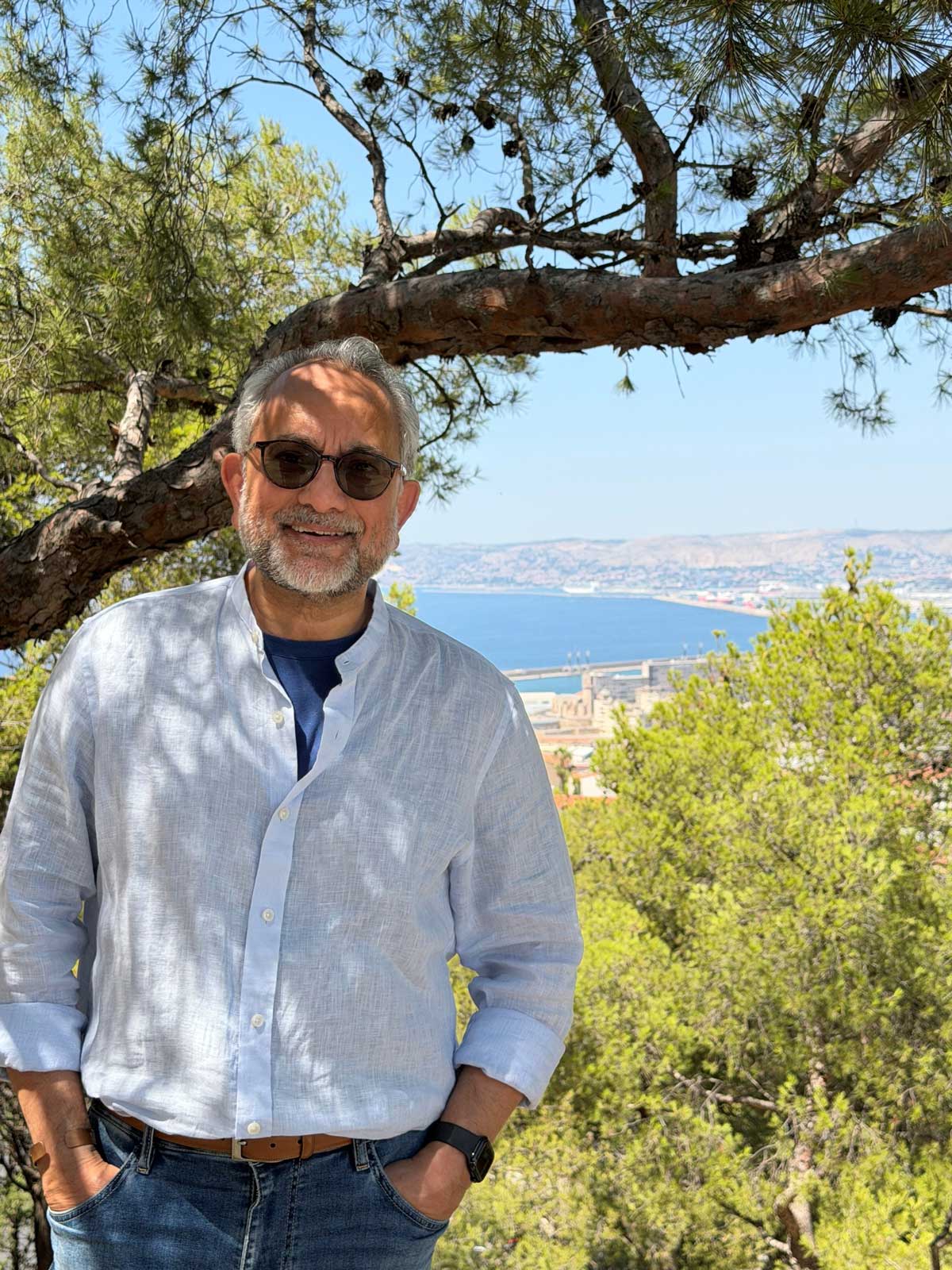
The author stands by Notre-Dame de la Garde.
According to a long-held tradition in Provence, after the Resurrection, Mary Magdalene, along with Lazarus, Martha, Mary Salome, Mary Jacobe, and other followers of Jesus, were placed in a rudderless boat and set adrift across the Mediterranean. They landed on the southern coast of France near today’s Saintes-Maries-de-la-Mer. Mary Magdalene later withdrew into the cave of Sainte-Baume, where, according to medieval Provençal tradition, she spent the final decades of her life in prayer before being buried near what is now Saint-Maximin-la-Sainte-Baume.
Modern historians cannot verify these events. Nor can they completely dismiss why this tradition has endured for centuries. Over the centuries, the site has drawn countless pilgrims, as well as saints, popes, and French monarchs—including King Louis IX (Saint Louis), Francis I, and Louis XIV. Whether drawn by history, faith, or curiosity, they continue to walk the same forest paths.
Perhaps that itself says something.
Three Layers of Truth
As I write this article, I find myself thinking about three kinds of truth.
Saintes Maries de la Mere. | Image courtesy of Viola Schafer.
Historical truth asks what historians can reasonably document from surviving evidence.
Traditional truth preserves the stories that communities have cherished across generations—stories that shape identity even when not
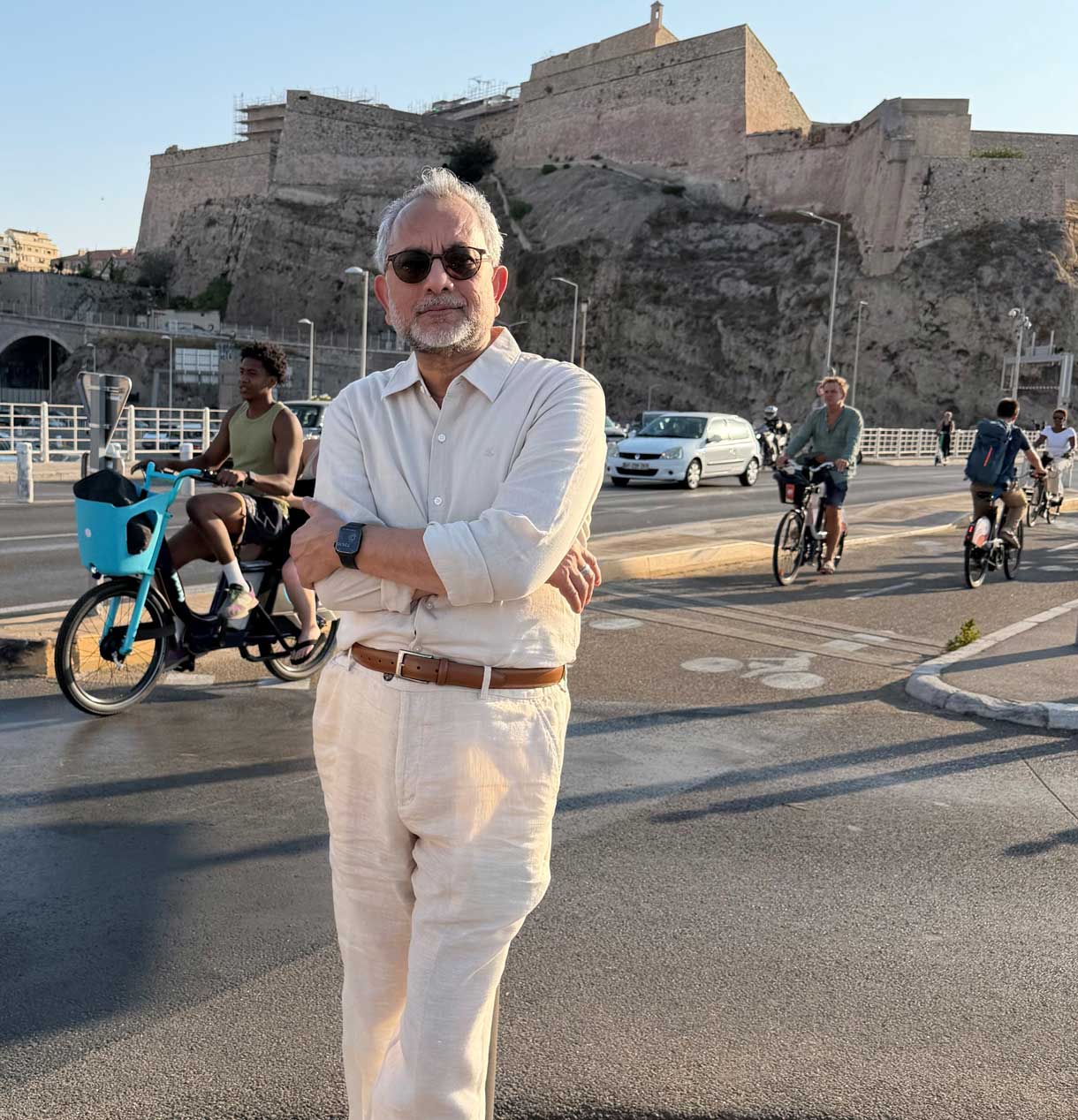
The author poses in front of Fort Saint Nicolas.
every detail can be historically verified.
Personal truth asks a different question.
Not simply, “Did this happen exactly this way?”
But, “What kind of person does this story invite me to become?”
Is our personal truth helping us to become kinder neighbors, more compassionate parents, more generous citizens?
Historical truth matters. But when history reaches the limits of what it can establish, another question remains: What does this centuries-old tradition ask of those who encounter it today? For me, its value lies partly in whether it inspires greater humility, service, compassion, and love.
Sacred Places
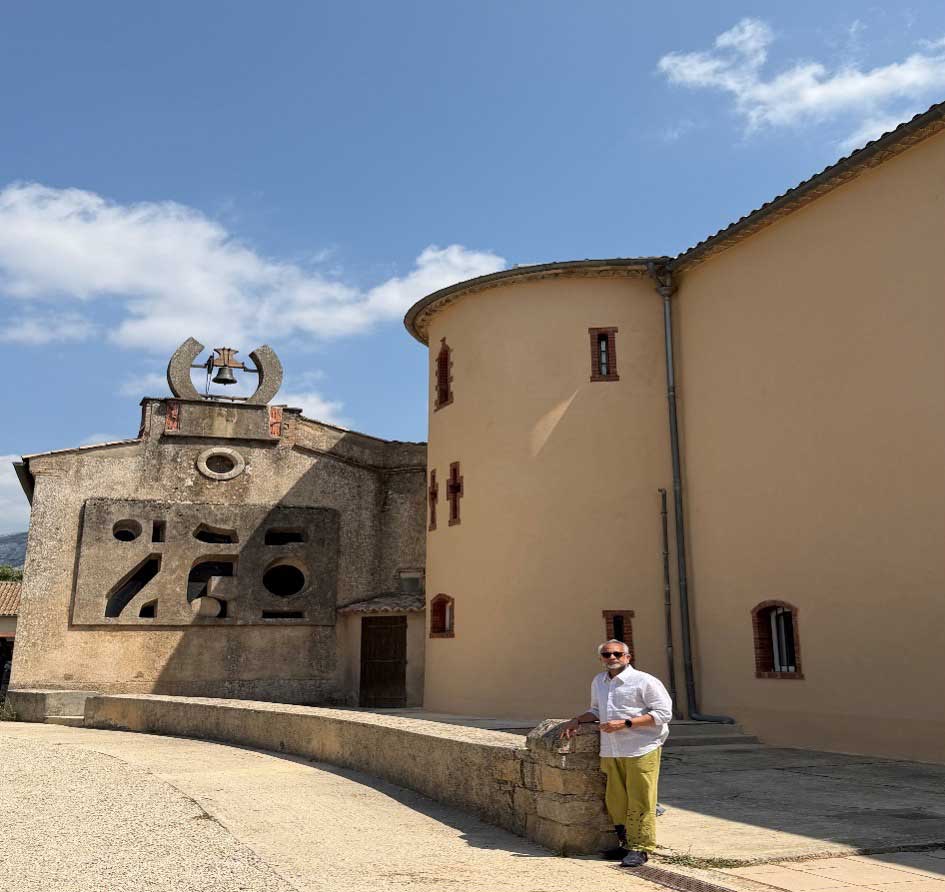
The author poses outside the Chapel des Hotes 1 at the base of the Sainte Baume Massif.
Over the years, I have visited sacred places on several continents. Temples. Mosques. Synagogues. Churches. Monasteries. Every tradition has its own architecture.
Its own prayers.
Its own rituals.
Yet what stays with me is not how different they are. It is how similar the people are. Everywhere I go, people arrive carrying something invisible. Hope. Grief. Questions. Gratitude. Fear. Love.
No one makes a pilgrimage because life is already perfect. It took me three days to reach Mary Magdalene. Yet I never reached her cave. Perhaps that is the nature of every pilgrimage. We begin believing the destination will change us. Instead, somewhere along the road, the journey quietly begins to do its work.
Some journeys take three days.
Others take a lifetime.
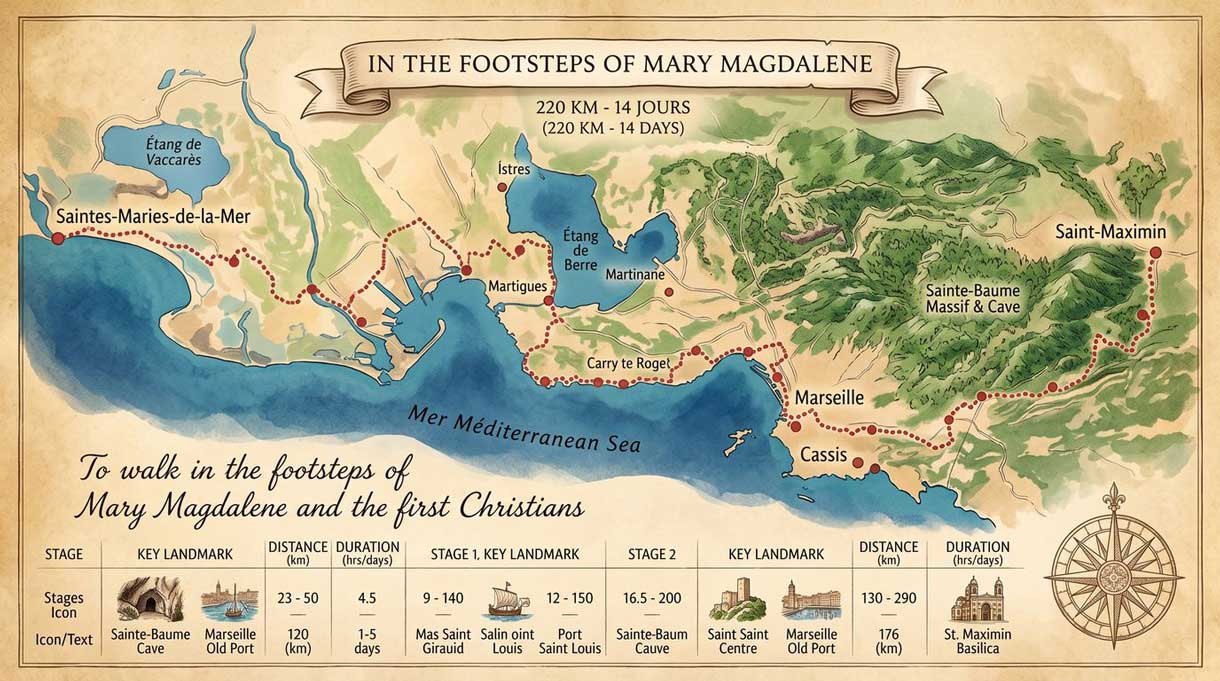
A vintage-style illustrated pilgrimage map of Southern France titled “In the Footsteps of Mary Magdalene and the first Christians.” Painted on aged parchment, the map outlines a red dotted route starting from Saintes-Maries-de-la-Mer on the coast, winding through Marseille and Cassis, and heading inland into the mountains of the Sainte-Baume Massif & Cave, ending at Saint-Maximin. | Image created for Patheos in Synaptic.
Progressive Christian
Hindu
History and Religion

About Neil Ghosh
Neil Ghosh is an author, speaker, and bridge builder. He is the author of Do More Good, featuring a foreword by His Holiness the Dalai Lama, and writes the Building Bridges column for Patheos, exploring empathy, purpose, civic life, and the small actions that can bridge divides and strengthen communities. Learn more at neilghosh.org. You can read more about the author here.
Previous Post

July 9, 2026
America at 250: The Country We Are Still Becoming
Next Post
August 24, 2026 Why Every Major Religion Pays Attention to Feet
Recent Comments
"Happy Bhai Phonta festivities. Celebrations such as Christmas, Diwali, Eid, Easter, Pongal, Onam, Navratri, Puja, ..."
What Is Bhai Phonta? A Bengali ..."
"Though humble and lowly, one's feet are the most trusted vehicles for every pilgrim. Visiting ..."
Why Every Major Religion Pays Attention ..."
"Recent migrants, newly arrived refugees, early settlers, and original inhabitants are all fellow pilgrims on ..."
America at 250: The Country We ..."
"This is such a meaningful and heartfelt read, you’ve shared the idea of religious harmony ..."
Exploring India’s Religious Harmony: A Father-Son ..."
Browse Our Archives
Select a Category Uncategorized
Select a Month November 2026 August 2026 July 2026 December 2025 August 2025 July 2025 June 2025 May 2025 April 2025 March 2025 February 2025 December 2024 November 2024 October 2024 September 2024 August 2024
Follow Us!
TAKE THE
Religious Wisdom Quiz
The Lord is close to the brokenhearted and saves those who are crushed in ____.
Select your answer to see how you score.
Fear Grief Spirit Pain
Related posts from Building Bridges
Family
What Is Bhai Phonta? A Bengali Tradition of...
Family
Why Every Major Religion Pays Attention to Feet

Family
America at 250: The Country We Are Still...
Family
What Bhutan Taught Me About Joy After Two...
TRENDING AT PATHEOS Travel and Religion

A Modest Proposal for President Trump
Trump should just quit the loser Republicans who failed him so badly...
Jesus is Coming with Glory and Power
https://www.youtube.com/watch?v=_lt60EDHOQ4&list=RD_lt60EDHOQ4&start_radio=1

The Late Francis Frangipane & the Failure Too...
I learned today that another one of my heroes has gone to...

Thomas Paine, the Smiths, the apostles in England,...
I'm pleased to announce that the Becoming Brigham Black Friday Sale,...

CatholicTV Series: Six Black Catholics on Path to...
WATERTOWN, Mass., November 9, 2026 – In recognition of Black Catholic History...

New Advent Journal Invites Catholics to Be Pilgrims
Florissant, MO, November 16, 2026— What if Advent were more than a...
view all Travel and Religion blogs
What Are Your Thoughts?leave a comment
Ad-Free & Subscriber Log-In Subscription Support
- About Us
- 2026 Calendar
- Videos
- Podcasts
- Library of World Religions
- Faith In Media Tracker
- Advertise With Us
- Write for Us
- Privacy Policy
- Terms of Service
- Do Not Sell My Data
- Contact Us
- Radiant Digital
- Manage Newsletter Subscriptions
- Unsubscribe From Notifications
- Sitemap
Copyright 2008-2026, Patheos, part of the Radiant Digital network of media brands. All rights reserved.
Subscription Support Ad-Free & Subscriber Log-In
Follow Patheos