
BuddhistCatholicContemplativeEvangelicalGeneral ChristianHinduJewishLatter-day SaintMuslimNew VisionsProgressive Christian
Beliefs
- Buddhist
- Catholic
- Contemplative
- Evangelical
- General Christian
- Hindu
- Jewish
- Latter-day Saint
- More Voices
- Muslim
- New Visions
- Pagan
- Progressive Christian
Topics
- Religion News
- Food and Religion
- Sports and Religion
- Religious Art
- Religious Music and Entertainment
- Religious Events
- History and Religion
- Style and Religion
- Politics and Religion
- Women in Religion
- Recreation Outdoors and Religion
- Business Finance and Religion
- Careers Workplace and Religion
- Education and Religion
- Family Parenting and Religion
- Health Fitness and Religion
- Home and Religion
- Relationships and Religion
- Technology and Religion
- Travel and Religion
Columnists
- Buddhist Columnists
- Business Finance and Religion Columnists
- Careers Workplace and Religion Columnists
- Catholic Columnists
- Contemplative Columnists
- Education and Religion Columnists
- Evangelists Columnists
- Family Parenting and Religion Columnists
- General Christian Columnists
- Health Fitness and Religion Columnists
- Hindu Columnists
- History and Religion Columnists
- Home and Religion Columnists
- Jewish Columnists
- More Voices Columnists
- Latter Day Columnists
- Muslim Columnists
- New Visions Columnists
- Nonreligious Columnists
- Pagan Columnists
- Politics and Religion Columnists
- Progressive Columnists
- Recreation Outdoors and Religion Columnists
- Relationships and Religion Columnists
- Religion News Columnists
- Religious Art Columnists
- Religious Events Columnists
- Religious Music and Entertainment Columnists
- Sports and Religion Columnists
- Style and Religion Columnists
- Technology and Religion Columnists
- Travel and Religion Columnists
- Women in Religion Columnists
Resource Library
- 2026 Calendar
- Library of World Religions
- The 100 Most Holy Places on Earth
- Patheos Answers
- Podcasts
- Videos
- Faith Leaders Database
- Anglican Episcopalian
- Bahai
- Baptist
- Buddhism
- Christianity
- Confucianism
- Eastern Orthodoxy
- Hinduism
- Holiness and Pentecostal
- ISKCON
- Islam
- Judaism
- Lutheran
- Methodist
- The Church of Jesus Christ of Latter-day Saints
- New Age
- Paganism
- Presbytarian and Reformed
- Protestantism
- Religion Behind the Scenes
- Roman Catholic
- Scientology
- Shia Islam
- Sikhism
- Sufism
- Sunni Islam
- Taoism
- Zen
- See all religions
Research Tools
 Ad-Free & Subscriber Log-In Subscription Support
Ad-Free & Subscriber Log-In Subscription Support
Follow Patheos 

- Trending:
- Forgiveness
- |
- Marriage
- |
- Consciousness
- |
- Death Penalty
- |
- Election
- |
- Halloween

- Home
- Muslim
- Travel and Religion
- Exploring India’s Religious Harmony: A Father-Son Journey
Exploring India’s Religious Harmony: A Father-Son Journey
Last updated on: October 2, 2024 at 11:07 am by Neil Ghosh
Exploring India’s Religious Harmony: A Father-Son Journey 2024-10-02T11:07:46-04:00 Neil Ghosh
Patheos Explore the world's faith through different perspectives on religion and spirituality! Patheos has the views of the prevalent religions and spiritualities of the world.
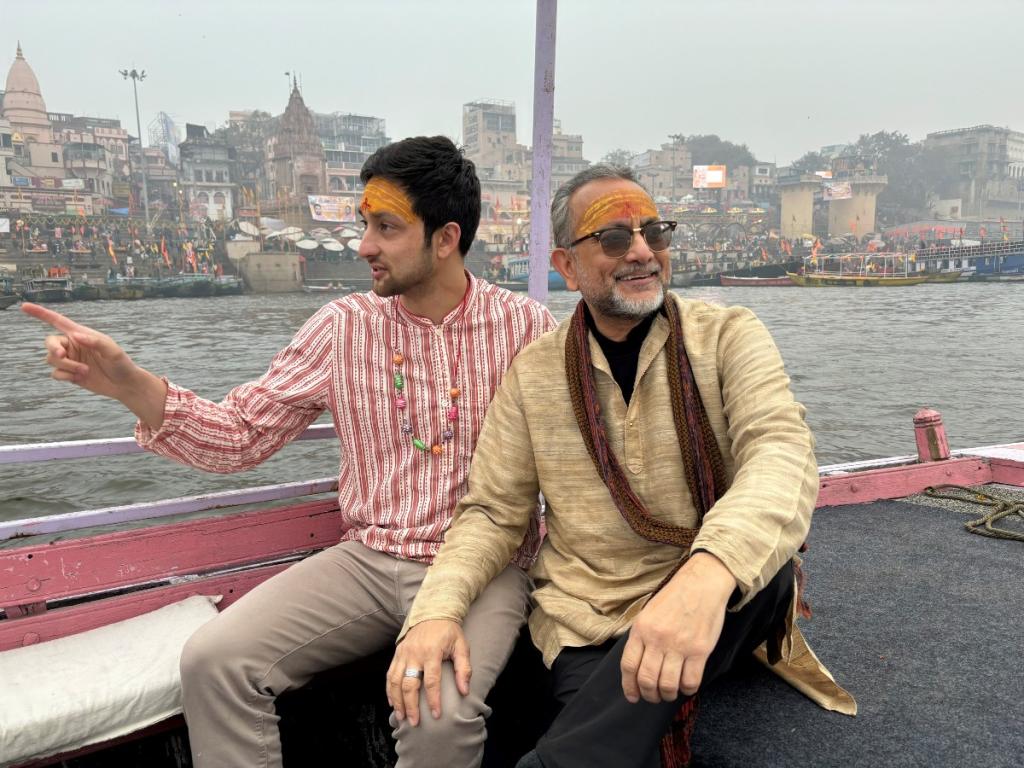
Neil Ghosh with Ryan Ghosh at Dashashwamedh Ghat, Varanasi, India. / Courtesy of Neil Ghosh
Seeking Religious Harmony in a Divided World
Growing up, we were taught that the fundamental principle of Hinduism is that God is in everyone, that everyone is divine, and that all human beings are fundamentally equal. I have been deeply concerned about the increasing religious polarization in recent years. So, earlier this year, my 28-year-old son Ryan and I embarked on a whirlwind tour of India, the country of our birth. We wanted to experience the country’s incredibly rich variety of religious traditions and witness religious harmony in action.
Our journey was a vibrant tapestry of experiences, leading us to explore various historic sites and religious establishments across the country. The awe-inspiring Ajanta and Ellora caves in Maharashtra left us spellbound, while the spiritual aura of Varanasi and Sarnath in Uttar Pradesh filled us with a profound sense of humility. Sarnath, the site of the Buddha’s first sermon, and Varanasi, the heart of Hinduism, are both revered by Buddhists, Muslims, Christians, Sikhs, and Jains. Our visit to Kolkata, my birthplace and the “city of joy,” was a special homecoming.
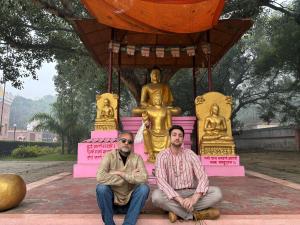
Neil Ghosh and Ryan Ghosh under the Bodhi Tree in Sarnath, India. Courtesy of Neil Ghosh
Since leaving India in 1984, I have visited numerous times. I also moved back to India from 1993 to 1998, where Ryan was born. I wanted to see what remained of the India of my childhood, a place of unity amid diversity. The spirit of “Unity in Diversity” is a fundamental aspect of Indian identity. The journey also provided an opportunity to connect Ryan to his Indian roots while deepening our own spiritual relationship.
In addition to the spiritual, there was a political dimension. While religious harmony is known to foster social stability, inclusivity, and economic growth, violence based on region—as well as restrictions on religion—is on the rise globally, including in India, according to a report by the Pew Research Center.
Does religious harmony still exist in India?
As one whose life is dedicated to building bridges between people, I had to find out.
Ancient, Majestic, Artistic
Our exploration of India’s diverse faiths began with a visit to the Ellora Caves. These caves, dating from approximately 200 BCE to 1000 CE, consist
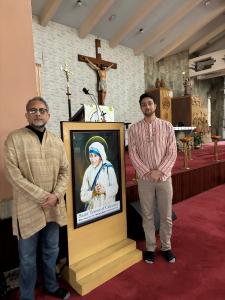
Neil Ghosh and Ryan Ghosh at St. Mary’s Church, Varanasi, India. Courtesy of Neil Ghosh
of 12 Buddhist caves in the south, 17 Hindu temples in the center, and five Jain temples in the north. The most remarkable of these is Kailasa Temple, also known as Kailasanatha (cave 16), a breathtaking marvel of artistry and spirituality.
The Ajanta Caves, which we visited next, are 29 rock-cut Buddhist cave monuments dating from the second century BCE to about 480 CE in the Aurangabad district of Maharashtra state. Universally regarded as masterpieces of ancient Indian and Buddhist religious art and listed among the UNESCO World Heritage Sites of India, the caves include particularly expressive sculptures and paintings rich in gesture, pose, and form.
Sacred, Timeless, Spiritual
In Varanasi, we immersed ourselves in the vibrant and colorful atmosphere of Hindu temples, including the New Viswanath Temple at Banaras Hindu University (BHU), Devrah Baba Ashram, Dwarkadhish Temple, Sankat Mochan, Sita Ram Temple, and the numerous stairways or ghats along the sacred Ganges, which are used for cleansing and cremation.
As we continued our journey, we embraced the serene ambiance of the Haji Ali Dargah and Mosque in Mumbai and Jama Masjid in Varanasi. I am glad to report that We also experienced the solemn dignity of a synagogue at Knesset Eliyahoo in Mumbai, dating back to 1884, and the peaceful aura of a Sikh Gurudwara—Gurdwara Sri Guru ka Bagh in Varanasi—which commemorates the visit of Guru Nanak, the founder of the Sikh religion, in the sixteenth century.
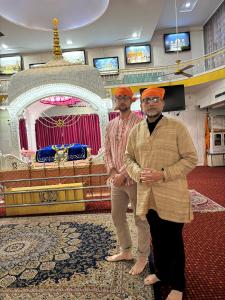
Neil Ghosh and Ryan Ghosh at Gurdwara Sri Guru Ka Bagh Varanasi, India. Courtesy of Neil Ghosh
The profound tranquility of Jain temples, such as the Sri Parswanath Jain Temple in Kolkata and the Jain Temple in Sarnath near Varanasi, left a lasting impact on us. The latter was built in 1824 CE to honor the birthplace of Shreyansanatha, the 11th supreme spiritual teacher or tirthankara. Our exploration also led us to St. Mary’s Church in Varanasi, further testament to the city’s diverse religious landscape.
Peaceful, Enlightening, Historic
One of the most rewarding experiences was our visit to Sarnath, the birthplace of Buddhism. In 528 BCE, Gautama Buddha delivered his first sermon in Sarnath after attaining enlightenment at Bodh Gaya. Sitting near the Bodhi tree in Sarnath (planted in 1931 by Anagarika Dharmapala, founder of the Maha Bodhi Society of India), we felt a deep connection to the spiritual history of this place.
Throughout this journey, I engaged with citizens from all walks of life—friends, fellow airline passengers, Uber and Taxi drivers, hotel staff, tour guides, and many others. While many expressed hope and some voiced frustration, one thing was clear: with few exceptions, they focused on building a prosperous India rather than allowing the nation to be divided.
These conversations reminded me of a vital lesson my mother once taught me: how to transform hope and frustration into a sense of obligation to take action. I have expanded on these lessons in the article.
Our journey to India was enlightening. Within these many sacred spaces, so varied in their expression of devotion, we grasped the uniqueness of each religion’s path to divinity. Yet the sacred spaces all display the common essence of religious experience.
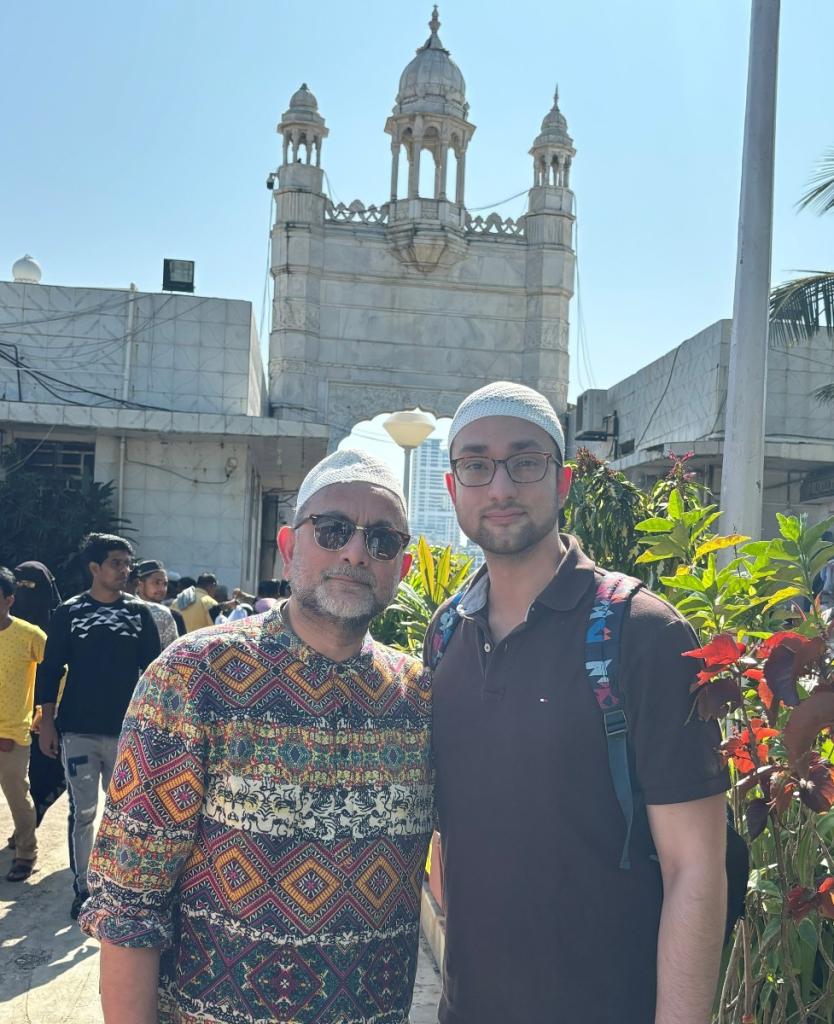
Neil Ghosh and Ryan Ghosh at Haji Ali Dargah and Mosque in Mumbai, India. Courtesy of Neil Ghosh
Does religious harmony still exist in India? For my part, I believe the answer is yes, though I realize now that it will always be fragile. Perhaps it always was. A child doesn’t always notice such things.
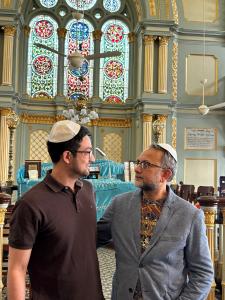
Neil Ghosh and Ryan Ghosh at Knesset Eliyahoo Synagogue in Mumbai, India. Courtesy of Neil Ghosh
I now accept that India’s diversity has historically been both a source of rich cultural exchange and tension. In recent years, significant socio-political changes have impacted the dynamics between religious communities. Some argue that instances of heightened religious rhetoric, particularly in politics, have contributed to increased polarization. It is impossible to escape the news, but there are deeper currents of tradition and practice here that serve to counter such polarization, with a staying power measured in millennia.
Harmony, and Hope for the Future
A visit to India, however brief, leaves no one unchanged. My feelings are as complex as the light on the surface of the Ganges.
- As an Indian American, I hope that the country of my birth can continue to model religious harmony in a world struggling with intolerance.
- As a businessman and social entrepreneur, I hope India’s religious diversity can continue to power country’s vast economy, impacting everything from foreign investment, tourism, and workforce productivity to innovation, market expansion, and consumer confidence.
- As a father, I am even more committed to ensuring that Ryan’s generation will inherit a world that celebrates rather than persecutes religious differences.
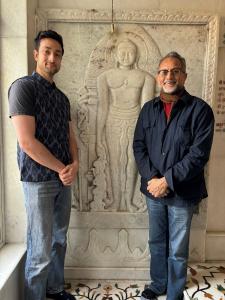
Neil Ghosh and Ryan Ghosh at Sri Parswanath Jain Temple, Kolkata, India. Courtesy of Neil Ghosh
As he and I shared our impressions, energized with wonder, I was struck anew by the beauty and strength that reside in our diversity. And I returned home to Maryland convinced that we could build a more harmonious and prosperous future together, regardless of our beliefs.
Share your thoughts in the comments—I’d love to hear them!
In my next column, I will share stories why Unity in Diversity is a Bread and Butter Issue for India, followed by my article on how we navigate truth in an age of misinformation.
Muslim
Hindu
Fundamental Principle of Hinduism
Religious Polarization in India
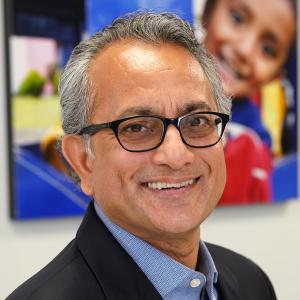
About Neil Ghosh
Neil Ghosh has a mission: To give a voice to the voiceless. Neil has forged a path from a childhood in Kolkata to the boardrooms of multinational companies and from leadership roles in global nonprofits to building homes for vulnerable children in Morocco and India. He combines business skills with boundless compassion to build partnerships that foster sustainable development. As an advocate for marginalized populations, the underrepresented, and people facing injustice, Neil has appeared in print, broadcast, and online media in the United States and abroad, including CNN, Devex, the Washington Post, Economic Times, Voice of America, the Australian, the Huffington Post, and Stanford Social Innovation Review. You can read more about the author here: www.neilghosh.net You can read more about the author here.
Previous Post

September 10, 2024
7 Things Parents Can Do To Teach Kids To Reject Hate
Next Post
October 24, 2024 India’s True Need: Jobs Over Temples
Recent Comments
"Though humble and lowly, one's feet are the most trusted vehicles for every pilgrim. Visiting ..."
Why Every Major Religion Pays Attention ..."
"Recent migrants, newly arrived refugees, early settlers, and original inhabitants are all fellow pilgrims on ..."
America at 250: The Country We ..."
"This is such a meaningful and heartfelt read, you’ve shared the idea of religious harmony ..."
Exploring India’s Religious Harmony: A Father-Son ..."
"Doing Dignity is a meaningful project. Living in dignity and dying in dignity is a ..."
What Bhutan Taught Me About Joy ..."
Browse Our Archives
Select a Category Uncategorized
Select a Month August 2026 July 2026 December 2025 August 2025 July 2025 June 2025 May 2025 April 2025 March 2025 February 2025 December 2024 November 2024 October 2024 September 2024 August 2024
Follow Us!
TAKE THE
Religious Wisdom Quiz
Who said: "Dear friends, do not be surprised at the fiery ordeal that has come on you to test you"?
Select your answer to see how you score.
John Peter James Paul
Related posts from Building Bridges
Family
Why Every Major Religion Pays Attention to Feet
Family
Three Days Attempting to Reach Mary Magdalene's Cave

Family
America at 250: The Country We Are Still...
Family
What Bhutan Taught Me About Joy After Two...
TRENDING AT PATHEOS Travel and Religion

In "Irreplaceable," our book on vocation and technology, Trevor Sutton and I...

I was strolling through the top floor of the brand new Parthenon...

What Does Gêvâh Mean For Kimberley Guifoyle &...
This week, a lot of the news is focused on Kimberly Guilfoyle....

INNER CIRCLE: Profound Mystery (Of Christ In All...
Ephesians 5:31-32 “For this reason, a man will leave his father and...

Do Not Rejoice When Your Enemy Falls: The...
Turning an execution into a public spectacle is a disturbing expression of...

'The Chosen' S6 Trailer: The Passion Gets Very...
Not many watching 'The Chosen' worry about spoilers, but just because they...
view all Travel and Religion blogs
What Are Your Thoughts?leave a comment
Ad-Free & Subscriber Log-In Subscription Support
- About Us
- 2026 Calendar
- Videos
- Podcasts
- Library of World Religions
- Faith In Media Tracker
- Advertise With Us
- Write for Us
- Privacy Policy
- Terms of Service
- Do Not Sell My Data
- Contact Us
- Radiant Digital
- Manage Newsletter Subscriptions
- Unsubscribe From Notifications
- Sitemap
Copyright 2008-2026, Patheos. All rights reserved.
Subscription Support Ad-Free & Subscriber Log-In
Follow Patheos