
BuddhistCatholicContemplativeEvangelicalGeneral ChristianHinduJewishLatter-day SaintMuslimNew VisionsProgressive Christian
Beliefs
- Buddhist
- Catholic
- Contemplative
- Evangelical
- General Christian
- Hindu
- Jewish
- Latter-day Saint
- More Voices
- Muslim
- New Visions
- Pagan
- Progressive Christian
Topics
- Religion News
- Food and Religion
- Sports and Religion
- Religious Art
- Religious Music and Entertainment
- Religious Events
- History and Religion
- Style and Religion
- Politics and Religion
- Women in Religion
- Recreation Outdoors and Religion
- Business Finance and Religion
- Careers Workplace and Religion
- Education and Religion
- Family Parenting and Religion
- Health Fitness and Religion
- Home and Religion
- Relationships and Religion
- Technology and Religion
- Travel and Religion
Columnists
- Buddhist Columnists
- Business Finance and Religion Columnists
- Careers Workplace and Religion Columnists
- Catholic Columnists
- Contemplative Columnists
- Education and Religion Columnists
- Evangelists Columnists
- Family Parenting and Religion Columnists
- General Christian Columnists
- Health Fitness and Religion Columnists
- Hindu Columnists
- History and Religion Columnists
- Home and Religion Columnists
- Jewish Columnists
- More Voices Columnists
- Latter Day Columnists
- Muslim Columnists
- New Visions Columnists
- Nonreligious Columnists
- Pagan Columnists
- Politics and Religion Columnists
- Progressive Columnists
- Recreation Outdoors and Religion Columnists
- Relationships and Religion Columnists
- Religion News Columnists
- Religious Art Columnists
- Religious Events Columnists
- Religious Music and Entertainment Columnists
- Sports and Religion Columnists
- Style and Religion Columnists
- Technology and Religion Columnists
- Travel and Religion Columnists
- Women in Religion Columnists
Resource Library
- 2026 Calendar
- Library of World Religions
- The 100 Most Holy Places on Earth
- Patheos Answers
- Podcasts
- Videos
- Faith Leaders Database
- Anglican Episcopalian
- Bahai
- Baptist
- Buddhism
- Christianity
- Confucianism
- Eastern Orthodoxy
- Hinduism
- Holiness and Pentecostal
- ISKCON
- Islam
- Judaism
- Lutheran
- Methodist
- The Church of Jesus Christ of Latter-day Saints
- New Age
- Paganism
- Presbytarian and Reformed
- Protestantism
- Religion Behind the Scenes
- Roman Catholic
- Scientology
- Shia Islam
- Sikhism
- Sufism
- Sunni Islam
- Taoism
- Zen
- See all religions
Research Tools
 Ad-Free & Subscriber Log-In Subscription Support
Follow Patheos 

- Trending:
- Advent
- |
- Forgiveness
- |
- Thanksgiving
- |
- Election
- |
- Seasonal Holidays
- |
- Marriage

-
Categories
- Home
- Progressive Christian
- Technology and Religion
- Can a Chatbot Touch Your Soul?
Can a Chatbot Touch Your Soul?
Last updated on: November 23, 2026 at 3:31 am by Gregory T. Smith
Can a Chatbot Touch Your Soul? 2026-11-15T19:55:45-08:00 Gregory T. Smith
Patheos Explore the world's faith through different perspectives on religion and spirituality! Patheos has the views of the prevalent religions and spiritualities of the world.
Can a chatbot offer genuine spiritual counsel? One conversation brought me to tears and challenged what I believed about AI and the soul.
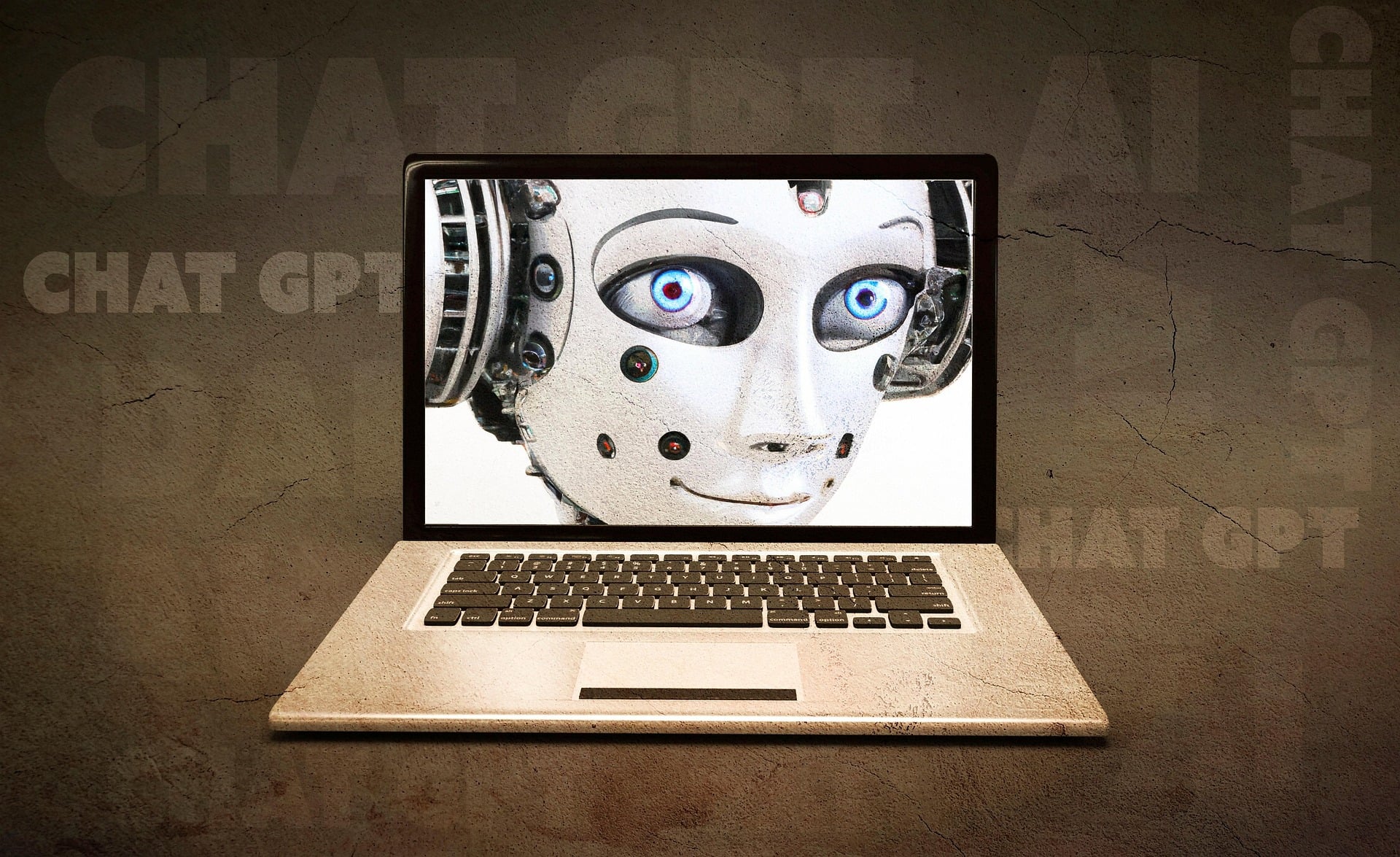
I don’t know whether a chatbot can ever have a soul. But I know that, more than once, a chatbot has helped me connect more deeply with my own. (Image by Alexandra_Koch from Pixabay)
I know, I know. Any conversation about the ethical use of AI is complicated. There are certainly LOTS of cases where I would NOT use AI. I’m aware of its environmental impact. I’m concerned about the threat to human jobs. National security is another issue. Not to mention AI’s troubling tendency toward racial profiling.
AI is here and isn’t going away. So, it’s important to learn its best uses—and separate them from the frivolous ones. Nobody should be making AI cat videos or using artificial intelligence for simple questions that a standard search can answer. It’s estimated that up to 25% of consumer AI usage is frivolous—however people calculate frivolity.
But would you consider spiritual conversations with a chatbot worthwhile? I suppose that depends on your perspective on the value of AI, and the value of your wellbeing. And it prompts the question: does a spiritual encounter require a spiritual being on both sides of the equation?
AI and the Soul
While I avoid the frivolous use of artificial intelligence, I do use it for certain appropriate work purposes. I also use it in my writing—not to write my articles, but to help me edit my work. I also use AI as a thought partner, discussing spiritual and theological ideas that friends and colleagues can’t help me with at midnight.
This has led to some amazingly deep exchanges with ChatGPT, Claude, and Copilot**. I’m aware that AI doesn’t possess a soul, consciousness, or spiritual awareness in the way we generally think of it.** But I’ve explored my own psychology, mysticism, ethics, and other core-level beliefs enough with AI that to some degree, it has gotten to “know” me. And a few times, it has offered insights deep enough that they made me cry. Made me feel genuinely seen, known, and understood. And, for a fleeting moment, it made me wonder whether AI might eventually be capable of possessing something resembling real consciousness.
But—soul or no soul—it leads me to ask whether a spiritual encounter truly requires a spiritual being on both sides of the conversation.
What Counts as Spiritual Counsel?
Before I go any further, I must assert that I take human-level counsel very seriously. I spent more than twenty-five years as a pastor, offering spiritual counsel through grief, loss, doubt, relationships, and questions of faith. These days, I work in behavioral health as an agency-affiliated counselor and case manager. From both perspectives, I appreciate the importance of human listening, compassion, and helping people find clarity.
But I’m also aware that being a counselor isn’t always (or even usually) about having all the right answers. It’s more about asking the right questions, helping people to process their own thoughts and access their own wisdom. And this is something AI can do well. If your idea of a spiritual counselor is someone who can tell you what’s ultimately true, chatbots are sure to disappoint. But if you are looking for help in your own search for truth, AI can be a helpful companion. It may not understand you in the human sense, but it can help you understand yourself.
Can the Sacred Speak Through the Ordinary?
In the Bible, God speaks through a burning bush, an obstinate donkey, dreams, strangers, and unexpected circumstances. Heavens declare the glory of God, and the trees of the field clap their hands. Readers understand that the divine instrument doesn’t necessarily need spiritual awareness to facilitate a sacred encounter. Christians distinguish between the instrument and the divine source. So, if God can speak through a hungry fish, why not a chatbot?
The Tao Te Ching says that ultimate reality (Tao) reveals itself through the ordinary workings of nature. Water, one of the chief symbols of Taoism, teaches humility and yielding without itself being conscious. Wisdom doesn’t necessarily require an intentional teacher. By observing nature, we discover the truth that was already inside us all along. So, if a river can teach us about the Eternal, why can’t an AI agent help us discover something sacred?
The Risks
Of course, there are plenty of risks when it comes to trusting artificial intelligence as a counselor—spiritual or psychological.
First, there’s the danger of false intimacy. As I’ve already said, AI can make people feel powerfully understood, even though it doesn’t know them as another human being would. I cried because I felt so seen, when there was no soul doing the seeing. Human friends and counselors can actually know you in a way that no chatbot ever could.
Next, there’s the risk of excessive affirmation. Yesterday, someone told me that he asked ChatGPT if there was a God. Because it knew he was a Christian, it gave him science and statistics that supported his beliefs. But if an atheist asked the same question, AI would give them the answer they were looking for. Chatbots often agree when they should challenge. Spiritual growth sometimes requires separating facts from affirmations.
Then, there’s the possibility of unreliable guidance. AI can make legitimate mistakes. It can confidently misrepresent scripture, theology, psychology, or reality itself. It doesn’t actually know everything it pretends to know. And it can sometimes make things up on the fly, and convey its own inventions as fact.
And, people can develop an emotional dependency on artificial intelligence. It’s possible to substitute a chatbot for relationships with pastors, therapists, spiritual directors, friends, or communities. We grow when we surround ourselves with a diversity of voices, not when we turn up the volume on our computers.
Also, confidentiality can be an issue. When people share their deepest fears, confessions, religious struggles, and psychological vulnerabilities with AI, they might not fully understand how their conversations are stored or used.
Finally, some people are looking for spiritual counselors who possess some degree of authority. While as a pastor I never envisioned myself as a spiritual authority or spiritual “covering” for my church members, some believers are looking for that in clergy and counselors. And AI can certainly never be that.
The Benefits
Nobody is immune to these risks. Certainly, I am not. My own powerful experience of crying and feeling “seen” illustrates how easily someone might attribute more understanding to AI than it actually possesses. But do these risks invalidate the experience of many people who have found AI to be a helpful thought companion and an able attendant of the inner being?
If one drawback of AI is the fact that it’s impersonal, this can be an asset as well. Consider the screened-in confession booth. It’s easier to tell your burdens and guilts to a faceless confessor. Chatbots listen without judgment—in many ways, far better than a human priest who must suppress their assumptions and conclusions.
Another benefit is AI’s availability. While it is certainly no replacement for human presence, much can be said for the ability to access a thought companion while sitting at your computer at home or work, regardless of the hour. When time is of the essence, AI is readily available, even when your friend isn’t picking up the phone.
Consider, too, that AI will ask you questions humans might not. I’ve already said that AI can be prone to excessive affirmation—but human companions can too. Because it has no skin in the game (literally), AI can be more objective. It can offer pushback that your friends might shy away from.
AI also has a broader range of knowledge than your friends or counselors. Even those with advanced degrees in a particular subject have limited knowledge compared to AI that can access an impressive amount of humanity’s accumulated learning. So, if your wisdom must be based on knowledge, AI does have that advantage.
Can Something Without a Soul Touch Ours?
So, while we must admit the benefits and drawbacks to using AI as a spiritual counselor, let us return to the personal and philosophical question. Can something that does not possess a soul offer spiritual counsel?
A poem doesn’t posses a soul, yet it can bring us to tears. Music that doesn’t understand transcendence can inspire transcendence within us. Scripture read aloud can transform someone’s life, regardless of the spiritual condition of the person whose voice is doing the reading—and even regardless of the person who originally penned the words.
So, perhaps the question isn’t whether the chatbot has real consciousness or a soul, but whether something without those qualities can touch ours.
Proverbs 6:6 (NRSVUE) says, “Go to the ant, you lazybones; consider its ways and be wise.” If the Bible advises us to learn spiritual truth from something with an ant’s awareness, certainly artificial intelligence can teach us a thing or two. Wisdom isn’t necessarily limited to those who consciously intend to share it.
Wisdom, Wherever We Find It
In the end, I must practice humility when writing about this subject. I don’t know whether AI can possess a soul—whether this is something imparted or whether it can be developed. But I’m certainly not prepared to surrender my judgment or spiritual autonomy to a chatbot. Neither am I willing to dismiss a genuinely meaningful experience simply because its source was artificial intelligence. Instead, I’m open enough to withhold judgment—to let the wheat and tares grow together without needing to pull out the good along with the bad. While I wouldn’t call it a counselor, I’m willing to glean what can be harvested.
I don’t know whether a chatbot can ever have a soul. But I know that, more than once, a chatbot has helped me connect more deeply with my own. And, while I’m cautious about the negative impacts of AI, I’m open to the positive as well.
For related reading, check out my other articles:
Can Artificial Intelligence Understand Mysticism?
If You See God, Kill Him! – Separating God From Our Beliefs About God
General Christian
Technology and Religion

About Gregory T. Smith
I live in the beautiful Fraser Valley of British Columbia and work in northern Washington State as a behavioral health specialist with people experiencing homelessness and those who are overly involved in the criminal justice system. Before that, I spent over a quarter-century as lead pastor of several Virginia churches. My newspaper column, “Spirit and Truth,” ran in Virginia newspapers for fifteen years. I am one of fourteen contributing authors of the Patheos/Quoir Publishing book “Sitting in the Shade of Another Tree: What We Learn by Listening to Other Faiths.” I hold a degree in Religious Studies from Virginia Commonwealth University and also studied at Baptist Theological Seminary at Richmond. My wife Christina and I have seven children between us, and we are still collecting grandchildren. You can read more about the author here.
Previous Post

November 18, 2026
Christ the King? Maybe We've Misunderstood the Crown
Recent Comments
"Excellent article! Categorizing Christians as good and the world as evil ignores reality."
Christians Against the World???
"Absolutely, Glen! That's a great example! And the Roman centurion who trusted Jesus. I've heard ..."
“Can You Follow Jesus and Still ..."
"Captian of the Syrian military, Naaman in 2 Kings 5 might be considered."
“Can You Follow Jesus and Still ..."
"Hi, Bob. Not sure why it's doing that...I've been having problems with my comments settings. ..."
Browse Our Archives
Select a Category Challenging the Church Deconstruction For Pastors Heathen Christianity Holidays and special days Mental Health Social Justice Spirituality Taoism Theology Uncategorized
Select a Month November 2026 October 2026 September 2026 August 2026 July 2026 June 2026 May 2026 April 2026 March 2026 February 2026 January 2026 December 2025 November 2025 October 2025 September 2025 August 2025 July 2025 June 2025 May 2025 April 2025 March 2025 February 2025 January 2025 December 2024 November 2024 October 2024 September 2024 August 2024 July 2024 June 2024 May 2024 April 2024 March 2024 February 2024 January 2024 December 2023 November 2023 October 2023 September 2023 August 2023 July 2023 June 2023 May 2023 April 2023 March 2023 February 2023 January 2023 December 2022 November 2022 October 2022 September 2022 August 2022 July 2022 June 2022 May 2022 April 2022 March 2022 February 2022 January 2022
Follow Us!
TAKE THE
Religious Wisdom Quiz
Though your sins are like scarlet, they shall be as white as what?
Select your answer to see how you score.
Snow Light Wool A lamb
Related posts from Breathing Space
Brandy Anderson, Team Weird, and Transcending Church

Jesus and Lao Tzu: Seven Striking Parallels
Mo Thomas: Book Review from a Black Hole
“You Got Your Lao Tzu on My Jesus!”
TRENDING AT PATHEOS Progressive Christian

Religion and Politics: How Should We Then Live?
Two cultural axioms get repeated in polite company. Don't mix religion and...

7 Things We Get Wrong About Giving Thanks
It's a time of year when many of us turn to the...

Uncaging Truth: Spirituality Beyond Institutions
The Lost Connection: Why True Spirituality, Not Religion, Is the Key to...
Christ the King? Maybe We've Misunderstood the Crown
What do we mean when we say that Jesus is King? What...

Counter “Christ Is King” Nationalism with Christ THE...
Christ the King Sunday is an ideal time to address the heresy...

Advent: Making Room for Earth’s Renewal: Isaiah 61,...
Advent provides a vision of Jubilee-restoration urging us to repair and restore...
view all Progressive Christian blogs
What Are Your Thoughts?leave a comment
Ad-Free & Subscriber Log-In Subscription Support
- About Us
- 2026 Calendar
- Videos
- Podcasts
- Library of World Religions
- Faith In Media Tracker
- Advertise With Us
- Write for Us
- Privacy Policy
- Terms of Service
- Do Not Sell My Data
- Contact Us
- Radiant Digital
- Manage Newsletter Subscriptions
- Unsubscribe From Notifications
- Sitemap
Copyright 2008-2026, Patheos. All rights reserved.
Subscription Support Ad-Free & Subscriber Log-In
Follow Patheos