
BuddhistCatholicContemplativeEvangelicalGeneral ChristianHinduJewishLatter-day SaintMuslimNew VisionsProgressive Christian
Beliefs
- Buddhist
- Catholic
- Contemplative
- Evangelical
- General Christian
- Hindu
- Jewish
- Latter-day Saint
- More Voices
- Muslim
- New Visions
- Pagan
- Progressive Christian
Topics
- Religion News
- Food and Religion
- Sports and Religion
- Religious Art
- Religious Music and Entertainment
- Religious Events
- History and Religion
- Style and Religion
- Politics and Religion
- Women in Religion
- Recreation Outdoors and Religion
- Business Finance and Religion
- Careers Workplace and Religion
- Education and Religion
- Family Parenting and Religion
- Health Fitness and Religion
- Home and Religion
- Relationships and Religion
- Technology and Religion
- Travel and Religion
Columnists
- Buddhist Columnists
- Business Finance and Religion Columnists
- Careers Workplace and Religion Columnists
- Catholic Columnists
- Contemplative Columnists
- Education and Religion Columnists
- Evangelists Columnists
- Family Parenting and Religion Columnists
- General Christian Columnists
- Health Fitness and Religion Columnists
- Hindu Columnists
- History and Religion Columnists
- Home and Religion Columnists
- Jewish Columnists
- More Voices Columnists
- Latter Day Columnists
- Muslim Columnists
- New Visions Columnists
- Nonreligious Columnists
- Pagan Columnists
- Politics and Religion Columnists
- Progressive Columnists
- Recreation Outdoors and Religion Columnists
- Relationships and Religion Columnists
- Religion News Columnists
- Religious Art Columnists
- Religious Events Columnists
- Religious Music and Entertainment Columnists
- Sports and Religion Columnists
- Style and Religion Columnists
- Technology and Religion Columnists
- Travel and Religion Columnists
- Women in Religion Columnists
Resource Library
- 2026 Calendar
- Library of World Religions
- The 100 Most Holy Places on Earth
- Patheos Answers
- Podcasts
- Videos
- Faith Leaders Database
- Anglican Episcopalian
- Bahai
- Baptist
- Buddhism
- Christianity
- Confucianism
- Eastern Orthodoxy
- Hinduism
- Holiness and Pentecostal
- ISKCON
- Islam
- Judaism
- Lutheran
- Methodist
- The Church of Jesus Christ of Latter-day Saints
- New Age
- Paganism
- Presbytarian and Reformed
- Protestantism
- Religion Behind the Scenes
- Roman Catholic
- Scientology
- Shia Islam
- Sikhism
- Sufism
- Sunni Islam
- Taoism
- Zen
- See all religions
Research Tools
 Ad-Free & Subscriber Log-In Subscription Support
Ad-Free & Subscriber Log-In Subscription Support
Follow Patheos 

- Trending:
- Forgiveness
- |
- Marriage
- |
- Consciousness
- |
- Death Penalty
- |
- Election
- |
- Halloween

-
Categories
- Home
- Progressive Christian
- Relationships and Religion
- Renaming God: If God Is Love, Then Is Love God?
Renaming God: If God Is Love, Then Is Love God?
Last updated on: May 3, 2026 at 3:44 am by Gregory T. Smith
Renaming God: If God Is Love, Then Is Love God? 2026-04-28T19:16:39-08:00 Gregory T. Smith
Patheos Explore the world's faith through different perspectives on religion and spirituality! Patheos has the views of the prevalent religions and spiritualities of the world.
The Bible says God is love. But when everyone claims to act in love, how do we know when “love” is actually God?
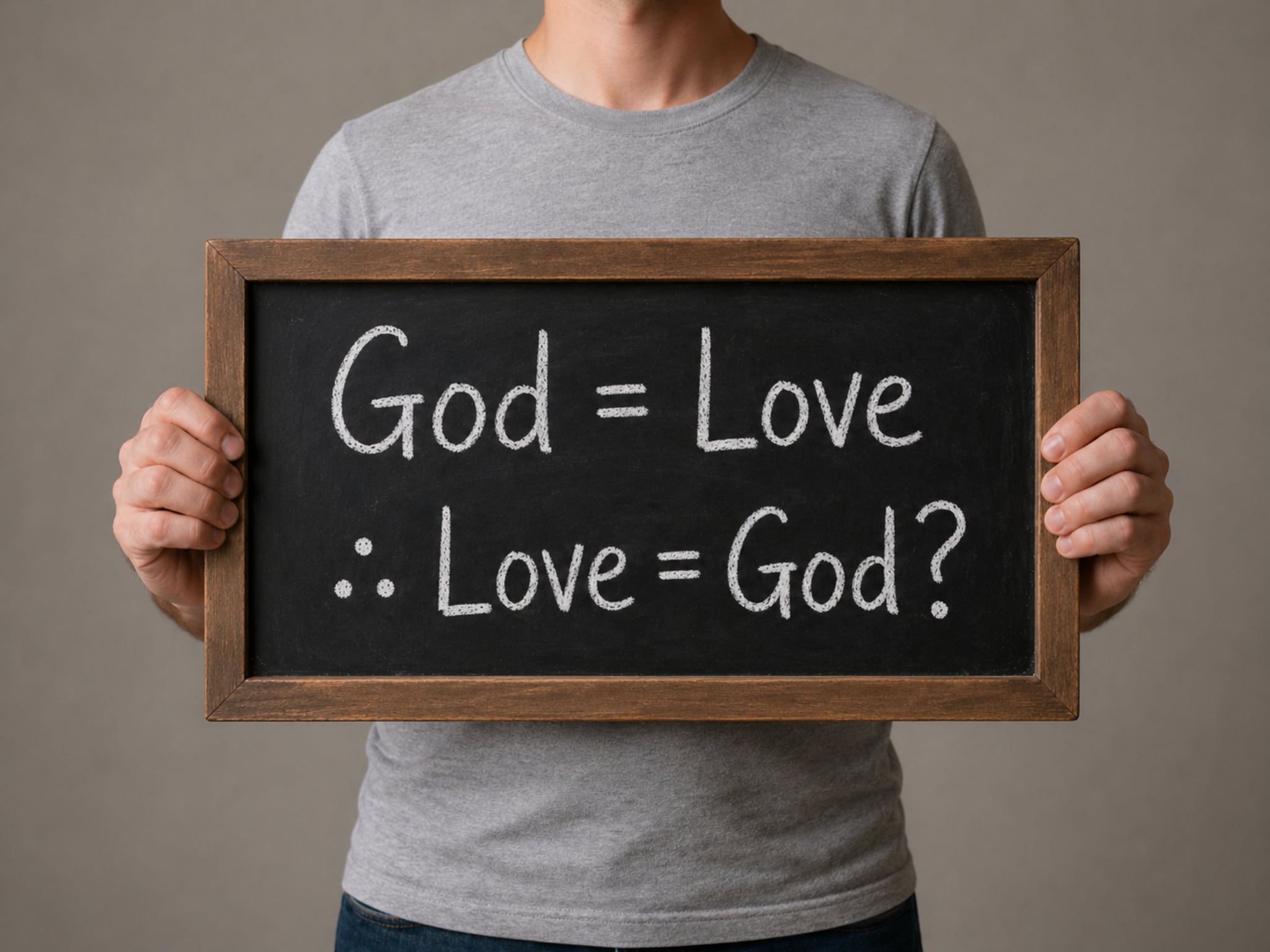
The question is, “Does this love reflect the character of God?” Or, for Christians, we might ask, “Does this love look like Jesus?” (Image created by Gregory T. Smith on OpenAI)
When Good Feels Like God
Wayne Dyer once wrote, “Feeling good is feeling God—our good feelings align us with Spirit.” Contrary to many religious notions, God is not the enemy of joy or a deity satisfied only when we wear a sour face. If “every good and perfect gift comes from above,” then we can often recognize God’s presence when we’re experiencing something good. This is why Dyer suggested that when we’re feeling good, we’re feeling God.
But this idea can also mislead us.
Not everything that feels good is God. Revenge, control, winning, being admired—all these can feel good. So can greed, ego, having the last word, addiction, and resentment. So, we have to be careful with quick equations like “God = Good, therefore, Good = God.” And we have to be careful with similar equations about God being love.
Renaming God
That is part of the reason I have been exploring this whole idea of “renaming God.” Not because the old names are useless, but because sometimes a new name—or an old name recovered—helps us see what we had missed. I have written about God as the Way, the Tao, Wellspring, Source, Light, Life, Host, Peace, the Center, the Hold, and the God of My Understanding. Each name opens a different window into who God is. None of them contains God completely. But each can help us let go of a cramped or fearful image of God and move toward something more alive, spacious, and true.
The same is true when we speak of God as Love.
God is Love
1 John 4:8 makes one of the boldest claims in all of Scripture: “God is love.” This does not mean God is merely loving, or that God sometimes acts lovingly. It doesn’t even mean that God has love as one divine quality among many. It simply says that God is love.
God = Love is a dangerous equation if we don’t handle it carefully. Because if God is love, then, in some sense, Love-with-a-capital-L can become one of the truest names for God. If God = Love, then Love reveals the essence of who God is. When we encounter real Love, we are touching the divine.
But the problem is that not everything we call love is Love.
When “Love” is Not Love
People use the word love for all kinds of things. We apply the word to pizza, old movies, our children, spouse, country, favorite team, and the feeling of being needed. The same word stretches so far—from casual preference to holy devotion—that it loses its meaning.
Worse than meaninglessness, love is one of the most abused words in human language.
An insecure partner may say love when they really mean control. A parent may call possession love. A nation may speak of love when it really means violence. Religious leaders may try to silence victims in the name of love. In many contexts, people have experienced shame, manipulation, and fear at the hands of people who claimed they were acting in love. Or even “with the love of Christ.”
So, no—not everything we call love is God.
Renaming God as Love
But maybe this is exactly why renaming God as Love matters. Because, if God is Love, then Love is not however we choose to define it. Love is not just a feeling, or intensity, or chemistry, or nostalgia. Love is not fear of loss or abandonment. It is not the warm glow we get when we receive what we wanted most. Love must be something far deeper.
The question is not simply, “Do I feel loving?” or “Do I feel loved?” The question is, “Does this love reflect the character of God?” Or, for Christians, we might ask, “Does this love look like Jesus?”
What Love Is—And Isn’t
In 1 Corinthians 13:4-8a, Paul gives us the classic definition of love. We hear it recited at weddings so often we can zone out when the passage is read. At the risk of boring you, I’ll share it here:
Love is patient, love is kind. It does not envy, it does not boast, it is not proud. It does not dishonor others, it is not self-seeking, it is not easily angered, it keeps no record of wrongs. Love does not delight in evil but rejoices with the truth. It always protects, always trusts, always hopes, always perseveres. Love never fails.
This passage becomes not only a litmus test for what love is, but also for what love isn’t.
If it is cruel, it is not Love.
If it humiliates, it is not Love.
If it controls, it is not Love.
If it keeps score forever, it is not Love.
If it demands that another person become smaller so I can feel larger, it is not Love.
If it needs lies in order to survive, it is not Love.
Whatever else it may be—desire, attachment, fear, power, ego, dependency, or loyalty—it is not the Love who is God. Nor is it the God who is Love.
This matters because many of us learned to confuse God with things like divine rejection, abandonment, punishment, humiliation, or threat. Our churches told us God loved us, but too often the love they showed us was mixed with terror.
Perfect Love
Terror should have no place in a Christian understanding of God**. 1 John 4:18 says, “There is no fear in love. But perfect love drives out fear.”**
This doesn’t mean that perfect love never confronts or corrects us. Real love tells the truth, burning away illusion and exposing what is false, selfish, or cruel in us. But love doesn’t destroy beloved children of God in order to make a point. Instead, divine Love heals, frees, restores, and makes room for truth without weaponizing shame against people who trusted it.
The Shape of Love
So, maybe we can say it this way: God is love. Therefore, true Love is of God.
But we must never mistake false love for God. If we do, then love becomes another idol, made not of silver or gold but of our own needs, wounds, fears, desires, and attachments. Cast in this mold, the idol of false love becomes narcissistic and looks like us.
But real Love looks different. It is patient and kind. It tells the truth. It doesn’t dominate, humiliate, or cling in fear. True love doesn’t demand worship or turn another person into a possession. It doesn’t paint cruelty as righteousness. And it never uses Scripture as a weapon so it can call the wound holy.
Love is not sentimentality or permission to do anything we want. It is not the avoidance of hard truth, but the deepest form of grace and peace.
This is why Jesus said the greatest of all commandments are to love God and love our neighbor as ourselves. Do this, he said, and you have fulfilled the law and the prophets. This doesn’t mean that love is easier than law, or antinomian (lawless) “freedom in Christ.” Instead, it means that by living in divine Love, we naturally fulfill the spiritual principle the law is based on. Love is what the law was always striving for.
So, by renaming God as Love, we are not making God smaller. On the contrary—we are making our understanding of love larger, truer, and harder to fake.
Love Looks Like Jesus
For Christians, this Love isn’t an abstract ideal. It’s a person. Love looks like Jesus. Jesus touched lepers. He ate with sinners, welcomed children, crossed boundaries, and confronted religious hypocrisy. He washed feet. Jesus forgave enemies and refused to answer violence with violence. He gave himself away without becoming cruel, cynical, or afraid. He said, “No one has greater love than this, to lay down one’s life for one’s friends.”
This kind of love isn’t passive. Modeled after Jesus, it rejects abuse and doesn’t let everyone else trample it. Jesus laid down his life, but he did not surrender his soul to the powers that killed him. Jesus’s love was not weakness, but the embodiment of courage without hatred. It was truth without cruelty, and power without domination. That is the kind of Love that can be trusted as a name for God.
This understanding of embodied Love gives us a way to test our images of God. If we imagine a God who is petty, cruel, controlling, abusive, or constantly offended, then we may not be imagining the God who is Love. We may be imagining our fear, or transferring an image of our parents onto the face of God. We might be remembering an old pastor or imagining the voice of shame inside our own heads.
But the God revealed in Jesus looks like Love: patient, kind, truth-telling, fear-casting, foot-washing, enemy-forgiving, boundary-crossing, life-giving Love. Love that doesn’t insist on its own way yet somehow remains the Way Itself.
Whenever Real Love Is Present
Renaming God as Love doesn’t make God vague or sappy. It is not to say that whatever feels loving must be divine. It is to let the Love who is God expose every false version of love we have inherited, practiced, feared, or worshiped. Because if God is Love, then Love is not weak.
Love is ultimate reality. It is the ground of all being. It is the divine fire at the center of the universe, the voice calling us out of fear, and the hand reaching toward the wounded. Love is the table where enemies gather to become family. It is the cross, the empty tomb, and the ascension of Christ to the throne of our hearts.
Christians can feel free to rename God as Love—the Bible already did it. And wherever real Love is present—healing, freeing, forgiving, feeding, sheltering, truth-telling, fear-casting Love—we are closer to God than we may have known.
Like what you see here? Visit my Patreon for free content and to unlock special offers. Click here to join.
For related reading, check out my other articles:
- Renaming God Can Rescue Your Floundering Faith Today
- Why Renaming God “The Host” Appeals to Every Faith Tradition
- Renaming God: Could “Peace” Be Another Name for the Divine?
General Christian
Relationships and Religion
Family, Parenting and Religion

About Gregory T. Smith
I live in the beautiful Fraser Valley of British Columbia and work in northern Washington State as a behavioral health specialist with people experiencing homelessness and those who are overly involved in the criminal justice system. Before that, I spent over a quarter-century as lead pastor of several Virginia churches. My newspaper column, “Spirit and Truth” ran in Virginia newspapers for fifteen years. I am one of fourteen contributing authors of the Patheos/Quoir Publishing book “Sitting in the Shade of another Tree: What We Learn by Listening to Other Faiths.” I hold a degree in Religious Studies from Virginia Commonwealth University, and also studied at Baptist Theological Seminary at Richmond. My wife Christina and I have seven children between us, and we are still collecting grandchildren. You can read more about the author here.
Previous Post

April 27, 2026
Prayer in One Hand, Humor in the Other
Next Post

May 11, 2026 Refusing to Bow to Trump's Golden Idol
Recent Comments
"Absolutely, Glen! That's a great example! And the Roman centurion who trusted Jesus. I've heard ..."
“Can You Follow Jesus and Still ..."
"Captian of the Syrian military, Naaman in 2 Kings 5 might be considered."
“Can You Follow Jesus and Still ..."
"Hi, Bob. Not sure why it's doing that...I've been having problems with my comments settings. ..."
"OMG, who CARES?!?!"
“Can You Follow Jesus and Still ..."
Browse Our Archives
Select a Category Challenging the Church Deconstruction For Pastors Heathen Christianity Holidays and special days Mental Health Social Justice Spirituality Taoism Theology Uncategorized
Select a Month October 2026 September 2026 August 2026 July 2026 June 2026 May 2026 April 2026 March 2026 February 2026 January 2026 December 2025 November 2025 October 2025 September 2025 August 2025 July 2025 June 2025 May 2025 April 2025 March 2025 February 2025 January 2025 December 2024 November 2024 October 2024 September 2024 August 2024 July 2024 June 2024 May 2024 April 2024 March 2024 February 2024 January 2024 December 2023 November 2023 October 2023 September 2023 August 2023 July 2023 June 2023 May 2023 April 2023 March 2023 February 2023 January 2023 December 2022 November 2022 October 2022 September 2022 August 2022 July 2022 June 2022 May 2022 April 2022 March 2022 February 2022 January 2022
Follow Us!
TAKE THE
Religious Wisdom Quiz
What event occurred immediately after Jesus died?
Select your answer to see how you score.
The temple curtain tore A great flood An earthquake split the land The sun turned red
Related posts from Breathing Space

“Can You Follow Jesus and Still Practice Smudging?”

Lead a Church Study of “Jesus and Lao...

I Met Papa Before I Read The Shack

The Guest Who Stayed at an Unfriendly Table
TRENDING AT PATHEOS Progressive Christian

What Being a Modern-Day Apostle Means to Me
In my last column, I discussed the ins and outs of modern-day...

Did Ancient China Once Worship the God of...
Across human history, a common thread weaves through the origins of the...

Love Your Neighbor – Including Earth-Kin: Lev. 19,...
God’s command to love your neighbor means acting in an ethical and...

Lead a Church Study of “Jesus and Lao...
Guest writer Jack Thomas (The Irreverent Reverend) reflects on leading his church...

Pastoral Wisdom for Responding to Sermon Pushback
Getting sermon pushback on your social justice sermon? Learn practical, Proverbs-based strategies...

Principles for Understanding the Apostolic Ministry Today
Whenever people discover that my formal ministry title is "apostle," as in...
view all Progressive Christian blogs
What Are Your Thoughts?leave a comment
Ad-Free & Subscriber Log-In Subscription Support
- About Us
- 2026 Calendar
- Videos
- Podcasts
- Library of World Religions
- Faith In Media Tracker
- Advertise With Us
- Write for Us
- Privacy Policy
- Terms of Service
- Do Not Sell My Data
- Contact Us
- Radiant Digital
- Manage Newsletter Subscriptions
- Unsubscribe From Notifications
- Sitemap
Copyright 2008-2026, Patheos. All rights reserved.
Subscription Support Ad-Free & Subscriber Log-In
Follow Patheos