
BuddhistCatholicContemplativeEvangelicalGeneral ChristianHinduJewishLatter-day SaintMuslimNew VisionsProgressive Christian
Beliefs
- Buddhist
- Catholic
- Contemplative
- Evangelical
- General Christian
- Hindu
- Jewish
- Latter-day Saint
- More Voices
- Muslim
- New Visions
- Pagan
- Progressive Christian
Topics
- Religion News
- Food and Religion
- Sports and Religion
- Religious Art
- Religious Music and Entertainment
- Religious Events
- History and Religion
- Style and Religion
- Politics and Religion
- Women in Religion
- Recreation Outdoors and Religion
- Business Finance and Religion
- Careers Workplace and Religion
- Education and Religion
- Family Parenting and Religion
- Health Fitness and Religion
- Home and Religion
- Relationships and Religion
- Technology and Religion
- Travel and Religion
Columnists
- Buddhist Columnists
- Business Finance and Religion Columnists
- Careers Workplace and Religion Columnists
- Catholic Columnists
- Contemplative Columnists
- Education and Religion Columnists
- Evangelists Columnists
- Family Parenting and Religion Columnists
- General Christian Columnists
- Health Fitness and Religion Columnists
- Hindu Columnists
- History and Religion Columnists
- Home and Religion Columnists
- Jewish Columnists
- More Voices Columnists
- Latter Day Columnists
- Muslim Columnists
- New Visions Columnists
- Nonreligious Columnists
- Pagan Columnists
- Politics and Religion Columnists
- Progressive Columnists
- Recreation Outdoors and Religion Columnists
- Relationships and Religion Columnists
- Religion News Columnists
- Religious Art Columnists
- Religious Events Columnists
- Religious Music and Entertainment Columnists
- Sports and Religion Columnists
- Style and Religion Columnists
- Technology and Religion Columnists
- Travel and Religion Columnists
- Women in Religion Columnists
Resource Library
- 2026 Calendar
- Library of World Religions
- The 100 Most Holy Places on Earth
- Patheos Answers
- Podcasts
- Videos
- Faith Leaders Database
- Anglican Episcopalian
- Bahai
- Baptist
- Buddhism
- Christianity
- Confucianism
- Eastern Orthodoxy
- Hinduism
- Holiness and Pentecostal
- ISKCON
- Islam
- Judaism
- Lutheran
- Methodist
- The Church of Jesus Christ of Latter-day Saints
- New Age
- Paganism
- Presbytarian and Reformed
- Protestantism
- Religion Behind the Scenes
- Roman Catholic
- Scientology
- Shia Islam
- Sikhism
- Sufism
- Sunni Islam
- Taoism
- Zen
- See all religions
Research Tools
 Ad-Free & Subscriber Log-In Subscription Support
Ad-Free & Subscriber Log-In Subscription Support
Follow Patheos 

- Trending:
- Forgiveness
- |
- Marriage
- |
- Consciousness
- |
- Death Penalty
- |
- Election
- |
- Halloween

-
Categories
- Home
- Progressive Christian
- Family, Parenting and Religion
- What are the Pitfalls of Part-Time Ministry?
What are the Pitfalls of Part-Time Ministry?
Last updated on: April 6, 2026 at 3:44 am by Gregory T. Smith
What are the Pitfalls of Part-Time Ministry? 2026-03-15T10:44:29-08:00 Gregory T. Smith
Patheos Explore the world's faith through different perspectives on religion and spirituality! Patheos has the views of the prevalent religions and spiritualities of the world.
There’s nothing wrong with bivocational ministry, but it does come with a few pitfalls. In my last article, I made the case for part-time ministry. What are they, and how can you avoid them?
To be fair, bivocational ministry has its own risks. I would do you a disservice if I presented the pros of a part-time pastorate without also discussing the dangers. But, in my mind, the benefits far outweigh the drawbacks. My last article listed twelve pros, but I could only think of three cons of bivocational ministry:
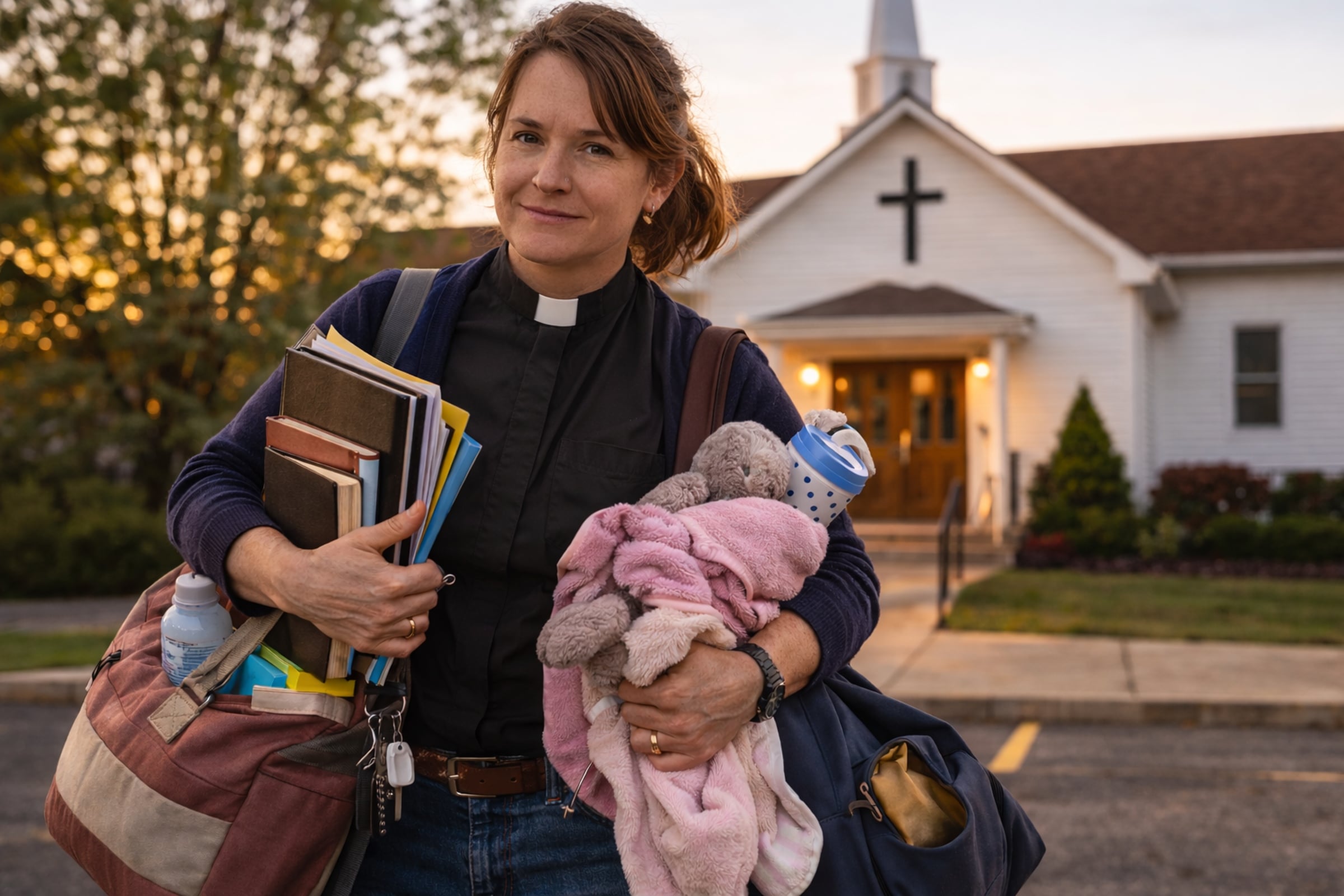
Part-time pastorates may be one of the best ways to keep pastors free, churches grounded, and ministry shared by the whole body rather than outsourced to a professional class. (Image created by Gregory T. Smith on Open AI)
The Dangers of Bivocational Ministry
1. It can lead to exhaustion.
Some churches will still expect full-time output from someone who is only partially paid. My first church was that way. While they expected too much work, they talked about how little they paid me as a way of “keeping the pastor humble.” That is not noble. That is just overwork with a halo.
2. Your family could feel the pinch.
Anytime somebody works a full-time job and adds on a part-time
3. It can be financially risky.
I’ve already said that bivocational ministry can be financially freeing—but it can also be financially risky, depending on how you do it. It’s risky if you have two part-time jobs, one ministerial and the other secular. The problem with that (assuming each is 20 hours per week) is that part-time jobs pay small salaries and offer no benefits. That’s no good financial stewardship for you and your family. So, I do not suggest approaching ministry in a financially risky way.
What I am suggesting is that you work full-time in a secular job with good pay and benefits, and then church work becomes a side gig. This way, you avoid financial risk. If your church salary is “extra” money, it gives you the freedom to say what you feel called to say without needing to please people. It also gives you freedom to walk away, should you feel led to do that. In this way, you avoid financial risk.
Smaller, Humbler, and Less Polished
I still believe God calls people into ministry. I just no longer assume that calling should usually lead to full-time professional clergy. Maybe the healthier model is smaller, humbler, and less polished. Maybe the church does not need more executives with master’s degrees. Yes—I believe religious education is important, but why pay for a master’s degree for a side-gig of ten hours a week? The church needs more shepherds who still know what it feels like to live and work in the same world as the people they serve, not ministers who live in an academic ivory tower.
Quiet Quitting the Church
In my article, “Pastors are Quiet Quitting the Church,” I discussed the factors that lead to clergy burnout**. As a result of that exhaustion, many full-time pastors continue in ministry because they are financially dependent on the paycheck.** Their hearts are no longer in it, and they feel stuck—unable to either leave or fully engage.
Bivocational ministry keeps pastors financially free. It also gives them something else to focus on, so the church doesn’t become so all-consuming. This helps the ministry to remain a passion and a pastime rather than a prison. (Check out the above article’s sequel, “Pastors—Quit Quiet Quitting the Church,” for more ideas on how to survive ministry.)
A Bivocational Role Model
As I said in my last article, when I felt called to ministry, bivocational ministry was the last thing on my mind. Out of five churches I served in Virginia, only one was part-time, and that was when I was in seminary. I falsely believed that full-time was the best way to go and that bivocational ministry was second-best. I didn’t understand that it could be more balanced.
When I was a graduate student and newly ordained, I visited a particular church as a revival speaker. The old pastor (he had gray hair, so in my twenties, that meant he was old) was bivocational. He and his wife took such care of their congregation that I wondered how he could do it. He kept his passion by serving the church part-time. In his other profession, he was a butcher. By balancing two careers, he kept a foot in the real world, prevented his family from depending on church income, and remained humble and healthily marginal in the church he served. I didn’t see that at the time—all I saw was a man who “had to work two jobs,” rather than someone who “got to do ministry as a side calling.” While I felt great affection for the pastor, I must admit I didn’t fully appreciate his decision to remain part-time. Unfortunately, I didn’t allow him to be a bivocational role model. If I’d followed his example, I might have been better off.
Clergy and Church Both Have Callings
Do you feel called to be a pastor? Consider bivocational ministry. Yes, it has pitfalls. But in my view, the benefits far outweigh the risks. Part-time pastorates may be one of the best ways to keep pastors free, churches grounded, and ministry shared by the whole body rather than outsourced to a professional class.
If you’d like to support the work and join me around the campfire for extra practices and audio reflections, you can find my Patreon here: [https://www.patreon.com/cw/GregoryTSmith]
For related reading, check out my other articles:
- “Bed Bath and the Great Beyond: What Can Dying Churches Learn?”
- “Pastors Job Hunting in the Secular World”
- “Pastors Leaving Ministry: Crafting Winning Secular Résumés”
General Christian
Family, Parenting and Religion
Careers, Workplace and Religion
Previous Post

March 30, 2026
Called to Be a Pastor? Consider Bivocational Ministry
Next Post

April 13, 2026 How Haiku Can Deepen Christian Spirituality
Recent Comments
"Absolutely, Glen! That's a great example! And the Roman centurion who trusted Jesus. I've heard ..."
“Can You Follow Jesus and Still ..."
"Captian of the Syrian military, Naaman in 2 Kings 5 might be considered."
“Can You Follow Jesus and Still ..."
"Hi, Bob. Not sure why it's doing that...I've been having problems with my comments settings. ..."
"OMG, who CARES?!?!"
“Can You Follow Jesus and Still ..."
Browse Our Archives
Select a Category Challenging the Church Deconstruction For Pastors Heathen Christianity Holidays and special days Mental Health Social Justice Spirituality Taoism Theology Uncategorized
Select a Month October 2026 September 2026 August 2026 July 2026 June 2026 May 2026 April 2026 March 2026 February 2026 January 2026 December 2025 November 2025 October 2025 September 2025 August 2025 July 2025 June 2025 May 2025 April 2025 March 2025 February 2025 January 2025 December 2024 November 2024 October 2024 September 2024 August 2024 July 2024 June 2024 May 2024 April 2024 March 2024 February 2024 January 2024 December 2023 November 2023 October 2023 September 2023 August 2023 July 2023 June 2023 May 2023 April 2023 March 2023 February 2023 January 2023 December 2022 November 2022 October 2022 September 2022 August 2022 July 2022 June 2022 May 2022 April 2022 March 2022 February 2022 January 2022
Follow Us!
TAKE THE
Religious Wisdom Quiz
What city is known as the birthplace of Jesus?
Select your answer to see how you score.
Nazareth Galilee Jerusalem Bethlehem
Related posts from Breathing Space

“Can You Follow Jesus and Still Practice Smudging?”

Lead a Church Study of “Jesus and Lao...

The Guest Who Stayed at an Unfriendly Table

When Being a Good Guest Is Better than...
TRENDING AT PATHEOS Progressive Christian

What Being a Modern-Day Apostle Means to Me
In my last column, I discussed the ins and outs of modern-day...

Did Ancient China Once Worship the God of...
Across human history, a common thread weaves through the origins of the...

Love Your Neighbor – Including Earth-Kin: Lev. 19,...
God’s command to love your neighbor means acting in an ethical and...

Lead a Church Study of “Jesus and Lao...
Guest writer Jack Thomas (The Irreverent Reverend) reflects on leading his church...

Pastoral Wisdom for Responding to Sermon Pushback
Getting sermon pushback on your social justice sermon? Learn practical, Proverbs-based strategies...

Principles for Understanding the Apostolic Ministry Today
Whenever people discover that my formal ministry title is "apostle," as in...
view all Progressive Christian blogs
What Are Your Thoughts?leave a comment
Ad-Free & Subscriber Log-In Subscription Support
- About Us
- 2026 Calendar
- Videos
- Podcasts
- Library of World Religions
- Faith In Media Tracker
- Advertise With Us
- Write for Us
- Privacy Policy
- Terms of Service
- Do Not Sell My Data
- Contact Us
- Radiant Digital
- Manage Newsletter Subscriptions
- Unsubscribe From Notifications
- Sitemap
Copyright 2008-2026, Patheos. All rights reserved.
Subscription Support Ad-Free & Subscriber Log-In
Follow Patheos