
BuddhistCatholicContemplativeEvangelicalGeneral ChristianHinduJewishLatter-day SaintMuslimNew VisionsProgressive Christian
Beliefs
- Buddhist
- Catholic
- Contemplative
- Evangelical
- General Christian
- Hindu
- Jewish
- Latter-day Saint
- More Voices
- Muslim
- New Visions
- Pagan
- Progressive Christian
Topics
- Religion News
- Food and Religion
- Sports and Religion
- Religious Art
- Religious Music and Entertainment
- Religious Events
- History and Religion
- Style and Religion
- Politics and Religion
- Women in Religion
- Recreation Outdoors and Religion
- Business Finance and Religion
- Careers Workplace and Religion
- Education and Religion
- Family Parenting and Religion
- Health Fitness and Religion
- Home and Religion
- Relationships and Religion
- Technology and Religion
- Travel and Religion
Columnists
- Buddhist Columnists
- Business Finance and Religion Columnists
- Careers Workplace and Religion Columnists
- Catholic Columnists
- Contemplative Columnists
- Education and Religion Columnists
- Evangelists Columnists
- Family Parenting and Religion Columnists
- General Christian Columnists
- Health Fitness and Religion Columnists
- Hindu Columnists
- History and Religion Columnists
- Home and Religion Columnists
- Jewish Columnists
- More Voices Columnists
- Latter Day Columnists
- Muslim Columnists
- New Visions Columnists
- Nonreligious Columnists
- Pagan Columnists
- Politics and Religion Columnists
- Progressive Columnists
- Recreation Outdoors and Religion Columnists
- Relationships and Religion Columnists
- Religion News Columnists
- Religious Art Columnists
- Religious Events Columnists
- Religious Music and Entertainment Columnists
- Sports and Religion Columnists
- Style and Religion Columnists
- Technology and Religion Columnists
- Travel and Religion Columnists
- Women in Religion Columnists
Resource Library
- 2026 Calendar
- Library of World Religions
- The 100 Most Holy Places on Earth
- Patheos Answers
- Podcasts
- Videos
- Faith Leaders Database
- Anglican Episcopalian
- Bahai
- Baptist
- Buddhism
- Christianity
- Confucianism
- Eastern Orthodoxy
- Hinduism
- Holiness and Pentecostal
- ISKCON
- Islam
- Judaism
- Lutheran
- Methodist
- The Church of Jesus Christ of Latter-day Saints
- New Age
- Paganism
- Presbytarian and Reformed
- Protestantism
- Religion Behind the Scenes
- Roman Catholic
- Scientology
- Shia Islam
- Sikhism
- Sufism
- Sunni Islam
- Taoism
- Zen
- See all religions
Research Tools
 Ad-Free & Subscriber Log-In Subscription Support
Ad-Free & Subscriber Log-In Subscription Support
Follow Patheos 

- Trending:
- Forgiveness
- |
- Marriage
- |
- Consciousness
- |
- Death Penalty
- |
- Election
- |
- Halloween

-
Categories
- Home
- Progressive Christian
- Politics and Religion
- Seeing Both Sides: Jesus, Sinners, and Modern Blind Spots
Seeing Both Sides: Jesus, Sinners, and Modern Blind Spots
Last updated on: February 16, 2026 at 3:59 am by Gregory T. Smith
Seeing Both Sides: Jesus, Sinners, and Modern Blind Spots 2026-01-26T22:02:37-08:00 Gregory T. Smith
Patheos Explore the world's faith through different perspectives on religion and spirituality! Patheos has the views of the prevalent religions and spiritualities of the world.
Many worship a Jesus who forgives personal sin. Others follow a Jesus who fixes systemic injustice. The Gospels reveal One who does both.
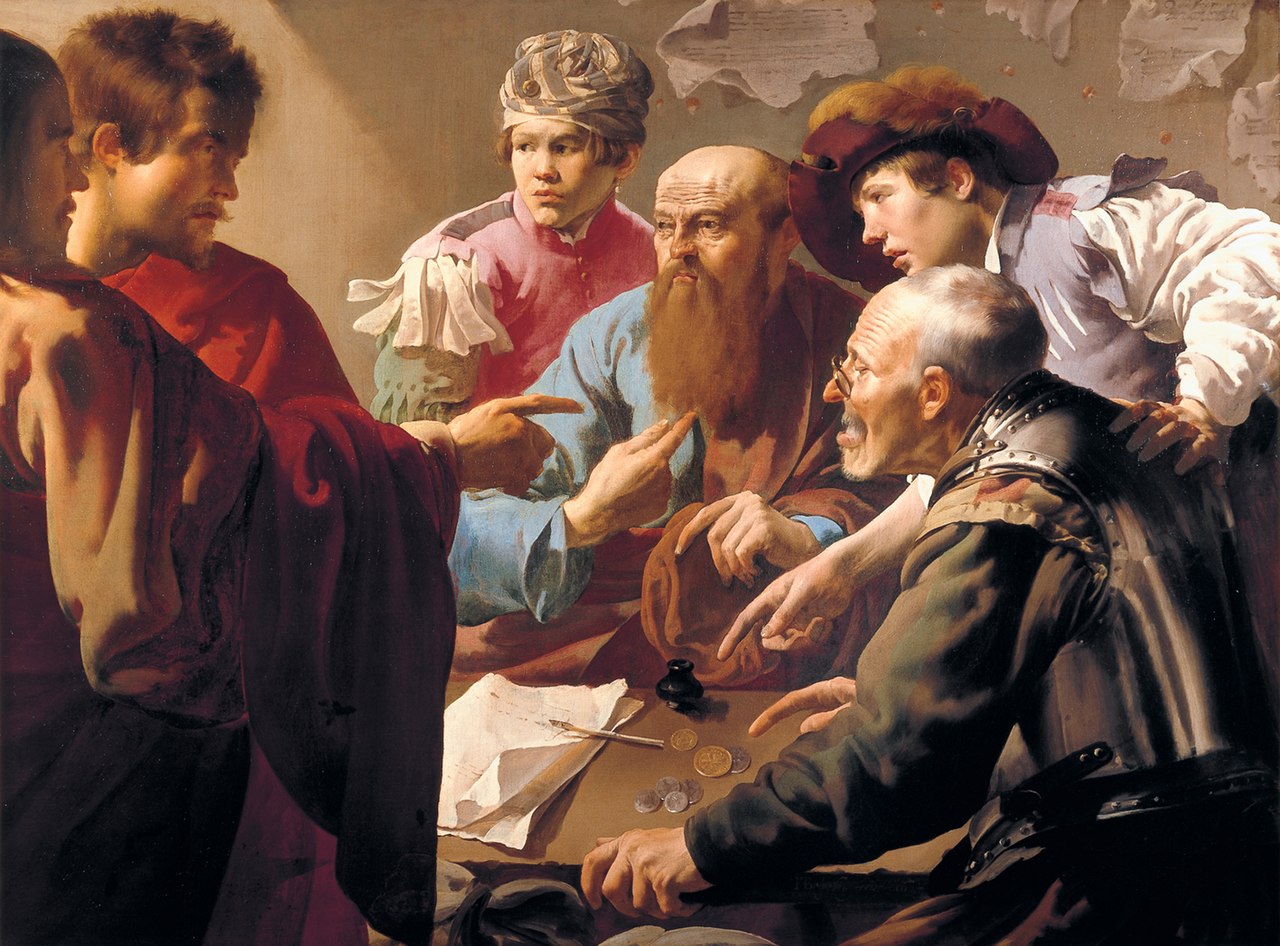
In the end, Jesus shows us that both personal and systemic transformation are part of the same journey. (Hendrick ter Brugghen, Public domain, via Wikimedia Commons)

A friend who was an Episcopal priest once told me his observation that mainline Protestants tend to define sin primarily as systemic injustice, while evangelicals often understand sin mainly as moral failure. These tendencies are not universal, but they are common enough to notice. Jesus did not engage in such dualistic either/or thinking but became a “friend of sinners” in both camps.
It’s time we examine this comforting phrase and let it make us uncomfortable. Who were these “sinners” that Jesus befriended, and why do the Gospels mention them so consistently? When we read carefully, two groups keep appearing: tax collectors and women labeled as immoral, often described as prostitutes. These are not random examples. They point to two very different—and deeply connected—ways of understanding sin that religious communities have historically used to name brokenness.
Two Kinds of Brokenness: Systemic and Personal
In Jesus’s time, tax collectors were not IRS agents—the sort you don’t want to look at your taxes, but you might barbecue with on the weekends. They were collaborators in a larger system of economic exploitation. The Roman government required them to extract a certain amount of taxes from the population but allowed them to collect additional money—often by effectively shaking people down—for however much they could, to their own profit. They were also permitted the service of Roman soldiers as their goon squad.
In Luke 5:27–32, Jesus calls Levi, a tax collector, to follow him. In Luke 19:1–10, Jesus seeks out Zacchaeus, another tax collector, whose encounter with Jesus leads him to repair the harm he has caused. These stories display Jesus’s love for those embroiled in what we might now call systemic injustice: sin buried in structures, incentives, and institutions.
On the other side are stories like the woman caught in adultery (John 8:1-11), and the “sinful” woman who anoints Jesus’s feet (Luke 7:36-50). Though the Gospels don’t explicitly identify either of these women as sex workers, Jesus elsewhere explicitly refers to “tax collectors and prostitutes” as those with whom he was known to associate. Jesus shows compassion and offers them dignity and a fresh start. This pairing is not a random sampling, but an intentional contrast between two kinds of brokenness: systemic and personal—and the religious habit of reducing both to labels.
The Systemic Side of Personal Sin—and Vice Versa
It’s important to recognize that these two sides are often intertwined. Those seen as having moral failures—represented by prostitutes in this case but not limited to those individuals—are frequently caught in systemic problems such as poverty or exploitation. In many cases, the moral label itself functions as a way to ignore those systemic realities. At the same time, those who perpetuate systemic injustices often have personal sin at the root—like greed or hunger for power. Personal and systemic sin are not opposites; they feed each other. If we’re going to focus on one, we must be willing to consider the other.
Our Own Blind Spots
Because of this connection, Jesus invites us to examine our own blind spots. If we focus only on systemic sin, we might overlook basic moral issues as unimportant. If we focus only on personal purity, we might miss the larger systems of oppression in which we are participants. In Matthew 7:3-5, Jesus tells us to remove the plank from our own eye before addressing the speck in our neighbor’s. This is a call to humility—not only about our own personal behavior, but also about the systems we support, excuse, or benefit from.
Practical Ways to Explore Blind Spots
How can you do this introspection? You might try having conversations with people who see things differently, listening thoughtfully to perspectives you might not otherwise consider. Or you could try some reflective journaling. Ask yourself where you might be missing something. Experiment by reading scripture through a different lens, reading commentaries or exposing yourself to traditions that challenge your usual perspective. The goal is not to abandon conviction, but to deepen it through personal encounter.
Expand Your Friendships
I have seen this in my own life, as I have made friends with people of other faiths and backgrounds. At one point, while pastoring a rural Baptist church and also making friends with gay Wiccans, I got called on the carpet at a church business meeting. In Sitting in the Shade of Another Tree, I wrote:
My heart fell when a deacon said, “Pastor, some of us are getting concerned about the kinds of people you’ve been spending time with. The community is beginning to talk about your choice of friends.” I was certain the jig was up until the deacon continued, “Yes—all those Presbyterian, Methodist, and Lutheran pastors!” Can’t you make friends with the Baptist ministers instead?”
That deacon’s blind spots were so huge that he thought ecumenical Christian relationships were a problem. I can only imagine how alarmed he might have been had he realized that some of my closest friendships fell even farther outside his moral and theological categories.
Exploring your blind spots means hanging out with people who might get you in trouble if the religious folks find out about it. But it will help you get rid of your blind spots. You may discover areas in your own life that need improvement or repentance—including your tendency to label the sins of others before considering yourself. Before you know it, you’ll be seeing God in all kinds of people—not because God is those people, but because God is never absent from them —when Jesus spent time with tax collectors and prostitutes. He got to know them as people, not as labels. And the grace he gave them looked less like forgiveness and more like acceptance and affirmation, with an invitation to a broad view of God and the world.
A Call to Embrace the Full Picture
In the end, Jesus shows us that both personal and systemic transformation are part of the same journey. By recognizing our blind spots—whether they are individual moral struggles or the systems we support—we move closer to the kind of holistic faith Jesus embodied. Our vision sharpens when compassion replaces certainty.
So, I invite you to embrace a spirit of humility and curiosity. Have those good conversations with people who help you ask deeper questions. Let both personal and systemic insights shape your walk of faith. In doing so, you’ll get a fuller picture of what it means to be a Jesus-follower in a complex world.
For related reading, check out my other articles:
- The Gay Subtext of Jesus Revolution
- Christians and Third-Way Thinking
- Jesus and Trauma-Informed Care
General Christian
Politics and Religion
Home and Religion
tax collectors and prostitutes

About Gregory T. Smith
I live in the beautiful Fraser Valley of British Columbia and work in northern Washington State as a behavioral health specialist with people experiencing homelessness and those who are overly involved in the criminal justice system. Before that, I spent over a quarter-century as lead pastor of several Virginia churches. My newspaper column, “Spirit and Truth” ran in Virginia newspapers for fifteen years. I am one of fourteen contributing authors of the Patheos/Quoir Publishing book “Sitting in the Shade of another Tree: What We Learn by Listening to Other Faiths.” I hold a degree in Religious Studies from Virginia Commonwealth University, and also studied at Baptist Theological Seminary at Richmond. My wife Christina and I have seven children between us, and we are still collecting grandchildren. You can read more about the author here.
Previous Post

February 9, 2026
Renaming God: When You Need God to Hold You
Next Post

February 23, 2026 How Household Shrines Create Breathing Space in Your Home
Recent Comments
"Absolutely, Glen! That's a great example! And the Roman centurion who trusted Jesus. I've heard ..."
“Can You Follow Jesus and Still ..."
"Captian of the Syrian military, Naaman in 2 Kings 5 might be considered."
“Can You Follow Jesus and Still ..."
"Hi, Bob. Not sure why it's doing that...I've been having problems with my comments settings. ..."
"OMG, who CARES?!?!"
“Can You Follow Jesus and Still ..."
Browse Our Archives
Select a Category Challenging the Church Deconstruction For Pastors Heathen Christianity Holidays and special days Mental Health Social Justice Spirituality Taoism Theology Uncategorized
Select a Month October 2026 September 2026 August 2026 July 2026 June 2026 May 2026 April 2026 March 2026 February 2026 January 2026 December 2025 November 2025 October 2025 September 2025 August 2025 July 2025 June 2025 May 2025 April 2025 March 2025 February 2025 January 2025 December 2024 November 2024 October 2024 September 2024 August 2024 July 2024 June 2024 May 2024 April 2024 March 2024 February 2024 January 2024 December 2023 November 2023 October 2023 September 2023 August 2023 July 2023 June 2023 May 2023 April 2023 March 2023 February 2023 January 2023 December 2022 November 2022 October 2022 September 2022 August 2022 July 2022 June 2022 May 2022 April 2022 March 2022 February 2022 January 2022
Follow Us!
TAKE THE
Religious Wisdom Quiz
Who built an ark to survive the great flood?
Select your answer to see how you score.
Enoch Abram Shem Noah
Related posts from Breathing Space

“Can You Follow Jesus and Still Practice Smudging?”

Lead a Church Study of “Jesus and Lao...

The Guest Who Stayed at an Unfriendly Table

When Being a Good Guest Is Better than...
TRENDING AT PATHEOS Progressive Christian

What Being a Modern-Day Apostle Means to Me
In my last column, I discussed the ins and outs of modern-day...

Did Ancient China Once Worship the God of...
Across human history, a common thread weaves through the origins of the...

Love Your Neighbor – Including Earth-Kin: Lev. 19,...
God’s command to love your neighbor means acting in an ethical and...

Lead a Church Study of “Jesus and Lao...
Guest writer Jack Thomas (The Irreverent Reverend) reflects on leading his church...

Pastoral Wisdom for Responding to Sermon Pushback
Getting sermon pushback on your social justice sermon? Learn practical, Proverbs-based strategies...

Principles for Understanding the Apostolic Ministry Today
Whenever people discover that my formal ministry title is "apostle," as in...
view all Progressive Christian blogs
What Are Your Thoughts?leave a comment
Ad-Free & Subscriber Log-In Subscription Support
- About Us
- 2026 Calendar
- Videos
- Podcasts
- Library of World Religions
- Faith In Media Tracker
- Advertise With Us
- Write for Us
- Privacy Policy
- Terms of Service
- Do Not Sell My Data
- Contact Us
- Radiant Digital
- Manage Newsletter Subscriptions
- Unsubscribe From Notifications
- Sitemap
Copyright 2008-2026, Patheos. All rights reserved.
Subscription Support Ad-Free & Subscriber Log-In
Follow Patheos