
BuddhistCatholicContemplativeEvangelicalGeneral ChristianHinduJewishLatter-day SaintMuslimNew VisionsProgressive Christian
Beliefs
- Buddhist
- Catholic
- Contemplative
- Evangelical
- General Christian
- Hindu
- Jewish
- Latter-day Saint
- More Voices
- Muslim
- New Visions
- Pagan
- Progressive Christian
Topics
- Religion News
- Food and Religion
- Sports and Religion
- Religious Art
- Religious Music and Entertainment
- Religious Events
- History and Religion
- Style and Religion
- Politics and Religion
- Women in Religion
- Recreation Outdoors and Religion
- Business Finance and Religion
- Careers Workplace and Religion
- Education and Religion
- Family Parenting and Religion
- Health Fitness and Religion
- Home and Religion
- Relationships and Religion
- Technology and Religion
- Travel and Religion
Columnists
- Buddhist Columnists
- Business Finance and Religion Columnists
- Careers Workplace and Religion Columnists
- Catholic Columnists
- Contemplative Columnists
- Education and Religion Columnists
- Evangelists Columnists
- Family Parenting and Religion Columnists
- General Christian Columnists
- Health Fitness and Religion Columnists
- Hindu Columnists
- History and Religion Columnists
- Home and Religion Columnists
- Jewish Columnists
- More Voices Columnists
- Latter Day Columnists
- Muslim Columnists
- New Visions Columnists
- Nonreligious Columnists
- Pagan Columnists
- Politics and Religion Columnists
- Progressive Columnists
- Recreation Outdoors and Religion Columnists
- Relationships and Religion Columnists
- Religion News Columnists
- Religious Art Columnists
- Religious Events Columnists
- Religious Music and Entertainment Columnists
- Sports and Religion Columnists
- Style and Religion Columnists
- Technology and Religion Columnists
- Travel and Religion Columnists
- Women in Religion Columnists
Resource Library
- 2026 Calendar
- Library of World Religions
- The 100 Most Holy Places on Earth
- Patheos Answers
- Podcasts
- Videos
- Faith Leaders Database
- Anglican Episcopalian
- Bahai
- Baptist
- Buddhism
- Christianity
- Confucianism
- Eastern Orthodoxy
- Hinduism
- Holiness and Pentecostal
- ISKCON
- Islam
- Judaism
- Lutheran
- Methodist
- The Church of Jesus Christ of Latter-day Saints
- New Age
- Paganism
- Presbytarian and Reformed
- Protestantism
- Religion Behind the Scenes
- Roman Catholic
- Scientology
- Shia Islam
- Sikhism
- Sufism
- Sunni Islam
- Taoism
- Zen
- See all religions
Research Tools
 Ad-Free & Subscriber Log-In Subscription Support
Ad-Free & Subscriber Log-In Subscription Support
Follow Patheos 

- Trending:
- Forgiveness
- |
- Marriage
- |
- Consciousness
- |
- Death Penalty
- |
- Election
- |
- Halloween

-
Categories
- Home
- Progressive Christian
- Health, Fitness and Religion
- Marvel’s Thunderbolts* Highlights Mental Health & Addiction
Marvel’s Thunderbolts* Highlights Mental Health & Addiction
Last updated on: September 1, 2025 at 8:20 am by Gregory T. Smith
Marvel’s Thunderbolts* Highlights Mental Health & Addiction 2025-09-01T07:15:12-08:00 Gregory T. Smith
Patheos Explore the world's faith through different perspectives on religion and spirituality! Patheos has the views of the prevalent religions and spiritualities of the world.
Marvel’s Thunderbolts* does more than set the scene for the “New Avengers.” It also highlights mental health and addiction.
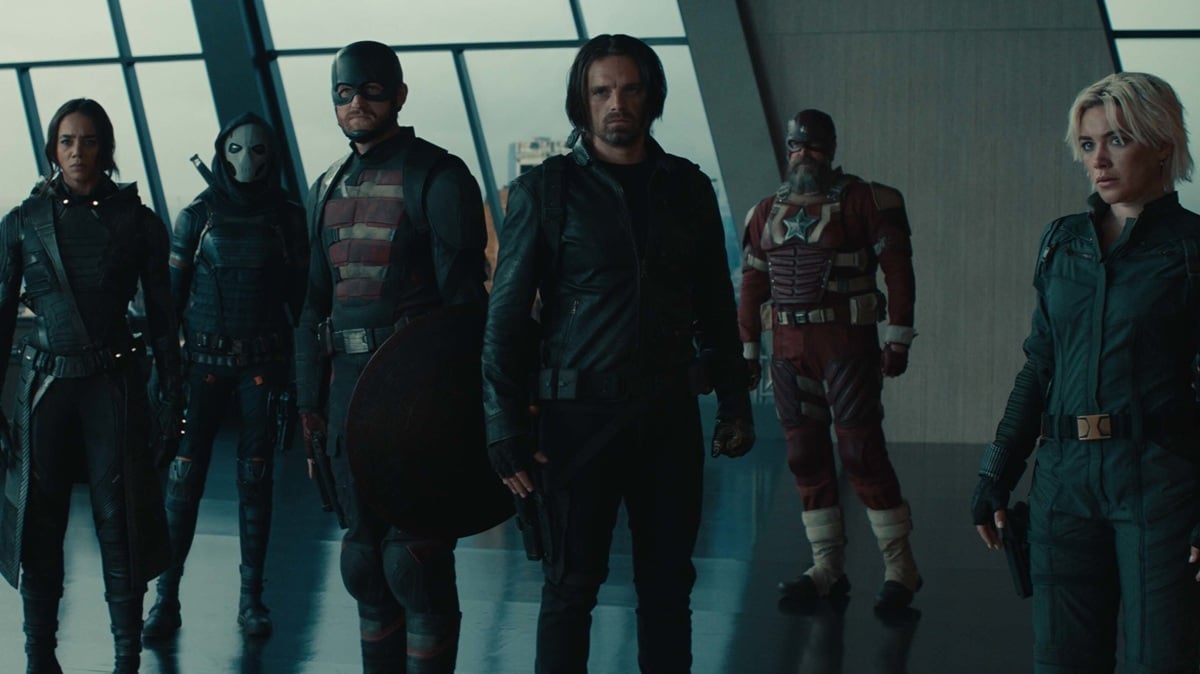
Marvel’s film shows that we all have trauma—but healing happens when we face it together. (Image from Disney’s Press Kit)
I’ve gotta admit—I should have watched this film in the theater. Nothing matches a Marvel movie for theatrical greatness. If you want to experience the fights, explosions, and dramatic musical score in its full glory, you must see it in the theater. But I waited until after Disney Plus’s streaming release, on August 27. It was a big mistake—but I was wowed by more than the special effects. I was impressed by the movie’s focus on mental health and addiction.
What’s the Movie About?
First, let me catch you up. For those new to the Marvel Cinematic Universe (MCU), here’s what you need to know, before watching the film. The Avengers were awesome—there was never a team to save the planet more times than Iron Man, Spiderman, The Hulk, Captain America, Black Widow, Thor, and friends. Now that they’re gone, there’s a new team in town to resist the latest villain. According to the MCU Wiki:
Marvel Studios assembles an unconventional team of antiheroes—Yelena Belova, Bucky Barnes, Red Guardian, Ghost, Taskmaster and John Walker. After finding themselves ensnared in a death trap set by Valentina Allegra de Fontaine, these disillusioned castoffs must embark on a dangerous mission that will force them to confront the darkest corners of their pasts. Will this dysfunctional group tear themselves apart, or find redemption and unite as something much more before it’s too late?
To tell you what the film is about, I must reveal a few spoilers. But I will try to be vague enough not to give away too many major plot points. The movie is ostensibly about the formation of a new team. But it’s really about the effects of trauma on a person’s life. And it’s about the coping mechanisms we develop to survive.
We’ve All Got Trauma
One of the messages of The Thunderbolts is that we’ve all got trauma. Except for Bucky Barnes, who says he had a “great past,” all the main characters suffer from trauma of one kind or another. (Honestly, why is it that Superhero movies seldom deal with heroes living with PTSD?)
One of the movie’s prominent messages is that trauma isn’t always something you fix. Usually, it’s something you have to learn to live with. One of the primary characters, Bob, revisits his childhood traumas and says it led to his use of methamphetamine as a survival strategy. Bob makes himself a villain because of his poor coping mechanisms and lashes out at others to deal with his pain. But the team learns that “fighting the bad guy” won’t fix the problem. Instead, they decide to be with him in his pain. Through their persistent presence and determination not to give up on him, Bob finds redemption.
Mental Health and Addiction
As a visual representation of trauma, the film walks us through Ylena’s and Bob’s relentless revisiting of the most shameful moments of their lives. We discover that Bob isn’t the only one who turned to substances to escape from pain. Ylena admitted that she found her solace in alcohol addiction. But escape is not the answer. Heroes and villains alike find that it’s only by facing their shame and trauma head-on that they can find healing.
Psychology Today points out the role that PTSD, Complex PTSD, depression, and substance misuse play in this film. Ylena tries to stuff her pain way down deep, so she doesn’t have to deal with it—but this is unsuccessful. Bob’s safe place that he retreats to in his mind becomes a void of depression that ends up swallowing others around him.
Healing Happens Together
Without giving away the end of the film, I will say this: Though the Void claims many victims, healing doesn’t take place in a vacuum. It happens together. Shame breeds isolation, but recovery takes teamwork. Whether we are talking about mental health or substance misuse (or a combination of both), Thunderbolts* reminds viewers that isolation only makes it worse.
It’s been said that the opposite of addiction isn’t sobriety. The opposite of addiction is connection. This is just as true for mental health struggles as it is for substance misuse. If you need healing, you can’t do it alone. Only by letting others into your life to be with you in the pain and help you toward healing will you ever find wholeness.
And, if you’re a healer, there’s a message in this movie for you as well. The Thunderbolts take a team-based approach as they work toward Bob’s recovery. They recognize that they are all wounded healers who must rely on each other for strength. And they find more value in just being with Bob than they do in trying to fix him. Only Bob can face his inner Void—their job is simply to help.
From a Faith Perspective
As a behavioral health specialist, I recognize many of my own clients in Bob. I am glad for the ability to openly discuss trauma and substance use with so many of them. As a former pastor, I am reminded of how isolating the religious world can be for many who struggle with mental health issues and addiction. Too often, the Church has told people that the solution to depression is prayer, and that the answer to addiction is determination.
Unfortunately, misunderstanding and stigma in religious circles often contribute to a sense of isolation and despair. It’s past time for the Church to take behavioral health seriously and to recognize that those with mental health struggles aren’t experiencing sin problems. You can’t pray everything away—and the toolkit that most pastors possess isn’t sufficient for dealing with issues like depression, PTSD, trauma, and addiction. Pastors must acknowledge when it’s time to refer parishioners to professionals. And they must recognize their own unique role to play in a team of superheroes that work to restore a person’s body, psyche, and spirit.
Saving The World Together
Marvel’s film shows that we all have trauma—but healing happens when we face it together. Even if you’re not a superhero movie fan, you should check out Thunderbolts* if you’re interested in a creative take on mental health and addiction, from the MCU perspective. And, even if The Avengers weren’t quite your thing, maybe there’s new hope for the world as the Thunderbolts save the world (and each other) as a team.
For related reading, check out my other articles:
- Is It Mental Health, or Guns?
- Can Religion and Spirituality Benefit Mental Health?
- From Anxiety to Joy: Inside Out 2 and the Skylight App
General Christian
Health, Fitness and Religion
Religious Music and Entertainment

About Gregory T. Smith
I live in the beautiful Fraser Valley of British Columbia and work in northern Washington State as a behavioral health specialist with people experiencing homelessness and those who are overly involved in the criminal justice system. Before that, I spent over a quarter-century as lead pastor of several Virginia churches. My newspaper column, “Spirit and Truth” ran in Virginia newspapers for fifteen years. I am one of fourteen contributing authors of the Patheos/Quoir Publishing book “Sitting in the Shade of another Tree: What We Learn by Listening to Other Faiths.” I hold a degree in Religious Studies from Virginia Commonwealth University, and also studied at Baptist Theological Seminary at Richmond. My wife Christina and I have seven children between us, and we are still collecting grandchildren. You can read more about the author here.
Previous Post

August 25, 2025
Overdose Awareness: We are One Big Family
Next Post

September 2, 2025 Ending Church Conflict: 5 Loaves, 2 Fish, 1 Pouting Pastor
Recent Comments
"Absolutely, Glen! That's a great example! And the Roman centurion who trusted Jesus. I've heard ..."
“Can You Follow Jesus and Still ..."
"Captian of the Syrian military, Naaman in 2 Kings 5 might be considered."
“Can You Follow Jesus and Still ..."
"Hi, Bob. Not sure why it's doing that...I've been having problems with my comments settings. ..."
"OMG, who CARES?!?!"
“Can You Follow Jesus and Still ..."
Browse Our Archives
Select a Category Challenging the Church Deconstruction For Pastors Heathen Christianity Holidays and special days Mental Health Social Justice Spirituality Taoism Theology Uncategorized
Select a Month October 2026 September 2026 August 2026 July 2026 June 2026 May 2026 April 2026 March 2026 February 2026 January 2026 December 2025 November 2025 October 2025 September 2025 August 2025 July 2025 June 2025 May 2025 April 2025 March 2025 February 2025 January 2025 December 2024 November 2024 October 2024 September 2024 August 2024 July 2024 June 2024 May 2024 April 2024 March 2024 February 2024 January 2024 December 2023 November 2023 October 2023 September 2023 August 2023 July 2023 June 2023 May 2023 April 2023 March 2023 February 2023 January 2023 December 2022 November 2022 October 2022 September 2022 August 2022 July 2022 June 2022 May 2022 April 2022 March 2022 February 2022 January 2022
Follow Us!
TAKE THE
Religious Wisdom Quiz
Who lay on his side for over a year as a prophetic sign?
Select your answer to see how you score.
Hosea Daniel Ezekiel Micah
Related posts from Breathing Space

If Birds Talked, They Couldn’t Fly
Which Version of Superman is the Most Punk...

All the Colors of the Rainbow Testify to...
Refusing to Bow to Trump's Golden Idol
TRENDING AT PATHEOS Progressive Christian

What Being a Modern-Day Apostle Means to Me
In my last column, I discussed the ins and outs of modern-day...

Did Ancient China Once Worship the God of...
Across human history, a common thread weaves through the origins of the...

Love Your Neighbor – Including Earth-Kin: Lev. 19,...
God’s command to love your neighbor means acting in an ethical and...

Lead a Church Study of “Jesus and Lao...
Guest writer Jack Thomas (The Irreverent Reverend) reflects on leading his church...

Pastoral Wisdom for Responding to Sermon Pushback
Getting sermon pushback on your social justice sermon? Learn practical, Proverbs-based strategies...

Principles for Understanding the Apostolic Ministry Today
Whenever people discover that my formal ministry title is "apostle," as in...
view all Progressive Christian blogs
What Are Your Thoughts?leave a comment
Ad-Free & Subscriber Log-In Subscription Support
- About Us
- 2026 Calendar
- Videos
- Podcasts
- Library of World Religions
- Faith In Media Tracker
- Advertise With Us
- Write for Us
- Privacy Policy
- Terms of Service
- Do Not Sell My Data
- Contact Us
- Radiant Digital
- Manage Newsletter Subscriptions
- Unsubscribe From Notifications
- Sitemap
Copyright 2008-2026, Patheos. All rights reserved.
Subscription Support Ad-Free & Subscriber Log-In
Follow Patheos