
BuddhistCatholicContemplativeEvangelicalGeneral ChristianHinduJewishLatter-day SaintMuslimNew VisionsProgressive Christian
Beliefs
- Buddhist
- Catholic
- Contemplative
- Evangelical
- General Christian
- Hindu
- Jewish
- Latter-day Saint
- More Voices
- Muslim
- New Visions
- Pagan
- Progressive Christian
Topics
- Religion News
- Food and Religion
- Sports and Religion
- Religious Art
- Religious Music and Entertainment
- Religious Events
- History and Religion
- Style and Religion
- Politics and Religion
- Women in Religion
- Recreation Outdoors and Religion
- Business Finance and Religion
- Careers Workplace and Religion
- Education and Religion
- Family Parenting and Religion
- Health Fitness and Religion
- Home and Religion
- Relationships and Religion
- Technology and Religion
- Travel and Religion
Columnists
- Buddhist Columnists
- Business Finance and Religion Columnists
- Careers Workplace and Religion Columnists
- Catholic Columnists
- Contemplative Columnists
- Education and Religion Columnists
- Evangelists Columnists
- Family Parenting and Religion Columnists
- General Christian Columnists
- Health Fitness and Religion Columnists
- Hindu Columnists
- History and Religion Columnists
- Home and Religion Columnists
- Jewish Columnists
- More Voices Columnists
- Latter Day Columnists
- Muslim Columnists
- New Visions Columnists
- Nonreligious Columnists
- Pagan Columnists
- Politics and Religion Columnists
- Progressive Columnists
- Recreation Outdoors and Religion Columnists
- Relationships and Religion Columnists
- Religion News Columnists
- Religious Art Columnists
- Religious Events Columnists
- Religious Music and Entertainment Columnists
- Sports and Religion Columnists
- Style and Religion Columnists
- Technology and Religion Columnists
- Travel and Religion Columnists
- Women in Religion Columnists
Resource Library
- 2026 Calendar
- Library of World Religions
- The 100 Most Holy Places on Earth
- Patheos Answers
- Podcasts
- Videos
- Faith Leaders Database
- Anglican Episcopalian
- Bahai
- Baptist
- Buddhism
- Christianity
- Confucianism
- Eastern Orthodoxy
- Hinduism
- Holiness and Pentecostal
- ISKCON
- Islam
- Judaism
- Lutheran
- Methodist
- The Church of Jesus Christ of Latter-day Saints
- New Age
- Paganism
- Presbytarian and Reformed
- Protestantism
- Religion Behind the Scenes
- Roman Catholic
- Scientology
- Shia Islam
- Sikhism
- Sufism
- Sunni Islam
- Taoism
- Zen
- See all religions
Research Tools
 Ad-Free & Subscriber Log-In Subscription Support
Ad-Free & Subscriber Log-In Subscription Support
Follow Patheos 

- Trending:
- Forgiveness
- |
- Marriage
- |
- Consciousness
- |
- Death Penalty
- |
- Election
- |
- Halloween

-
Categories
- Home
- Progressive Christian
- Education and Religion
- Am I Still a Minister? The Baptist Ordination Dilemma
Am I Still a Minister? The Baptist Ordination Dilemma
Last updated on: April 4, 2025 at 11:54 am by Gregory T. Smith
Am I Still a Minister? The Baptist Ordination Dilemma 2025-04-04T11:54:46-08:00 Gregory T. Smith
Patheos Explore the world's faith through different perspectives on religion and spirituality! Patheos has the views of the prevalent religions and spiritualities of the world.
“Are you still an ordained minister?” my friend asked me. I hesitated. “Well, that’s a long story. Because Baptists make it complicated.”
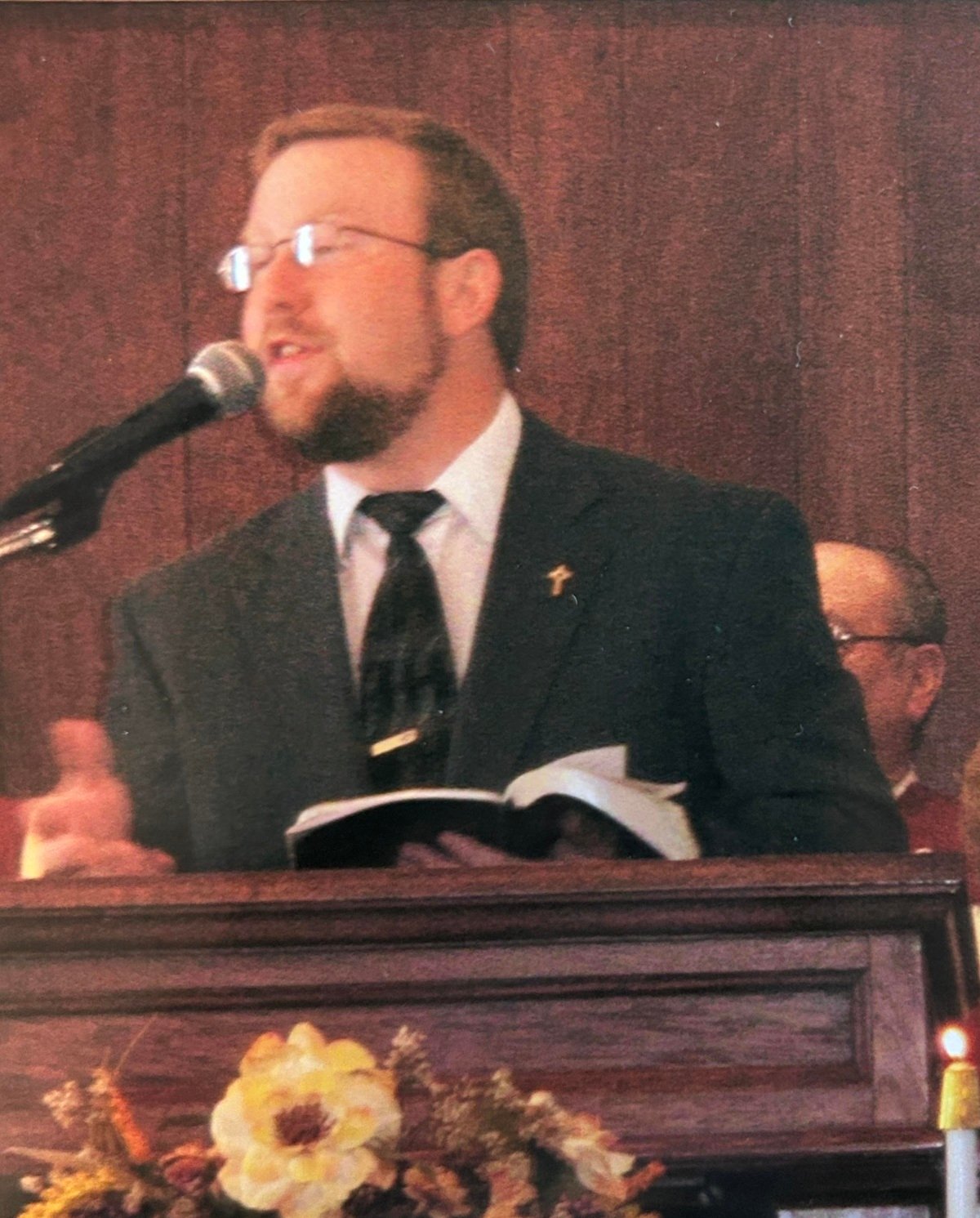
Photo of the author back in the preaching days. Unknown source.
“My short answer is yes,” I told her. “I’m still ordained as a Southern Baptist minister. Although, if I had been ordained in nearly any other denomination, I’d have to say that I was ‘former clergy.’ But, because of the Southern Baptist structure, I’m ordained for life—unless the church that ordains me decides to revoke my ordination. There are pros and cons to that sort of polity.
This month marks thirty years of ordained Christian ministry. The effectiveness of my vocation is measured more in lives touched than in parchments on the wall. Still, after thirty years, I’m ready to critique the system that made me.
Ministers Need a Call Story
For those entering Christian ministry, it’s good to have a “call story.” On my first day of seminary, we went around the room as each new student told his or her account of how God led them to a place of considering vocational ministry. Some told tedious tales of how they were born into ministry families and how church work seemed like the natural choice. The family business, you might say. Others gave romantic reports of how God wooed them like a lover and invited them into ministry. Still others detailed dramatic conversions and even more striking stories of how God drafted them into service. Each had their tale to tell. And here’s mine…
My Call Story
I was raised in a Christian home and was always a pretty good kid. My father was a deacon, and my mother was a Sunday school teacher. Church was just what we did. But it wasn’t my plan for a career. In fact, I’d seen how difficult it was for the two pastors who served my church when I was growing up. So, in college I majored in sociology and anthropology, with vague plans of being a combination explorer/archaeologist/anthropologist/journalist. But God had other plans.
My older brother had already surrendered to a call to Christian ministry a year or so earlier. So, when God began working on my heart, I resisted the idea. I had always followed in his footsteps and did not want to appear a professional copycat. But it seemed every time I opened the Bible it was to a Great Commission sort of scripture. Every time I heard a sermon it directed me to consider a calling to ministry. Each time I switched on the radio, had a friendly conversation, or engaged in prayer I felt drawn closer to this thing that I resisted.
Wrestling with God
Finally, one night at a Christian concert (Harvest—if you remember that group), I had a wrestling match with God. Like Jacob struggling with the Lord, I knelt on the floor while everyone else enjoyed the rock music. I felt like I was physically fighting, my face flinching, body clinching, and shoulders shuddering as I prayed. “No,” I told God. “I do NOT want to do it! Just leave me alone!”
I felt God say to me, “I’ll leave you alone about it when you say yes.”
So, I gave in, and I said yes. Immediately, a peace came over me. All the fight left. I knew that while ministry wasn’t what I had in mind, it was what God planned for me. And if I was in God’s will, it was going to be okay. And guess what—God never left me alone. God’s been with me the whole way.
Youth Ministry
I shared the story of God’s call with my pastor, who counseled me not to let the feeling fade. “If God is calling you to ministry, then you need to do something about it,” he said. Not long thereafter, I changed my course of study from sociology and anthropology to religious studies. I took my first ministry position as a youth pastor of a mid-sized Baptist church just outside of Richmond, Virginia.
I only served that church for a year and a half, until I graduated college and went to seminary. Though I loved the kids at that church, the experience taught me that God definitely did not call me to full-time youth ministry. I have many stories I could relate from that congregation, but I want to focus on the one thing related to my development toward ordination.
One notable thing is that my predecessor, a female, carried the title of “youth director.” I carried the same qualifications and performed the same duties, but the church called me its “youth minister.” Go figure. So, for a year and a half, without any official ministerial credentials, I was called a “minister” because I was a man. Well—as much as a man as I could be, from age twenty and one-half to twenty-two. Then, before I left for seminary, the church granted me a license to preach.
A License to Preach
For many Southern Baptists, a license to preach is the first step to ordination. My certificate says, “This is to certify that Greg Smith, who has given evidence that God has called him into the gospel ministry, was licensed to preach the Gospel as he may have opportunity, and to exercise his gifts in the work of the Ministry.” It was signed by the pastor and clerk of the church on June 26, 1994.
Not that anybody really needs a license to preach (none of the apostles had one). But for many Southern Baptist ministers, this is the first step to ordination. It is simply a recognition that some local congregation has witnessed God’s call. It is their stamp of approval that other churches might give the licensed preacher a try. A licensed preacher may carry the title “reverend” if they wish—though many do not. A license to preach does not carry the authority of ordination, though it does allow a new minister to perform any pastoral duties other than performing legal weddings.
In addition to a title and certain responsibilities, ideally, a licensed minister is placed under the tutelage of a more experienced member of the clergy who serves as a mentor. In this case, the church failed me. They granted my license as I left that congregation, and I was never formally mentored by anyone. More on this later.
My First Pastorate
Three months after I turned twenty-two, I entered seminary. I worked at a grocery store for a few months, keeping an eye on my school’s bulletin board for opportunities to preach. Churches needing guest speakers would often contact the seminary to find willing pulpit supply. One pastorless church was looking for someone to preach for Thanksgiving. After I delivered what must have been an acceptable sermon, they invited me to stay on through New Year’s. A consistent face through the holidays would be a good thing, they said. By mid-January, they elected me as pastor, even though I hadn’t actively pursued the role so early in my seminary studies.
Since I was going to be the only pastor of this small country church, I knew there would be weddings somewhere along the way. For this, I would need ordination. I didn’t know how this process worked, so once again, I went to the pastor of my home church for guidance. He explained that Southern Baptist churches believe in the autonomy of the local church, almost above all other things. This is why one church, and not an association, state convention, or denomination, had licensed me to preach.
Standards for Ordination
The same principle applies for ordination. Each church oversees these things as they see fit. Which means there is no centralized standard among Southern Baptists for how it must be done. Many denominations require ministers to graduate with their Master of Divinity or similar degree before they receive ordination. The Southern Baptist Convention has no educational requirement whatsoever. I had just begun my seminary training, but as my bachelor’s degree was in religious studies, my pastor viewed that as sufficient.
The best practice would be for a newly licensed preacher to be mentored for at least a year by a seasoned minister. I had just spent eighteen months as a youth pastor with very little oversight by the pastor of that church. Truth be told, he seemed more threatened or bothered by me than interested in sponsoring me. And, of course, while I was away from my home church doing this, my own pastor was not involved in actively showing me the ropes. So, we bypassed graduate-level education, and we bypassed private tutelage. At least, I could be reassured that the tradition of an in-depth ordination council would lend credibility to my ordination.
My Ordination Council
I have said that there is no one standard for how things must be done in Southern Baptist churches. There are, however, typical customs. Ordinarily, an ordination candidate is brought before an ordination council. The council is usually made up of ministers from the local association, representing a consensus of related denominational churches. Sometimes, lay members also join.
The job of the ordination council is to offer challenging questions to the candidate regarding their sense of call, knowledge of church polity, theological understanding, and spiritual maturity. Ordination councils are one of the most solemn responsibilities in which ministers can participate, as they help determine the qualifications of their peers.
In my case, the church I had been called to serve requested that the ordination be done by the church where I grew up—but at the location of my new ministry. This way, the churches could participate together. In reality, my new church would simply be the location of the ceremony. My home church would be the local congregation to ordain me.
My Examination
Little did I know at the time, but my pastor was already planning his exit from my home church. For this reason, he did not take his responsibility seriously as my new church asked him to convene an ordination council. Instead of inviting local clergy, the council was conducted by the deacons of the church—mostly tradesmen and farmers with little to no theological background. What’s more, my pastor did not think it important to make my ordination council a special event in the life of the church. It would happen as part of a regularly scheduled deacon’s meeting. Besides this, my pastor neglected to give proper instructions and decided not to attend himself.
So, when I arrived for the ordination council, the deacons had no idea what was expected. My examination consisted of one question: “Which came first—the chicken or the egg?”
I shit you not. That was the question.
Don’t get me wrong—I don’t blame the beloved men (and they were all men) who would inscribe their names on my ordination certificate. They didn’t know any better. Honestly, they probably said to themselves, “We’ve known this kid since he was knee-high.” One of them had cleaned my six-year-old pee off the floor in the choir room, for Pete’s sake. They knew me. They taught me everything I knew (or at least, so they believed). For them, it was a no-brainer. I was their kid—so of course they would approve me!
But this knowledge didn’t prevent me from feeling like my ordination was a sham for pretty much the past thirty years. I’ve suffered from Imposter Syndrome for most of my ministry, and this introduction to the role of clergy is one of the reasons.
What is Ordination, Anyway?
Still, in the end, my examination and subsequent ordination ceremony represented the joint efforts of two congregations that each recognized God’s gifts and call on my life. Of course, I don’t judge my entire ministry on the faux pas that took place from my licensure in June of 1994 to my ordination of March of 1995. The worthiness of my ministry is something that only God can judge, based on whether or not I used my gifts to touch people’s lives in an instructive, helpful, and healing manner.
But this causes me to ask: what is ordination, anyway? Is it a spiritual calling or an institutional office? A lifelong office, or something that can be revoked? Is ordination even biblical?
“Are you still an ordained minister?” my friend asked me. I hesitated. “Well, that’s a long story. Because Baptists make it complicated.” As long as the church that granted it doesn’t revoke it, the answer is yes—even though I don’t attend a Baptist church anymore. But is that the best way to handle ordination? I suggest it isn’t.
I invite you to read my next article, “Rethinking Ordination: Power, Purpose, and Problems.” I will look at the history of ordination, and observe some problems with it. The third and final article in the series, “Baptist Ordination: No Standards? No Problem!” takes a critical look at the ordination practices of the Southern Baptist Convention in particular. I will also suggest ways Baptist churches can improve their standards. I hope you’ll join me.
For related reading, check out my other articles:
- Substance Use Harm Reduction: What Would Jesus Do?
- Why “Getting them Saved and Baptized” is Killing the Church
- Tipping Your Church’s Sacred Cows While Avoiding Cow Pies
General Christian
Education and Religion
Careers, Workplace and Religion

About Gregory T. Smith
I live in the beautiful Fraser Valley of British Columbia and work in northern Washington State as a behavioral health specialist with people experiencing homelessness and those who are overly involved in the criminal justice system. Before that, I spent over a quarter-century as lead pastor of several Virginia churches. My newspaper column, “Spirit and Truth” ran in Virginia newspapers for fifteen years. I am one of fourteen contributing authors of the Patheos/Quoir Publishing book “Sitting in the Shade of another Tree: What We Learn by Listening to Other Faiths.” I hold a degree in Religious Studies from Virginia Commonwealth University, and also studied at Baptist Theological Seminary at Richmond. My wife Christina and I have seven children between us, and we are still collecting grandchildren. You can read more about the author here.
Previous Post
March 20, 2025
Jesus & Lao Tzu: Finding Order in the Chaos
Next Post

March 27, 2025 Rethinking Ordination: Power, Purpose, and Problems
Recent Comments
"Absolutely, Glen! That's a great example! And the Roman centurion who trusted Jesus. I've heard ..."
“Can You Follow Jesus and Still ..."
"Captian of the Syrian military, Naaman in 2 Kings 5 might be considered."
“Can You Follow Jesus and Still ..."
"Hi, Bob. Not sure why it's doing that...I've been having problems with my comments settings. ..."
"OMG, who CARES?!?!"
“Can You Follow Jesus and Still ..."
Browse Our Archives
Select a Category Challenging the Church Deconstruction For Pastors Heathen Christianity Holidays and special days Mental Health Social Justice Spirituality Taoism Theology Uncategorized
Select a Month October 2026 September 2026 August 2026 July 2026 June 2026 May 2026 April 2026 March 2026 February 2026 January 2026 December 2025 November 2025 October 2025 September 2025 August 2025 July 2025 June 2025 May 2025 April 2025 March 2025 February 2025 January 2025 December 2024 November 2024 October 2024 September 2024 August 2024 July 2024 June 2024 May 2024 April 2024 March 2024 February 2024 January 2024 December 2023 November 2023 October 2023 September 2023 August 2023 July 2023 June 2023 May 2023 April 2023 March 2023 February 2023 January 2023 December 2022 November 2022 October 2022 September 2022 August 2022 July 2022 June 2022 May 2022 April 2022 March 2022 February 2022 January 2022
Follow Us!
TAKE THE
Religious Wisdom Quiz
Who said, "Even though I walk through the valley of the shadow of death, I will fear no evil"?
Select your answer to see how you score.
David Moses Job Paul
Related posts from Breathing Space

“Can You Follow Jesus and Still Practice Smudging?”

Lead a Church Study of “Jesus and Lao...

The Guest Who Stayed at an Unfriendly Table

When Being a Good Guest Is Better than...
TRENDING AT PATHEOS Progressive Christian

What Being a Modern-Day Apostle Means to Me
In my last column, I discussed the ins and outs of modern-day...

Did Ancient China Once Worship the God of...
Across human history, a common thread weaves through the origins of the...

Love Your Neighbor – Including Earth-Kin: Lev. 19,...
God’s command to love your neighbor means acting in an ethical and...

Lead a Church Study of “Jesus and Lao...
Guest writer Jack Thomas (The Irreverent Reverend) reflects on leading his church...

Pastoral Wisdom for Responding to Sermon Pushback
Getting sermon pushback on your social justice sermon? Learn practical, Proverbs-based strategies...

Principles for Understanding the Apostolic Ministry Today
Whenever people discover that my formal ministry title is "apostle," as in...
view all Progressive Christian blogs
What Are Your Thoughts?leave a comment
Ad-Free & Subscriber Log-In Subscription Support
- About Us
- 2026 Calendar
- Videos
- Podcasts
- Library of World Religions
- Faith In Media Tracker
- Advertise With Us
- Write for Us
- Privacy Policy
- Terms of Service
- Do Not Sell My Data
- Contact Us
- Radiant Digital
- Manage Newsletter Subscriptions
- Unsubscribe From Notifications
- Sitemap
Copyright 2008-2026, Patheos. All rights reserved.
Subscription Support Ad-Free & Subscriber Log-In
Follow Patheos