
BuddhistCatholicContemplativeEvangelicalGeneral ChristianHinduJewishLatter-day SaintMuslimNew VisionsProgressive Christian
Beliefs
- Buddhist
- Catholic
- Contemplative
- Evangelical
- General Christian
- Hindu
- Jewish
- Latter-day Saint
- More Voices
- Muslim
- New Visions
- Pagan
- Progressive Christian
Topics
- Religion News
- Food and Religion
- Sports and Religion
- Religious Art
- Religious Music and Entertainment
- Religious Events
- History and Religion
- Style and Religion
- Politics and Religion
- Women in Religion
- Recreation Outdoors and Religion
- Business Finance and Religion
- Careers Workplace and Religion
- Education and Religion
- Family Parenting and Religion
- Health Fitness and Religion
- Home and Religion
- Relationships and Religion
- Technology and Religion
- Travel and Religion
Columnists
- Buddhist Columnists
- Business Finance and Religion Columnists
- Careers Workplace and Religion Columnists
- Catholic Columnists
- Contemplative Columnists
- Education and Religion Columnists
- Evangelists Columnists
- Family Parenting and Religion Columnists
- General Christian Columnists
- Health Fitness and Religion Columnists
- Hindu Columnists
- History and Religion Columnists
- Home and Religion Columnists
- Jewish Columnists
- More Voices Columnists
- Latter Day Columnists
- Muslim Columnists
- New Visions Columnists
- Nonreligious Columnists
- Pagan Columnists
- Politics and Religion Columnists
- Progressive Columnists
- Recreation Outdoors and Religion Columnists
- Relationships and Religion Columnists
- Religion News Columnists
- Religious Art Columnists
- Religious Events Columnists
- Religious Music and Entertainment Columnists
- Sports and Religion Columnists
- Style and Religion Columnists
- Technology and Religion Columnists
- Travel and Religion Columnists
- Women in Religion Columnists
Resource Library
- 2026 Calendar
- Library of World Religions
- The 100 Most Holy Places on Earth
- Patheos Answers
- Podcasts
- Videos
- Faith Leaders Database
- Anglican Episcopalian
- Bahai
- Baptist
- Buddhism
- Christianity
- Confucianism
- Eastern Orthodoxy
- Hinduism
- Holiness and Pentecostal
- ISKCON
- Islam
- Judaism
- Lutheran
- Methodist
- The Church of Jesus Christ of Latter-day Saints
- New Age
- Paganism
- Presbytarian and Reformed
- Protestantism
- Religion Behind the Scenes
- Roman Catholic
- Scientology
- Shia Islam
- Sikhism
- Sufism
- Sunni Islam
- Taoism
- Zen
- See all religions
Research Tools
 Ad-Free & Subscriber Log-In Subscription Support
Ad-Free & Subscriber Log-In Subscription Support
Follow Patheos 

- Trending:
- Forgiveness
- |
- Marriage
- |
- Consciousness
- |
- Death Penalty
- |
- Election
- |
- Halloween

-
Categories
- Home
- Progressive Christian
- Politics and Religion
- When God’s People Traumatize Each Other, Is There Any Hope?
When God’s People Traumatize Each Other, Is There Any Hope?
Last updated on: September 1, 2024 at 3:51 am by Gregory T. Smith
When God’s People Traumatize Each Other, Is There Any Hope? 2024-08-30T12:45:32-08:00 Gregory T. Smith
Patheos Explore the world's faith through different perspectives on religion and spirituality! Patheos has the views of the prevalent religions and spiritualities of the world.
God’s people have become experts at traumatizing one another. But two men I met after a trauma conference gave me hope for peace.
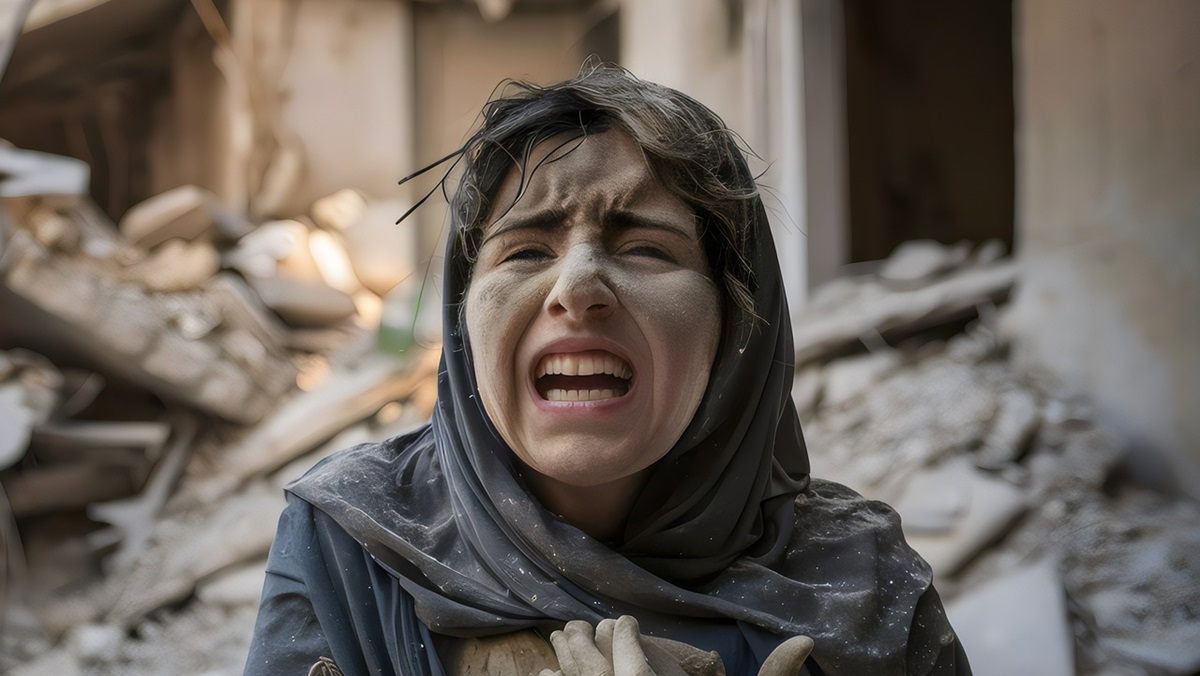
Image by abdulla alyaqoob from Pixabay
I’m writing this from a hotel room in La Jolla, California. With a team from work, I have spent the past few days at IVAT’s 29th San Diego Summit on Violence, Abuse, and Trauma Over the Course of a Lifetime. I’ve just learned that Israel has moved its attacks beyond Gaza, to the West Bank. Because of the conference, news has reached me slowly. The violence in the West Bank has been going on for a week.
The conference is now over. Triggered by some topics we’ve explored at the convention, my team and I decide to spend the afternoon at the beach. Trying to get our minds in a more cheerful place, we peruse the shops before our return trip tomorrow. But my thoughts are on the Middle East conflict**. My heart turns to my high school friend Shadi from** Beit Sahour, West Bank. I think of the violence and trauma his friends and family are experiencing right now.
The Keffiyeh
In my backpack, along with my snorkel, fins, and beach towel, is a tatty keffiyeh that always accompanies me on my travels. It’s not the first Palestinian scarf I ever had, the one Shadi gave me in high school. Thirty-four years have passed since then, and the original one wore out years ago. But I keep replacing them as they become ragged. They’re good for everything—not just as a neck scarf, but as a head covering, a towel, a makeshift tablecloth, a small beach blanket, and more. (Click here to read other suggestions.) I need a new one.
I wander into San Diego Crystals and Jewelry on Prospect Street in La Jolla. Immediately, I notice the Arab-culture items for sale, including a huge collection of hijabs. I ask the shopkeeper if he has any keffiyehs for sale. He seems confused at first, but when I explain he says, “Oh, in Afghanistan, where I am from, they are called shemaghs.” Unfortunately, he says he doesn’t sell them. “We only sell women’s scarves,” he tells me. “When people see the kind of scarf you’re talking about, it makes them angry.”
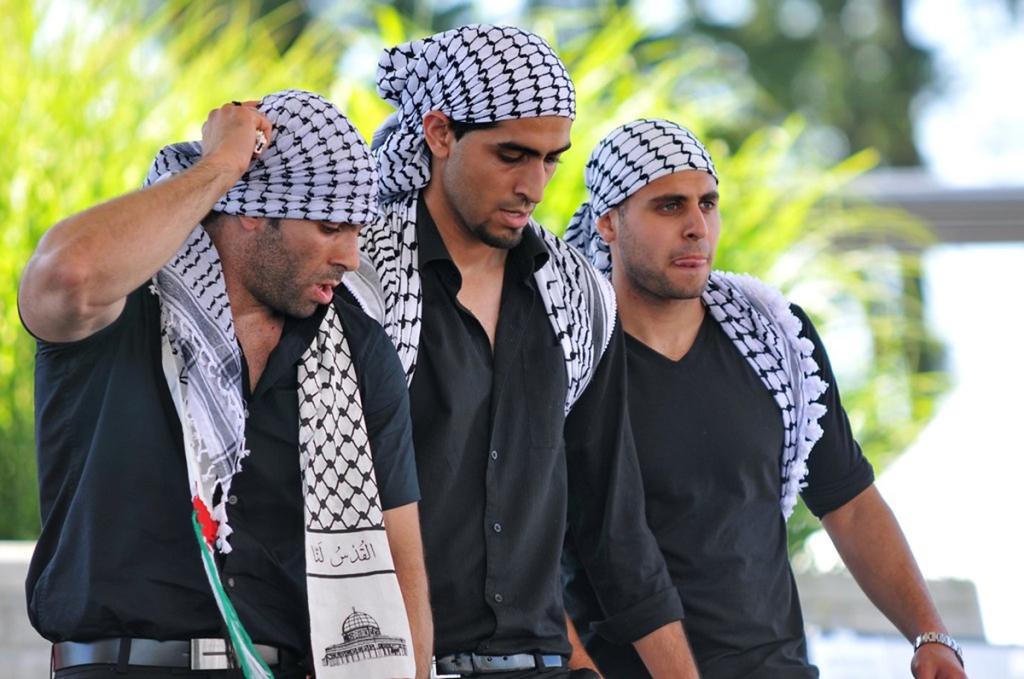

I know what he means. “You’re concerned they’ll think you’re terrorists,” I observe. I’m aware of the sideways glances I get when I wear a keffiyeh. I wear it in solidarity with my Palestinian adopted-extended family. People must think it odd—me, a White man with red-blond hair and blue eyes. When an Arab wears a traditional scarf in the United States, all many people can think about are terrorists.
Most Americans know nothing about the national pride this garment inspires. Like Scottish kilts boasting plaids that represent their respective clans, keffiyehs/shemaghs bear distinctive patterns symbolizing various Arab nations. Sadly, when most Americans see these beautiful scarves, they don’t think of the honor and dignity of those nations. They only think of the actions of radical factions.
Because of this misunderstanding, the shopkeeper says he doesn’t carry keffiyehs. Due to violence and trauma on the part of others, society robs him of the ability to display a symbol of his national identity. It prevents him from selling a particular product associated with his people.
The Tasbih
As we continue our conversation, we grieve this injustice together. He introduces himself to me as Sami, and I give him my name as well. There’s something so simple and profound about exchanging names. I am no longer “the customer,” and he is not just “the shopkeeper.” We discuss our common experiences as immigrants—he to the US, and I to Canada.
In our conversation about the shemagh (which he pronounces like the smog over Los Angeles) he pulls out his phone and shows me a picture of himself in traditional Afghan attire. I notice a set of beads that he is holding in the picture, and I ask about them. “They are called Tasbih,” he says. “They are Muslim prayer beads.” I tell him that I am fascinated with prayer beads. I’ve prayed with Roman Catholic rosaries, and Anglican rosaries for decades. I’ve meditated with mala beads for years. I frequently give prayer beads to clients who need meditation and ask for assistive devices.
Pointing to the beads he is holding in the picture, I ask, “Do you have any of those here?” He says he doesn’t have any of the thirty-three bead tasbihat like in the picture. However, he does carry some ninety-nine bead sets. He takes a set off the shelf. I admire the weight of the stone beads, and their masculine beauty. “Can you show me how to pray with them?” I ask. He gladly gives me a demonstration, telling me about the different phrases you repeat for each of the beads. (Click here to see how.)
“There are ninety-nine beads, one for each of the names of Allah, right?” I say.
His eyes brighten. “How do you know so much about other religions?” he asks. I tell him I have a degree in world religions. “Which religion do you feel drawn to the most?” he asks. I point to the Celtic cross on my arm and tell him I’m a Christian. “Besides Christianity, is there a religion that draws you the most?” I talk a little about Taoism. Then, I shift to the things I appreciate about his religion as well.
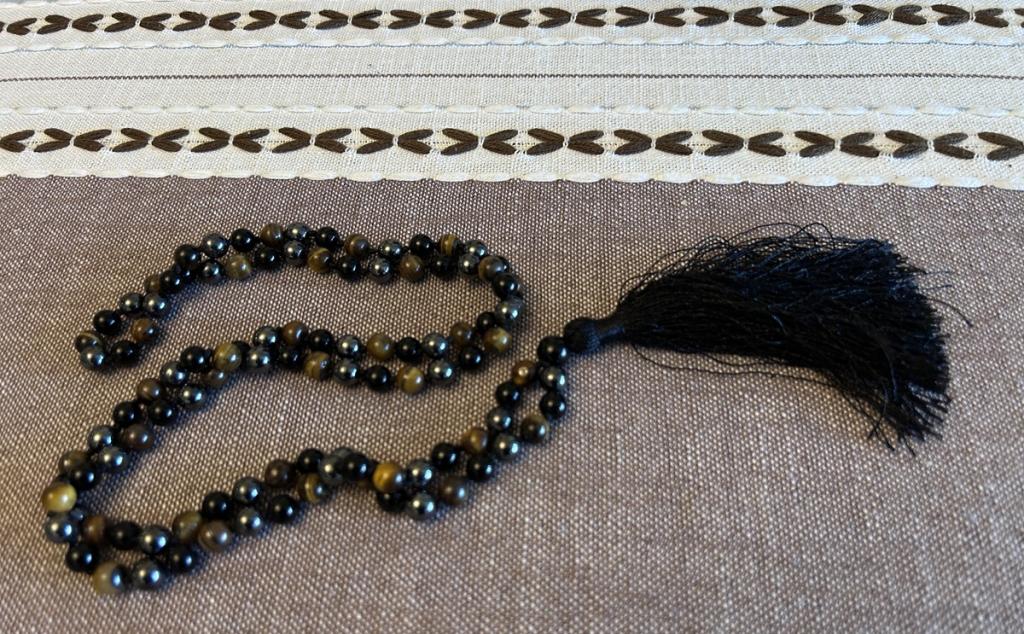
This is the Tasbih Sami sold me. Image by Gregory T. Smith
One God, and One People
Finally, I make my way back to the Tasbih, and ask how much. “Those normally sell for eighty dollars,” he says, “But for you, my friend, I’ll take twenty.” It could be a sales tactic. I’ve worked in sales before, myself. But I choose to believe that something more profound has happened here and that he has offered me these exquisite prayer beads at his cost, as a genuine gesture of peace. I thank him and purchase the beads.
Our conversation turns to what’s going on right now in the West Bank and Gaza. “You know, there’s only one way that wars are going to end,” I say. “It can only happen when people do exactly what we’ve been doing. When we talk with one another. There’s only one God, and we’re all one people.”
“One God and one people,” Sami says and offers his hand for a fist-bump.
I thank him again and bump his fist. “As-salamu alaykum,” I say.
Sami smiles. “Wa alaykumu s-salam,” he says as I leave the store.
We Are All One People
I cross Prospect Street and head over to Warwick’s, the country’s oldest continuously family-owned and operated bookstore, since 1896. In search of a gift for my wife, I exchange conversation with a couple of the people on staff. Soon, an older gentleman approaches me and asks about my accent, which he mistakes for New York. Nobody has ever made that mistake before, but I notice his thick accent and appreciate that it can be difficult to identify various English accents if you aren’t a native English speaker. I ask him where he is from.
“Israel,” he says. It’s not until he turns his head that I notice the yarmulke he wears.
“That’s fantastic,” I say. “I have always wanted to go there.”
He shakes his finger, a gesture of caution. “Ah, but not right now.”
“No, not right now,” I agree. We talk a little about the current war. “I don’t know why there must be this conflict between us,” he says. “We Jews, Christians, and Muslims have the same God.”
“And we are one people,” I add.
“Yes,” he says. “We are all one people.”
It is a brief exchange, but meaningful, especially considering it was within half an hour of my conversation with Sami.
Willing to See God in Each Other
As I head home from the conference, I’m grateful for all that I’ve learned about violence, abuse, and trauma over the course of a lifetime. We discussed such horrors as human trafficking, rape, grooming, combat PTSD, suicide, homelessness, incarceration, and more. When I watch the news, I think about the violence, abuse, and trauma God’s people inflict on one another. Especially when our hatred for each other stems from religious differences, this can be hard to comprehend. I’m glad I have a four-day weekend after I return, so I can unwind before getting back to the work I do with people experiencing trauma.
Sometimes, doing this work can be discouraging. On bad days, working in social services can make you feel hopeless. But today, I’m encouraged by these two random men I met while shopping. Today, a Christian, a Muslim, and a Jew agree that we have the same God, and we are all one people. If we are willing to see God in each other, and if we are open to dialogue, then just maybe there is hope for peace.
For related reading, check out my other articles:
- Stop Dehumanizing and Demonizing Your Enemies!
- How are Gazans Counterparts to Native Americans?
- Good Guys Vs. Bad Buys: Christians and Self-Defense
General Christian
Politics and Religion
Style and Religion

About Gregory T. Smith
I live in the beautiful Fraser Valley of British Columbia and work in northern Washington State as a behavioral health specialist with people experiencing homelessness and those who are overly involved in the criminal justice system. Before that, I spent over a quarter-century as lead pastor of several Virginia churches. My newspaper column, “Spirit and Truth” ran in Virginia newspapers for fifteen years. I am one of fourteen contributing authors of the Patheos/Quoir Publishing book “Sitting in the Shade of another Tree: What We Learn by Listening to Other Faiths.” I hold a degree in Religious Studies from Virginia Commonwealth University, and also studied at Baptist Theological Seminary at Richmond. My wife Christina and I have seven children between us, and we are still collecting grandchildren. You can read more about the author here.
Previous Post

August 29, 2024
Overdose Awareness Day: How Can Your Church Save Lives?
Next Post

September 5, 2024 Jesus, Lao Tzu, and the Holy Trinity of the Unfathomable
Recent Comments
"Absolutely, Glen! That's a great example! And the Roman centurion who trusted Jesus. I've heard ..."
“Can You Follow Jesus and Still ..."
"Captian of the Syrian military, Naaman in 2 Kings 5 might be considered."
“Can You Follow Jesus and Still ..."
"Hi, Bob. Not sure why it's doing that...I've been having problems with my comments settings. ..."
"OMG, who CARES?!?!"
“Can You Follow Jesus and Still ..."
Browse Our Archives
Select a Category Challenging the Church Deconstruction For Pastors Heathen Christianity Holidays and special days Mental Health Social Justice Spirituality Taoism Theology Uncategorized
Select a Month October 2026 September 2026 August 2026 July 2026 June 2026 May 2026 April 2026 March 2026 February 2026 January 2026 December 2025 November 2025 October 2025 September 2025 August 2025 July 2025 June 2025 May 2025 April 2025 March 2025 February 2025 January 2025 December 2024 November 2024 October 2024 September 2024 August 2024 July 2024 June 2024 May 2024 April 2024 March 2024 February 2024 January 2024 December 2023 November 2023 October 2023 September 2023 August 2023 July 2023 June 2023 May 2023 April 2023 March 2023 February 2023 January 2023 December 2022 November 2022 October 2022 September 2022 August 2022 July 2022 June 2022 May 2022 April 2022 March 2022 February 2022 January 2022
Follow Us!
TAKE THE
Religious Wisdom Quiz
What continent was the birthplace of Christianity?
Select your answer to see how you score.
Australia Asia Africa Europe
Related posts from Breathing Space

If Birds Talked, They Couldn’t Fly

All the Colors of the Rainbow Testify to...

Why the Rainbow Became a Pride Symbol
Refusing to Bow to Trump's Golden Idol
TRENDING AT PATHEOS Progressive Christian

What Being a Modern-Day Apostle Means to Me
In my last column, I discussed the ins and outs of modern-day...

Did Ancient China Once Worship the God of...
Across human history, a common thread weaves through the origins of the...

Love Your Neighbor – Including Earth-Kin: Lev. 19,...
God’s command to love your neighbor means acting in an ethical and...

Lead a Church Study of “Jesus and Lao...
Guest writer Jack Thomas (The Irreverent Reverend) reflects on leading his church...

Pastoral Wisdom for Responding to Sermon Pushback
Getting sermon pushback on your social justice sermon? Learn practical, Proverbs-based strategies...

Principles for Understanding the Apostolic Ministry Today
Whenever people discover that my formal ministry title is "apostle," as in...
view all Progressive Christian blogs
What Are Your Thoughts?leave a comment
Ad-Free & Subscriber Log-In Subscription Support
- About Us
- 2026 Calendar
- Videos
- Podcasts
- Library of World Religions
- Faith In Media Tracker
- Advertise With Us
- Write for Us
- Privacy Policy
- Terms of Service
- Do Not Sell My Data
- Contact Us
- Radiant Digital
- Manage Newsletter Subscriptions
- Unsubscribe From Notifications
- Sitemap
Copyright 2008-2026, Patheos. All rights reserved.
Subscription Support Ad-Free & Subscriber Log-In
Follow Patheos