
BuddhistCatholicContemplativeEvangelicalGeneral ChristianHinduJewishLatter-day SaintMuslimNew VisionsProgressive Christian
Beliefs
- Buddhist
- Catholic
- Contemplative
- Evangelical
- General Christian
- Hindu
- Jewish
- Latter-day Saint
- More Voices
- Muslim
- New Visions
- Pagan
- Progressive Christian
Topics
- Religion News
- Food and Religion
- Sports and Religion
- Religious Art
- Religious Music and Entertainment
- Religious Events
- History and Religion
- Style and Religion
- Politics and Religion
- Women in Religion
- Recreation Outdoors and Religion
- Business Finance and Religion
- Careers Workplace and Religion
- Education and Religion
- Family Parenting and Religion
- Health Fitness and Religion
- Home and Religion
- Relationships and Religion
- Technology and Religion
- Travel and Religion
Columnists
- Buddhist Columnists
- Business Finance and Religion Columnists
- Careers Workplace and Religion Columnists
- Catholic Columnists
- Contemplative Columnists
- Education and Religion Columnists
- Evangelists Columnists
- Family Parenting and Religion Columnists
- General Christian Columnists
- Health Fitness and Religion Columnists
- Hindu Columnists
- History and Religion Columnists
- Home and Religion Columnists
- Jewish Columnists
- More Voices Columnists
- Latter Day Columnists
- Muslim Columnists
- New Visions Columnists
- Nonreligious Columnists
- Pagan Columnists
- Politics and Religion Columnists
- Progressive Columnists
- Recreation Outdoors and Religion Columnists
- Relationships and Religion Columnists
- Religion News Columnists
- Religious Art Columnists
- Religious Events Columnists
- Religious Music and Entertainment Columnists
- Sports and Religion Columnists
- Style and Religion Columnists
- Technology and Religion Columnists
- Travel and Religion Columnists
- Women in Religion Columnists
Resource Library
- 2026 Calendar
- Library of World Religions
- The 100 Most Holy Places on Earth
- Patheos Answers
- Podcasts
- Videos
- Faith Leaders Database
- Anglican Episcopalian
- Bahai
- Baptist
- Buddhism
- Christianity
- Confucianism
- Eastern Orthodoxy
- Hinduism
- Holiness and Pentecostal
- ISKCON
- Islam
- Judaism
- Lutheran
- Methodist
- The Church of Jesus Christ of Latter-day Saints
- New Age
- Paganism
- Presbytarian and Reformed
- Protestantism
- Religion Behind the Scenes
- Roman Catholic
- Scientology
- Shia Islam
- Sikhism
- Sufism
- Sunni Islam
- Taoism
- Zen
- See all religions
Research Tools
 Ad-Free & Subscriber Log-In Subscription Support
Ad-Free & Subscriber Log-In Subscription Support
Follow Patheos 

- Trending:
- Forgiveness
- |
- Marriage
- |
- Consciousness
- |
- Death Penalty
- |
- Election
- |
- Halloween

-
Categories
- Home
- Progressive Christian
- Relationships and Religion
- Is It the Church’s Mission to Do Social Work?
Is It the Church’s Mission to Do Social Work?
Last updated on: September 12, 2024 at 3:56 am by Gregory T. Smith
Is It the Church’s Mission to Do Social Work? 2024-09-11T18:19:09-08:00 Gregory T. Smith
Patheos Explore the world's faith through different perspectives on religion and spirituality! Patheos has the views of the prevalent religions and spiritualities of the world.
Should your church offer resources for mental & sexual health, & addiction recovery? I respond to objections to the Church doing social work.
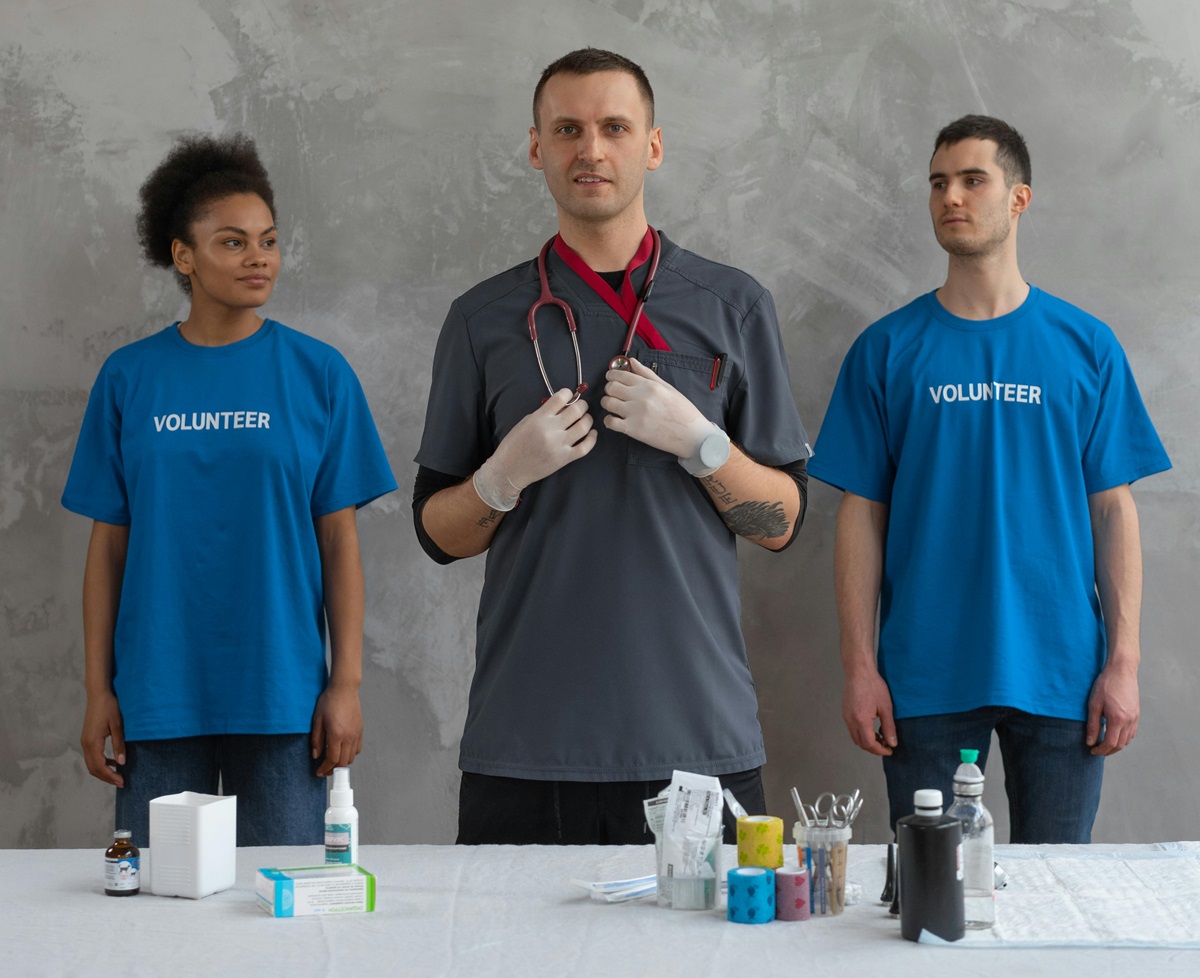
Hurt people hurt people… But healed people heal people. Photo by Mikhail Nilov: https://www.pexels.com/photo/man-in-blue-crew-neck-t-shirt-standing-beside-woman-in-blue-crew-neck-t-shirt-7465700/
Harm Reduction
Two recent articles I wrote about harm reduction generated an interesting comment. What is harm reduction? In my article, “Substance Use Harm Reduction: What Would Jesus Do?” I define harm reduction as “mitigating potential harms caused by risky behaviors.” HealthLink BC explains it further:
Harm reduction is a public health approach to substance use (including alcohol, cannabis, and other substances) and drug policy. The aim of harm reduction is to support the health and well-being of people who use substances. Harm reduction aims to meet people “where they are at”, whether that is active substance use or abstinence.
Harm reduction includes programs and services to lessen the harms related to substance use and drug policy, including blood borne infections, drug poisoning (overdose), criminalization, and stigma. Harm reduction is also an approach to service delivery that prioritizes evidence, human rights, and anti-stigma.
Stigmatizing Individuals
In my article, I write: “Historically, the Evangelical church has not had much to do with harm reduction. Unfortunately, conservative Christians have preoccupied themselves with the dichotomy of righteousness versus sin.” The Church does great harm when it categorizes all unhealthy behaviors as immoral, shameful, and evil. This stigmatizes individuals in need of care.
In my article, I suggest that if Jesus walked our streets today, he would have been a harm reductionist. Refusing to judge others, he would have advocated for them and helped to save their lives. As we face today’s opioid epidemic, we need to be like Jesus and rescue our neighbors. But not everybody agrees. I expected some push-back, and I got some.
I Expected Push-Back
Some people believe that the Church actually does harm if it practices harm reduction. In “Overdose Awareness Day: How Can Your Church Save Lives?” I offer some suggestions for how local congregations can keep people alive long enough to make an eternal difference.
If your church drove its youth group to the beach, chaperones would encourage students to fasten their seat belts, wear life jackets, and apply sunscreen. This is harm reduction. In the same way, your church might consider offering things like free condoms, STI testing, rides to reproductive services across state lines, NARCAN, fentanyl test strips, and gender-affirming care.
When I authored this article, I was aware of the controversy I might start by asking the Church to offer mental health, sexual health, and substance use harm reduction**. I expected the comment that I received from one reader.**
A Thoughtful Comment
I am grateful to my readers who offer thoughtful comments and feedback. Sometimes, the comments are completely unhelpful. This comment, however, was useful as a writing prompt. I’ll share the entire comment here, then break it down to respond to each section.
Charitable institutions should help and educate. Would you suggest the same agenda is appropriate for public schools?
Congregations as institutions are not designed for some types of social work. Churches are spiritual support ministries.
What you suggest would be a serious distraction to the visible role of the church. Such support ministries need some separation from congregational worship and education. Filling the church building’s hallways with the homeless sounds charitable, but would be a distraction for the members of the congregation.
Your agenda seems too idealistic unless the meeting’s location, services, and agenda are designed for such ministries such as the Union Gospel Mission.
There is the assumption that most members of the congregation are where you are when many are in need of ministry themselves.
Again, I am grateful to the person who commented. Though I will disagree with their points, I am indebted to them for the thoughtful feedback, and for the opportunity to respond in this way.
To Help and Educate
“Charitable institutions should help and educate. Would you suggest the same agenda is appropriate for public schools?”
I agree completely with this opening statement. Part of helping is keeping people alive, and part of educating is making sure that people have the knowledge and information they need to stay alive. Not only would I suggest the same for public schools—I am grateful for those public schools that are doing just this.
Here are a few resources you might want to consider when it comes to harm reduction in public schools:
- Preventing substance-related harms among Canadian youth through action within school communities: A policy paper
- School-based harm reduction with adolescents: a pilot study
- Can Harm Reduction Finally Take Root in America’s Schools?
The commenter is completely right when they say charities should help and educate. Churches and public schools should lead the way in educating not only young people, but adults as well.
Spiritual Support Ministries
“Congregations as institutions are not designed for some types of social work. Churches are spiritual support ministries.”
Again, I agree with the commenter, after a fashion. If churches are institutions, run by committees, and operating as organizations, this may be correct. I know, because I pastored churches for over a quarter-century. Yet, this is not how Jesus viewed the Church, or how it functioned in the New Testament.
The Church is meant to be an organism, not an organization. An organization requires governance, a constitution, rules, and permission either given or withheld. As institutions, most congregations are not equipped to function as branches of the local health department. But as a living organism, the Church can offer harm-reduction techniques and products to save people’s lives. Each member can do their part:
- Mrs. Jimenez doesn’t need to be a nurse to keep a bowl at her pew stocked with condoms, available for anyone, without questions.
- Rev. Jones doesn’t need to be a psychologist to call Kai by their chosen pronouns.
- The custodian doesn’t need to be a social worker to put an “all gender” sign on the restroom.
- Deacon Jasmine doesn’t need to be a Substance Use Disorder Professional to set out a display with free fentanyl test strips.
My commenter is right when they say that churches are spiritual support ministries. But this means more than preaching and teaching. Discipling people means meeting them at all aspects of their lives—even those areas where they are at the greatest risk of harm. It would be a mistake to say that churches are only there for spiritual support and not for whole-person support.
A Serious Distraction
What you suggest would be a serious distraction to the visible role of the church. Such support ministries need some separation from congregational worship and education. Filling the church building’s hallways with the homeless sounds charitable, but would be a distraction for the members of the congregation.
As much as I have agreed, at least in part, with my thoughtful commenter, here is where we really part ways. My reader suggests that the primary role of the Church is worship and education. This couldn’t be further from the truth. Here are a couple of important points:
- If the Church is to fashion its mission after Jesus, then its primary role is to sit at table with people, share tasty food and drink with them, enjoy life with them, and help them to understand God’s limitless love and grace. Yet, the institutional church values institutional things, measuring its success by attendance numbers at worship and Sunday school. If worship and teaching happen, they should be a matter of course as we do life together, not the primary focus.
- My writer assumes that “the homeless” (we really should try people-first language here) are the only ones who could benefit from harm reduction. They have not considered the hidden addictions, active sexuality, and real behavioral health issues that members of the congregation might have.
- Jesus told the self-righteous people, “Truly I tell you, the tax collectors and the prostitutes are going into the kingdom of God ahead of you.” Much like Jesus’s audience, my reader eschews the idea that the church building’s hallways would be packed with dirty people. But if Jesus has his way, the Church should be all about these people, with regular parishioners standing on the edges, applauding. This is the mission of the church!
A Rabbit Trail
Your agenda seems too idealistic unless the meeting’s location, services, and agenda are designed for such ministries such as the Union Gospel Mission.
I’ll give my commenter credit because they do not know me. If they’ve read my profile, they know I work in an urban setting with people experiencing homelessness. What they don’t know is the rural setting of my pastoral career. Because of the diversity of my two career settings, I am fully aware that to some extent, the type of ministry you do is determined by real estate—location, location, location!
I will also grant that when I served churches in rural Virginia, my churches had little to do with the homeless population. Mainly, because there were few people around us that most would consider traditionally homeless. There were no city streets with unhoused individuals sleeping in doorways.
Yet, others who meet HUD’s definition of homelessness lived in RVs without connection to power, water, and sewer. Still others couch-surfed from place to place, with no home of their own. So, homelessness does exist in rural areas. Sometimes it is just invisible.
But this rabbit trail is the real distraction because it confuses homelessness with the need for harm reduction. As I said before, “good (read that as seemingly righteous) church members” are also in need of harm reduction services.
Many Need Ministry
There is the assumption that most members of the congregation are where you are when many are in need of ministry themselves.
In this comment, my reader assumes my assumptions. In fact, I do not assume that most members of the congregation are where I am, on this issue. This is the precise reason for my articles about harm reduction—to convince those who aren’t where I am, of the need. If my readers already agreed, then these articles would not challenge them. In fact, just as pastors should presume that not all church members see things their way, writers should do the same.
As I conclude this article, I must return to a point of agreement with my commenter. Yes, yes, yes—many in the church need ministry themselves! I am not suggesting that every church member become a social worker to reach out to unsheltered individuals (though, some should!). I am suggesting that the Church should first minister to the harm reduction needs of its own members. There are many more of these needs than “good Christians” would presume, just by looking on the surface. After that, I am suggesting that the Church care for the community at large.
Is It the Church’s Mission to Do Social Work?
In chapter four of Luke’s Gospel, we read about Jesus returning to his hometown. Here, he declares his own mission, and that of the Church that would assume his call.
When he came to Nazareth, where he had been brought up, he went to the synagogue on the Sabbath day, as was his custom. He stood up to read, and the scroll of the prophet Isaiah was given to him. He unrolled the scroll and found the place where it was written:
“The Spirit of the Lord is upon me,
because he has anointed me
to bring good news to the poor.
He has sent me to proclaim release to the captives
and recovery of sight to the blind,
to set free those who are oppressed,
to proclaim the year of the Lord’s favor.”
And he rolled up the scroll, gave it back to the attendant, and sat down. The eyes of all in the synagogue were fixed on him. Then he began to say to them, “Today this scripture has been fulfilled in your hearing.”
So, to my commenter, I will say, yes—it is the Church’s mission to do social work. Jesus declared it to be his mission, so it’s the Church’s mission as well. It’s been said that “hurt people hurt people.” Trauma breeds more trauma. But it’s also true that “healed people heal people.” If the Gospel has any power to transform individuals, then it’s the responsibility of those healed individuals to reach out and heal others.
For related reading, check out my other articles:
- Jesus and Trauma-Informed Care
- Stop Saying, “There, but for the Grace of God, Go I.”
- What if the Church Focused on Justice Instead of Just-Us?
- What if the Church Got Its Hands Dirty Like Jesus?
- If You Give a Man a Fish: Humanitarianism and the Gospel
General Christian
Relationships and Religion
Health, Fitness and Religion
He has anointed me to bring good news to the poor

About Gregory T. Smith
I live in the beautiful Fraser Valley of British Columbia and work in northern Washington State as a behavioral health specialist with people experiencing homelessness and those who are overly involved in the criminal justice system. Before that, I spent over a quarter-century as lead pastor of several Virginia churches. My newspaper column, “Spirit and Truth” ran in Virginia newspapers for fifteen years. I am one of fourteen contributing authors of the Patheos/Quoir Publishing book “Sitting in the Shade of another Tree: What We Learn by Listening to Other Faiths.” I hold a degree in Religious Studies from Virginia Commonwealth University, and also studied at Baptist Theological Seminary at Richmond. My wife Christina and I have seven children between us, and we are still collecting grandchildren. You can read more about the author here.
Previous Post

September 9, 2024
Trumpsters’ Trauma Response: Fight, Flight, Freeze, & Fawn
Next Post

September 15, 2024 Christian & Pagan Holidays: Michaelmas, Mabon, & Matthew
Recent Comments
"Absolutely, Glen! That's a great example! And the Roman centurion who trusted Jesus. I've heard ..."
“Can You Follow Jesus and Still ..."
"Captian of the Syrian military, Naaman in 2 Kings 5 might be considered."
“Can You Follow Jesus and Still ..."
"Hi, Bob. Not sure why it's doing that...I've been having problems with my comments settings. ..."
"OMG, who CARES?!?!"
“Can You Follow Jesus and Still ..."
Browse Our Archives
Select a Category Challenging the Church Deconstruction For Pastors Heathen Christianity Holidays and special days Mental Health Social Justice Spirituality Taoism Theology Uncategorized
Select a Month October 2026 September 2026 August 2026 July 2026 June 2026 May 2026 April 2026 March 2026 February 2026 January 2026 December 2025 November 2025 October 2025 September 2025 August 2025 July 2025 June 2025 May 2025 April 2025 March 2025 February 2025 January 2025 December 2024 November 2024 October 2024 September 2024 August 2024 July 2024 June 2024 May 2024 April 2024 March 2024 February 2024 January 2024 December 2023 November 2023 October 2023 September 2023 August 2023 July 2023 June 2023 May 2023 April 2023 March 2023 February 2023 January 2023 December 2022 November 2022 October 2022 September 2022 August 2022 July 2022 June 2022 May 2022 April 2022 March 2022 February 2022 January 2022
Follow Us!
TAKE THE
Religious Wisdom Quiz
True or False: The parable of the Prodigal Son appears only in Luke's Gospel.
Select your answer to see how you score.
FALSE TRUE
Related posts from Breathing Space

“Can You Follow Jesus and Still Practice Smudging?”

Lead a Church Study of “Jesus and Lao...

If Birds Talked, They Couldn’t Fly

The Guest Who Stayed at an Unfriendly Table
TRENDING AT PATHEOS Progressive Christian

What Being a Modern-Day Apostle Means to Me
In my last column, I discussed the ins and outs of modern-day...

Did Ancient China Once Worship the God of...
Across human history, a common thread weaves through the origins of the...

Love Your Neighbor – Including Earth-Kin: Lev. 19,...
God’s command to love your neighbor means acting in an ethical and...

Lead a Church Study of “Jesus and Lao...
Guest writer Jack Thomas (The Irreverent Reverend) reflects on leading his church...

Pastoral Wisdom for Responding to Sermon Pushback
Getting sermon pushback on your social justice sermon? Learn practical, Proverbs-based strategies...

Principles for Understanding the Apostolic Ministry Today
Whenever people discover that my formal ministry title is "apostle," as in...
view all Progressive Christian blogs
What Are Your Thoughts?leave a comment
Ad-Free & Subscriber Log-In Subscription Support
- About Us
- 2026 Calendar
- Videos
- Podcasts
- Library of World Religions
- Faith In Media Tracker
- Advertise With Us
- Write for Us
- Privacy Policy
- Terms of Service
- Do Not Sell My Data
- Contact Us
- Radiant Digital
- Manage Newsletter Subscriptions
- Unsubscribe From Notifications
- Sitemap
Copyright 2008-2026, Patheos. All rights reserved.
Subscription Support Ad-Free & Subscriber Log-In
Follow Patheos