
BuddhistCatholicContemplativeEvangelicalGeneral ChristianHinduJewishLatter-day SaintMuslimNew VisionsProgressive Christian
Beliefs
- Buddhist
- Catholic
- Contemplative
- Evangelical
- General Christian
- Hindu
- Jewish
- Latter-day Saint
- More Voices
- Muslim
- New Visions
- Pagan
- Progressive Christian
Topics
- Religion News
- Food and Religion
- Sports and Religion
- Religious Art
- Religious Music and Entertainment
- Religious Events
- History and Religion
- Style and Religion
- Politics and Religion
- Women in Religion
- Recreation Outdoors and Religion
- Business Finance and Religion
- Careers Workplace and Religion
- Education and Religion
- Family Parenting and Religion
- Health Fitness and Religion
- Home and Religion
- Relationships and Religion
- Technology and Religion
- Travel and Religion
Columnists
- Buddhist Columnists
- Business Finance and Religion Columnists
- Careers Workplace and Religion Columnists
- Catholic Columnists
- Contemplative Columnists
- Education and Religion Columnists
- Evangelists Columnists
- Family Parenting and Religion Columnists
- General Christian Columnists
- Health Fitness and Religion Columnists
- Hindu Columnists
- History and Religion Columnists
- Home and Religion Columnists
- Jewish Columnists
- More Voices Columnists
- Latter Day Columnists
- Muslim Columnists
- New Visions Columnists
- Nonreligious Columnists
- Pagan Columnists
- Politics and Religion Columnists
- Progressive Columnists
- Recreation Outdoors and Religion Columnists
- Relationships and Religion Columnists
- Religion News Columnists
- Religious Art Columnists
- Religious Events Columnists
- Religious Music and Entertainment Columnists
- Sports and Religion Columnists
- Style and Religion Columnists
- Technology and Religion Columnists
- Travel and Religion Columnists
- Women in Religion Columnists
Resource Library
- 2026 Calendar
- Library of World Religions
- The 100 Most Holy Places on Earth
- Patheos Answers
- Podcasts
- Videos
- Faith Leaders Database
- Anglican Episcopalian
- Bahai
- Baptist
- Buddhism
- Christianity
- Confucianism
- Eastern Orthodoxy
- Hinduism
- Holiness and Pentecostal
- ISKCON
- Islam
- Judaism
- Lutheran
- Methodist
- The Church of Jesus Christ of Latter-day Saints
- New Age
- Paganism
- Presbytarian and Reformed
- Protestantism
- Religion Behind the Scenes
- Roman Catholic
- Scientology
- Shia Islam
- Sikhism
- Sufism
- Sunni Islam
- Taoism
- Zen
- See all religions
Research Tools
 Ad-Free & Subscriber Log-In Subscription Support
Ad-Free & Subscriber Log-In Subscription Support
Follow Patheos 

- Trending:
- Forgiveness
- |
- Marriage
- |
- Consciousness
- |
- Death Penalty
- |
- Election
- |
- Halloween

-
Categories
- Home
- Progressive Christian
- History and Religion
- Picking and Choosing: Why Selective Bible Reading is Okay
Picking and Choosing: Why Selective Bible Reading is Okay
Last updated on: June 30, 2024 at 3:44 am by Gregory T. Smith
Picking and Choosing: Why Selective Bible Reading is Okay 2024-06-19T16:37:20-08:00 Gregory T. Smith
Patheos Explore the world's faith through different perspectives on religion and spirituality! Patheos has the views of the prevalent religions and spiritualities of the world.
Paul and the other apostles practiced selective Bible reading, just like Jesus. Here’s how you can learn to pick and choose verses like them.

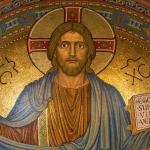
Image by Mircea Iancu from Pixabay
In my last article, “Be Like Jesus—Pick and Choose Your Scriptures!” I discussed a conversation with a friend, in which he accused me of picking and choosing scriptures to fit my personal beliefs. I pointed out that Jesus did exactly that and expects us to do the same. Check out that article, then continue with this one. Here, I’ll discuss how the apostles took Jesus’s example to heart, and you can, too.
So, Why Do We Have the Law?
The apostle Paul encountered Christians who insisted on following the whole Bible (as much of it as they had at the time). Not only did they demand their own strict obedience—they enforced it on other believers. Paul wrote to the church at Gaul (Galatia) to explain why they no longer needed to follow the Bible all the time. Galatians 3:19-29 says:
Why then the law? It was added because of transgressions, until the offspring would come to whom the promise had been made, and it was ordained through angels by a mediator. Now a mediator involves more than one party, but God is one.
Is the law then opposed to the promises of God? Certainly not! For if a law had been given that could make alive, then righteousness would indeed come through the law. But the scripture has imprisoned all things under the power of sin, so that what was promised through the faith of Jesus Christ might be given to those who believe.
Now before faith came, we were imprisoned and guarded under the law until faith would be revealed. Therefore the law was our disciplinarian until Christ came, so that we might be reckoned as righteous by faith. But now that faith has come, we are no longer subject to a disciplinarian, for in Christ Jesus you are all children of God through faith. As many of you as were baptized into Christ have clothed yourselves with Christ. There is no longer Jew or Greek; there is no longer slave or free; there is no longer male and female, for all of you are one in Christ Jesus. And if you belong to Christ, then you are Abraham’s offspring, heirs according to the promise.
So, the law was there to guide people until they came to full knowledge of the truth through Jesus. Now that we have grace through Christ and the Holy Spirit’s guidance, we are no longer bound to keep the whole law.
Picking and Choosing
Like Jesus, Paul was famous for “picking and choosing” which laws he would follow. In 1 Corinthians 9:19-21, Paul says that his behavior depends on the company he keeps.
For though I am free with respect to all, I have made myself a slave to all, so that I might gain all the more. To the Jews I became as a Jew, in order to gain Jews. To those under the law I became as one under the law (though I myself am not under the law) so that I might gain those under the law. To those outside the law I became as one outside the law (though I am not outside God’s law but am within Christ’s law) so that I might gain those outside the law.
Some might say this makes Paul a hypocrite. It doesn’t. It makes him free. Paul considered himself free from following Jewish law, unless he was with Jewish people who would be offended by his freedom. In those cases, he reverted to law keeping to avoid giving offense. But that’s not how he lived every day. He freely decided which parts of the Bible applied to his life. How did he do this? By applying the principles Christ taught, and by following the Holy Spirit’s guidance.
The Law Written on Your Heart
This is why Hebrews 8:11 quotes Jeremiah 31:33-34, which says:
But this is the covenant that I will make with the house of Israel after those days, says the Lord: I will put my law within them, and I will write it on their hearts, and I will be their God, and they shall be my people. No longer shall they teach one another or say to each other, “Know the Lord,” for they shall all know me, from the least of them to the greatest, says the Lord, for I will forgive their iniquity and remember their sin no more.
What does it mean to have the law written on your heart? Not that you have the Bible memorized. Instead, it means that the same Holy Spirit that inspired the Bible lives in you. Having the law written on your heart means that if you never had a scrap of the Bible to follow, you could still live beautifully, because you are a living, walking, breathing scripture all your own. This is why you can pick and choose—because you have the Holy Spirit to help you discern the truth for yourself.
The Irony
My friend became incensed when I suggested that we can choose which parts of the Bible are applicable for our lives today. The irony is that this particular friend is covered in tattoos. Clearly, he has chosen which parts of the Bible to follow, and which parts no longer apply. (Click here to read my article, “Is It A Sin To Get Tattooed Or Pierced?) I don’t say this as a matter of criticism. I’m glad he had the understanding that allowed him the freedom to get his tattoos. I just wish he would recognize that he has freedom in other areas of life as well.
The Jerusalem Council
In Acts 15, the Jerusalem Council tackled the question of whether Gentile males need to be circumcised before they can become Christians. The law called for God’s people to be circumcised. Yet, the church understood that such a requirement would prevent many people from joining the church. So, they prayed about it. Here’s what they came up with, and wrote in a letter to the Gentile believers:
For it has seemed good to the Holy Spirit and to us to impose on you no further burden than these essentials: that you abstain from what has been sacrificed to idols and from blood and from what is strangled and from sexual immorality. If you keep yourselves from these, you will do well (Acts 15:28-29).
Note the decision-making process here. “It seemed good to the Holy Spirit and to us.” Through prayer (through a relationship with the Holy Spirit and not a relationship with the law) They came up with their solution.
Jesus Offers a Better Way
This is the same process that Jesus wants us to use today. When challenged with a conundrum, Christians are not supposed to search the scriptures as if the Bible will save. In fact, this is why Jesus criticized the religious leaders of his day. “You search the Scriptures because you think they give you eternal life. But the Scriptures point to me (John 5:39)!” Jesus didn’t want people’s faith to get stuck in the static pages of a book. Instead, he wanted his followers to base their behavior on what’s Christlike, not what’s biblical.
Jesus offers a better way. He said, “I have much to teach you, but you cannot bear it now (emphasis mine) (John 16:12).” Jesus knew that truth and its application are time-sensitive. What works for one generation might not work for another. What applies in one culture may not apply in another. So, Jesus only gave his disciples the bite-sized morsels they needed for the time being. Hebrew law was given to the Hebrew people at a particular place and time for a particular situation, and not intended to be universally applicable. In the same way, Jesus knew that even his words to his disciples were also bound in time and space. The better way is to move beyond our dependence on scripture and toward a spiritual heart.
Are We Without Guidance?
Does this mean we are without Divine guidance in the world? Of course not! Jesus said, “When the Spirit of truth comes, he will guide you into all truth (John 16:13).” In other words, when you need to make moral and ethical decisions, the Holy Spirit will lead you. Just the same way that Spirit guided the apostles to determine which parts of the Bible they would follow, and which parts no longer applied for their situation. We are not without godly guidance. But our divine direction comes not from stale words on a page. Instead, that leadership comes from the living Holy Spirit.
Many say that as Christians, we are not free to pick and choose which parts of the Bible we will follow. The truth is that everyone does. In fact, the tattoos on our bodies, the fabrics we wear, and the food we eat prove this to be the case for all Christians. While we may say that the Bible is inspired (click here to read my article on biblical inspiration), not all of it is equally applicable today. Anyone who says differently is fooling themselves because no one follows the Bible in its entirety.
For related reading, check out my other articles:
- Does The Holy Spirit Point to Jesus? Or The Other Way Around?
- Is The Biblical Canon a Dangerous Weapon?
- Does God Change God’s Mind? The Bible Appears Confused…
General Christian
History and Religion
Education and Religion
Picking and choosing scriptures

About Gregory T. Smith
I live in the beautiful Fraser Valley of British Columbia and work in northern Washington State as a behavioral health specialist with people experiencing homelessness and those who are overly involved in the criminal justice system. Before that, I spent over a quarter-century as lead pastor of several Virginia churches. My newspaper column, “Spirit and Truth” ran in Virginia newspapers for fifteen years. I am one of fourteen contributing authors of the Patheos/Quoir Publishing book “Sitting in the Shade of another Tree: What We Learn by Listening to Other Faiths.” I hold a degree in Religious Studies from Virginia Commonwealth University, and also studied at Baptist Theological Seminary at Richmond. My wife Christina and I have seven children between us, and we are still collecting grandchildren. You can read more about the author here.
Previous Post
June 27, 2024
Be Like Jesus—Pick and Choose Your Scriptures!
Next Post

July 3, 2024 "If My People, Called by My Name" Doesn't Apply to America
Recent Comments
"Absolutely, Glen! That's a great example! And the Roman centurion who trusted Jesus. I've heard ..."
“Can You Follow Jesus and Still ..."
"Captian of the Syrian military, Naaman in 2 Kings 5 might be considered."
“Can You Follow Jesus and Still ..."
"Hi, Bob. Not sure why it's doing that...I've been having problems with my comments settings. ..."
"OMG, who CARES?!?!"
“Can You Follow Jesus and Still ..."
Browse Our Archives
Select a Category Challenging the Church Deconstruction For Pastors Heathen Christianity Holidays and special days Mental Health Social Justice Spirituality Taoism Theology Uncategorized
Select a Month October 2026 September 2026 August 2026 July 2026 June 2026 May 2026 April 2026 March 2026 February 2026 January 2026 December 2025 November 2025 October 2025 September 2025 August 2025 July 2025 June 2025 May 2025 April 2025 March 2025 February 2025 January 2025 December 2024 November 2024 October 2024 September 2024 August 2024 July 2024 June 2024 May 2024 April 2024 March 2024 February 2024 January 2024 December 2023 November 2023 October 2023 September 2023 August 2023 July 2023 June 2023 May 2023 April 2023 March 2023 February 2023 January 2023 December 2022 November 2022 October 2022 September 2022 August 2022 July 2022 June 2022 May 2022 April 2022 March 2022 February 2022 January 2022
Follow Us!
TAKE THE
Religious Wisdom Quiz
Who took Jesus’ body and placed it in a tomb?
Select your answer to see how you score.
John Peter Joseph of Arimathea Nicodemus
Related posts from Breathing Space

“Can You Follow Jesus and Still Practice Smudging?”

Lead a Church Study of “Jesus and Lao...

The Guest Who Stayed at an Unfriendly Table

When Being a Good Guest Is Better than...
TRENDING AT PATHEOS Progressive Christian

What Being a Modern-Day Apostle Means to Me
In my last column, I discussed the ins and outs of modern-day...

Did Ancient China Once Worship the God of...
Across human history, a common thread weaves through the origins of the...

Love Your Neighbor – Including Earth-Kin: Lev. 19,...
God’s command to love your neighbor means acting in an ethical and...

Lead a Church Study of “Jesus and Lao...
Guest writer Jack Thomas (The Irreverent Reverend) reflects on leading his church...

Pastoral Wisdom for Responding to Sermon Pushback
Getting sermon pushback on your social justice sermon? Learn practical, Proverbs-based strategies...

Principles for Understanding the Apostolic Ministry Today
Whenever people discover that my formal ministry title is "apostle," as in...
view all Progressive Christian blogs
What Are Your Thoughts?leave a comment
Ad-Free & Subscriber Log-In Subscription Support
- About Us
- 2026 Calendar
- Videos
- Podcasts
- Library of World Religions
- Faith In Media Tracker
- Advertise With Us
- Write for Us
- Privacy Policy
- Terms of Service
- Do Not Sell My Data
- Contact Us
- Radiant Digital
- Manage Newsletter Subscriptions
- Unsubscribe From Notifications
- Sitemap
Copyright 2008-2026, Patheos. All rights reserved.
Subscription Support Ad-Free & Subscriber Log-In
Follow Patheos