
BuddhistCatholicContemplativeEvangelicalGeneral ChristianHinduJewishLatter-day SaintMuslimNew VisionsProgressive Christian
Beliefs
- Buddhist
- Catholic
- Contemplative
- Evangelical
- General Christian
- Hindu
- Jewish
- Latter-day Saint
- More Voices
- Muslim
- New Visions
- Pagan
- Progressive Christian
Topics
- Religion News
- Food and Religion
- Sports and Religion
- Religious Art
- Religious Music and Entertainment
- Religious Events
- History and Religion
- Style and Religion
- Politics and Religion
- Women in Religion
- Recreation Outdoors and Religion
- Business Finance and Religion
- Careers Workplace and Religion
- Education and Religion
- Family Parenting and Religion
- Health Fitness and Religion
- Home and Religion
- Relationships and Religion
- Technology and Religion
- Travel and Religion
Columnists
- Buddhist Columnists
- Business Finance and Religion Columnists
- Careers Workplace and Religion Columnists
- Catholic Columnists
- Contemplative Columnists
- Education and Religion Columnists
- Evangelists Columnists
- Family Parenting and Religion Columnists
- General Christian Columnists
- Health Fitness and Religion Columnists
- Hindu Columnists
- History and Religion Columnists
- Home and Religion Columnists
- Jewish Columnists
- More Voices Columnists
- Latter Day Columnists
- Muslim Columnists
- New Visions Columnists
- Nonreligious Columnists
- Pagan Columnists
- Politics and Religion Columnists
- Progressive Columnists
- Recreation Outdoors and Religion Columnists
- Relationships and Religion Columnists
- Religion News Columnists
- Religious Art Columnists
- Religious Events Columnists
- Religious Music and Entertainment Columnists
- Sports and Religion Columnists
- Style and Religion Columnists
- Technology and Religion Columnists
- Travel and Religion Columnists
- Women in Religion Columnists
Resource Library
- 2026 Calendar
- Library of World Religions
- The 100 Most Holy Places on Earth
- Patheos Answers
- Podcasts
- Videos
- Faith Leaders Database
- Anglican Episcopalian
- Bahai
- Baptist
- Buddhism
- Christianity
- Confucianism
- Eastern Orthodoxy
- Hinduism
- Holiness and Pentecostal
- ISKCON
- Islam
- Judaism
- Lutheran
- Methodist
- The Church of Jesus Christ of Latter-day Saints
- New Age
- Paganism
- Presbytarian and Reformed
- Protestantism
- Religion Behind the Scenes
- Roman Catholic
- Scientology
- Shia Islam
- Sikhism
- Sufism
- Sunni Islam
- Taoism
- Zen
- See all religions
Research Tools
 Ad-Free & Subscriber Log-In Subscription Support
Ad-Free & Subscriber Log-In Subscription Support
Follow Patheos 

- Trending:
- Forgiveness
- |
- Marriage
- |
- Consciousness
- |
- Death Penalty
- |
- Election
- |
- Halloween

-
Categories
- Home
- Progressive Christian
- Relationships and Religion
- Racism’s Day of Reckoning: From Compromise to Conviction
Racism’s Day of Reckoning: From Compromise to Conviction
Last updated on: June 13, 2024 at 6:57 pm by Gregory T. Smith
Racism’s Day of Reckoning: From Compromise to Conviction 2024-06-13T18:57:54-08:00 Gregory T. Smith
Patheos Explore the world's faith through different perspectives on religion and spirituality! Patheos has the views of the prevalent religions and spiritualities of the world.
In “Racism in the Pews: A Pastor’s Confession of Compromise,” I bared my shame. Here’s how compromise can lead to conviction and action.
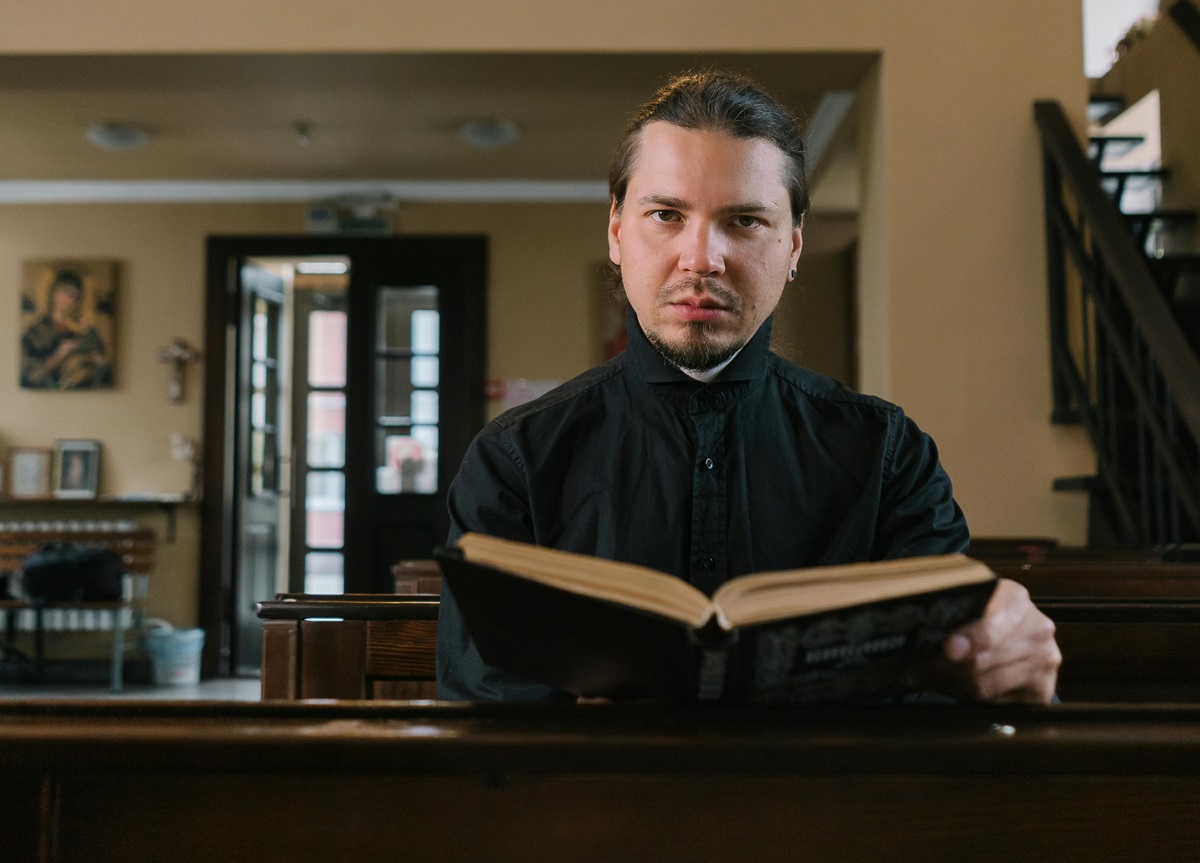
Do you remember the longstanding tradition of “testimony night” in Evangelical churches? In the absence of a sermon, church members would get up and tell their own stories of God’s goodness. At testimony night, we heard tales of miracles, of broken relationships restored, and of blessings.
But the ones that always moved us the most were the confessions. A believer stood up and said, “This is how I’ve failed, but this is also where I’ve learned, where God has given grace, and where I can do better.” I think its time that we had testimony night. I’ve gotten the ball rolling with my confession.
My last article was difficult to write. I hope you’ll open this link and read it if you haven’t already. What I have to say next hinges on your understanding of my horrible mistake, and my desire to move forward.
The Chasm of Segregation
In his book, The Color of Compromise: The Truth about the American Church’s Complicity in Racism, author Jemar Tisby writes about a chasm of segregation between White people and people of color:
[Martin Luther King Jr.’s “I Have a Dream” speech] was August 28, 1963. More than fifty years later, how far has the American church come in terms of race relations? The “Whites Only” and “No Negros Allowed” signs have been taken down, but schools remain segregated. People of color are incarcerated at disproportionally high rates. Black unemployment remains double that of whites. Most poignantly, churches remain largely segregated. The reluctance to reckon with racism has led to a chasm between black and white Christians in theology, politics, and culture. This chasm only makes it harder to productively communicate and take effective action around racial issues. (Pg. 192)
I was still struggling with this chasm when, a few months after the incident of my last article, another opportunity emerged for the church and me to do the right thing. When that new situation arose, I had to decide whether I would repeat my mistake or begin to rebuild the bridge.
“We Don’t Rent…to Their Kind.”
I received a phone call from a bride-to-be who said she was looking for a church building to rent, for their upcoming ceremony. She explained to me that she was a member of a local congregation, but their facility was too small to manage the crowd she expected. “We’ve always driven by your church building and thought how pretty it was, and we’re wondering if it’s available.” I told her that I didn’t make those decisions but had a committee that handled bookings of our facilities. I’d talk with the committee and have them give her a call. I did just that, and once I had passed the job on to the committee chair, I thought nothing else of it.
Some time later, the committee chair called me back, her voice quavering anxiously. “Did you know that the couple is Black?”
I was glad that she couldn’t see me rolling my eyes through the telephone, but I don’t think I disguised my feelings as telegraphed through my own voice. “Well, first of all, you can’t see what a person looks like through the telephone, so no, I didn’t know that they were Black. But second, so what if they are Black? Why does that make a difference? This is, after all, the twenty-first century.”
That ruffled her. “I…well, I… you don’t understand,” she said. “We don’t rent our building to their kind. The committee is going to tell them no.”
A Convenient Excuse
That pissed me off. I knew very well that we did not have a discrimination policy, and that it was only the intent of the committee, or only the chair of the committee, to keep people of color out of our building. So, I told her the church at large must decide this. (Baptist churches vote on everything!)
By the time our church business meeting came up, word had spread throughout the congregation. One of the things on the agenda would be a decision as to whether or not we would allow this particular couple to rent our building. People came with their proverbial guns loaded for bear. However, as we began to look into the date the couple had requested the use of our building, we discovered that the church already had a major event planned for that entire weekend. So, the membership decided that we would contact the couple and say that we were sorry, it was nothing personal, but the building simply wasn’t available for their wedding. It was an all too convenient excuse.
Non-Discrimination Resolution
That pacified a few people, but it just made me even more angry. I had come to the meeting prepared to settle this matter for the last time. Instead, the missed opportunity to decide for inclusion seemed like one more nail in the church’s racist coffin. So, at our next business meeting after that, I came to the church with a well-drafted non-discrimination resolution that I wanted the church to pass. After reading the resolution and allowing time for discussion, I asked for the vote to be taken by show of hands. And, to my surprise, the resolution passed with only a few dissenting votes. What a cause for celebration!
In The Color of Compromise, Tisby writes:
In the Bible, James 4:17 says, “If anyone, then, knows the good they ought to do and doesn’t do it, it is sin for them”…The church today must practice the good that ought to be done. To look at this history and then refuse to act only perpetuates racist patterns. It is time for the church to stand against racism and compromise no longer (Pg 212).
Not “Publicly Racist”
I was proud that my church had known the good that needed to be done, and then had the courage to act on its convictions. I was delighted with the decision that I framed the non-discrimination policy. Then, I nailed it to the wall in the sanctuary, in a spot where every passerby would see it. It was only later that I learned that not everybody who had voted for the policy actually agreed with it. When asked why they had supported it, one grumbler stated, “The vote was by show of hands—I wasn’t going to be publicly racist.”
And isn’t that just the thing? The church doesn’t want to be publicly racist. That’s why the deacon took me aside in private to say I shouldn’t preach at the Black church. It’s why everyone felt relieved when our building just happened to be unavailable for the wedding. Why the few African Americans who have entered White churches in the South have done so with a sense of dread—not because of what’s said to their face, but behind their backs.
In my experience, overt, malicious racism in the church is rare. But silent racism still thrives. But I have wondered why the church nominated do-nothing parishioners to be deacons, when our one Black member, already ordained a deacon at another Baptist church, never got a mention. I have had to explain why it’s offensive when farmers refer to the migrant workers they employ as “Our Mexicans,” (especially when some were from Honduras). And I have heard the loud silent gasps of the congregation when a person of color ascended the pulpit to preach in my place.
Anti-Racism
Racism has been a pernicious thorn in the flesh of the Southern, White, evangelical church for a long time. I confess that when I was younger, I compromised my own beliefs to keep the peace. I didn’t realize at the time that it’s not enough to be non-racist. Only an anti-racist stance from church leadership can break the cycle of overt hatred and violence, as well as covert undercuts and bigotry. Ephesians 2:13-15 says:
But now in Christ Jesus you who once were far off have been brought near by the blood of Christ. For he is our peace; in his flesh he has made both into one and has broken down the dividing wall, that is, the hostility between us, abolishing the law with its commandments and ordinances, that he might create in himself one new humanity in place of the two, thus making peace…
White Christians, if we believe that’s true, then it’s not enough to defend our perceived non-racism by proclaiming that we have Black friends. It’s not enough that we try to be fair and equitable by declaring that “all lives matter,” rather than singling out the significant pain of one particular group. Instead, we’ve got to come to terms with the systemic racism present in our society and in our churches. We’ve got to have courage enough to face our own racism, because it’s there, whether we like it or not. We’ve got to educate ourselves, and gain perspectives we’ve never had before (Jemar Tisby’s book is a good start). And we’ve got to become proactive rather than reactive.
How is This Not Virtue-Signaling?
As I conclude this article, I must ask myself an important question: How is this not virtue signaling? Virtue signaling is calling attention to your position to make you look better. I hope that, if you read my last article, you don’t think it makes me look better. On the contrary, it makes me look pretty damn weak. Instead of virtue signaling, I hope that this article is virtue challenging. In the spirit of amends and reparations, I call attention to my failure in the hopes that we can all learn to do better. Maybe one day, when we’re all doing better, we won’t need articles like this.
For related reading, check out my other articles:
- Pastors: If Your Deconstruction Gets You Crucified, There’s Hope of Resurrection
- Who Helped Jesus Carry the Cross?
- Stop Dehumanizing And Demonizing Your Enemies!
General Christian
Relationships and Religion
Careers, Workplace and Religion

About Gregory T. Smith
I live in the beautiful Fraser Valley of British Columbia and work in northern Washington State as a behavioral health specialist with people experiencing homelessness and those who are overly involved in the criminal justice system. Before that, I spent over a quarter-century as lead pastor of several Virginia churches. My newspaper column, “Spirit and Truth” ran in Virginia newspapers for fifteen years. I am one of fourteen contributing authors of the Patheos/Quoir Publishing book “Sitting in the Shade of another Tree: What We Learn by Listening to Other Faiths.” I hold a degree in Religious Studies from Virginia Commonwealth University, and also studied at Baptist Theological Seminary at Richmond. My wife Christina and I have seven children between us, and we are still collecting grandchildren. You can read more about the author here.
Previous Post

June 10, 2024
Racism in the Pews: A Pastor's Confession of Compromise
Next Post

June 14, 2024 From Anxiety to Joy: Inside Out 2 and the Skylight App
Recent Comments
"Absolutely, Glen! That's a great example! And the Roman centurion who trusted Jesus. I've heard ..."
“Can You Follow Jesus and Still ..."
"Captian of the Syrian military, Naaman in 2 Kings 5 might be considered."
“Can You Follow Jesus and Still ..."
"Hi, Bob. Not sure why it's doing that...I've been having problems with my comments settings. ..."
"OMG, who CARES?!?!"
“Can You Follow Jesus and Still ..."
Browse Our Archives
Select a Category Challenging the Church Deconstruction For Pastors Heathen Christianity Holidays and special days Mental Health Social Justice Spirituality Taoism Theology Uncategorized
Select a Month October 2026 September 2026 August 2026 July 2026 June 2026 May 2026 April 2026 March 2026 February 2026 January 2026 December 2025 November 2025 October 2025 September 2025 August 2025 July 2025 June 2025 May 2025 April 2025 March 2025 February 2025 January 2025 December 2024 November 2024 October 2024 September 2024 August 2024 July 2024 June 2024 May 2024 April 2024 March 2024 February 2024 January 2024 December 2023 November 2023 October 2023 September 2023 August 2023 July 2023 June 2023 May 2023 April 2023 March 2023 February 2023 January 2023 December 2022 November 2022 October 2022 September 2022 August 2022 July 2022 June 2022 May 2022 April 2022 March 2022 February 2022 January 2022
Follow Us!
TAKE THE
Religious Wisdom Quiz
What is the correct order of the seven churches addressed in Revelation?
Select your answer to see how you score.
Ephesus, Smyrna, Pergamum, Thyatira, Sardis, Philadelphia, Laodicea Ephesus, Pergamum, Smyrna, Sardis, Thyatira, Laodicea, Philadelphia Laodicea, Philadelphia, Sardis, Thyatira, Pergamum, Smyrna, Ephesus Smyrna, Ephesus, Thyatira, Pergamum, Philadelphia, Sardis, Laodicea
Related posts from Breathing Space

“Can You Follow Jesus and Still Practice Smudging?”

Lead a Church Study of “Jesus and Lao...

The Guest Who Stayed at an Unfriendly Table

When Being a Good Guest Is Better than...
TRENDING AT PATHEOS Progressive Christian

What Being a Modern-Day Apostle Means to Me
In my last column, I discussed the ins and outs of modern-day...

Did Ancient China Once Worship the God of...
Across human history, a common thread weaves through the origins of the...

Love Your Neighbor – Including Earth-Kin: Lev. 19,...
God’s command to love your neighbor means acting in an ethical and...

Lead a Church Study of “Jesus and Lao...
Guest writer Jack Thomas (The Irreverent Reverend) reflects on leading his church...

Pastoral Wisdom for Responding to Sermon Pushback
Getting sermon pushback on your social justice sermon? Learn practical, Proverbs-based strategies...

Principles for Understanding the Apostolic Ministry Today
Whenever people discover that my formal ministry title is "apostle," as in...
view all Progressive Christian blogs
What Are Your Thoughts?leave a comment
Ad-Free & Subscriber Log-In Subscription Support
- About Us
- 2026 Calendar
- Videos
- Podcasts
- Library of World Religions
- Faith In Media Tracker
- Advertise With Us
- Write for Us
- Privacy Policy
- Terms of Service
- Do Not Sell My Data
- Contact Us
- Radiant Digital
- Manage Newsletter Subscriptions
- Unsubscribe From Notifications
- Sitemap
Copyright 2008-2026, Patheos. All rights reserved.
Subscription Support Ad-Free & Subscriber Log-In
Follow Patheos