
BuddhistCatholicContemplativeEvangelicalGeneral ChristianHinduJewishLatter-day SaintMuslimNew VisionsProgressive Christian
Beliefs
- Buddhist
- Catholic
- Contemplative
- Evangelical
- General Christian
- Hindu
- Jewish
- Latter-day Saint
- More Voices
- Muslim
- New Visions
- Pagan
- Progressive Christian
Topics
- Religion News
- Food and Religion
- Sports and Religion
- Religious Art
- Religious Music and Entertainment
- Religious Events
- History and Religion
- Style and Religion
- Politics and Religion
- Women in Religion
- Recreation Outdoors and Religion
- Business Finance and Religion
- Careers Workplace and Religion
- Education and Religion
- Family Parenting and Religion
- Health Fitness and Religion
- Home and Religion
- Relationships and Religion
- Technology and Religion
- Travel and Religion
Columnists
- Buddhist Columnists
- Business Finance and Religion Columnists
- Careers Workplace and Religion Columnists
- Catholic Columnists
- Contemplative Columnists
- Education and Religion Columnists
- Evangelists Columnists
- Family Parenting and Religion Columnists
- General Christian Columnists
- Health Fitness and Religion Columnists
- Hindu Columnists
- History and Religion Columnists
- Home and Religion Columnists
- Jewish Columnists
- More Voices Columnists
- Latter Day Columnists
- Muslim Columnists
- New Visions Columnists
- Nonreligious Columnists
- Pagan Columnists
- Politics and Religion Columnists
- Progressive Columnists
- Recreation Outdoors and Religion Columnists
- Relationships and Religion Columnists
- Religion News Columnists
- Religious Art Columnists
- Religious Events Columnists
- Religious Music and Entertainment Columnists
- Sports and Religion Columnists
- Style and Religion Columnists
- Technology and Religion Columnists
- Travel and Religion Columnists
- Women in Religion Columnists
Resource Library
- 2026 Calendar
- Library of World Religions
- The 100 Most Holy Places on Earth
- Patheos Answers
- Podcasts
- Videos
- Faith Leaders Database
- Anglican Episcopalian
- Bahai
- Baptist
- Buddhism
- Christianity
- Confucianism
- Eastern Orthodoxy
- Hinduism
- Holiness and Pentecostal
- ISKCON
- Islam
- Judaism
- Lutheran
- Methodist
- The Church of Jesus Christ of Latter-day Saints
- New Age
- Paganism
- Presbytarian and Reformed
- Protestantism
- Religion Behind the Scenes
- Roman Catholic
- Scientology
- Shia Islam
- Sikhism
- Sufism
- Sunni Islam
- Taoism
- Zen
- See all religions
Research Tools
 Ad-Free & Subscriber Log-In Subscription Support
Ad-Free & Subscriber Log-In Subscription Support
Follow Patheos 

- Trending:
- Forgiveness
- |
- Marriage
- |
- Consciousness
- |
- Death Penalty
- |
- Election
- |
- Halloween

-
Categories
- Home
- Progressive Christian
- Religious Events
- Christian & Pagan Holidays: A Midsummer Night’s Dream
Christian & Pagan Holidays: A Midsummer Night’s Dream
Last updated on: June 20, 2024 at 9:04 am by Gregory T. Smith
Christian & Pagan Holidays: A Midsummer Night’s Dream 2024-06-20T09:04:02-08:00 Gregory T. Smith
Patheos Explore the world's faith through different perspectives on religion and spirituality! Patheos has the views of the prevalent religions and spiritualities of the world.
Shakespeare’s “A Midsummer Night’s Dream” is a magical romp through an ancient fairyland. How can it help you celebrate the summer solstice?
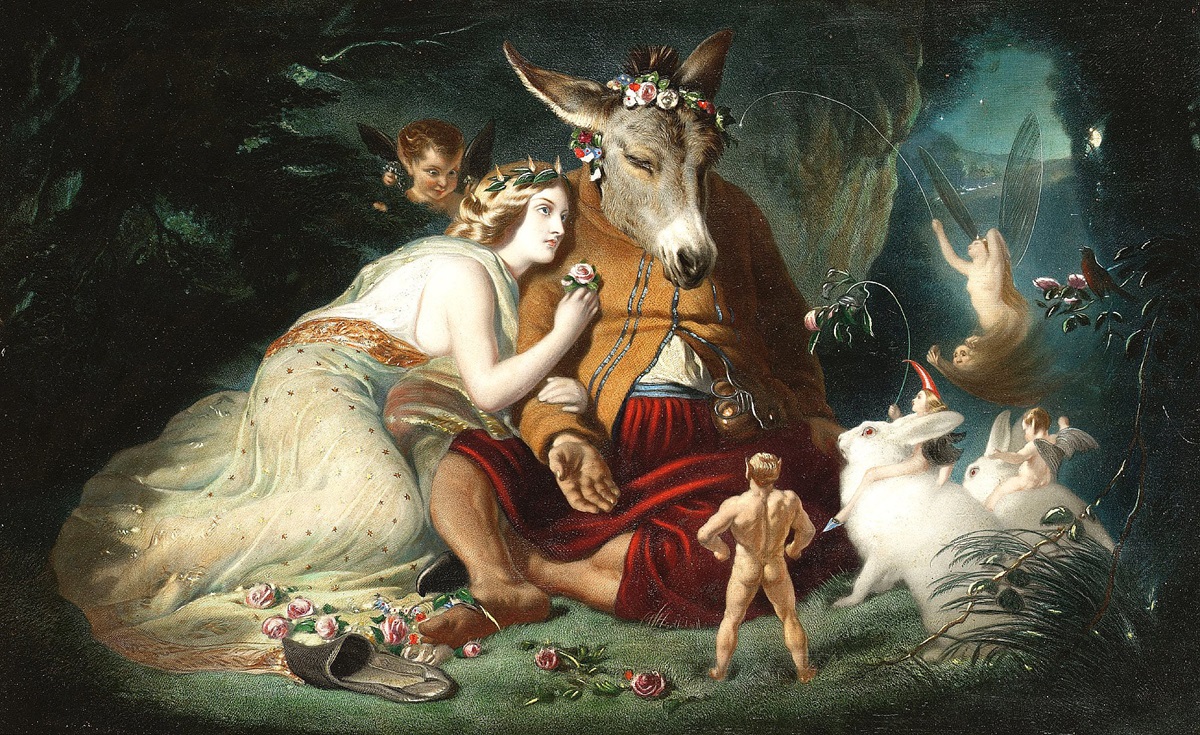
“Sir Edwin Landseer – ‘A Midsummer Night’s Dream'” by sofi01 is licensed under CC BY-NC 2.0.
It’s halfway to Christmas. And time for a little magic. Shakespeare depicts midsummer as a mystical time when fairies play tricks on people and love is in the air. The holiday has a long tradition in northern Europe. Neopagans call the summer solstice Litha, while Christians observe it as the Nativity of John the Baptist.
Why is It Called “Midsummer”?
To those unfamiliar with the Wheel of the Year, the terms can seem a bit awkward. On our calendar, summer begins on or around June 21, and winter begins on or around December 21. So, Midsummer isn’t the middle of astronomical summer, and Midwinter isn’t the middle of astronomical winter. The middle of summer is near August 1, and the middle of winter is Groundhog Day. So, why the confusion?
Remember that our calendar isn’t the only one used around the world and hasn’t been the only one used throughout history. In ancient northern European reckoning, summer begins on May 1 and ends on August 1. Thus, Midsummer is the middle of summer, and Midwinter is the middle of winter. Hence, the Christmas song, “In the Bleak Midwinter” is about Yule, not Groundhog Day.
The Wheel of the Year
In my article on Groundhogs, Candlemas, and Imbolc I discuss the Wheel of the Year:
Pre-Christian Celts divided the year into eight equal portions, called “The Wheel of the Year.” The quarters fall at the summer solstice (Litha, on or around June 21), the winter solstice (Yule, on or around December 21), spring equinox (Ostara, on or around March 21), and fall equinox (Mabon, on or around September 21). The cross-quarters lie at the midpoints in each season. The midpoint of spring is Beltane, on or around May 1. The middle of summer is Lughnasadh, on or around August 1. Halfway through fall is Samhain, on or around November 1. The midpoint of winter is Imbolc, on or around February 1. (These dates are inverted for those who celebrate in the southern hemisphere.) Each of these quarters and cross-quarters represents a different phase in the agricultural year and carries with it a spiritual significance.**
When Roman Catholicism entered the unchurched lands of Western Europe, it Christianized the indigenous festivals to facilitate the conversion of Pagans. Ostara was renamed Easter. Beltane was transformed into May Day with its fertility pole. Litha corresponds to the Roman Catholic Solemnity of the Birth of John the Baptist. Lughnasadh, the festival of first harvest, became Lammas, or the Loaf Mass. Mabon, the feast of the second harvest, became the Feast of Matthew the Apostle. The Church turned Samhain into All Saints’ Day. We are more familiar with the day before—All Hallows Eve, or Halloween. Christmas eclipsed Yule to such an extent that many think they are synonymous. And finally, Candlemas replaced Imbolc.

Midsummer Traditions
In Western and Northern Europe, Midsummer’s Day (Old English, Midsumor) is traditionally celebrated, not on the solstice itself, but on June 24. So, Shakespeare’s magical rom-com “A Midsummer Night’s Dream” would have been set on the night of June 23.
Europeans have been observing Midsummer since Neolithic times. Stonehenge is one example of many standing stones, dolmens, and other markers to observe astronomical solstices. Historians, archaeologists, and anthropologists debate what actually went on at these locations. However, nobody debates their connection to some kind of Midsummer and Midwinter observances.
Across Pre-Christian Europe, Midsummer festivals involved singing, dancing, playing games, and indulging in sumptuous foods. Celebrants lit bonfires on Midsummer Night, dancing around them or leaping over them. In the Middle Ages, these bonfires were made of bones and other waste. So, the word “bonfire” actually means “bone fire.” Ancient celebrants also lit large wheels on fire and rolled them downhill into lakes. This represented the decline of the light from the summer solstice to Yule.
Christianization of the Holiday
Pre-Christian Europeans celebrated the long days of summer with bonfires in honor of the sun that provided light and life to the people. As Christianity moved into the reaches of Europe, it sought to evangelize its inhabitants. Rather than contest their Pagan practices and holidays, the church “baptized” many of the festivals. Church leaders knew the people would continue observing them anyway. So, the Church simply gave the holidays new meaning. Thus, Midsumor became the Feast of the Nativity of St. John the Baptist.
St. John’s Day
The Gospel of Luke says that Jesus’s cousin John the Baptist was six months older than Christ. So, St. John’s Day is roughly six months from Christmas. Colonizing Christians equated Christmas with Yule—the shortest and darkest day of the year when the light starts returning day by day. Mirroring this holiday, the Church celebrated the summer solstice as the longest and brightest day of the year when the light begins to fade. As Jesus was the “true light coming into the world,” John’s light needed to fade to make room for Jesus. For context, let’s look at some scriptures about John the Baptist.
John: A Witness to the Light
The Church placed St. John’s Day where it did because it was six months from Christmas, and because of the baptist’s association with decreasing light. In the Gospel of John (the Beloved, not the Baptist), the evangelist writes:
John 1:6 – There was a man sent from God whose name was John. 7 He came as a witness to testify to the light, so that all might believe through him. 8 He himself was not the light, but he came to testify to the light. 9 The true light, which enlightens everyone, was coming into the world.
“He Must Increase, But I Must Decrease”
Later, when Jesus’s ministry increased along with his following, the baptist’s disciples took issue with their teacher’s decreasing popularity. The evangelist writes:
John 3:27 – John answered, “No one can receive anything except what has been given from heaven. 28 You yourselves are my witnesses that I said, ‘I am not the Messiah, but I have been sent ahead of him.’ 29 He who has the bride is the bridegroom. The friend of the bridegroom who stands and hears him rejoices greatly at the bridegroom’s voice. For this reason my joy has been fulfilled. 30 He must increase, but I must decrease.”
Because John’s popularity began to decrease as Jesus began his messianic ministry, John is associated with the decrease of light. For this reason, Midsummer is the perfect time to celebrate his birth.
St. John’s Day Celebrations
John is best represented with the dual elements of fire and water. Fire, because Jesus is called the Light of the World, about whom John was called to testify. On the website, “Catholic Culture,” Jennifer Gregory Miller writes:
Light (as in sun and fire) and water are the two imageries that keep repeating for this feast (and saint). All over Europe bonfires were traditional for St. John’s Eve. “The Church blesses such fires, praying God that the faithful may overcome the darkness of the world and reach the “indefectible light” of God.” (Dir. Pop. Piety, #225) Here we can see the merging of popular piety with the liturgy with the official blessing from the Roman Ritual for the bonfire.
Miller says that the Church celebrates John’s birthday through the element of water, as well.
And as St. John THE BAPTIST baptized with water, including Our Lord, water plays a significant role. In reading about different customs throughout the world my favorite has to be Mexico, where they bathe and swim and throw water “baptizing” each other.
Catholic All Year, by Kendra Tierney, is a great resource for those who want to bring Midsummer traditions out of the Middle Ages. The author suggests the typical bonfires and barbecues. She also shares a video by Elissa Mirzaei, in which children inquisitively eat locusts and wild honey, just like John. A priest stops by to bless the gathering. At the bonfire, he encourages them to use this time to focus on emulating and imitating John’s humility. Check out her website for more traditions and ideas.
Litha
Neopagans, who trace their spiritual lineage not through the Church but to their pre-Christian ancestors, celebrate Midsummer as Litha. According to Mabon House…
The name “Litha” is derived from Old English and has its origins in the Anglo-Saxon calendar. The term “Litha” is believed to be related to the word “liþa,” which translates to “gentle” or “calm” in Old English.
Shakespeare wasn’t making things up when he depicted a thin veil between the fairy world and this one. The ancients believed this to be a time when the Fae mingled with humanity. Sometimes they brought blessings, and sometimes they played tricks. Modern practitioners of the Old Ways celebrate the longest day of the year by remembering these otherworldly beings. Dhruti Bhagat writes:
The summer solstice is the longest day of the year, and in some traditions, Litha is when a battle between light and dark takes place. In this battle, the Oak King and the Holly King battle for control. During each solstice, they battle for power, and the balance shifts. The Oak King, who represents daylight, rules from the winter solstice (Yule) to Litha. During this time, the days steadily get longer. However, during Litha, the Holly King wins this battle, and the days get steadily darker until Yule.
For Neopagans, Midsummer Night isn’t just a dream about fairies—it’s an otherworld reality lived out in an annual cycle. Litha traditions bring spiritual significance to seasonal activities.
Litha Traditions
Wiccans, Neopagans, and others who celebrate Litha often recreate the old traditions of northern and Western Europe. For this reason, fire plays a big role in celebrating the lightest and longest day. As with most human festivals around the world, seasonal foods, music, and dancing play prominently. Celebrants go to the countryside, gather herbs, construct sun wheels, and enjoy bonfires. This is a good time for herbal magic, as freshly harvested herbs fill the house with aromatic potency. Modern witches adorn altars, wreaths, and other sacred spaces with flowers. Today’s Druids celebrate Litha at Stonehenge annually, welcoming the solstice light. Sophie Swan’s website gives many suggestions for Neopagans looking for Litha traditions.
My Midsummer Night’s Dream
The juncture of Litha and St. John’s Day isn’t as famous as the intersection of Yule and Christmas, or the connection between Ostara and Easter. Perhaps this is because of the Reformation and its shift away from saints’ days. Most Protestants haven’t even heard of the Solemnity of the Nativity of St. John the Baptist. Or maybe it’s just because people are busier at the beach, lake, and golf course this time of year. But here’s a suggestion for people of any faith, to celebrate the summer solstice:
Regardless of religion, summer is a perfect time for barbecues and bonfires. Celebrate the longer days cooking outdoors. Take the chill off the nights with a bonfire and some good friends. Build bridges across religions. If you’re a Christian, make friends with a Neopagan. If you’re a Wiccan, invite a Christian to your Midsummer festival. Sit in the shade of another tree for a while and see if you can find some common ground. My Midsummer night’s dream is that we could use the holiday to put differences aside and seek peace together.
Practicing Humility
In Matthew 11:11, Jesus has something amazing to say about his cousin John:
“Truly I tell you, among those born of women no one has arisen greater than John the Baptist, yet the least in the kingdom of heaven is greater than he.”
John was not great just because of his ministry. He was great because of his humility. He was willing to step back so Jesus could step forward. Perhaps this is a lesson everyone can learn from. To practice the humility of John, we’ve got to put others first. We’ve got to become quiet, and let the other person speak.
In Shakespeare’s A Midsummer Night’s Dream, humans and fairies interact, with comedic results. The impish Puck turns Nick Bottom’s head into a donkey’s head. This reminds us of what asses we all can be—especially when it comes to religion. Thankfully, summer is a time when you don’t hear a lot of people arguing about religion. There’s no “Jesus is the reason for the season,” or “They took my Samhain and made it All Saints’ Day.” Instead, there’s only summer—and a celebration of light. This solstice let’s put our asinine religious differences behind us and enjoy a Midsummer night’s dream of peace together.
For related reading, check out my other articles in this series:
- Christians & Pagan Holidays: Groundhogs, Candlemas & Imbolc
- Christian & Pagan Holidays: Easter Bunnies Come From Ostara
- Christian & Pagan Holidays: Beltane & May Day
Pagan
Religious Events
History and Religion

About Gregory T. Smith
I live in the beautiful Fraser Valley of British Columbia and work in northern Washington State as a behavioral health specialist with people experiencing homelessness and those who are overly involved in the criminal justice system. Before that, I spent over a quarter-century as lead pastor of several Virginia churches. My newspaper column, “Spirit and Truth” ran in Virginia newspapers for fifteen years. I am one of fourteen contributing authors of the Patheos/Quoir Publishing book “Sitting in the Shade of another Tree: What We Learn by Listening to Other Faiths.” I hold a degree in Religious Studies from Virginia Commonwealth University, and also studied at Baptist Theological Seminary at Richmond. My wife Christina and I have seven children between us, and we are still collecting grandchildren. You can read more about the author here.
Previous Post

June 16, 2024
Call Trans Folks by Their New Names and Pronouns Today!
Next Post
June 24, 2024 How You Can Embrace the Mysterious Virtue of Jesus & Lao Tzu
Recent Comments
"Absolutely, Glen! That's a great example! And the Roman centurion who trusted Jesus. I've heard ..."
“Can You Follow Jesus and Still ..."
"Captian of the Syrian military, Naaman in 2 Kings 5 might be considered."
“Can You Follow Jesus and Still ..."
"Hi, Bob. Not sure why it's doing that...I've been having problems with my comments settings. ..."
"OMG, who CARES?!?!"
“Can You Follow Jesus and Still ..."
Browse Our Archives
Select a Category Challenging the Church Deconstruction For Pastors Heathen Christianity Holidays and special days Mental Health Social Justice Spirituality Taoism Theology Uncategorized
Select a Month October 2026 September 2026 August 2026 July 2026 June 2026 May 2026 April 2026 March 2026 February 2026 January 2026 December 2025 November 2025 October 2025 September 2025 August 2025 July 2025 June 2025 May 2025 April 2025 March 2025 February 2025 January 2025 December 2024 November 2024 October 2024 September 2024 August 2024 July 2024 June 2024 May 2024 April 2024 March 2024 February 2024 January 2024 December 2023 November 2023 October 2023 September 2023 August 2023 July 2023 June 2023 May 2023 April 2023 March 2023 February 2023 January 2023 December 2022 November 2022 October 2022 September 2022 August 2022 July 2022 June 2022 May 2022 April 2022 March 2022 February 2022 January 2022
Follow Us!
TAKE THE
Religious Wisdom Quiz
What does "Barnabas" mean?
Select your answer to see how you score.
Faithful one Son of encouragement Gifted one Son of thunder
Related posts from Breathing Space

All the Colors of the Rainbow Testify to...
No, the Rainbow is Not a Christian Trademark

Holy Water Isn’t Acid. Stop Weaponizing Faith.
TRENDING AT PATHEOS Progressive Christian

What Being a Modern-Day Apostle Means to Me
In my last column, I discussed the ins and outs of modern-day...

Did Ancient China Once Worship the God of...
Across human history, a common thread weaves through the origins of the...

Love Your Neighbor – Including Earth-Kin: Lev. 19,...
God’s command to love your neighbor means acting in an ethical and...

Lead a Church Study of “Jesus and Lao...
Guest writer Jack Thomas (The Irreverent Reverend) reflects on leading his church...

Pastoral Wisdom for Responding to Sermon Pushback
Getting sermon pushback on your social justice sermon? Learn practical, Proverbs-based strategies...

Principles for Understanding the Apostolic Ministry Today
Whenever people discover that my formal ministry title is "apostle," as in...
view all Progressive Christian blogs
What Are Your Thoughts?leave a comment
Ad-Free & Subscriber Log-In Subscription Support
- About Us
- 2026 Calendar
- Videos
- Podcasts
- Library of World Religions
- Faith In Media Tracker
- Advertise With Us
- Write for Us
- Privacy Policy
- Terms of Service
- Do Not Sell My Data
- Contact Us
- Radiant Digital
- Manage Newsletter Subscriptions
- Unsubscribe From Notifications
- Sitemap
Copyright 2008-2026, Patheos. All rights reserved.
Subscription Support Ad-Free & Subscriber Log-In
Follow Patheos