
BuddhistCatholicContemplativeEvangelicalGeneral ChristianHinduJewishLatter-day SaintMuslimNew VisionsProgressive Christian
Beliefs
- Buddhist
- Catholic
- Contemplative
- Evangelical
- General Christian
- Hindu
- Jewish
- Latter-day Saint
- More Voices
- Muslim
- New Visions
- Pagan
- Progressive Christian
Topics
- Religion News
- Food and Religion
- Sports and Religion
- Religious Art
- Religious Music and Entertainment
- Religious Events
- History and Religion
- Style and Religion
- Politics and Religion
- Women in Religion
- Recreation Outdoors and Religion
- Business Finance and Religion
- Careers Workplace and Religion
- Education and Religion
- Family Parenting and Religion
- Health Fitness and Religion
- Home and Religion
- Relationships and Religion
- Technology and Religion
- Travel and Religion
Columnists
- Buddhist Columnists
- Business Finance and Religion Columnists
- Careers Workplace and Religion Columnists
- Catholic Columnists
- Contemplative Columnists
- Education and Religion Columnists
- Evangelists Columnists
- Family Parenting and Religion Columnists
- General Christian Columnists
- Health Fitness and Religion Columnists
- Hindu Columnists
- History and Religion Columnists
- Home and Religion Columnists
- Jewish Columnists
- More Voices Columnists
- Latter Day Columnists
- Muslim Columnists
- New Visions Columnists
- Nonreligious Columnists
- Pagan Columnists
- Politics and Religion Columnists
- Progressive Columnists
- Recreation Outdoors and Religion Columnists
- Relationships and Religion Columnists
- Religion News Columnists
- Religious Art Columnists
- Religious Events Columnists
- Religious Music and Entertainment Columnists
- Sports and Religion Columnists
- Style and Religion Columnists
- Technology and Religion Columnists
- Travel and Religion Columnists
- Women in Religion Columnists
Resource Library
- 2026 Calendar
- Library of World Religions
- The 100 Most Holy Places on Earth
- Patheos Answers
- Podcasts
- Videos
- Faith Leaders Database
- Anglican Episcopalian
- Bahai
- Baptist
- Buddhism
- Christianity
- Confucianism
- Eastern Orthodoxy
- Hinduism
- Holiness and Pentecostal
- ISKCON
- Islam
- Judaism
- Lutheran
- Methodist
- The Church of Jesus Christ of Latter-day Saints
- New Age
- Paganism
- Presbytarian and Reformed
- Protestantism
- Religion Behind the Scenes
- Roman Catholic
- Scientology
- Shia Islam
- Sikhism
- Sufism
- Sunni Islam
- Taoism
- Zen
- See all religions
Research Tools
 Ad-Free & Subscriber Log-In Subscription Support
Ad-Free & Subscriber Log-In Subscription Support
Follow Patheos 

- Trending:
- Forgiveness
- |
- Marriage
- |
- Consciousness
- |
- Death Penalty
- |
- Election
- |
- Halloween

-
Categories
- Home
- Progressive Christian
- Education and Religion
- Be Like Jesus—Pick and Choose Your Scriptures!
Be Like Jesus—Pick and Choose Your Scriptures!
Last updated on: June 27, 2024 at 3:06 am by Gregory T. Smith
Be Like Jesus—Pick and Choose Your Scriptures! 2024-06-19T10:22:49-08:00 Gregory T. Smith
Patheos Explore the world's faith through different perspectives on religion and spirituality! Patheos has the views of the prevalent religions and spiritualities of the world.
When conservatives say, “You can’t pick and choose which parts of the Bible support your beliefs, and ignore the rest,” How do you respond?
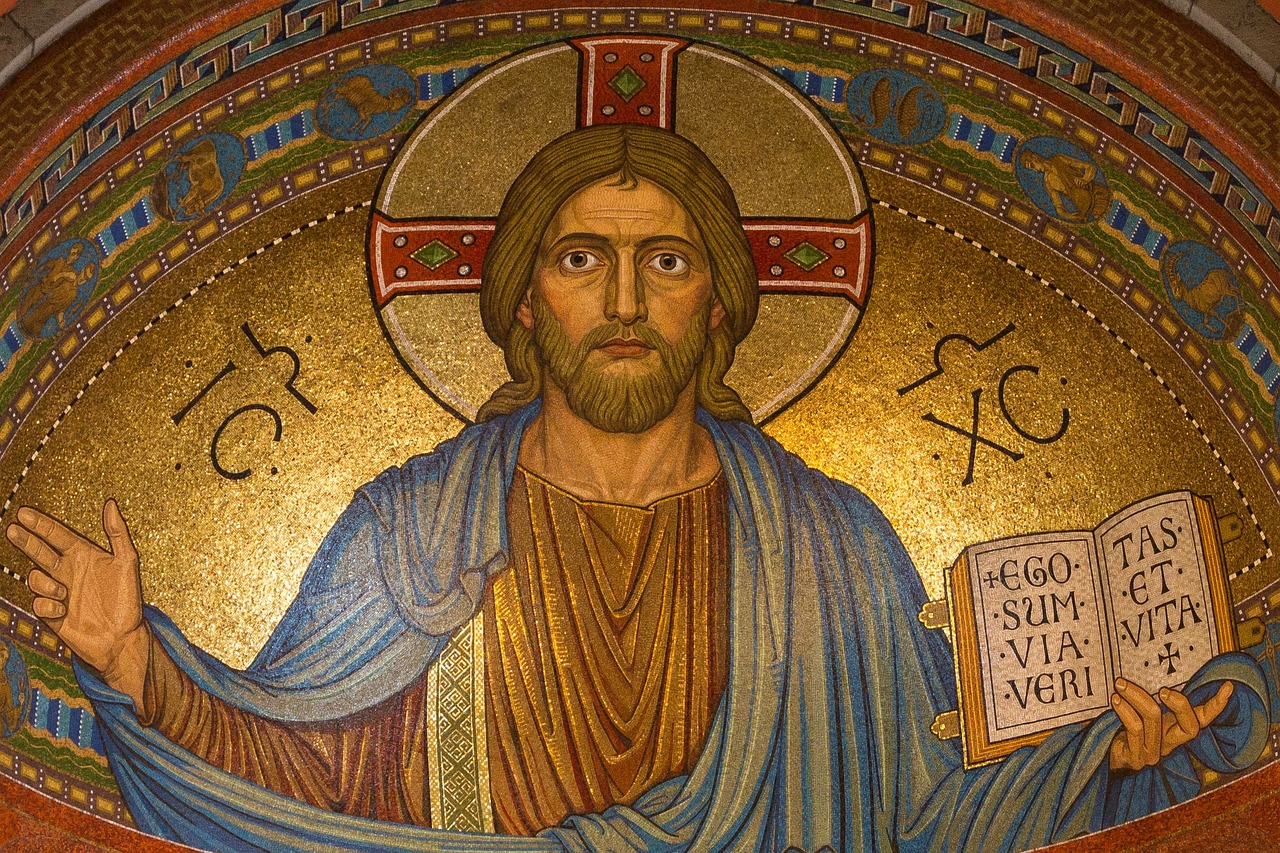
Recently, a friend gave me this conservative line about selectively reading and interpreting scriptures. I pointed out that almost nobody follows the whole Bible. There’s a reason why Christians don’t sell our daughters for a bride price, or marry them off to someone who rapes them. As it should be, you never hear about Jesus’s followers stoning their children to death for disobedience. Justice demands that slavery be illegal, even though Moses provided for its existence as an institution. There’s a reason we no longer have cities of refuge where people can escape punishment for manslaughter. Neither do we legally prevent farmers from harvesting the corners of their fields, or from shaving the corners of their beards.
Why is this? It’s because Jesus taught us how to pick and choose which laws apply to us. I told my friend, “While we might say all of the Bible is equally inspired, not all of the Bible is equally useful for today’s world.”
That set him off! He quickly retorted, “For today’s world? Really? Are you telling us that God’s word has an expiration date if it doesn’t agree with people’s personal desires?” How would you respond to this?
The Bible as a Jumping-Off Point
Jesus had a long history of contradicting and rewriting the Bible. Here are five Jesus quotes:
- Matthew 5:21-22a – You have heard that it was said to those of ancient times, ‘You shall not murder,’ and ‘whoever murders shall be liable to judgment.’ But I say to you that if you are angry with a brother or sister, you will be liable to judgment, and if you insult a brother or sister, you will be liable to the council…
- Matthew 5:2-27 – You have heard that it was said, ‘You shall not commit adultery.’ But I say to you that everyone who looks at a woman with lust has already committed adultery with her in his heart.
- Matthew 5:31-32 – It was also said, ‘Whoever divorces his wife, let him give her a certificate of divorce.’ But I say to you that anyone who divorces his wife, except on the ground of sexual immorality, causes her to commit adultery, and whoever marries a divorced woman commits adultery.
- Matthew 5:33-35 – Again, you have heard that it was said to those of ancient times, ‘You shall not swear falsely, but carry out the vows you have made to the Lord.’ But I say to you: Do not swear at all, either by heaven, for it is the throne of God, or by the earth, for it is his footstool, or by Jerusalem, for it is the city of the great King.
- Matthew 5:38-39 – “You have heard that it was said, ‘An eye for an eye and a tooth for a tooth.’ But I say to you: Do not resist an evildoer. But if anyone strikes you on the right cheek, turn the other also.
Jesus taught us how to use the Bible as a jumping-off point for moral teaching. He also demonstrated how you can go beyond its basic precepts to create an ethical system for yourself. Moses’s law was radical for its day. It served to transform a nomadic group of tribes into a nation. But Jesus knew it needed revising. This is why he so often contradicted and broke the law.
Jesus Disregarded the Law as Needed
As an example, let’s look at Jesus’s willingness to disregard scripture that prohibited work on the Sabbath. For him, it was a matter of interpreting whether the work was meaningful, useful, or helpful. He got himself in trouble because he refused to allow religious people to bind him with the written law. Here are seven examples:
- Mark 1:21-28 – On the Sabbath, Jesus heals a man with an unclean spirit.
- Mark 1:29-31 – Jesus heals Simon Peter’s mother on the Sabbath.
- Mark 3:1-6 – Jesus restores an injured hand on the Sabbath.
- Luke 13:10-17 – On the Sabbath, Jesus heals a woman who could not stand straight.
- Luke 14:1-6 – Jesus heals a man with dropsy on the Sabbath.
- John 9:1-16 – On the Sabbath, Jesus gives sight to a man who was born blind.
- John 5:1-18 – On the Sabbath, Jesus heals a man by the pool of Bethesda.
Jesus didn’t just break the law as needed—he taught his disciples to follow his example. In Matthew 12:1-8, the Pharisees criticize him for allowing his students to harvest and mill grain on the Sabbath.
Jesus’s Defense for Breaking the Law
Jesus knows his accusers won’t let him off without a good defense. So, he employs five justifications for breaking the law.
- First, Jesus cites the precedent of David and his companions, who broke the law by eating consecrated bread in a moment of hunger (1 Samuel 21:6).
- Next, Jesus points out that priests working in the temple break the law, and yet are guiltless (Leviticus 24:8; Numbers 28:9-10).
- Then, Jesus tells them, “Something greater than the temple is here. But if you had known what this means, ‘I desire mercy and not sacrifice,’ you would not have condemned the guiltless.” What is greater than the temple, and all the religious rules that accompany it? Mercy. For the sake of mercy, Jesus breaks the law repeatedly.
- Finally, Jesus claims his own authority. “For the Son of Man is lord of the Sabbath.” Basically, “I’m Jesus, so I’ll do what I want.”
- As a bonus, to drive the point home, he immediately goes out and breaks the Sabbath again (Matthew 12:9-14).
Jesus Wants You to Pick and Choose, too!
As Jesus did all these things, his disciples watched and learned. They knew that Jesus wanted them to follow his example. In John 14:12, Jesus says, “Very truly, I tell you, the one who believes in me will also do the works that I do and, in fact, will do greater works than these, because I am going to the Father.” When Jesus ascended, he gave his followers the Holy Spirit, who would lead them in all truth. The Holy Spirit makes rule-following obsolete, as it was for Jesus. Instead, our law is love and mercy. We don’t need to ask, “Should I avoid this?” or “Can I do that?” We are not children seeking permission, not knowing what will please the Parent. Jesus makes it simple: anything that flows from love and mercy will be acceptable to God. So, as Saint Augustine put it, “Love God, and do what you will.”
But Didn’t Jesus Say He Came to Fulfill the Law?
At this point, a conservative reader may ask, “But, didn’t Jesus say he came to fulfill the law? And that the law must remain until everything is accomplished?’ Yes! That’s some good Bible reading you’ve done there! Here it is, from Matthew 5:17-20:
“Do not think that I have come to abolish the Law or the Prophets; I have come not to abolish but to fulfill. For truly I tell you, until heaven and earth pass away, not one letter, not one stroke of a letter, will pass from the law until all is accomplished. Therefore, whoever breaks one of the least of these commandments and teaches others to do the same will be called least in the kingdom of heaven, but whoever does them and teaches them will be called great in the kingdom of heaven. For I tell you, unless your righteousness exceeds that of the scribes and Pharisees, you will never enter the kingdom of heaven.
Jesus demonstrated what it would look like to evaluate and disregard certain laws for yourself. But his disciples did not do so without his supervision until after Jesus accomplished everything he set out to do. What does this mean? From the cross, Jesus declared, “It is accomplished (John 19:30).” People needed the law up until that point. But, with Jesus’s last breath, he fulfilled the law. Christians don’t need to keep it anymore.
Be sure to check out my next article, “Picking and Choosing: Why Selective Bible Reading is Okay” I’ll discuss how the apostles took Jesus’s example to heart, and you can, too.
For related reading, check out my other articles:
- Is All Scripture God-Breathed?
- When Jesus Talked About Deconstruction
- Deconstruction: A Slippery Slope, But A Wild Ride
General Christian
Education and Religion
History and Religion
Picking and choosing scriptures

About Gregory T. Smith
I live in the beautiful Fraser Valley of British Columbia and work in northern Washington State as a behavioral health specialist with people experiencing homelessness and those who are overly involved in the criminal justice system. Before that, I spent over a quarter-century as lead pastor of several Virginia churches. My newspaper column, “Spirit and Truth” ran in Virginia newspapers for fifteen years. I am one of fourteen contributing authors of the Patheos/Quoir Publishing book “Sitting in the Shade of another Tree: What We Learn by Listening to Other Faiths.” I hold a degree in Religious Studies from Virginia Commonwealth University, and also studied at Baptist Theological Seminary at Richmond. My wife Christina and I have seven children between us, and we are still collecting grandchildren. You can read more about the author here.
Previous Post

June 24, 2024
How You Can Embrace the Mysterious Virtue of Jesus & Lao Tzu
Next Post

June 30, 2024 Picking and Choosing: Why Selective Bible Reading is Okay
Recent Comments
"Absolutely, Glen! That's a great example! And the Roman centurion who trusted Jesus. I've heard ..."
“Can You Follow Jesus and Still ..."
"Captian of the Syrian military, Naaman in 2 Kings 5 might be considered."
“Can You Follow Jesus and Still ..."
"Hi, Bob. Not sure why it's doing that...I've been having problems with my comments settings. ..."
"OMG, who CARES?!?!"
“Can You Follow Jesus and Still ..."
Browse Our Archives
Select a Category Challenging the Church Deconstruction For Pastors Heathen Christianity Holidays and special days Mental Health Social Justice Spirituality Taoism Theology Uncategorized
Select a Month October 2026 September 2026 August 2026 July 2026 June 2026 May 2026 April 2026 March 2026 February 2026 January 2026 December 2025 November 2025 October 2025 September 2025 August 2025 July 2025 June 2025 May 2025 April 2025 March 2025 February 2025 January 2025 December 2024 November 2024 October 2024 September 2024 August 2024 July 2024 June 2024 May 2024 April 2024 March 2024 February 2024 January 2024 December 2023 November 2023 October 2023 September 2023 August 2023 July 2023 June 2023 May 2023 April 2023 March 2023 February 2023 January 2023 December 2022 November 2022 October 2022 September 2022 August 2022 July 2022 June 2022 May 2022 April 2022 March 2022 February 2022 January 2022
Follow Us!
TAKE THE
Religious Wisdom Quiz
Who took Jesus’ body and placed it in a tomb?
Select your answer to see how you score.
John Peter Joseph of Arimathea Nicodemus
Related posts from Breathing Space

“Can You Follow Jesus and Still Practice Smudging?”

Lead a Church Study of “Jesus and Lao...

The Guest Who Stayed at an Unfriendly Table

When Being a Good Guest Is Better than...
TRENDING AT PATHEOS Progressive Christian

What Being a Modern-Day Apostle Means to Me
In my last column, I discussed the ins and outs of modern-day...

Did Ancient China Once Worship the God of...
Across human history, a common thread weaves through the origins of the...

Love Your Neighbor – Including Earth-Kin: Lev. 19,...
God’s command to love your neighbor means acting in an ethical and...

Lead a Church Study of “Jesus and Lao...
Guest writer Jack Thomas (The Irreverent Reverend) reflects on leading his church...

Pastoral Wisdom for Responding to Sermon Pushback
Getting sermon pushback on your social justice sermon? Learn practical, Proverbs-based strategies...

Principles for Understanding the Apostolic Ministry Today
Whenever people discover that my formal ministry title is "apostle," as in...
view all Progressive Christian blogs
What Are Your Thoughts?leave a comment
Ad-Free & Subscriber Log-In Subscription Support
- About Us
- 2026 Calendar
- Videos
- Podcasts
- Library of World Religions
- Faith In Media Tracker
- Advertise With Us
- Write for Us
- Privacy Policy
- Terms of Service
- Do Not Sell My Data
- Contact Us
- Radiant Digital
- Manage Newsletter Subscriptions
- Unsubscribe From Notifications
- Sitemap
Copyright 2008-2026, Patheos. All rights reserved.
Subscription Support Ad-Free & Subscriber Log-In
Follow Patheos