
BuddhistCatholicContemplativeEvangelicalGeneral ChristianHinduJewishLatter-day SaintMuslimNew VisionsProgressive Christian
Beliefs
- Buddhist
- Catholic
- Contemplative
- Evangelical
- General Christian
- Hindu
- Jewish
- Latter-day Saint
- More Voices
- Muslim
- New Visions
- Pagan
- Progressive Christian
Topics
- Religion News
- Food and Religion
- Sports and Religion
- Religious Art
- Religious Music and Entertainment
- Religious Events
- History and Religion
- Style and Religion
- Politics and Religion
- Women in Religion
- Recreation Outdoors and Religion
- Business Finance and Religion
- Careers Workplace and Religion
- Education and Religion
- Family Parenting and Religion
- Health Fitness and Religion
- Home and Religion
- Relationships and Religion
- Technology and Religion
- Travel and Religion
Columnists
- Buddhist Columnists
- Business Finance and Religion Columnists
- Careers Workplace and Religion Columnists
- Catholic Columnists
- Contemplative Columnists
- Education and Religion Columnists
- Evangelists Columnists
- Family Parenting and Religion Columnists
- General Christian Columnists
- Health Fitness and Religion Columnists
- Hindu Columnists
- History and Religion Columnists
- Home and Religion Columnists
- Jewish Columnists
- More Voices Columnists
- Latter Day Columnists
- Muslim Columnists
- New Visions Columnists
- Nonreligious Columnists
- Pagan Columnists
- Politics and Religion Columnists
- Progressive Columnists
- Recreation Outdoors and Religion Columnists
- Relationships and Religion Columnists
- Religion News Columnists
- Religious Art Columnists
- Religious Events Columnists
- Religious Music and Entertainment Columnists
- Sports and Religion Columnists
- Style and Religion Columnists
- Technology and Religion Columnists
- Travel and Religion Columnists
- Women in Religion Columnists
Resource Library
- 2026 Calendar
- Library of World Religions
- The 100 Most Holy Places on Earth
- Patheos Answers
- Podcasts
- Videos
- Faith Leaders Database
- Anglican Episcopalian
- Bahai
- Baptist
- Buddhism
- Christianity
- Confucianism
- Eastern Orthodoxy
- Hinduism
- Holiness and Pentecostal
- ISKCON
- Islam
- Judaism
- Lutheran
- Methodist
- The Church of Jesus Christ of Latter-day Saints
- New Age
- Paganism
- Presbytarian and Reformed
- Protestantism
- Religion Behind the Scenes
- Roman Catholic
- Scientology
- Shia Islam
- Sikhism
- Sufism
- Sunni Islam
- Taoism
- Zen
- See all religions
Research Tools
 Ad-Free & Subscriber Log-In Subscription Support
Ad-Free & Subscriber Log-In Subscription Support
Follow Patheos 

- Trending:
- Forgiveness
- |
- Marriage
- |
- Consciousness
- |
- Death Penalty
- |
- Election
- |
- Halloween

-
Categories
- Home
- Progressive Christian
- Politics and Religion
- 6 Things You Do at Home That are Illegal if You’re Homeless
6 Things You Do at Home That are Illegal if You’re Homeless
Last updated on: May 9, 2024 at 7:23 pm by Gregory T. Smith
6 Things You Do at Home That are Illegal if You’re Homeless 2024-05-09T19:23:16-08:00 Gregory T. Smith
Patheos Explore the world's faith through different perspectives on religion and spirituality! Patheos has the views of the prevalent religions and spiritualities of the world.
Should homelessness be made illegal? Cities everywhere are cracking down. Here are six bad reasons why towns are jailing unhoused people.
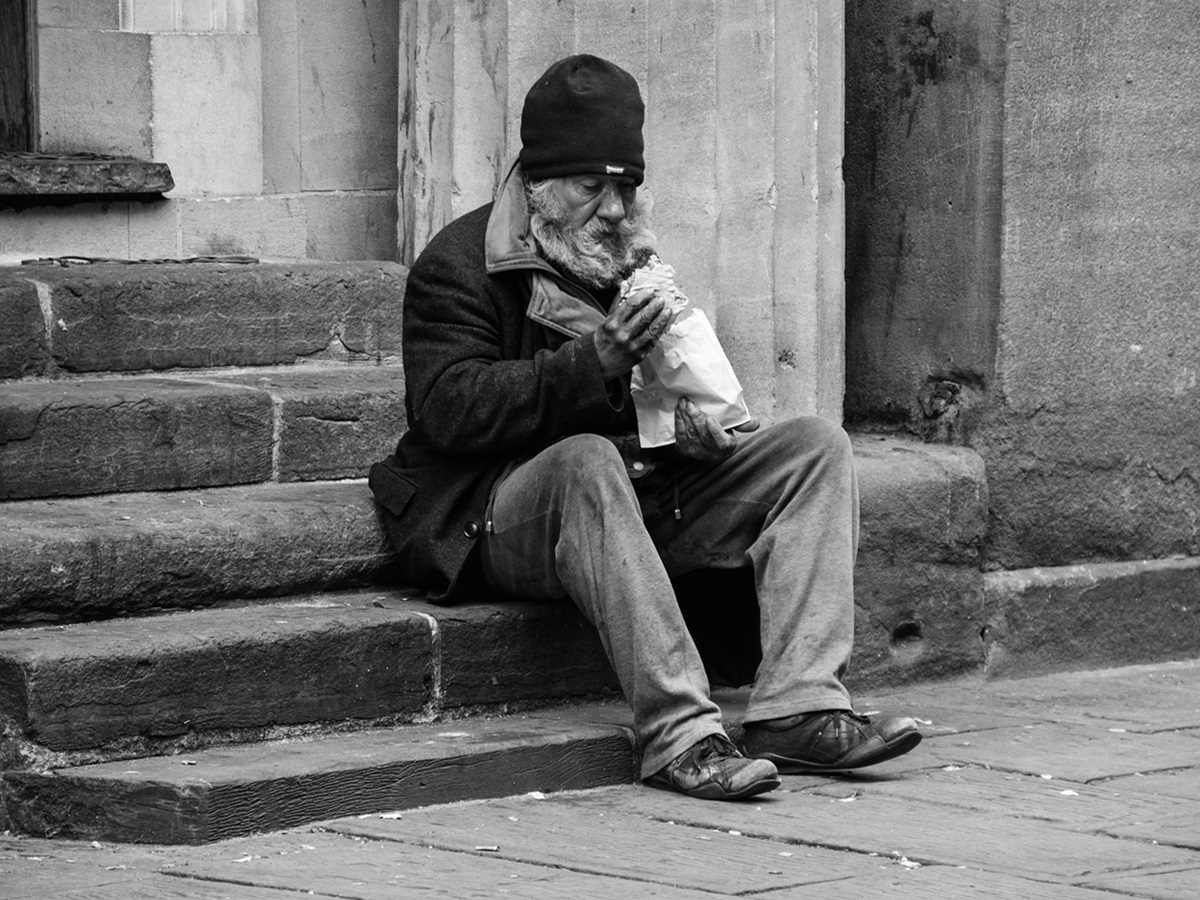
Image by shauking from Pixabay
An April 19 New York Times interview with Supreme Court correspondent Abbie VanSickle says that cities across the US are cracking down on homelessness. Working as I do with an unsheltered population in Washington State, this comes as no shock to me. Our homeless population has surged, prompting a backlash from municipalities. The New York Times sheds light on it.
Homelessness in Grants Pass
In her interview with VanSickle, Katrin Bennhold says that the “Supreme Court…is about to hear arguments in the most significant case on homelessness in decades, about whether cities can make it illegal to be homeless.” She asks VanSickle, “You’ve been reporting on this case that has been making waves, Grants Pass versus Johnson, which the Supreme Court is taking up next week. What’s this case about?” VanSickle replies:
So this case is about a small town in Oregon where three homeless people sued the city after they received tickets for sleeping and camping outside. And this case is the latest case that shows this growing tension, especially in states in the West, between people who are homeless and cities who are trying to figure out what to do about this. These cities have seen a sharp increase in homeless encampments in public spaces, especially with people on sidewalks and in parks. And they’ve raised questions about public drug use and other safety issues in these spaces.
And so the question before the justices is really how far a city can go to police homelessness. Can city officials and police use local laws to ban people from laying down outside and sleeping in a public space? Can a city essentially make it illegal to be homeless?
Criminalizing Behaviors Related to Homelessness
Of course, cities can’t criminalize homelessness. And nobody wants to round up all the unsheltered people and throw them in jail. Localities like Grants Pass don’t want to burden their jail systems with people whose only crime is to have no home. But residents don’t want “those people” in their community, either. So, what’s a town to do?
While they can’t criminalize homelessness per se, municipalities can criminalize behaviors typical of unsheltered individuals. While they can’t bust someone for being homeless, they can ticket or arrest them for doing the things that unsheltered people do. In this way, residents keep “the homeless” out of their own backyards and force them to move along to someplace else.
What Behaviors Are Typical of Homelessness?
When they think of “behaviors typical of homelessness,” many people first think of illicit drug use. While not all people experiencing homelessness use illegal drugs, this is a problem for many. Debates continue over the decriminalization and legalization of street drugs. I won’t address that issue in this article. But here is a list of other activities typical of homelessness—things that are not illegal in and of themselves. If you have a home, you can do these things with no problems, but if you live on the streets, these normal human functions suddenly become illegal:
6 Illegal Activities for People Without Homes
- Drinking alcohol and smoking weed (where it’s legal). Have a glass of wine in your home, and it’s just a relaxing night by the fireplace. But try that on the sidewalk, and you’re headed for jail. Forget your feelings about the legitimacy of these activities. Simply recognize that for one group of privileged people, this is legal while for others it is not.
- Sexual activities. If you have a home, you can be intimate with anybody you want, without fear of arrest. Even if it’s late at night in a city park, and the only person walking past your tent is a police officer, you’re going to be under arrest for public indecency. If it’s in the bushes, you’ll be charged with public nudity on top of that. And you’ll probably have to register as a sex offender, making it virtually impossible to find housing in the future.
- Toileting activities. You might say, “They can just use public bathrooms.” The problem is that an increasing number of establishments offer these for customers only. Plus, park restrooms close after sunset. So, where’s an unsheltered person supposed to relieve themselves, besides an alleyway or behind the bushes? If you have a home, you can pee to your heart’s content. But if you’re homeless, it might just be illegal to take a leak.
- Sleeping. Take a nap in your own bed if you have one. But if you don’t have one, that’s a ticketable offense. In Grants Pass, for example, as long as you don’t look homeless, you can spread a picnic blanket on the beach or in a park and doze all you want. But if you’re unsheltered, even a catnap can be illegal. In addition to ticketing people without homes sleeping in public locations, cities also fence off access to overpasses where people might find shelter beneath bridges. They replace old-fashioned park benches with ones that have armrests in the middle, to discourage sleeping on them. And they install spikes or place sharp rocks on the ground, in popular sleeping spots.
- Fire. Cook all you want at home—in your microwave, on your stovetop, or in your grill or smoker. But light a small campfire in the park or fire up your single-burner alcohol stove in an alleyway and you’ll be charged with reckless burning. Even when it’s cold outside, you can’t huddle over your propane camp stove for warmth.
- Having an argument. Unless you’re really disturbing the peace, you can have an argument inside your house or apartment without police intervening. But those who live in public have their whole lives on display. This means everyone sees their worst moments, whereas yours are kept private, as long as you have a home. People find it uncomfortable to watch others have arguments. Concerned citizens may worry about safety and call 911. Third parties call police for arguments they can see and hear—not those they don’t know about because they happen behind closed doors.
You can probably think of other activities that you can do freely in your home, but which are illegal if you are homeless. Cities can’t make homelessness itself illegal. But they can target ordinary human behaviors that are acceptable for housed people, and make them illegal for unsheltered individuals.
The result is an entire segment of the population that is forced to choose between incarceration and transience. That’s not a choice anyone should have to make.
I invite you to read my next article, “6 Reasons Homeless Shelters Won’t Solve the Problem,” where I discuss the deepening issue, and offer some solutions.
For related reading, check out my other articles:
- What Jesus Said To The Homeless Man
- Emergency Brakes At Highway Speeds (& Other Cries For Help)
- “I Think I Might Not Die Now”
General Christian
Politics and Religion
Home and Religion

About Gregory T. Smith
I live in the beautiful Fraser Valley of British Columbia and work in northern Washington State as a behavioral health specialist with people experiencing homelessness and those who are overly involved in the criminal justice system. Before that, I spent over a quarter-century as lead pastor of several Virginia churches. My newspaper column, “Spirit and Truth” ran in Virginia newspapers for fifteen years. I am one of fourteen contributing authors of the Patheos/Quoir Publishing book “Sitting in the Shade of another Tree: What We Learn by Listening to Other Faiths.” I hold a degree in Religious Studies from Virginia Commonwealth University, and also studied at Baptist Theological Seminary at Richmond. My wife Christina and I have seven children between us, and we are still collecting grandchildren. You can read more about the author here.
Previous Post

April 29, 2024
Christian & Pagan Holidays: Beltane & May Day
Next Post

May 6, 2024 6 Reasons Homeless Shelters Won’t Solve the Problem
Recent Comments
"Absolutely, Glen! That's a great example! And the Roman centurion who trusted Jesus. I've heard ..."
“Can You Follow Jesus and Still ..."
"Captian of the Syrian military, Naaman in 2 Kings 5 might be considered."
“Can You Follow Jesus and Still ..."
"Hi, Bob. Not sure why it's doing that...I've been having problems with my comments settings. ..."
"OMG, who CARES?!?!"
“Can You Follow Jesus and Still ..."
Browse Our Archives
Select a Category Challenging the Church Deconstruction For Pastors Heathen Christianity Holidays and special days Mental Health Social Justice Spirituality Taoism Theology Uncategorized
Select a Month October 2026 September 2026 August 2026 July 2026 June 2026 May 2026 April 2026 March 2026 February 2026 January 2026 December 2025 November 2025 October 2025 September 2025 August 2025 July 2025 June 2025 May 2025 April 2025 March 2025 February 2025 January 2025 December 2024 November 2024 October 2024 September 2024 August 2024 July 2024 June 2024 May 2024 April 2024 March 2024 February 2024 January 2024 December 2023 November 2023 October 2023 September 2023 August 2023 July 2023 June 2023 May 2023 April 2023 March 2023 February 2023 January 2023 December 2022 November 2022 October 2022 September 2022 August 2022 July 2022 June 2022 May 2022 April 2022 March 2022 February 2022 January 2022
Follow Us!
TAKE THE
Religious Wisdom Quiz
At a well in Samaria, I asked a woman for a drink and told her about living water. How many husbands had she had?
Select your answer to see how you score.
Three Five Seven Two
Related posts from Breathing Space

All the Colors of the Rainbow Testify to...

Why the Rainbow Became a Pride Symbol
Refusing to Bow to Trump's Golden Idol

Holy Water Isn’t Acid. Stop Weaponizing Faith.
TRENDING AT PATHEOS Progressive Christian

Why Christians Have a Sacred Duty to Vote:...
The Bible offers strong support for the sacred duty to vote. Here...

What Being a Modern-Day Apostle Means to Me
In my last column, I discussed the ins and outs of modern-day...

Did Ancient China Once Worship the God of...
Across human history, a common thread weaves through the origins of the...

Love Your Neighbor – Including Earth-Kin: Lev. 19,...
God’s command to love your neighbor means acting in an ethical and...

Lead a Church Study of “Jesus and Lao...
Guest writer Jack Thomas (The Irreverent Reverend) reflects on leading his church...

Principles for Understanding the Apostolic Ministry Today
Whenever people discover that my formal ministry title is "apostle," as in...
view all Progressive Christian blogs
What Are Your Thoughts?leave a comment
Ad-Free & Subscriber Log-In Subscription Support
- About Us
- 2026 Calendar
- Videos
- Podcasts
- Library of World Religions
- Faith In Media Tracker
- Advertise With Us
- Write for Us
- Privacy Policy
- Terms of Service
- Do Not Sell My Data
- Contact Us
- Radiant Digital
- Manage Newsletter Subscriptions
- Unsubscribe From Notifications
- Sitemap
Copyright 2008-2026, Patheos. All rights reserved.
Subscription Support Ad-Free & Subscriber Log-In
Follow Patheos