
BuddhistCatholicContemplativeEvangelicalGeneral ChristianHinduJewishLatter-day SaintMuslimNew VisionsProgressive Christian
Beliefs
- Buddhist
- Catholic
- Contemplative
- Evangelical
- General Christian
- Hindu
- Jewish
- Latter-day Saint
- More Voices
- Muslim
- New Visions
- Pagan
- Progressive Christian
Topics
- Religion News
- Food and Religion
- Sports and Religion
- Religious Art
- Religious Music and Entertainment
- Religious Events
- History and Religion
- Style and Religion
- Politics and Religion
- Women in Religion
- Recreation Outdoors and Religion
- Business Finance and Religion
- Careers Workplace and Religion
- Education and Religion
- Family Parenting and Religion
- Health Fitness and Religion
- Home and Religion
- Relationships and Religion
- Technology and Religion
- Travel and Religion
Columnists
- Buddhist Columnists
- Business Finance and Religion Columnists
- Careers Workplace and Religion Columnists
- Catholic Columnists
- Contemplative Columnists
- Education and Religion Columnists
- Evangelists Columnists
- Family Parenting and Religion Columnists
- General Christian Columnists
- Health Fitness and Religion Columnists
- Hindu Columnists
- History and Religion Columnists
- Home and Religion Columnists
- Jewish Columnists
- More Voices Columnists
- Latter Day Columnists
- Muslim Columnists
- New Visions Columnists
- Nonreligious Columnists
- Pagan Columnists
- Politics and Religion Columnists
- Progressive Columnists
- Recreation Outdoors and Religion Columnists
- Relationships and Religion Columnists
- Religion News Columnists
- Religious Art Columnists
- Religious Events Columnists
- Religious Music and Entertainment Columnists
- Sports and Religion Columnists
- Style and Religion Columnists
- Technology and Religion Columnists
- Travel and Religion Columnists
- Women in Religion Columnists
Resource Library
- 2026 Calendar
- Library of World Religions
- The 100 Most Holy Places on Earth
- Patheos Answers
- Podcasts
- Videos
- Faith Leaders Database
- Anglican Episcopalian
- Bahai
- Baptist
- Buddhism
- Christianity
- Confucianism
- Eastern Orthodoxy
- Hinduism
- Holiness and Pentecostal
- ISKCON
- Islam
- Judaism
- Lutheran
- Methodist
- The Church of Jesus Christ of Latter-day Saints
- New Age
- Paganism
- Presbytarian and Reformed
- Protestantism
- Religion Behind the Scenes
- Roman Catholic
- Scientology
- Shia Islam
- Sikhism
- Sufism
- Sunni Islam
- Taoism
- Zen
- See all religions
Research Tools
 Ad-Free & Subscriber Log-In Subscription Support
Follow Patheos 

- Trending:
- Advent
- |
- Forgiveness
- |
- Thanksgiving
- |
- Election
- |
- Seasonal Holidays
- |
- Marriage

-
Categories
- Home
- Progressive Christian
- Technology and Religion
- Can Artificial Intelligence Understand Mysticism?
Can Artificial Intelligence Understand Mysticism?
Last updated on: March 19, 2023 at 5:51 pm by Gregory T. Smith
Can Artificial Intelligence Understand Mysticism? 2023-03-19T17:51:37-08:00 Gregory T. Smith
Patheos Explore the world's faith through different perspectives on religion and spirituality! Patheos has the views of the prevalent religions and spiritualities of the world.
AI knows a lot about theology—but can artificial intelligence understand mysticism? I asked ChatGPT about the nature of God…
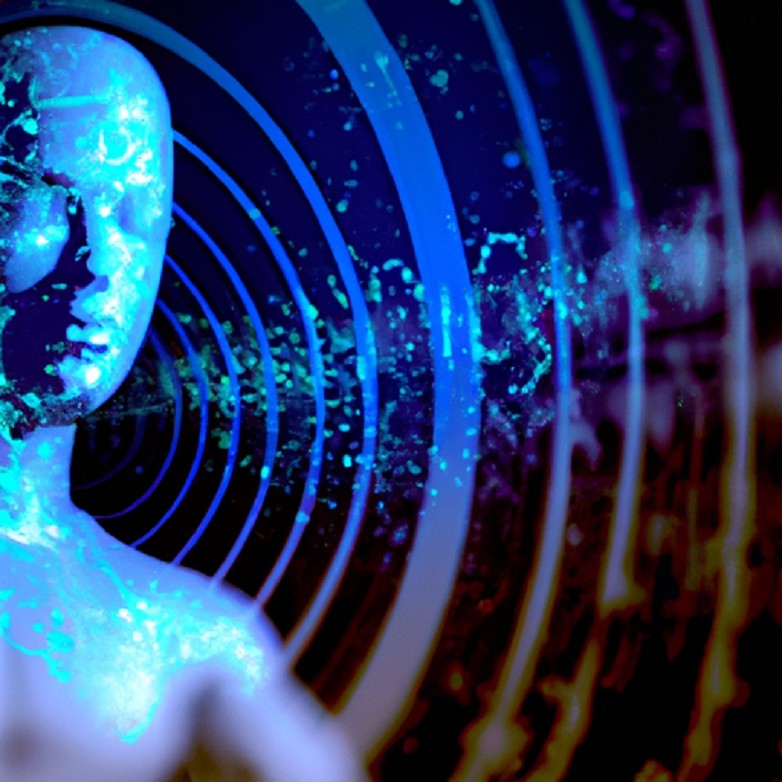
Hey, ChatGPT! What is God Like?
With all the talk about ChatGPT, I had to try it for myself. As a writer, it’s easy to become intimidated by artificial intelligence that claims the ability to draft your articles for you. What if bots one day put writers out of business? That could happen eventually, for technical writers—but what about religious teachers? I had to meet this new “intelligence” for myself, and see what it could tell me about the Divine Presence. I asked the bot, “What is God like?” ChatGPT replied:
As an AI language model, I don’t have personal beliefs or views. However, God is perceived differently by different religions and individuals. In Christianity, God is seen as loving, just, merciful, and all-powerful. In Hinduism, God is viewed as the Supreme Being or the ultimate reality of the universe. In Islam, God is seen as the creator of the universe and the source of all knowledge and power. Different people may have varying opinions on what God is like based on their beliefs and experiences.
It’s a good thing that ChatGPT acknowledges that it doesn’t have personal beliefs or views. This AI can only regurgitate information that it gleans from the internet. It can’t interpret. AI can’t believe. It can’t understand—all it can do is collect and distribute information.
Can Artificial Intelligence Grasp Deep Theology?
Still, I wanted to know whether ChatGPT could go beyond a surface-level summary on world religions. As a test, I asked it, “What can you tell me about the Roman Catholic doctrine of Transubstantiation?” Again, it began its discourse with a disclaimer:
As an AI language model, I don’t have my beliefs or opinions. I provide information based on facts and reliable sources.
The Roman Catholic doctrine of Transubstantiation is the belief that during the Eucharistic celebration, the bread and wine used by the priest are transformed or transubstantiated into the actual body and blood of Jesus Christ, despite the appearance remaining unchanged.
The doctrine of Transubstantiation is rooted in the teachings of early Church Fathers and was formally defined as a dogma of faith by the Fourth Lateran Council in 1215.
Catholics believe that by consuming the consecrated bread and wine, they are partaking in the real presence of Jesus Christ and receiving His grace. The Eucharist is considered the central act of worship in the Catholic Church.
Transubstantiation is not accepted by all Christians, and many Protestant denominations hold varying beliefs regarding the nature of the bread and wine used during communion.
Can Artificial Intelligence Understand Mysticism?
I’m sure if I played with ChatGPT longer, I could ask it more questions and get even more detailed answers about the finer points of theology. But can AI have a mystical experience? Can it discuss God from an experiential perspective? I entered “can artificial intelligence understand mysticism?” into ChatGPT’s prompt window, and this is the response it gave:
As an AI language model, I do not have beliefs or opinions, but I can provide information based on current research and understanding of the topic.
Mysticism is a complex concept that involves a deep understanding of spirituality and the universe. It is closely related to religious experiences and often involves a connection to something greater than oneself.
Artificial Intelligence, on the other hand, is a computer-based system designed to simulate human intelligence and perform tasks that would typically require human intelligence, such as learning, problem-solving, and decision-making.
While AI can analyze and process vast amounts of data, it is unclear whether it is possible for AI to understand mysticism. Some argue that AI could potentially understand mysticism through the analysis of patterns and data collected from different sources. However, others suggest that mysticism may be too abstract and subjective to be understood by an AI system.
Furthermore, the idea of mystical experience is different for each individual and varies depending on their cultural background, spiritual beliefs and even personal experiences. As such, it becomes quite difficult to create a universal definition of what mysticism is, let alone designing an AI system that can ‘understand’ it.
In conclusion, while AI may be capable of analyzing and processing vast amounts of data related to mysticism, it may not necessarily be able to fully understand or experience it in the same way as a human being due to its limitations as a machine.
Do Religions Have Anything to Worry About?
With the growth of AI, some might wonder whether religions have anything to worry about. I don’t think so. While ChatGPT and other artificial intelligence is capable of gleaning information from online sources, it can never experience God directly like a human can. AI might one day be able to teach catechism, which is the formulaic outline of theological precepts already enumerated by human beings. But AI can never be trusted to convey a sense of the Divine Presence.
Religious leaders have nothing to worry about when it comes to AI. The bots aren’t coming to take over our churches. Our kids aren’t going to start learning their spirituality from machines. The answers that AI provides are unoriginal and inert—unlike the Divine Logos, which Hebrews 4.12 NRSV says is
… living and active and sharper than any two-edged sword, piercing until it divides soul from spirit, joints from marrow; it is able to judge the thoughts and intentions of the heart.
Theology and Mysticism
There’s a big difference between theology and mysticism. ChatGPT can retell and reconfigure theological propositions it has gathered from many sources, but it can never create original theology on its own. This is because theology is a human endeavor as we try to understand the Divine. But, we must also be aware of the difference between theology and mysticism. In a previous article, I suggested that there’s really no such thing as theology. This is because we can’t study God. We can only study our own ideas about God. Mysticism, I believe, gets closer to God than theology.
If the goal of theology is understanding God, then the goal of mysticism is experiencing God. A sampling of Christian mystical traditions includes the desert traditions of Egypt and Irish monasticism, the Pentecostal tradition, Shaker spirituality, and Christian Gnosticism, just to name a few. Mystics are less interested in knowing about God than they are interested in knowing God. They often find this experience of God in altered states of consciousness through dance, tongue-speaking, meditation, and other supernatural manifestations.
Sometimes this experience is ecstatic. Other times, it involves a quiet sense of delight in the Holy Spirit. Mystics leave a lot of room for unknowing—simply resting in God and experiencing the Divine Presence, without trying to comprehend everything with one’s mind. This is something that artificial intelligence will never be able to do. While AI might be able to regurgitate someone else’s theological work, it can never think about God on its own or experience God itself.
Getting Sermons Off the Internet
Once, when the interwebs were young, a church member accused me of getting my sermons off the internet. They said this because they didn’t understand the difference between using the internet to discover the perfect illustration or research theology and using it to steal someone else’s sermon. While most ministers use the internet to do biblical research and find just the right story to convey their point, they wouldn’t dream of using ChatGPT to write their sermons for them. This is because anything AI creates is bound to lack the human emotion needed for good spiritual teaching.
Artificial intelligence can’t glean memories from childhood to convey the truth of God the Divine Parent. It can’t draw from personal experience. AI might have the knowledge, but it can never have wisdom. It might know about God, but it can never know God. I don’t think we have to worry that artificial intelligence will ever become our spiritual teacher. Because bots can never “have the life that is true life.” Even once they get even smarter, they won’t be capable of human feelings. Because, as we all know, even if they “understand all mysteries and have all knowledge…but do not have love,” they are nothing.
General Christian
Technology and Religion
Style and Religion
Can artificial intelligence understand mysticism
can artificial intelligence understand theology
Previous Post

March 5, 2023
Pastors (and Others) Exempt from Tithing
Next Post

March 12, 2023 The Climate's Changing, So What if the Church...
Recent Comments
"Excellent article! Categorizing Christians as good and the world as evil ignores reality."
Christians Against the World???
"Absolutely, Glen! That's a great example! And the Roman centurion who trusted Jesus. I've heard ..."
“Can You Follow Jesus and Still ..."
"Captian of the Syrian military, Naaman in 2 Kings 5 might be considered."
“Can You Follow Jesus and Still ..."
"Hi, Bob. Not sure why it's doing that...I've been having problems with my comments settings. ..."
Browse Our Archives
Select a Category Challenging the Church Deconstruction For Pastors Heathen Christianity Holidays and special days Mental Health Social Justice Spirituality Taoism Theology Uncategorized
Select a Month November 2026 October 2026 September 2026 August 2026 July 2026 June 2026 May 2026 April 2026 March 2026 February 2026 January 2026 December 2025 November 2025 October 2025 September 2025 August 2025 July 2025 June 2025 May 2025 April 2025 March 2025 February 2025 January 2025 December 2024 November 2024 October 2024 September 2024 August 2024 July 2024 June 2024 May 2024 April 2024 March 2024 February 2024 January 2024 December 2023 November 2023 October 2023 September 2023 August 2023 July 2023 June 2023 May 2023 April 2023 March 2023 February 2023 January 2023 December 2022 November 2022 October 2022 September 2022 August 2022 July 2022 June 2022 May 2022 April 2022 March 2022 February 2022 January 2022
Follow Us!
TAKE THE
Religious Wisdom Quiz
How many years from creation to Abraham?
Select your answer to see how you score.
1000 years 2500 years 1500 years Approximately 2000 years
Related posts from Breathing Space

Paul Young’s Return to the Shack: God’s Love...
Brandy Anderson, Team Weird, and Transcending Church

“Can You Follow Jesus and Still Practice Smudging?”

The Hidden Theology of the Gingerbread Man
TRENDING AT PATHEOS Progressive Christian

Can a Chatbot Touch Your Soul?
Can a chatbot offer genuine spiritual counsel? One conversation brought me to...

Religion and Politics: How Should We Then Live?
Two cultural axioms get repeated in polite company. Don't mix religion and...

7 Things We Get Wrong About Giving Thanks
It's a time of year when many of us turn to the...

Uncaging Truth: Spirituality Beyond Institutions
The Lost Connection: Why True Spirituality, Not Religion, Is the Key to...

Christ the King? Maybe We've Misunderstood the Crown
What do we mean when we say that Jesus is King? What...

Counter “Christ Is King” Nationalism with Christ THE...
Christ the King Sunday is an ideal time to address the heresy...
view all Progressive Christian blogs
What Are Your Thoughts?leave a comment
Ad-Free & Subscriber Log-In Subscription Support
- About Us
- 2026 Calendar
- Videos
- Podcasts
- Library of World Religions
- Faith In Media Tracker
- Advertise With Us
- Write for Us
- Privacy Policy
- Terms of Service
- Do Not Sell My Data
- Contact Us
- Radiant Digital
- Manage Newsletter Subscriptions
- Unsubscribe From Notifications
- Sitemap
Copyright 2008-2026, Patheos. All rights reserved.
Subscription Support Ad-Free & Subscriber Log-In
Follow Patheos