
BuddhistCatholicContemplativeEvangelicalGeneral ChristianHinduJewishLatter-day SaintMuslimNew VisionsProgressive Christian
Beliefs
- Buddhist
- Catholic
- Contemplative
- Evangelical
- General Christian
- Hindu
- Jewish
- Latter-day Saint
- More Voices
- Muslim
- New Visions
- Pagan
- Progressive Christian
Topics
- Religion News
- Food and Religion
- Sports and Religion
- Religious Art
- Religious Music and Entertainment
- Religious Events
- History and Religion
- Style and Religion
- Politics and Religion
- Women in Religion
- Recreation Outdoors and Religion
- Business Finance and Religion
- Careers Workplace and Religion
- Education and Religion
- Family Parenting and Religion
- Health Fitness and Religion
- Home and Religion
- Relationships and Religion
- Technology and Religion
- Travel and Religion
Columnists
- Buddhist Columnists
- Business Finance and Religion Columnists
- Careers Workplace and Religion Columnists
- Catholic Columnists
- Contemplative Columnists
- Education and Religion Columnists
- Evangelists Columnists
- Family Parenting and Religion Columnists
- General Christian Columnists
- Health Fitness and Religion Columnists
- Hindu Columnists
- History and Religion Columnists
- Home and Religion Columnists
- Jewish Columnists
- More Voices Columnists
- Latter Day Columnists
- Muslim Columnists
- New Visions Columnists
- Nonreligious Columnists
- Pagan Columnists
- Politics and Religion Columnists
- Progressive Columnists
- Recreation Outdoors and Religion Columnists
- Relationships and Religion Columnists
- Religion News Columnists
- Religious Art Columnists
- Religious Events Columnists
- Religious Music and Entertainment Columnists
- Sports and Religion Columnists
- Style and Religion Columnists
- Technology and Religion Columnists
- Travel and Religion Columnists
- Women in Religion Columnists
Resource Library
- 2026 Calendar
- Library of World Religions
- The 100 Most Holy Places on Earth
- Patheos Answers
- Podcasts
- Videos
- Faith Leaders Database
- Anglican Episcopalian
- Bahai
- Baptist
- Buddhism
- Christianity
- Confucianism
- Eastern Orthodoxy
- Hinduism
- Holiness and Pentecostal
- ISKCON
- Islam
- Judaism
- Lutheran
- Methodist
- The Church of Jesus Christ of Latter-day Saints
- New Age
- Paganism
- Presbytarian and Reformed
- Protestantism
- Religion Behind the Scenes
- Roman Catholic
- Scientology
- Shia Islam
- Sikhism
- Sufism
- Sunni Islam
- Taoism
- Zen
- See all religions
Research Tools
 Ad-Free & Subscriber Log-In Subscription Support
Ad-Free & Subscriber Log-In Subscription Support
Follow Patheos 

- Trending:
- Forgiveness
- |
- Marriage
- |
- Consciousness
- |
- Death Penalty
- |
- Election
- |
- Halloween

-
Categories
- Home
- Progressive Christian
- Apocalypse 3: “The Wrath of God”
Apocalypse 3: “The Wrath of God”
Last updated on: March 5, 2022 at 7:34 pm by Gregory T. Smith
Apocalypse 3: “The Wrath of God” 2022-03-05T19:34:46-08:00 Gregory T. Smith
Patheos Explore the world's faith through different perspectives on religion and spirituality! Patheos has the views of the prevalent religions and spiritualities of the world.
Are wars and rumors of wars, natural disasters, climate change, and pandemic signs of God’s wrath?
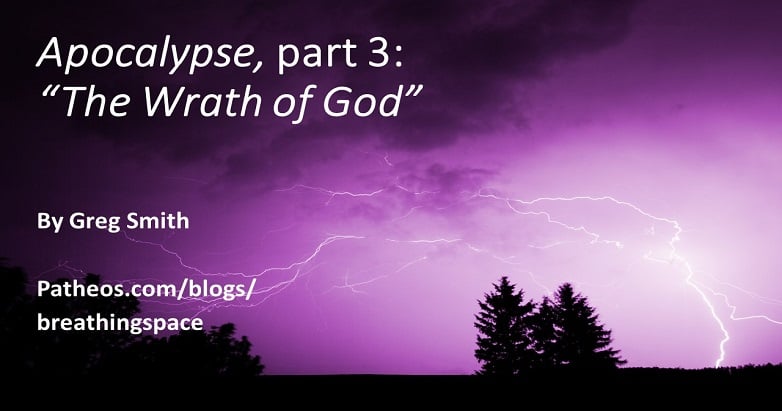
Image by PublicDomainPictures from Pixabay
Religion journalist Cathleen Falsani writes:
A judge in Nebraska threw out a 2007 lawsuit filed against God by state Sen. Ernie Chambers, who had sought permanent injunction against the Almighty for bringing “acts of terrorism” against the Cornhusker state. Chambers…asked that an order be issued demanding God to cease and desist from causing ‘fearsome floods, egregious earthquakes, horrendous hurricanes, terrifying tornadoes, pestilential plagues, ferocious famines, devastating droughts, genocidal wars, birth defects, and the like.’ Judge Marlon Polk threw out Chambers’ case because the defendant in the case a.k.a. God, could not be served with a summons.
Seals and Bowls
The Book of Revelation narrates acts of God that would solicit a lawsuit from Ernie Chambers. God pours out seals and bowls of wrath on the earth. Four Horsemen of the Apocalypse wreak havoc on humanity, bringing conquest, war, famine, and death. Martyrs cry out for vengeance. Humanity hides from earthquakes and celestial disasters. Huge percentages of the population die. The Bottomless is opened. The springs and rivers and the sea are filled with blood.
John uses colorful language not to describe literal events that will unfold, but simply to say that terrible things will take place, but God is still in control. He describes not the end of the world, but the end of the Jewish and Christian world that his readers have always known. Rebellion, persecution, martyrdom, and the destruction of the temple in Jerusalem have left his readers feeling like the sky was falling. John paints this poetic picture to accentuate the way believers felt during this time, and to address their worries about the end of days.
Acts of God?
The problem with calling everyday wildfires, windstorms, and tsunamis “acts of God” is that these occurrences are natural events, caused by laws set in motion at the foundation of the world. God does not plan every weather pattern. But according to biblical authors, extraordinary events like the ones mentioned in Revelation, or like the Great Flood, or the destruction of Sodom, or the plagues of Egypt, are not natural occurrences but supernatural ones. They are exceptions to the rule, not God’s usual method of dealing with humanity. The problem comes when people try to read divine retribution into every hailstorm or hurricane.
In 2005, many religious leaders said that Hurricane Katrina was divine retribution against both the immorality and Voodoo practices of the New Orleans area. Evangelist Pat Robertson said that the 2010 earthquake in Haiti was the wrath of God for a pact that previous generations had made with the devil. Of course, natural disasters aren’t the only things people point to as examples of God’s anger. Some religious leaders claimed that Ebola was God’s wrath against “sins including corruption and immoral acts such as homosexuality.”
Many biblical authors believed that God at times uses war, natural disaster, and disease to bring divine wrath. Yet not every occurrence is an indication of God’s displeasure with specific people and sins. In fact, we human beings are perfectly capable of destroying things on our own—without divine participation. And Jesus himself seemed to disagree with the Bible’s narrative of divine wrath.
Fire on Our Enemies?
In Luke 9:55-56, when Jesus’ disciples wanted to call fire down on their enemies, it says, “But He turned and rebuked them, [and said, “You do not know what kind of spirit you are of; for the Son of Man did not come to destroy men’s lives, but to save them.”] And they went on to another village.” Jesus’ Abba God is a loving Creator, who wants to bless rather than curse. When people presume exceptions to that rule, Jesus reminds us that compassion is God’s way. In Matthew 18:14, Jesus says, “So it is not the will of your Father who is in heaven that one of these little ones perish.”
Jesus’ words remain true today, that God does not want people to perish. Though many biblical authors believed God to be wrathful and destructive, we see that Jesus heals, and never afflicts. If you want to know what God is like, look at Jesus, who said, “Whoever has seen me has seen the Father (John 14:9).” If Jesus wouldn’t call down wrath from heaven, then the Father doesn’t do that, either. Imagine the Prince of Peace compelling Putin to invade Ukraine, as Pat Robertson suggested! It would never happen—God does not inspire actions like this. In fact, it’s blasphemous to suggest that God could inspire something as demonic as war.
Does God Cause Suffering?
Death and destruction are part of the human experience. Every creature that has ever been born will die. This isn’t the wrath of God, but the consequence of the human condition. In many cases, it’s the result of people making decisions—like how we choose to follow COVID protocols, whether one country invades another, or the way we treat the environment. God does not send the Four Horsemen of the Apocalypse—those specters are something we humans have created ourselves.
The book of Job is an example of a righteous man who endured great trouble. Job’s friends said that his suffering was God’s judgment on a sin that he had committed. The story’s narrative contradicts this notion, however, insisting on Job’s innocence. The author says that Satan, not God, is the the culprit. Romans 8:28 says, “…We know that God causes all things to work together for good to those who love God, to those who are called according to His purpose,” Some believe that this means God sends disaster as well as blessing to work the divine will. To the contrary, it means that regardless of pain, God can still bring triumph, just as in the life of Job.
Equal Opportunity Suffering
Along with many modern people, ancients believed that tragedy was always a sign of God’s wrath. Yet Jesus contradicts this notion by saying, “He causes His sun to rise on the evil and the good, and sends rain on the righteous and the unrighteous (Matthew 5:45).” Jesus often dealt with people who wrongly attributed disasters to the wrath of God. In response, He said, “Or do you suppose that those eighteen on whom the tower in Siloam fell and killed them were worse culprits than all the men who live in Jerusalem? I tell you, no, but unless you repent, you will all likewise perish (Luke 13:4-5).” While God did not cause this tragedy, Jesus says that events like this bring our own mortality more readily into focus and cause us to consider spiritual things.
All Creation Groans
Death and suffering are an unavoidable part of life. Rather than being the result of specific sins, they are inherent in creation. In Matthew 24:8, Jesus describes wars and disasters as “birth pangs.” Similarly, the apostle Paul wrote:
For I consider that the sufferings of this present time are not worthy to be compared with the glory that is to be revealed to us. For the anxious longing of the creation waits eagerly for the revealing of the sons of God. For the creation was subjected to futility, not willingly, but because of Him who subjected it, in hope that the creation itself also will be set free from its slavery to corruption into the freedom of the glory of the children of God. For we know that the whole creation groans and suffers the pains of childbirth together until now (Romans 8:18-22).
When we see suffering in the world, should we interpret it as the wrath of God? It’s better to first understand that Jehovah is not Zeus, ready to smite people with lightning bolts. God is not a wrathful punisher, but a loving divine parent ready to give grace. Second, consider that the Book of Jonah demonstrates God’s purpose in permitting suffering is to bring people to a point of change. God is not a bloodthirsty punisher who takes delight in destruction but does bring good out of tragedy.
What Revelation Says About Suffering
What did these passages about God’s wrath mean for the original readers of the book of Revelation? That while persecution under Roman oppressors was terrible indeed, they could look forward to a day when all suffering is over, and the world is made new.
What will it mean, to a last generation of Christians, if there is at some point a final generation? That just as pain in the body alerts a person to the need to draw their hand back from the fire, suffering also helps a person realize the need for spiritual renewal. If Christianity gets to the point where it will die out within one generation, it’s because we’ve been doing it wrong. If that’s the case, maybe we will learn from the world’s suffering and pull away from the way we’ve been doing it, to follow Jesus in the true way of love that he demonstrated.
What does it mean to us today? That while suffering is a part of everyone’s life, God wants to bring about our good. Through a careful study in Revelation, I hope that we’ll learn that not every disaster or tragedy is an act of God. If that were so, it would paint God with a terrible and torturous kind of brush. As we read about suffering in the book of Revelation, I hope we’ll realize that God loves us, and that even through tragedy God is drawing us into a divine embrace.
Scripture quotations taken from the NRSV.
Four horsemen of the apocalypse
Previous Post

March 2, 2022
“Apocalypse” Part 2: “Worship for Believers in Exile”
Next Post
March 9, 2022 "Apocalypse" Part 4: "Antichrist"
Browse Our Archives
Select a Category Challenging the Church Deconstruction For Pastors Heathen Christianity Holidays and special days Mental Health Social Justice Spirituality Taoism Theology Uncategorized
Select a Month October 2026 September 2026 August 2026 July 2026 June 2026 May 2026 April 2026 March 2026 February 2026 January 2026 December 2025 November 2025 October 2025 September 2025 August 2025 July 2025 June 2025 May 2025 April 2025 March 2025 February 2025 January 2025 December 2024 November 2024 October 2024 September 2024 August 2024 July 2024 June 2024 May 2024 April 2024 March 2024 February 2024 January 2024 December 2023 November 2023 October 2023 September 2023 August 2023 July 2023 June 2023 May 2023 April 2023 March 2023 February 2023 January 2023 December 2022 November 2022 October 2022 September 2022 August 2022 July 2022 June 2022 May 2022 April 2022 March 2022 February 2022 January 2022
Follow Us!
TAKE THE
Religious Wisdom Quiz
I am a ladder reaching to heaven with angels ascending and descending. What am I?
Select your answer to see how you score.
Heaven's gate The way to God Jacob's ladder A vision
Related posts from Breathing Space

“Can You Follow Jesus and Still Practice Smudging?”

Lead a Church Study of “Jesus and Lao...

I Met Papa Before I Read The Shack

The Guest Who Stayed at an Unfriendly Table
TRENDING AT PATHEOS Progressive Christian

What Being a Modern-Day Apostle Means to Me
In my last column, I discussed the ins and outs of modern-day...

Did Ancient China Once Worship the God of...
Across human history, a common thread weaves through the origins of the...

Love Your Neighbor – Including Earth-Kin: Lev. 19,...
God’s command to love your neighbor means acting in an ethical and...

Lead a Church Study of “Jesus and Lao...
Guest writer Jack Thomas (The Irreverent Reverend) reflects on leading his church...

Pastoral Wisdom for Responding to Sermon Pushback
Getting sermon pushback on your social justice sermon? Learn practical, Proverbs-based strategies...

Principles for Understanding the Apostolic Ministry Today
Whenever people discover that my formal ministry title is "apostle," as in...
view all Progressive Christian blogs
Ad-Free & Subscriber Log-In Subscription Support
- About Us
- 2026 Calendar
- Videos
- Podcasts
- Library of World Religions
- Faith In Media Tracker
- Advertise With Us
- Write for Us
- Privacy Policy
- Terms of Service
- Do Not Sell My Data
- Contact Us
- Radiant Digital
- Manage Newsletter Subscriptions
- Unsubscribe From Notifications
- Sitemap
Copyright 2008-2026, Patheos. All rights reserved.
Subscription Support Ad-Free & Subscriber Log-In
Follow Patheos