
BuddhistCatholicContemplativeEvangelicalGeneral ChristianHinduJewishLatter-day SaintMuslimNew VisionsProgressive Christian
Beliefs
- Buddhist
- Catholic
- Contemplative
- Evangelical
- General Christian
- Hindu
- Jewish
- Latter-day Saint
- More Voices
- Muslim
- New Visions
- Pagan
- Progressive Christian
Topics
- Religion News
- Food and Religion
- Sports and Religion
- Religious Art
- Religious Music and Entertainment
- Religious Events
- History and Religion
- Style and Religion
- Politics and Religion
- Women in Religion
- Recreation Outdoors and Religion
- Business Finance and Religion
- Careers Workplace and Religion
- Education and Religion
- Family Parenting and Religion
- Health Fitness and Religion
- Home and Religion
- Relationships and Religion
- Technology and Religion
- Travel and Religion
Columnists
- Buddhist Columnists
- Business Finance and Religion Columnists
- Careers Workplace and Religion Columnists
- Catholic Columnists
- Contemplative Columnists
- Education and Religion Columnists
- Evangelists Columnists
- Family Parenting and Religion Columnists
- General Christian Columnists
- Health Fitness and Religion Columnists
- Hindu Columnists
- History and Religion Columnists
- Home and Religion Columnists
- Jewish Columnists
- More Voices Columnists
- Latter Day Columnists
- Muslim Columnists
- New Visions Columnists
- Nonreligious Columnists
- Pagan Columnists
- Politics and Religion Columnists
- Progressive Columnists
- Recreation Outdoors and Religion Columnists
- Relationships and Religion Columnists
- Religion News Columnists
- Religious Art Columnists
- Religious Events Columnists
- Religious Music and Entertainment Columnists
- Sports and Religion Columnists
- Style and Religion Columnists
- Technology and Religion Columnists
- Travel and Religion Columnists
- Women in Religion Columnists
Resource Library
- 2026 Calendar
- Library of World Religions
- The 100 Most Holy Places on Earth
- Patheos Answers
- Podcasts
- Videos
- Faith Leaders Database
- Anglican Episcopalian
- Bahai
- Baptist
- Buddhism
- Christianity
- Confucianism
- Eastern Orthodoxy
- Hinduism
- Holiness and Pentecostal
- ISKCON
- Islam
- Judaism
- Lutheran
- Methodist
- The Church of Jesus Christ of Latter-day Saints
- New Age
- Paganism
- Presbytarian and Reformed
- Protestantism
- Religion Behind the Scenes
- Roman Catholic
- Scientology
- Shia Islam
- Sikhism
- Sufism
- Sunni Islam
- Taoism
- Zen
- See all religions
Research Tools
 Ad-Free & Subscriber Log-In Subscription Support
Ad-Free & Subscriber Log-In Subscription Support
Follow Patheos 

- Trending:
- Forgiveness
- |
- Marriage
- |
- Consciousness
- |
- Death Penalty
- |
- Election
- |
- Halloween
 Church Grammar
- Home
- Evangelical
- Why Did the Book of Revelation Outlast Other Early Christian Apocalypses?
Why Did the Book of Revelation Outlast Other Early Christian Apocalypses?
Last updated on: September 1, 2017 at 1:36 pm by Brandon D. Smith
Why Did the Book of Revelation Outlast Other Early Christian Apocalypses? 2017-09-01T13:36:00-05:00 Brandon D. Smith
Patheos Explore the world's faith through different perspectives on religion and spirituality! Patheos has the views of the prevalent religions and spiritualities of the world.
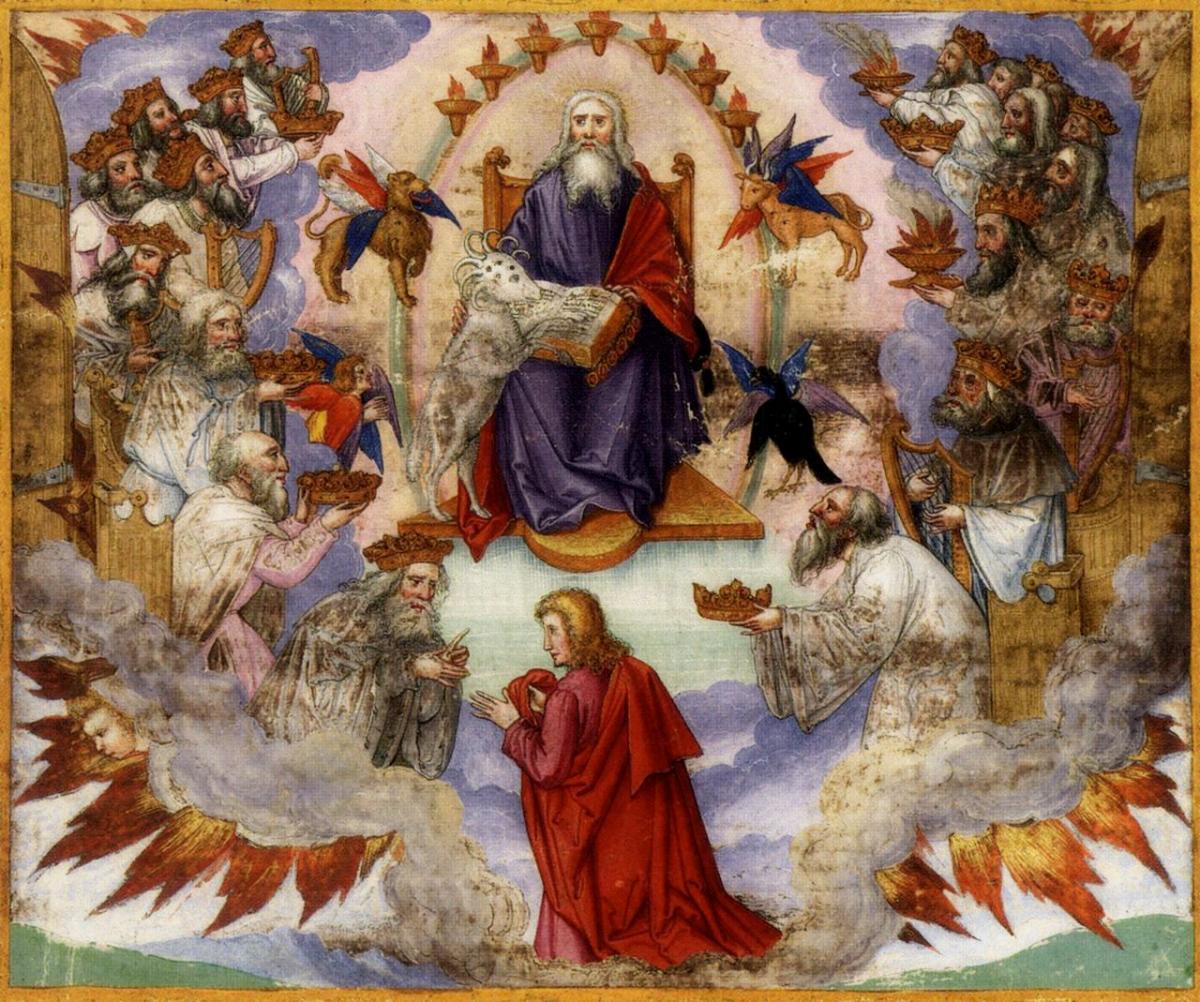 The Book of Revelation/John’s Apocalypse was not the only apocalypse read and even revered by early Christians. In the first few centuries of Christianity, it stood alongside or was replaced by other Christian apocalyptic literature, most notably Shepherd of Hermas, Apocalypse of Peter, and Ascension of Isaiah. In my dissertation, the relationship between Revelation and these other works is one of the questions I’m wrestling with in my first chapter. Why did Revelation outlast the others, becoming a sole apocalyptic member of the New Testament canon?
Of course, the overarching answer is the preservation of God’s Word by God himself. We should, at some level, grant that. But, having said that, we can also look at the works themselves and see the continuity/disparity with other biblical texts and the scope of Christian teaching at-large. It’s no stretch to wonder whether or not Revelation survived because of its robust theology and usefulness in the budding Trinitarian theology, while others fell by the wayside as their theology resembled the heretics more than the defenders of orthodoxy.
Shepherd of Hermas is perhaps the most prominent among these works, having been included in certain canonical lists and quoted often in the early church. Ignatius of Antioch rejected the book because of its failure to distinguish between the two natures of Christ.[1] Tertullian had a tentative relationship with Hermas, eventually rejecting its “liberal” views on several topics, including on remarriage and repentance,[2] while simultaneously including Revelation in an early list of authoritative books.[3] Origen and Clement of Alexandria both quoted Hermas frequently, the latter going so far as to call it divinely inspired.[4] Other early church leaders such as Athanasius, Eusebius, and Rufinus seemed to follow the Muratorian Canon thread of denying its authority but recommending it as helpful for private reading and catechesis.[5] Its relevance in the West held on for a few centuries, with Augustine and John Cassian quoting it regularly, but its use began to wane, with regular quotations beginning to decline, indicating its diminishing authority and relevance.[6] By the sixth-century, Pseudo-Gelasian Decrees outright rejected Hermas, calling it “useful only to heretics and schismatics.”[7] At least in part, we can assume that Hermas eventually fell off the canonical map due to its inconsistent Trinitarian theology—particularly its confusion of Jesus and the Holy Spirit with one another and with angels—which could not have been tolerated in the middle of orthodoxy debates about the divinity and personhood of the Father, Son, and Spirit.
Origen is accused of dabbling in universal salvation and may have had some familiarity with Apocalypse of Peter’s interesting and heretical views on the potential final salvation of Satan,[8] however these types of views on the divine judgment of God surely played a role in its eventual dismissal from Christian usage. As for Ascension of Isaiah, the Trinitarian debates had no room for its teaching that there is indeed a divine triad of Father, Son, and Spirit, but that Christ and the Spirit both ultimately worship the Father.[9] Both of these books were less widespread and influential as Hermas, but fell into the same trap of sloppy and inconsistent teachings about the persons of the Trinity, in a time when sloppy language was not being tolerated (and rightfully so!).
—
Stay in touch! Email me at [email protected] or connect with me on Academia.edu.
—
[1] H.D. McDonald, “Development and Christology,” Vox Evangelica 9 (1975): 5.
[2] Carolyn Osiek, The Shepherd of Hermas (Minneapolis, MN: Fortress Press, 1999), 5. Many believe part of this rejection was due to Tertullian’s later sympathy with Montanism.
[3] J. N. D. Kelly, Early Christian Doctrines, 5th ed. (New York, NY: HarperCollins Publishers, 1978), 59.
[4] Osiek, The Shepherd of Hermas, 5.
[5] Osiek, The Shepherd of Hermas, 6.
[6] Osiek, The Shepherd of Hermas, 7.
[7] Osiek, The Shepherd of Hermas, 7.
[8] Ilaria L. E. Ramelli, “Origen, Bardaiṣan, and the Origin of Universal Salvation,” Harvard Theological Review 102/02 (2009): 136-40.
[9] Osiek, The Shepherd of Hermas, 33.
Previous Post

August 23, 2017
Blood Moons, Babylonian Whores, and Reading Revelation Rightly
Next Post
September 5, 2017 The Sermon on the Mount and Jesus's Command to "Be Perfect"
Browse Our Archives
Select a Category Academics Apologetics Baptists Biblical Interpretation Biblical Studies Blog News Books Christian Life Church History Culture Ecclesiology Eschatology Gospel Interviews New Creation News Politics Science Scripture Sexual Sin Social Media Spiritual Discipline The Smorgasbord Theology Trinity Word Matters Podcast
Select a Month September 2017 August 2017 July 2017 June 2017 May 2017 April 2017 March 2017 February 2017 January 2017 December 2016 November 2016 October 2016 September 2016 August 2016 July 2016 June 2016 May 2016 April 2016 December 2015 November 2015 October 2015 July 2015 June 2015 May 2015 April 2015 March 2015 February 2015
TAKE THE
Religious Wisdom Quiz
Which book comes immediately after Acts in the New Testament?
Select your answer to see how you score.
Galatians 1 Corinthians Hebrews Romans
Books by This Author Books by Brandon D. Smith
Related posts from Church Grammar

What We Know about Arius and His Heresy

The Sermon on the Mount and Jesus's Command...

Blood Moons, Babylonian Whores, and Reading Revelation Rightly

Jesus, Jonah, and Doubting God
TRENDING AT PATHEOS Evangelical

How the author of the world's best hymn...
I've been working with John Newton for a while now. This makes...

Long before this Lectio Divina, Psalm 130 - the song - started...

What About the Trees? Another Living Parable
After I finished writing the last article about falling leaves as a...

Why Classical Education Is a Conversation, Not a...
Come and Read: Joy in Classical Education When I was a little...

Falling Leaves: A Living Parable on Letting Go
I’ve spent the vast majority of my life in the southeast corner...

Cornell University has received a great deal of negative publicity and intense...
view all Evangelical blogs
Ad-Free & Subscriber Log-In Subscription Support
- About Us
- 2026 Calendar
- Videos
- Podcasts
- Library of World Religions
- Faith In Media Tracker
- Advertise With Us
- Write for Us
- Privacy Policy
- Terms of Service
- Do Not Sell My Data
- Contact Us
- Radiant Digital
- Manage Newsletter Subscriptions
- Unsubscribe From Notifications
- Sitemap
Copyright 2008-2026, Patheos. All rights reserved.
Subscription Support Ad-Free & Subscriber Log-In
Follow Patheos