
BuddhistCatholicContemplativeEvangelicalGeneral ChristianHinduJewishLatter-day SaintMuslimNew VisionsProgressive Christian
Beliefs
- Buddhist
- Catholic
- Contemplative
- Evangelical
- General Christian
- Hindu
- Jewish
- Latter-day Saint
- More Voices
- Muslim
- New Visions
- Pagan
- Progressive Christian
Topics
- Religion News
- Food and Religion
- Sports and Religion
- Religious Art
- Religious Music and Entertainment
- Religious Events
- History and Religion
- Style and Religion
- Politics and Religion
- Women in Religion
- Recreation Outdoors and Religion
- Business Finance and Religion
- Careers Workplace and Religion
- Education and Religion
- Family Parenting and Religion
- Health Fitness and Religion
- Home and Religion
- Relationships and Religion
- Technology and Religion
- Travel and Religion
Columnists
- Buddhist Columnists
- Business Finance and Religion Columnists
- Careers Workplace and Religion Columnists
- Catholic Columnists
- Contemplative Columnists
- Education and Religion Columnists
- Evangelists Columnists
- Family Parenting and Religion Columnists
- General Christian Columnists
- Health Fitness and Religion Columnists
- Hindu Columnists
- History and Religion Columnists
- Home and Religion Columnists
- Jewish Columnists
- More Voices Columnists
- Latter Day Columnists
- Muslim Columnists
- New Visions Columnists
- Nonreligious Columnists
- Pagan Columnists
- Politics and Religion Columnists
- Progressive Columnists
- Recreation Outdoors and Religion Columnists
- Relationships and Religion Columnists
- Religion News Columnists
- Religious Art Columnists
- Religious Events Columnists
- Religious Music and Entertainment Columnists
- Sports and Religion Columnists
- Style and Religion Columnists
- Technology and Religion Columnists
- Travel and Religion Columnists
- Women in Religion Columnists
Resource Library
- 2026 Calendar
- Library of World Religions
- The 100 Most Holy Places on Earth
- Patheos Answers
- Podcasts
- Videos
- Faith Leaders Database
- Anglican Episcopalian
- Bahai
- Baptist
- Buddhism
- Christianity
- Confucianism
- Eastern Orthodoxy
- Hinduism
- Holiness and Pentecostal
- ISKCON
- Islam
- Judaism
- Lutheran
- Methodist
- The Church of Jesus Christ of Latter-day Saints
- New Age
- Paganism
- Presbytarian and Reformed
- Protestantism
- Religion Behind the Scenes
- Roman Catholic
- Scientology
- Shia Islam
- Sikhism
- Sufism
- Sunni Islam
- Taoism
- Zen
- See all religions
Research Tools
 Ad-Free & Subscriber Log-In Subscription Support
Ad-Free & Subscriber Log-In Subscription Support
Follow Patheos 

- Trending:
- Forgiveness
- |
- Marriage
- |
- Consciousness
- |
- Death Penalty
- |
- Election
- |
- Halloween
 Church Grammar
- Home
- Evangelical
- How Does the Holy Spirit Unite Us to Christ?
How Does the Holy Spirit Unite Us to Christ?
Last updated on: January 31, 2017 at 11:53 pm by Brandon D. Smith
How Does the Holy Spirit Unite Us to Christ? 2017-01-31T23:53:57-05:00 Brandon D. Smith
Patheos Explore the world's faith through different perspectives on religion and spirituality! Patheos has the views of the prevalent religions and spiritualities of the world.
 In describing the Persons of the Trinity, the argument is often dichotomized into two parts:
(1) Who the Person is (all three are God, but no Person is the other Person);
(2) What the Person does (the Father sends the Son; the Son secures salvation; the Holy Spirit seals salvation; etc.)
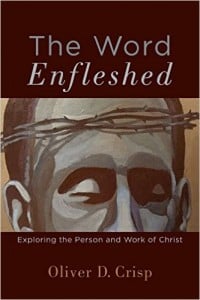
While this dichotomy is actually helpful in laying a foundation, it doesn’t always do justice to the intricate ways in which the Persons work together in the economy of salvation. In The Word Enfleshed: Exploring the Person and Work of Christ, Oliver Crisp offers an example of doing it well, discussing how the Holy Spirit works in our union with Christ:
“It is as if the Spirit acts as a kind of adhesive, preparing and enabling the human subject to be joined to the body of Christ. Like the glue that holds together a composite object that is made up of different parts, such as a piece of furniture or some other artifact, so the Spirit “glues” us to Christ. We become part of his body really and truly—as really and truly as the foam, wood, tacks, fabric, and glue form the one composite object that is an armchair. …
His work is personal, intimate, the real union of one organism to another, the bringing about of a whole new body that is the body of Christ. We might say that just as the Holy Spirit generates and prepares Christ’s human body at the incarnation, so he generates and prepares Christ’s bride, his ecclesiastical body, which in one sense will be complete at the inauguration of the eschaton, when God’s ultimate end in creation will be accomplished and creaturely participation in the divine life begins in earnest.” (161)
So it’s not simply that we’re united with Christ by grace through faith—we’re united to him, held together with him, and made more like him by the indwelling of the Spirit. Of course, we know that the Spirit was intricately involved in both the incarnation and resurrection of Christ, but we also know he is often overlooked or undervalued in the economy of salvation. Crisp points out here one of the many, many ways in which the Spirit works alongside the Father and Son in salvation.
The Persons always work in unison, and no piece of salvation happens without the involvement of each Person. This is why we can say with Fred Sanders that “the gospel is Trinitarian, and the Trinity is the gospel.” May we continue to plumb the depths of the ways in which the unity of the Trinity transforms our hearts and all of creation.
Previous Post

January 16, 2017
A White Man's Meditations on Martin Luther King Day
Next Post
February 10, 2017 Why the 5 Solas Still Matter Today
Browse Our Archives
Select a Category Academics Apologetics Baptists Biblical Interpretation Biblical Studies Blog News Books Christian Life Church History Culture Ecclesiology Eschatology Gospel Interviews New Creation News Politics Science Scripture Sexual Sin Social Media Spiritual Discipline The Smorgasbord Theology Trinity Word Matters Podcast
Select a Month September 2017 August 2017 July 2017 June 2017 May 2017 April 2017 March 2017 February 2017 January 2017 December 2016 November 2016 October 2016 September 2016 August 2016 July 2016 June 2016 May 2016 April 2016 December 2015 November 2015 October 2015 July 2015 June 2015 May 2015 April 2015 March 2015 February 2015
TAKE THE
Religious Wisdom Quiz
What is the term for the 40 days Jesus spent in the wilderness, remembered by Christians in Lent?
Select your answer to see how you score.
Crucifixion Transfiguration Temptation of Christ Sermon on the Mount
Books by This Author Books by Brandon D. Smith
Related posts from Church Grammar

What We Know about Arius and His Heresy

The Sermon on the Mount and Jesus's Command...

Why Did the Book of Revelation Outlast Other...

Blood Moons, Babylonian Whores, and Reading Revelation Rightly
TRENDING AT PATHEOS Evangelical

The REST of Your Life: A Creative Wrestles...
This week I had a conversation with a good friend from church....

How the author of the world's best hymn...
I've been working with John Newton for a while now. This makes...

Long before this Lectio Divina, Psalm 130 - the song - started...

What About the Trees? Another Living Parable
After I finished writing the last article about falling leaves as a...

Why Classical Education Is a Conversation, Not a...
Come and Read: Joy in Classical Education When I was a little...

Cornell University has received a great deal of negative publicity and intense...
view all Evangelical blogs
Ad-Free & Subscriber Log-In Subscription Support
- About Us
- 2026 Calendar
- Videos
- Podcasts
- Library of World Religions
- Faith In Media Tracker
- Advertise With Us
- Write for Us
- Privacy Policy
- Terms of Service
- Do Not Sell My Data
- Contact Us
- Radiant Digital
- Manage Newsletter Subscriptions
- Unsubscribe From Notifications
- Sitemap
Copyright 2008-2026, Patheos. All rights reserved.
Subscription Support Ad-Free & Subscriber Log-In
Follow Patheos