
BuddhistCatholicContemplativeEvangelicalGeneral ChristianHinduJewishLatter-day SaintMuslimNew VisionsProgressive Christian
Beliefs
- Buddhist
- Catholic
- Contemplative
- Evangelical
- General Christian
- Hindu
- Jewish
- Latter-day Saint
- More Voices
- Muslim
- New Visions
- Pagan
- Progressive Christian
Topics
- Religion News
- Food and Religion
- Sports and Religion
- Religious Art
- Religious Music and Entertainment
- Religious Events
- History and Religion
- Style and Religion
- Politics and Religion
- Women in Religion
- Recreation Outdoors and Religion
- Business Finance and Religion
- Careers Workplace and Religion
- Education and Religion
- Family Parenting and Religion
- Health Fitness and Religion
- Home and Religion
- Relationships and Religion
- Technology and Religion
- Travel and Religion
Columnists
- Buddhist Columnists
- Business Finance and Religion Columnists
- Careers Workplace and Religion Columnists
- Catholic Columnists
- Contemplative Columnists
- Education and Religion Columnists
- Evangelists Columnists
- Family Parenting and Religion Columnists
- General Christian Columnists
- Health Fitness and Religion Columnists
- Hindu Columnists
- History and Religion Columnists
- Home and Religion Columnists
- Jewish Columnists
- More Voices Columnists
- Latter Day Columnists
- Muslim Columnists
- New Visions Columnists
- Nonreligious Columnists
- Pagan Columnists
- Politics and Religion Columnists
- Progressive Columnists
- Recreation Outdoors and Religion Columnists
- Relationships and Religion Columnists
- Religion News Columnists
- Religious Art Columnists
- Religious Events Columnists
- Religious Music and Entertainment Columnists
- Sports and Religion Columnists
- Style and Religion Columnists
- Technology and Religion Columnists
- Travel and Religion Columnists
- Women in Religion Columnists
Resource Library
- 2026 Calendar
- Library of World Religions
- The 100 Most Holy Places on Earth
- Patheos Answers
- Podcasts
- Videos
- Faith Leaders Database
- Anglican Episcopalian
- Bahai
- Baptist
- Buddhism
- Christianity
- Confucianism
- Eastern Orthodoxy
- Hinduism
- Holiness and Pentecostal
- ISKCON
- Islam
- Judaism
- Lutheran
- Methodist
- The Church of Jesus Christ of Latter-day Saints
- New Age
- Paganism
- Presbytarian and Reformed
- Protestantism
- Religion Behind the Scenes
- Roman Catholic
- Scientology
- Shia Islam
- Sikhism
- Sufism
- Sunni Islam
- Taoism
- Zen
- See all religions
Research Tools
 Ad-Free & Subscriber Log-In Subscription Support
Ad-Free & Subscriber Log-In Subscription Support
Follow Patheos 

- Trending:
- Forgiveness
- |
- Marriage
- |
- Consciousness
- |
- Death Penalty
- |
- Election
- |
- Halloween
 Church Grammar
- Home
- Evangelical
- Help My Unbelief: An Interview with Barnabas Piper
Help My Unbelief: An Interview with Barnabas Piper
Last updated on: July 7, 2015 at 2:34 pm by Brandon D. Smith
Help My Unbelief: An Interview with Barnabas Piper 2015-07-07T14:34:58-05:00 Brandon D. Smith
Patheos Explore the world's faith through different perspectives on religion and spirituality! Patheos has the views of the prevalent religions and spiritualities of the world.
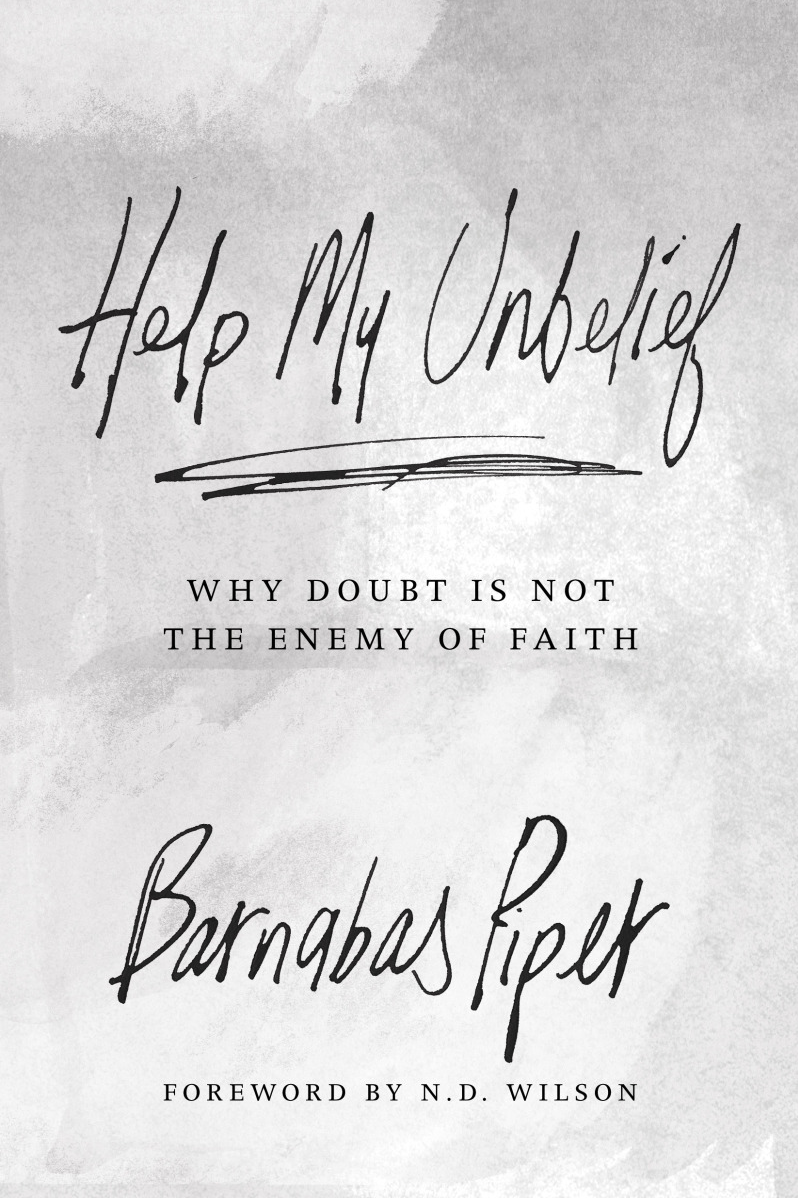 Barnabas Piper, a popular writer, podcast host, and member of the Ministry Grid team, stops by today to talk about his new book, Help My Unbelief: Why Doubt Is Not the Enemy of Faith.
I read a pre-publication copy of this book earlier this summer and was blown away by Barnabas’s handling of the sometimes bifurcated line between faith and doubt. For someone like me, faith and doubt are often unwelcome bedfellows, but Barnabas seeks to encourage Christians to ask questions. Doubt is not the enemy of faith so long as we pursue God with our questions, much like the man in Mark 9:24: “Lord, I believe; help my unbelief!”
In short, this book argues (rightly, I think) that a God as vast and wonderful as ours unsurprisingly brings about a plethora of questions. Along with these questions comes awe at his splendor and grace on the one hand, and doubt of his existence or goodness on the other. Barnabas argues that God not only desires our belief, but actually invites our curiosity.
If you struggle with doubts and questions, you know someone who does, or you know a new believer who could use some encouragement as he sets out on the journey of following Jesus, I recommend this book.
—
Brandon: You note in the beginning of Help My Unbelief that you grew up as a pastor’s kid, but that you “didn’t even know what belief was.” Is this book in some ways a sequel or extension of your first book, The Pastor’s Kid?
Barnabas: It’s definitely not a sequel. It’s more like a connected ides or an expansion of one piece of The Pastor’s Kid. When I was writing that one and shared a little bit of my story and about the gap in my belief it stirred a whole bunch of ideas and observations and questions that led to this book.
Help My Unbelief is for a much broader group of people, though, because doubt and questions are common to many. “I believe; help my unbelief” is a prayer any Christian can pray, and that’s the foundation for this book.
Brandon: What does Mark 9:24’s “Lord, I believe; help my unbelief” mean to you?
Barnabas: This verse captured my attention when I was at a place of struggling in my own faith. What I knew and the answers I had regarding God didn’t match the things that ruled my life. What did I really believe? What does it mean to believe? And then I read Mark 9, the story of a father bringing his demon possessed son to Jesus as a last ditch effort to be healed. He was desperate. He wasn’t overly confident. But he believed enough to reach out to Jesus, and that gripped me.
I will always struggle with unbelief (and so will everyone else), but I do believe in Jesus and in God’s character. So at any time of doubt, when I question, I can pray “help my unbelief” and there is faith just in the asking. It is an honest prayer that acknowledges my weakness and God’s presence and promise.
Brandon: How do you distinguish between good, healthy doubt and destructive doubt?
Barnabas: The difference lies in the aim of the doubt. Doubt leading to belief comes from a place of not knowing or understanding but in genuinely wanting to. It is open to answers and yearns for clarity and sight. This is the kind of doubt a follower of Christ will most often struggle with. The danger is when it turns into unbelieving doubt, that which comes from a place of rejection. It would rather undermine and disprove than find truth. Unbelieving doubt is blind because it closes its eyes willfully instead of because they simply haven’t learned to see yet.
Brandon: There have been many books published about doubt, unbelief, etc. What makes your new book unique?
Barnabas: What I have observed about most faith and doubt books is that they fall into one of two groups: 1) apologetics books which seek to answer the doubts or 2) books that revel in doubt and mystery and make few definitive statements of truth. Mine is neither. I do push the reader to recognize and become comfortable with mystery (since God is infinite and we are not it is inevitable and glorious). I also seek to be clearly biblical about who God is, who we are, and how we should view Him in spite of and through the mystery. Help My Unbelief also shares bits of my own story throughout so that the propositional truths and the difficult questions are grounded in real life and not just theory. I try to ask the kinds of questions doubters ask and answer them in a way that is neither pat nor opaque.
Brandon: How can a doubting believer strengthen his or her belief?
Barnabas: It sounds counter-intuitive, but often doubt can be evidence of belief. Like the dad in Mark 9, he was not sure what Jesus could do, but he believed enough to seek help. If you have the inclination to cry out to God you have belief. Too often Christians get overwrought with guilt and despair about their doubts instead of realizing that belief is woven throughout them. It’s like someone training for a race. If they get discouraged every time something hurts and think “I’m just not good enough” they are missing the point that the pain is the improvement.
So I would say that strengthening your belief comes from recognizing the heart behind the doubt. If your doubts come from a place of wanting to know God more deeply they are born from belief, not sin. They will lead you deeper into faith and obedience, not further away. It reframes doubt from sin to hope, from guilt to growth.
Previous Post

June 30, 2015
On Becoming a Humble Theologian
Next Post

July 23, 2015 Big News from the Smith Family: We're Moving to Nashville!
Browse Our Archives
Select a Category Academics Apologetics Baptists Biblical Interpretation Biblical Studies Blog News Books Christian Life Church History Culture Ecclesiology Eschatology Gospel Interviews New Creation News Politics Science Scripture Sexual Sin Social Media Spiritual Discipline The Smorgasbord Theology Trinity Word Matters Podcast
Select a Month September 2017 August 2017 July 2017 June 2017 May 2017 April 2017 March 2017 February 2017 January 2017 December 2016 November 2016 October 2016 September 2016 August 2016 July 2016 June 2016 May 2016 April 2016 December 2015 November 2015 October 2015 July 2015 June 2015 May 2015 April 2015 March 2015 February 2015
TAKE THE
Religious Wisdom Quiz
Which letter encourages believers to "be quick to listen, slow to speak, and slow to anger"?
Select your answer to see how you score.
2 Peter James Romans 1 John
Books by This Author Books by Brandon D. Smith
Related posts from Church Grammar

The Sermon on the Mount and Jesus's Command...

Blood Moons, Babylonian Whores, and Reading Revelation Rightly

Jesus, Jonah, and Doubting God

TRENDING AT PATHEOS Evangelical

How the author of the world's best hymn...
I've been working with John Newton for a while now. This makes...

Long before this Lectio Divina, Psalm 130 - the song - started...

What About the Trees? Another Living Parable
After I finished writing the last article about falling leaves as a...

Why Classical Education Is a Conversation, Not a...
Come and Read: Joy in Classical Education When I was a little...

Falling Leaves: A Living Parable on Letting Go
I’ve spent the vast majority of my life in the southeast corner...

Cornell University has received a great deal of negative publicity and intense...
view all Evangelical blogs
Ad-Free & Subscriber Log-In Subscription Support
- About Us
- 2026 Calendar
- Videos
- Podcasts
- Library of World Religions
- Faith In Media Tracker
- Advertise With Us
- Write for Us
- Privacy Policy
- Terms of Service
- Do Not Sell My Data
- Contact Us
- Radiant Digital
- Manage Newsletter Subscriptions
- Unsubscribe From Notifications
- Sitemap
Copyright 2008-2026, Patheos. All rights reserved.
Subscription Support Ad-Free & Subscriber Log-In
Follow Patheos