
BuddhistCatholicContemplativeEvangelicalGeneral ChristianHinduJewishLatter-day SaintMuslimNew VisionsProgressive Christian
Beliefs
- Buddhist
- Catholic
- Contemplative
- Evangelical
- General Christian
- Hindu
- Jewish
- Latter-day Saint
- More Voices
- Muslim
- New Visions
- Pagan
- Progressive Christian
Topics
- Religion News
- Food and Religion
- Sports and Religion
- Religious Art
- Religious Music and Entertainment
- Religious Events
- History and Religion
- Style and Religion
- Politics and Religion
- Women in Religion
- Recreation Outdoors and Religion
- Business Finance and Religion
- Careers Workplace and Religion
- Education and Religion
- Family Parenting and Religion
- Health Fitness and Religion
- Home and Religion
- Relationships and Religion
- Technology and Religion
- Travel and Religion
Columnists
- Buddhist Columnists
- Business Finance and Religion Columnists
- Careers Workplace and Religion Columnists
- Catholic Columnists
- Contemplative Columnists
- Education and Religion Columnists
- Evangelists Columnists
- Family Parenting and Religion Columnists
- General Christian Columnists
- Health Fitness and Religion Columnists
- Hindu Columnists
- History and Religion Columnists
- Home and Religion Columnists
- Jewish Columnists
- More Voices Columnists
- Latter Day Columnists
- Muslim Columnists
- New Visions Columnists
- Nonreligious Columnists
- Pagan Columnists
- Politics and Religion Columnists
- Progressive Columnists
- Recreation Outdoors and Religion Columnists
- Relationships and Religion Columnists
- Religion News Columnists
- Religious Art Columnists
- Religious Events Columnists
- Religious Music and Entertainment Columnists
- Sports and Religion Columnists
- Style and Religion Columnists
- Technology and Religion Columnists
- Travel and Religion Columnists
- Women in Religion Columnists
Resource Library
- 2026 Calendar
- Library of World Religions
- The 100 Most Holy Places on Earth
- Patheos Answers
- Podcasts
- Videos
- Faith Leaders Database
- Anglican Episcopalian
- Bahai
- Baptist
- Buddhism
- Christianity
- Confucianism
- Eastern Orthodoxy
- Hinduism
- Holiness and Pentecostal
- ISKCON
- Islam
- Judaism
- Lutheran
- Methodist
- The Church of Jesus Christ of Latter-day Saints
- New Age
- Paganism
- Presbytarian and Reformed
- Protestantism
- Religion Behind the Scenes
- Roman Catholic
- Scientology
- Shia Islam
- Sikhism
- Sufism
- Sunni Islam
- Taoism
- Zen
- See all religions
Research Tools
 Ad-Free & Subscriber Log-In Subscription Support
Ad-Free & Subscriber Log-In Subscription Support
Follow Patheos 

- Trending:
- Forgiveness
- |
- Marriage
- |
- Consciousness
- |
- Death Penalty
- |
- Election
- |
- Halloween
 Church Grammar
- Home
- Evangelical
- 4 Ways Paul Understood His Authority
4 Ways Paul Understood His Authority
Last updated on: May 20, 2015 at 2:41 pm by Brandon D. Smith
4 Ways Paul Understood His Authority 2015-05-20T14:41:34-05:00 Brandon D. Smith
Patheos Explore the world's faith through different perspectives on religion and spirituality! Patheos has the views of the prevalent religions and spiritualities of the world.
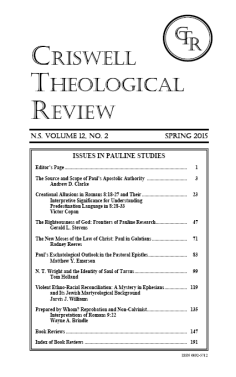 In the most recent issue of the Criswell Theological Review, Andrew Clarke of the University of Aberdeen has an article entitled, “The Source and Scope of Paul’s Apostolic Authority.” In the article, Clarke argues that Paul’s understanding of the source and scope of his authority is four-fold:
- Source: Dominical — “Called by God’s will, specifically to be an apostle of Christ Jesus, Paul considers his appointment to be dominical, meaning that it derives from God’s Son. While the Twelve were also commissioned by Jesus Christ, this cannot be said of all in the New Testament who were called apostles.”
- Source: Scriptural — “Also Paul is sufficiently immersed in rabbinic and other contemporary Jewish bodies of interpretation to the extent that he is aware he is not merely referencing the scriptures, but also serving as their interpreter. … Yet even in this sense, the source of his authority lies in the content of the scriptures; and his interpretation of those scriptures needs to be convincingly consistent with those scriptures.”
- Scope: Gospel — “Paul’s calling is specifically to proclaim the gospel. Although Paul describes it in Romans 2:16 and 16:25 as “my gospel” and in 2 Corinthians 4:3 as “our gospel,” he is clear that it is something that he received from God and is compelled to pass on to others. … The supreme importance of the gospel trumps any negative consequences for his own ministry.”
- Scope: Obedience of the Gentiles? — “Although the scope of Paul’s mission is to non-Jewish nations, it is short of universally embracing all Gentiles. Paul reflects that there are important additional limitations to the scope of his ministry. … Rather, he must avoid building on another’s foundation or in another’s territory; and, instead, where there is no further room, he must seek out fresh territories.”
Clarke then enters into a brief, but thought-provoking discussion about the posthumous reception, acceptance, and application of Pauline texts that’s worth noting.
To purchase the entire issue, click here. Or you can find the individual article on ATLA.
Previous Post
May 19, 2015
What Is the Significance of the 7 Churches in Revelation?
Next Post
May 21, 2015 The Pastoral Paul Was Always Looking Ahead
Browse Our Archives
Select a Category Academics Apologetics Baptists Biblical Interpretation Biblical Studies Blog News Books Christian Life Church History Culture Ecclesiology Eschatology Gospel Interviews New Creation News Politics Science Scripture Sexual Sin Social Media Spiritual Discipline The Smorgasbord Theology Trinity Word Matters Podcast
Select a Month September 2017 August 2017 July 2017 June 2017 May 2017 April 2017 March 2017 February 2017 January 2017 December 2016 November 2016 October 2016 September 2016 August 2016 July 2016 June 2016 May 2016 April 2016 December 2015 November 2015 October 2015 July 2015 June 2015 May 2015 April 2015 March 2015 February 2015
TAKE THE
Religious Wisdom Quiz
What does "Pentecost" mean in Greek?
Select your answer to see how you score.
Fire from Heaven Fiftieth Holy Day Harvest
Books by This Author Books by Brandon D. Smith
Related posts from Church Grammar

What We Know about Arius and His Heresy

The Sermon on the Mount and Jesus's Command...

Why Did the Book of Revelation Outlast Other...

Blood Moons, Babylonian Whores, and Reading Revelation Rightly
TRENDING AT PATHEOS Evangelical

How the author of the world's best hymn...
I've been working with John Newton for a while now. This makes...

Long before this Lectio Divina, Psalm 130 - the song - started...

What About the Trees? Another Living Parable
After I finished writing the last article about falling leaves as a...

Why Classical Education Is a Conversation, Not a...
Come and Read: Joy in Classical Education When I was a little...

Falling Leaves: A Living Parable on Letting Go
I’ve spent the vast majority of my life in the southeast corner...

Cornell University has received a great deal of negative publicity and intense...
view all Evangelical blogs
Ad-Free & Subscriber Log-In Subscription Support
- About Us
- 2026 Calendar
- Videos
- Podcasts
- Library of World Religions
- Faith In Media Tracker
- Advertise With Us
- Write for Us
- Privacy Policy
- Terms of Service
- Do Not Sell My Data
- Contact Us
- Radiant Digital
- Manage Newsletter Subscriptions
- Unsubscribe From Notifications
- Sitemap
Copyright 2008-2026, Patheos. All rights reserved.
Subscription Support Ad-Free & Subscriber Log-In
Follow Patheos