
BuddhistCatholicContemplativeEvangelicalGeneral ChristianHinduJewishLatter-day SaintMuslimNew VisionsProgressive Christian
Beliefs
- Buddhist
- Catholic
- Contemplative
- Evangelical
- General Christian
- Hindu
- Jewish
- Latter-day Saint
- More Voices
- Muslim
- New Visions
- Pagan
- Progressive Christian
Topics
- Religion News
- Food and Religion
- Sports and Religion
- Religious Art
- Religious Music and Entertainment
- Religious Events
- History and Religion
- Style and Religion
- Politics and Religion
- Women in Religion
- Recreation Outdoors and Religion
- Business Finance and Religion
- Careers Workplace and Religion
- Education and Religion
- Family Parenting and Religion
- Health Fitness and Religion
- Home and Religion
- Relationships and Religion
- Technology and Religion
- Travel and Religion
Columnists
- Buddhist Columnists
- Business Finance and Religion Columnists
- Careers Workplace and Religion Columnists
- Catholic Columnists
- Contemplative Columnists
- Education and Religion Columnists
- Evangelists Columnists
- Family Parenting and Religion Columnists
- General Christian Columnists
- Health Fitness and Religion Columnists
- Hindu Columnists
- History and Religion Columnists
- Home and Religion Columnists
- Jewish Columnists
- More Voices Columnists
- Latter Day Columnists
- Muslim Columnists
- New Visions Columnists
- Nonreligious Columnists
- Pagan Columnists
- Politics and Religion Columnists
- Progressive Columnists
- Recreation Outdoors and Religion Columnists
- Relationships and Religion Columnists
- Religion News Columnists
- Religious Art Columnists
- Religious Events Columnists
- Religious Music and Entertainment Columnists
- Sports and Religion Columnists
- Style and Religion Columnists
- Technology and Religion Columnists
- Travel and Religion Columnists
- Women in Religion Columnists
Resource Library
- 2026 Calendar
- Library of World Religions
- The 100 Most Holy Places on Earth
- Patheos Answers
- Podcasts
- Videos
- Faith Leaders Database
- Anglican Episcopalian
- Bahai
- Baptist
- Buddhism
- Christianity
- Confucianism
- Eastern Orthodoxy
- Hinduism
- Holiness and Pentecostal
- ISKCON
- Islam
- Judaism
- Lutheran
- Methodist
- The Church of Jesus Christ of Latter-day Saints
- New Age
- Paganism
- Presbytarian and Reformed
- Protestantism
- Religion Behind the Scenes
- Roman Catholic
- Scientology
- Shia Islam
- Sikhism
- Sufism
- Sunni Islam
- Taoism
- Zen
- See all religions
Research Tools
 Ad-Free & Subscriber Log-In Subscription Support
Ad-Free & Subscriber Log-In Subscription Support
Follow Patheos 

- Trending:
- Forgiveness
- |
- Marriage
- |
- Consciousness
- |
- Death Penalty
- |
- Election
- |
- Halloween
 Church Grammar
- Home
- Evangelical
- The Practical Calvin
The Practical Calvin
Last updated on: March 12, 2015 at 12:56 pm by Brandon D. Smith
The Practical Calvin 2015-03-12T12:56:55-05:00 Brandon D. Smith
Patheos Explore the world's faith through different perspectives on religion and spirituality! Patheos has the views of the prevalent religions and spiritualities of the world.
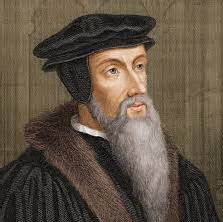 John Calvin.
This name has different meanings depending on one’s theological framework, denominational upbringing, or knowledge of church history. He is loved by many, hated by many, and surely unknown to many others. Regardless of your opinion of Calvin, you may see him as the rigid theologian who wrote extremely lofty thoughts about the sovereignty and glory of God. And that’s not entirely untrue.
In his greatest theological work, The Institutes of Christian Religion, Calvin expounds rather extensively upon nearly every major Christian doctrine. However, one particular theme that is woven throughout the work is the practical implications of his theology. Far from a crusty old man writing a stale textbook, Calvin understood that the breadth of his work was worthless if it did not apply itself to the life of a believer. He was intensely practical and pastoral in his writings, specifically exhibiting great concern for holiness.
When dealing with holiness and the day-to-day Christian life, he returned again and again to four major points in Institutes: union with Christ through the Spirit, the inseparable link of faith and the Word, the primacy of repentance, and the need for self-denial.
1. Union with Christ
In Calvin’s mind, there was no such thing as a “Christian life” apart from union with Christ. He said that “until we become one with him, everything he possesses is nothing to us.” So how does one become united with Christ? Calvin explains: “The Holy Spirit is the bond by which Christ effectively binds us to himself. … By the grace and energy of the Spirit we become his members, so that he is in charge of us and we, in our turn, possess him.”
In other words, the power of the Holy Spirit accomplishes this connection and applies salvation to the person. He also notes that in the gospel “we find the treasures of grace unfolded to us.” One becomes a believer by being united with Christ through the work of the Holy Spirit, and the gospel then discloses to them the fullness of Christ which is unknown without the Spirit.
2. The Connection of Faith and the Word
In the life of the Christian, Calvin saw faith and the Word of God as inseparable. He claimed that “they can no more be separated than rays of light from the sun.” He did not function as a wandering dreamer; he based faith itself on the objective truths of Scripture. To him, the authority held by Scripture is so transcendent, so otherworldly, that there is no way to have a markedly supernatural faith with a merely natural book.
Additionally, Calvin made the case that “the Word is the base on which faith rests and is strengthened. … Take away the Word, and there will be no faith.” Faith was more than simple knowledge about God in the eyes of Calvin; he believed that faith was a knowledge of God’s revealed will in Scripture. The Word gives believers all that they need to grow in faith and to comprehend God’s will, and the denial of the truth of Scripture directly correlates to the weakening of faith. Through the power of the Spirit, holiness only came through direct relationship with knowing God’s commands.
3. The Importance of Repentance
Upon the believer’s union with Christ through the Spirit while their faith is being strengthened through the Word, the logical following result for Calvin was repentance. He suggests that the gospel “is about repentance and forgiveness of sins. If these are omitted, any discussion about faith will be useless. … Repentance not only follows faith but is produced by it.” If the believer has been united with Christ and clothed in his righteousness, then he has been given a faith grounded in the authority of God’s Word. In turn, one must practice the ways of the new life by turning from the old life. If one truly understands God’s grace, then repentance is inevitable. As he put it, “a man cannot honestly say he knows about repentance unless he knows he belongs to God.”
Moreover, repentance is more plainly defined by Calvin as “a true conversion of our life to God, springing from real and solemn fear of God; it consists also in putting to death our flesh and the quickening of the Spirit.” First, people need a conversion of both the soul and their outward actions. Still walking in unrepentant sin, a person can hardly begin to seek righteousness through repentance in a meaningful way. Second, repentance springs from a sincere fear of God. The believer must truly come to grips with divine judgment and the reality of one day standing before God’s judgment seat. Lastly, repentance consists of mortification of the flesh and the Spirit’s imparting of holiness. Scripture is clear that believers must renounce the world and their own desires for the sake of Christ. The Holy Spirit, in turn, will “inspire our souls with new thoughts and affections.” The life of a Christian is entirely practical when weighed against Scripture. To Calvin, the Word is clear that God’s will is for his people to live a holy life and to use it in glorifying him.
4. The Act of Self-Denial
The definitive sum of the Christian life, according to Calvin, is self-denial. He concludes that “we must not follow our own way but the Lord’s will, and aim always to promote his glory. We are really succeeding when, almost forgetting ourselves and putting aside our own way of thinking, we genuinely try to obey God and his commandments.” The entirety of creation is God’s stage, and Christians are merely bit actors in his grand drama of redemption.
Not only so, but those united with Christ are members of his body, and thus they are members of one another. He is the head from which all of the functions of the body flows. As such, whatever one member of the body does, the rest of the body partakes of the action as well. All members exist for one another even as they all exist ultimately for Christ. All of this must be done selflessly as to avoid arrogance or moral blame. He expounds on this notion saying, “Really everyone should think that he owes himself to his neighbors, and that the only limit to his generosity is the end of his resources.”
Calvin’s emphasis on self-denial is rooted in Christ’s command to take up one’s cross and follow him. Just as the Father put his own Son through trials, he will certainly not spare the rest of his children. The more Christians share in Christ’s sufferings, the closer communion they experience with him, hence the further they progress in holiness.
A Theologian for Everyone
No person is perfect, and no one should agree with every single word a theologian says. (Lord, I pray, that we would destroy the idols we’ve built on our theological heroes. Amen.) But whether one resonates with Calvin’s theology as a whole or not, he is a theologian for everyone. He clearly loved Christ and wanted to point people to him. Ever the pursuer of God’s own heart, he has much to teach the world about lifting high the name of Jesus and living a life worthy of the calling (Eph. 4:1).
Previous Post
March 10, 2015
3 Responses to Critiques of Inerrancy
Next Post

March 13, 2015 Should Pastors Promote War from the Pulpit?
Browse Our Archives
Select a Category Academics Apologetics Baptists Biblical Interpretation Biblical Studies Blog News Books Christian Life Church History Culture Ecclesiology Eschatology Gospel Interviews New Creation News Politics Science Scripture Sexual Sin Social Media Spiritual Discipline The Smorgasbord Theology Trinity Word Matters Podcast
Select a Month September 2017 August 2017 July 2017 June 2017 May 2017 April 2017 March 2017 February 2017 January 2017 December 2016 November 2016 October 2016 September 2016 August 2016 July 2016 June 2016 May 2016 April 2016 December 2015 November 2015 October 2015 July 2015 June 2015 May 2015 April 2015 March 2015 February 2015
TAKE THE
Religious Wisdom Quiz
What did God place on Jeremiah’s mouth as a sign of his calling?
Select your answer to see how you score.
His words A staff A scroll Burning coal
Books by This Author Books by Brandon D. Smith
Related posts from Church Grammar

What We Know about Arius and His Heresy

The Sermon on the Mount and Jesus's Command...

Why Did the Book of Revelation Outlast Other...

Blood Moons, Babylonian Whores, and Reading Revelation Rightly
TRENDING AT PATHEOS Evangelical

How the author of the world's best hymn...
I've been working with John Newton for a while now. This makes...

Long before this Lectio Divina, Psalm 130 - the song - started...

What About the Trees? Another Living Parable
After I finished writing the last article about falling leaves as a...

Why Classical Education Is a Conversation, Not a...
Come and Read: Joy in Classical Education When I was a little...

Falling Leaves: A Living Parable on Letting Go
I’ve spent the vast majority of my life in the southeast corner...

Cornell University has received a great deal of negative publicity and intense...
view all Evangelical blogs
Ad-Free & Subscriber Log-In Subscription Support
- About Us
- 2026 Calendar
- Videos
- Podcasts
- Library of World Religions
- Faith In Media Tracker
- Advertise With Us
- Write for Us
- Privacy Policy
- Terms of Service
- Do Not Sell My Data
- Contact Us
- Radiant Digital
- Manage Newsletter Subscriptions
- Unsubscribe From Notifications
- Sitemap
Copyright 2008-2026, Patheos. All rights reserved.
Subscription Support Ad-Free & Subscriber Log-In
Follow Patheos