
BuddhistCatholicContemplativeEvangelicalGeneral ChristianHinduJewishLatter-day SaintMuslimNew VisionsProgressive Christian
Beliefs
- Buddhist
- Catholic
- Contemplative
- Evangelical
- General Christian
- Hindu
- Jewish
- Latter-day Saint
- More Voices
- Muslim
- New Visions
- Pagan
- Progressive Christian
Topics
- Religion News
- Food and Religion
- Sports and Religion
- Religious Art
- Religious Music and Entertainment
- Religious Events
- History and Religion
- Style and Religion
- Politics and Religion
- Women in Religion
- Recreation Outdoors and Religion
- Business Finance and Religion
- Careers Workplace and Religion
- Education and Religion
- Family Parenting and Religion
- Health Fitness and Religion
- Home and Religion
- Relationships and Religion
- Technology and Religion
- Travel and Religion
Columnists
- Buddhist Columnists
- Business Finance and Religion Columnists
- Careers Workplace and Religion Columnists
- Catholic Columnists
- Contemplative Columnists
- Education and Religion Columnists
- Evangelists Columnists
- Family Parenting and Religion Columnists
- General Christian Columnists
- Health Fitness and Religion Columnists
- Hindu Columnists
- History and Religion Columnists
- Home and Religion Columnists
- Jewish Columnists
- More Voices Columnists
- Latter Day Columnists
- Muslim Columnists
- New Visions Columnists
- Nonreligious Columnists
- Pagan Columnists
- Politics and Religion Columnists
- Progressive Columnists
- Recreation Outdoors and Religion Columnists
- Relationships and Religion Columnists
- Religion News Columnists
- Religious Art Columnists
- Religious Events Columnists
- Religious Music and Entertainment Columnists
- Sports and Religion Columnists
- Style and Religion Columnists
- Technology and Religion Columnists
- Travel and Religion Columnists
- Women in Religion Columnists
Resource Library
- 2026 Calendar
- Library of World Religions
- The 100 Most Holy Places on Earth
- Patheos Answers
- Podcasts
- Videos
- Faith Leaders Database
- Anglican Episcopalian
- Bahai
- Baptist
- Buddhism
- Christianity
- Confucianism
- Eastern Orthodoxy
- Hinduism
- Holiness and Pentecostal
- ISKCON
- Islam
- Judaism
- Lutheran
- Methodist
- The Church of Jesus Christ of Latter-day Saints
- New Age
- Paganism
- Presbytarian and Reformed
- Protestantism
- Religion Behind the Scenes
- Roman Catholic
- Scientology
- Shia Islam
- Sikhism
- Sufism
- Sunni Islam
- Taoism
- Zen
- See all religions
Research Tools
 Ad-Free & Subscriber Log-In Subscription Support
Ad-Free & Subscriber Log-In Subscription Support
Follow Patheos 

- Trending:
- Forgiveness
- |
- Marriage
- |
- Consciousness
- |
- Death Penalty
- |
- Election
- |
- Halloween
 Church Grammar
- Home
- Evangelical
- The 2 Deadly Interpretive Sins
The 2 Deadly Interpretive Sins
Last updated on: March 25, 2015 at 8:18 am by Brandon D. Smith
The 2 Deadly Interpretive Sins 2015-03-25T08:15:13-05:00 Brandon D. Smith
Patheos Explore the world's faith through different perspectives on religion and spirituality! Patheos has the views of the prevalent religions and spiritualities of the world.
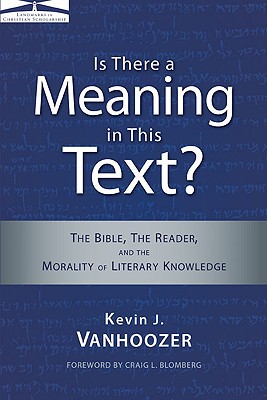 In Kevin Vanhoozer’s landmark book, Is There a Meaning in This Text?, he ends the 500-page tome with two sins that we can easily commit in trying to interpret Scripture (pp. 462-463):
1. Pride. “It is the sin of conservative and liberal alike, for pride knows neither party nor denominational boundaries. … [It] encourages us to think that we have got the correct meaning before we have made the appropriate effort to recover it. … Pride neglects the voice of the other in favor of its own.”
2. Sloth. “Interpretive sloth is a kind of shadow image of interpretive pride, its evil twin. Whereas pride claims knowledge prematurely, sloth prematurely claims the impossibility of literary knowledge. … Make no mistake: interpretive sloth is every bit as deadly as pride, for sloth breeds indifference, inattentiveness, and inaction.”
Particularly in Christian hermeneutics, in dealing with God’s Word, it is crucial to be aware of these dangers. First, pride can exacerbate the main issue for anyone seeking to understand Scripture: presuppositions. We come to the text with meaning in-hand, seeking to do the hard work of exegesis without having the humility to be wrong if the text leads us away from our presupposition. While bringing theological and exegetical baggage to the text is unavoidable, we can and should seek objectivity anyway. We can, if we are careful, leave at least some of our baggage at the door, stepping into the hermeneutical house with the Spirit as our guide and an open mind as our posture.
Second, sloth can leave us in our presuppositions without any attempt at letting the Spirit work through our efforts to grow us as interpreters. This is especially true of those who enjoy sermons and books. We would much rather let our favorite preacher or author tell us what a text means–especially when it fits our presuppositions–rather than putting in the hard work that our favorite muse assumedly put in. Instead, we could dive into the text with the joyful conviction that God has something meaningful to say to us.
We should come to the text with ourselves in mind (self-awareness and self-critique) and with God’s message in mind (what is the author/Author’s actual meaning, point, and application of this text?). Your hermeneutical method will never be perfect, but it doesn’t have to be static or stagnant.
Vanhoozer concludes (p. 466):
“A hermeneutics of humility and conviction. We must hold these two aspects together in a constructive tension. Emphasize one without the other, and you quickly fall prey to one or the other of the two deadly interpretive sins. Emphasize the two together, and you are able to avoid hermeneutic dogmatism and skepticism alike.”
Previous Post

March 23, 2015
Jesus Wasn't Afraid of His Old Testament
Next Post
March 27, 2015 Peter and John at the Tomb
Browse Our Archives
Select a Category Academics Apologetics Baptists Biblical Interpretation Biblical Studies Blog News Books Christian Life Church History Culture Ecclesiology Eschatology Gospel Interviews New Creation News Politics Science Scripture Sexual Sin Social Media Spiritual Discipline The Smorgasbord Theology Trinity Word Matters Podcast
Select a Month September 2017 August 2017 July 2017 June 2017 May 2017 April 2017 March 2017 February 2017 January 2017 December 2016 November 2016 October 2016 September 2016 August 2016 July 2016 June 2016 May 2016 April 2016 December 2015 November 2015 October 2015 July 2015 June 2015 May 2015 April 2015 March 2015 February 2015
TAKE THE
Religious Wisdom Quiz
Who was the king of Babylon during the exile of the Israelites?
Select your answer to see how you score.
Belshazzar Darius Cyrus Nebuchadnezzar
Books by This Author Books by Brandon D. Smith
Related posts from Church Grammar

The Sermon on the Mount and Jesus's Command...

Why Did the Book of Revelation Outlast Other...

Blood Moons, Babylonian Whores, and Reading Revelation Rightly

Jesus, Jonah, and Doubting God
TRENDING AT PATHEOS Evangelical

The REST of Your Life: A Creative Wrestles...
This week I had a conversation with a good friend from church....

How the author of the world's best hymn...
I've been working with John Newton for a while now. This makes...

Long before this Lectio Divina, Psalm 130 - the song - started...

What About the Trees? Another Living Parable
After I finished writing the last article about falling leaves as a...

Why Classical Education Is a Conversation, Not a...
Come and Read: Joy in Classical Education When I was a little...

Cornell University has received a great deal of negative publicity and intense...
view all Evangelical blogs
Ad-Free & Subscriber Log-In Subscription Support
- About Us
- 2026 Calendar
- Videos
- Podcasts
- Library of World Religions
- Faith In Media Tracker
- Advertise With Us
- Write for Us
- Privacy Policy
- Terms of Service
- Do Not Sell My Data
- Contact Us
- Radiant Digital
- Manage Newsletter Subscriptions
- Unsubscribe From Notifications
- Sitemap
Copyright 2008-2026, Patheos. All rights reserved.
Subscription Support Ad-Free & Subscriber Log-In
Follow Patheos