
BuddhistCatholicContemplativeEvangelicalGeneral ChristianHinduJewishLatter-day SaintMuslimNew VisionsProgressive Christian
Beliefs
- Buddhist
- Catholic
- Contemplative
- Evangelical
- General Christian
- Hindu
- Jewish
- Latter-day Saint
- More Voices
- Muslim
- New Visions
- Pagan
- Progressive Christian
Topics
- Religion News
- Food and Religion
- Sports and Religion
- Religious Art
- Religious Music and Entertainment
- Religious Events
- History and Religion
- Style and Religion
- Politics and Religion
- Women in Religion
- Recreation Outdoors and Religion
- Business Finance and Religion
- Careers Workplace and Religion
- Education and Religion
- Family Parenting and Religion
- Health Fitness and Religion
- Home and Religion
- Relationships and Religion
- Technology and Religion
- Travel and Religion
Columnists
- Buddhist Columnists
- Business Finance and Religion Columnists
- Careers Workplace and Religion Columnists
- Catholic Columnists
- Contemplative Columnists
- Education and Religion Columnists
- Evangelists Columnists
- Family Parenting and Religion Columnists
- General Christian Columnists
- Health Fitness and Religion Columnists
- Hindu Columnists
- History and Religion Columnists
- Home and Religion Columnists
- Jewish Columnists
- More Voices Columnists
- Latter Day Columnists
- Muslim Columnists
- New Visions Columnists
- Nonreligious Columnists
- Pagan Columnists
- Politics and Religion Columnists
- Progressive Columnists
- Recreation Outdoors and Religion Columnists
- Relationships and Religion Columnists
- Religion News Columnists
- Religious Art Columnists
- Religious Events Columnists
- Religious Music and Entertainment Columnists
- Sports and Religion Columnists
- Style and Religion Columnists
- Technology and Religion Columnists
- Travel and Religion Columnists
- Women in Religion Columnists
Resource Library
- 2026 Calendar
- Library of World Religions
- The 100 Most Holy Places on Earth
- Patheos Answers
- Podcasts
- Videos
- Faith Leaders Database
- Anglican Episcopalian
- Bahai
- Baptist
- Buddhism
- Christianity
- Confucianism
- Eastern Orthodoxy
- Hinduism
- Holiness and Pentecostal
- ISKCON
- Islam
- Judaism
- Lutheran
- Methodist
- The Church of Jesus Christ of Latter-day Saints
- New Age
- Paganism
- Presbytarian and Reformed
- Protestantism
- Religion Behind the Scenes
- Roman Catholic
- Scientology
- Shia Islam
- Sikhism
- Sufism
- Sunni Islam
- Taoism
- Zen
- See all religions
Research Tools
 Ad-Free & Subscriber Log-In Subscription Support
Ad-Free & Subscriber Log-In Subscription Support
Follow Patheos 

- Trending:
- Forgiveness
- |
- Marriage
- |
- Consciousness
- |
- Death Penalty
- |
- Election
- |
- Halloween
 Church Grammar
- Home
- Evangelical
- Jesus Wasn’t Afraid of His Old Testament
Jesus Wasn’t Afraid of His Old Testament
Last updated on: July 12, 2017 at 10:27 pm by Brandon D. Smith
Jesus Wasn’t Afraid of His Old Testament 2017-07-12T22:27:58-05:00 Brandon D. Smith
Patheos Explore the world's faith through different perspectives on religion and spirituality! Patheos has the views of the prevalent religions and spiritualities of the world.
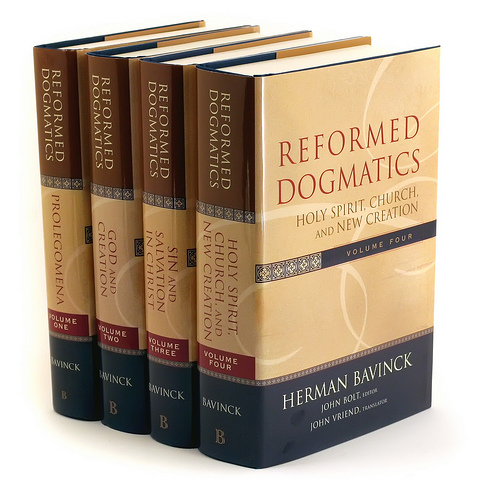 In Volume 1 of Reformed Dogmatics, Herman Bavinck lists out four ways that Jesus, the apostles, and other New Testament writers showed clear reverence for the authority of the Old Testament, particularly as a divinely-authored text. Immediately prior to this section, he also convincingly demonstrates why OT authors, prophets, etc. considered their message the words of God. Jesus and the NT writers, then, carry this view of Scripture’s authority into their own message.
(By the way, I have omitted the extensive amount of biblical references and the helpful notes on translation/hermeneutics that Bavinck includes in his book, which are worth checking out and digging into.)
Here is the list (pp. 394-397):
1. “The formula with which the OT is cited in the NT varies, but it always shows that to the writers of the NT the OT is of divine origin and bears divine authority. … This manner of citation clearly and distinctly teaches us that to Jesus and the apostles the Scripture of the old covenant, though composed of various parts and traceable to different authors, actually formed one organic whole whose author was God himself.”
2. “Several times Jesus and the apostles also definitely affirmed and taught the divine authority of OT Scripture. Scripture is a unified whole, which can neither be broken up and destroyed as a totality or in its parts.”
3. “Jesus and the apostles never take a critical position toward the content of the OT but accept it totally and without reservation. They unconditionally accept the Scripture of the OT as true and divine in all its parts, not only in its religious-ethical pronouncements or in the passages in which God himself speaks, but also in its historical components.”
4. “Dogmatically, to Jesus and the apostles the OT is the foundation of doctrine, the source of solutions, and the end of all argument. … And, to their mind, this divine authority of Scripture extended so far that a single word, even an iota or a dot, is covered by it.”
Scripture Is Life–Every Word of It
It’s become somewhat of a trend recently in evangelical circles to claim that we need to rescue Jesus and the NT from the megalomaniac, genocidal God of the OT. That OT God can’t really be what God is like because, well, Jesus isn’t like that. (And he’s God, after all.) Evangelicals, then, need to get Jesus right before they worry about getting the Bible right. And “to understand Jesus” means, at least in part, to understand that “love your enemies” is at odds with “show them no mercy.”
Christian scholars and lay-bloggers alike are picking up this dry, stale bread in hopes of selling it to the public as a buttered loaf straight from the oven. But people know stale bread when they taste it. And they should rightly spit it out.
There is no life in an OT divorced from the NT. This oft-cited quote from Paul to Timothy is not merely a Sunday school lesson in Bible-rule-following–it’s a proclamation about the authority of the OT:
“All Scripture is God-breathed and is useful for teaching, rebuking, correcting, and training in righteousness.” 2 Tim. 3:16
Paul isn’t saying, “Scripture is a good road map for life, so don’t worry about the weird stuff.” Paul is saying, “Scripture (in this case, the OT) is God’s breath–his Word–and therefore life-giving.”
The community of faith–where this teach-rebuke-correct-training quadrilateral takes place–is built around the Scriptures. There’s no need to hide from it. It won’t hurt you. God breathed into Adam’s nostrils and he came to life; God breathed into the Scriptures and we come to life.
This is not to say that we have to be “literalists” or “closed-minded.” The Bible isn’t immune to varying genres, turns-of-phrase, storytelling, hyperbole, round numbers, confusing statements, etc. It’s a book from its time, but it’s not a book stuck in time. It can be inerrant without being flattened. We don’t have to turn a blind eye to “problem passages” or deep questions. Our heads can stay well above the sand.
But we should, along with those considerations, take the Bible on its terms and seek answers on its terms. We too quickly want to ditch its claims in favor of the latest scientific trends, an emotional preference, or to create palatable teaching, when some of the most difficult passages (like God kicking Adam and Eve out of the Garden over a piece of fruit, or God freeing the Israelites from the Egyptians via river-drowning) inaugurate some of the most redemptive themes in Scripture.
The Old Testament According to Jesus
Christians should specifically take the OT on Jesus’s terms. After all, he claims that it’s about him on more than one occasion, and NT writers claim he embodies it.
He spoke of the OT as though it was historically trustworthy. He was comfortable suggesting that “the word of God cannot be broken,” and perhaps his most powerful and consistent indictment on opponents and doubters was, “Haven’t you read the Scriptures?”
Sure, he employed some surprising hermeneutics. He and the NT writers interpret OT passages and stories in ways that make us scratch our heads. It’s one thing to say they made weird pots out of OT clay, it’s quite another to say they were stifling or disposing of it.
We shouldn’t think that Jesus sticks the OT under a rug like a bad coffee stain. No, he sets it front and center without apology. For example, Jesus (the love-your-enemies Jesus) cites and the one-ups the OT in Matthew 10:15. First, he affirms the historicity of God’s destruction of Sodom and Gomorrah without qualification. Strike one*.* Second, he warned people that the coming judgment could be worse for them without apology. Strike two. Not only did he not qualify himself or apologize, and he clearly felt no need to. Strike three.
Denying, explaining away, or ignoring the OT (and by extension, the OT-NT unified whole) causes more questions than answers. Here are but a few:
- How can we trust the NT if we can’t trust its foundation, the OT?
- How can the reader “get Jesus right” without understanding the Bible who describes him as an accurate, historical book?
- How do we know Jesus existed and what he taught?
- How do we know that he really died for our sins and raised from the dead?
- How do we know he’s coming back?
- How can we trust a Bible written by a group of tabloid reporters and untrustworthy historians?
- How can we preach about the forgiveness, mercy, and justice of God if he’s neutered of his ability to enact judgment in order to further the narrative of redemption or to protect the oppressed and marginalized?
—
Stay in touch! Email me at [email protected].
Previous Post

March 19, 2015
Do Pre-Jesus Mythical Figures Debunk Christianity?
Next Post

March 25, 2015 The 2 Deadly Interpretive Sins
Browse Our Archives
Select a Category Academics Apologetics Baptists Biblical Interpretation Biblical Studies Blog News Books Christian Life Church History Culture Ecclesiology Eschatology Gospel Interviews New Creation News Politics Science Scripture Sexual Sin Social Media Spiritual Discipline The Smorgasbord Theology Trinity Word Matters Podcast
Select a Month September 2017 August 2017 July 2017 June 2017 May 2017 April 2017 March 2017 February 2017 January 2017 December 2016 November 2016 October 2016 September 2016 August 2016 July 2016 June 2016 May 2016 April 2016 December 2015 November 2015 October 2015 July 2015 June 2015 May 2015 April 2015 March 2015 February 2015
TAKE THE
Religious Wisdom Quiz
What language was the New Testament originally written in?
Select your answer to see how you score.
Latin Greek Hebrew Syriac
Books by This Author Books by Brandon D. Smith
Related posts from Church Grammar

What We Know about Arius and His Heresy

The Sermon on the Mount and Jesus's Command...

Why Did the Book of Revelation Outlast Other...

Blood Moons, Babylonian Whores, and Reading Revelation Rightly
TRENDING AT PATHEOS Evangelical

How the author of the world's best hymn...
I've been working with John Newton for a while now. This makes...

Long before this Lectio Divina, Psalm 130 - the song - started...

What About the Trees? Another Living Parable
After I finished writing the last article about falling leaves as a...

Why Classical Education Is a Conversation, Not a...
Come and Read: Joy in Classical Education When I was a little...

Falling Leaves: A Living Parable on Letting Go
I’ve spent the vast majority of my life in the southeast corner...

Cornell University has received a great deal of negative publicity and intense...
view all Evangelical blogs
Ad-Free & Subscriber Log-In Subscription Support
- About Us
- 2026 Calendar
- Videos
- Podcasts
- Library of World Religions
- Faith In Media Tracker
- Advertise With Us
- Write for Us
- Privacy Policy
- Terms of Service
- Do Not Sell My Data
- Contact Us
- Radiant Digital
- Manage Newsletter Subscriptions
- Unsubscribe From Notifications
- Sitemap
Copyright 2008-2026, Patheos. All rights reserved.
Subscription Support Ad-Free & Subscriber Log-In
Follow Patheos