
BuddhistCatholicContemplativeEvangelicalGeneral ChristianHinduJewishLatter-day SaintMuslimNew VisionsProgressive Christian
Beliefs
- Buddhist
- Catholic
- Contemplative
- Evangelical
- General Christian
- Hindu
- Jewish
- Latter-day Saint
- More Voices
- Muslim
- New Visions
- Pagan
- Progressive Christian
Topics
- Religion News
- Food and Religion
- Sports and Religion
- Religious Art
- Religious Music and Entertainment
- Religious Events
- History and Religion
- Style and Religion
- Politics and Religion
- Women in Religion
- Recreation Outdoors and Religion
- Business Finance and Religion
- Careers Workplace and Religion
- Education and Religion
- Family Parenting and Religion
- Health Fitness and Religion
- Home and Religion
- Relationships and Religion
- Technology and Religion
- Travel and Religion
Columnists
- Buddhist Columnists
- Business Finance and Religion Columnists
- Careers Workplace and Religion Columnists
- Catholic Columnists
- Contemplative Columnists
- Education and Religion Columnists
- Evangelists Columnists
- Family Parenting and Religion Columnists
- General Christian Columnists
- Health Fitness and Religion Columnists
- Hindu Columnists
- History and Religion Columnists
- Home and Religion Columnists
- Jewish Columnists
- More Voices Columnists
- Latter Day Columnists
- Muslim Columnists
- New Visions Columnists
- Nonreligious Columnists
- Pagan Columnists
- Politics and Religion Columnists
- Progressive Columnists
- Recreation Outdoors and Religion Columnists
- Relationships and Religion Columnists
- Religion News Columnists
- Religious Art Columnists
- Religious Events Columnists
- Religious Music and Entertainment Columnists
- Sports and Religion Columnists
- Style and Religion Columnists
- Technology and Religion Columnists
- Travel and Religion Columnists
- Women in Religion Columnists
Resource Library
- 2026 Calendar
- Library of World Religions
- The 100 Most Holy Places on Earth
- Patheos Answers
- Podcasts
- Videos
- Faith Leaders Database
- Anglican Episcopalian
- Bahai
- Baptist
- Buddhism
- Christianity
- Confucianism
- Eastern Orthodoxy
- Hinduism
- Holiness and Pentecostal
- ISKCON
- Islam
- Judaism
- Lutheran
- Methodist
- The Church of Jesus Christ of Latter-day Saints
- New Age
- Paganism
- Presbytarian and Reformed
- Protestantism
- Religion Behind the Scenes
- Roman Catholic
- Scientology
- Shia Islam
- Sikhism
- Sufism
- Sunni Islam
- Taoism
- Zen
- See all religions
Research Tools
 Ad-Free & Subscriber Log-In Subscription Support
Ad-Free & Subscriber Log-In Subscription Support
Follow Patheos 

- Trending:
- Forgiveness
- |
- Marriage
- |
- Consciousness
- |
- Death Penalty
- |
- Election
- |
- Halloween
 Brad Jersak
- Home
- Progressive Christian
- Where I Found Belonging – Brad Jersak
Where I Found Belonging – Brad Jersak
Last updated on: April 30, 2020 at 5:51 pm by Brad Jersak
Where I Found Belonging – Brad Jersak 2020-04-30T17:51:55-07:00 Brad Jersak
Patheos Explore the world's faith through different perspectives on religion and spirituality! Patheos has the views of the prevalent religions and spiritualities of the world.
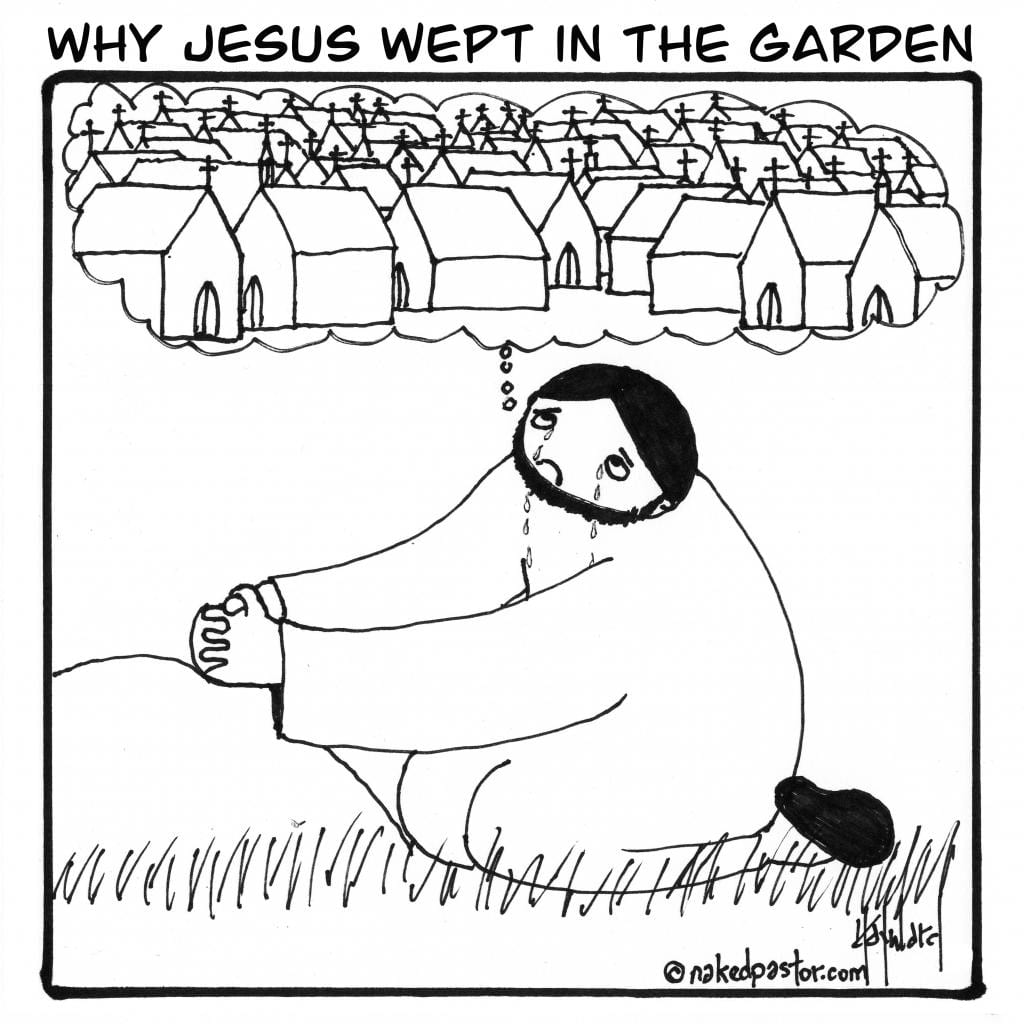 I am well aware, to the point of nausea, that the movement or institution or community so often called “church” has been a source of terrible suffering for many of my friends. Some experienced authentic spiritual abuse through stifling manipulation and control and others through marginalization or outright exclusion. I hear these stories regularly from both former and current church members as well as faithful leaders were mistreated by their congregants. It’s an ugly business that deserves careful attention until it ends completely.
That’s one story. And I think it only fair that I tell you another one. Mine.
I have spoken publicly many times on how my parents taught me to love Jesus, prayer, Scripture and sharing my faith. They raised me on “Jesus loves me this I know” and urged me to remain open to the Spirit when I was entrenched in dispensationalism, cessationism and then an early form of neo-Reformed Calvinism. I’ve also shared how those systems and the revivalists who spread them traumatized me with fear of hell, Armageddon and being “left behind.” So, when it comes to toxic faith, I can relate, believe me.
But there’s another side to the story and I think it needs to be said. For many years, I experienced bullying, mockery and exclusion outside the church. Public school was extremely lonely and frightening for me. I was an outsider at a very young age and developed a heart for the marginalized because my few friends were the other losers. I really appreciate those guys. Without them, I would have been all alone. I tried to compensate by being smart (and was ostracized) or funny (and met with cruelty). When I joined the hockey team as a goalie for a few years, I was made to gear up in a separate dressing room at practice and would hear my team murmur, “Aim for his head.” Eventually, I learned that being “nice” helped, but I rarely ever felt a true sense of belonging. As the other kids matured, some were kind to me but after years of rejection and insecurity, I knew I wasn’t “in.” Later, I played basketball and volleyball, but that was a concession to my skills. I couldn’t expect an invitation to parties and such. Most of my spare time was spent alone, walking the forest or the lakeside and playing with toys, reading books or working out in my bedroom.
I sound like I’m whining. I’m not shy but I am definitely an introvert so alone-time was solace. So now here’s the other side. I did not feel that exclusion or abuse in the church—not as a child, not as a teen, not as a young adult. We weren’t a big enough town to have much of a youth group, but that little band was consistently kind to me (though few were my age). So too the little group of outsiders at the inter-church “boys’ club.” But best of all, when I would go off to summer camp, it was like being transported to another planet. Despite some of the heavy-handed teaching, the staff and campers showed me real love and more importantly, they obviously liked me. They treated me as a peer and even esteemed me. How was this possible? Did I change every summer into a confident, popular guy who was worthy of welcome and belonging, only to transform back into a contemptible freak come September? Was I Dr. Jekyll and Mr. Hyde?
Well, if I did change, the difference because of my environment. Among these Jesus-followers, I didn’t have to flinch or worry about blindsides (physical or emotional). My gifts were appreciated but not necessary for acceptance. Everyone was my brother or sister. Now that Brian Zahnd has given me the language, I can see in retrospect that those summers of reprieve were Christ’s alternative society, what the synoptic Jesus called “the kingdom of God” or in John, “eternal life.” I remember the goodness of that time and also the depression that set in when I had to face “the world” again.
So, I’ll say it directly: for me, overall, “the church” I experienced was a place of harmony and belonging. “The world” I knew was hostile and incredibly mean.
What’s the moral of my story? I can name a few:
- It is entirely possible to experience love and belonging among the people of God, a harbor for those wearied and downtrodden by the cruel systems of exclusion in the world. Where God’s love is known as I knew it, we need to understand why people stay connected even if the preaching sucks, the services are mediocre, and the theology is sketchy. Love and belonging are more important than anything. Regardless of our reputation, I can tell you that I experience that acceptance all over the world.
- Therefore, it is entirely unacceptable that anyone should experience “the church” as controlling, abusive or exclusionary. That so many have had to flee to “the world” for safety is inexcusable and an indictment, not of the household (oikos) Christ established, but of those who’ve co-opted and perverted it for their own self-centered agendas. It is especially sickening when one is mistreated, excluded or treated as less-than by virtue of who they are. Those congregations who fail to repent will (or already) have their lampstand extinguished (Rev. 2:5) … luckily, Jesus is more patient than I am.
- Some feel secure in a fellowship of believers and it was among fellow Christ-followers that they first found harbor and healing from world-inflicted wounds. Others needed to escape serious abuse from dysfunctional faith communities, and they feel far safer among friends outside any church culture. This tells me we should not paint the whole Christian movement with one wide, condemning brush. Nor should we imagine that Christianity holds the monopoly on love, kindness, inclusion and healing. It’s not that simple. Rather, wherever we find ourselves today, we need to hear each person’s unique story and attend to their spiritual needs with the compassion, kindness and radical inclusion of Jesus Christ.
The “church,” whatever that is, has its share of negative press and army of haters. And surely it’s well deserved (as Israel’s great prophets would be quick to point out). But if we’re talking about the family of Christ-followers, then a generalized hatred of 31% of the people on the planet is pretty … well, hateful, whether you identify with them or not. Maybe the answer is to follow Paul the Apostle’s advice in Romans 2:1-4. I.e. Let’s remember that where we think wrath (God’s or our own) is deserved, it’s actually kindness (God’s and ours) that leads to repentance.
Previous Post

March 30, 2020
The River of Fire: the Sovereignty of Infinite Love - Brad Jersak
Browse Our Archives
Select a Category Uncategorized
Select a Month April 2020 March 2020 February 2020 January 2020 December 2019 November 2019 October 2019 September 2019
Follow Us!
TAKE THE
Religious Wisdom Quiz
What does the name "Samuel" mean?
Select your answer to see how you score.
Saved by God Sent by God Heard by God Gifted by God
Related posts from Brad Jersak
The River of Fire: the Sovereignty of Infinite...

Is Humanity the Real Plague? (Spoiler—No) - Brad...

The Covid-19 Reset: Dark Clouds, Silver Linings &...

Plato, Platinga & Paul - Toward Christian Knowing...
TRENDING AT PATHEOS Progressive Christian

Why Christians Have a Sacred Duty to Vote:...
The Bible offers strong support for the sacred duty to vote. Here...

What Being a Modern-Day Apostle Means to Me
In my last column, I discussed the ins and outs of modern-day...

Did Ancient China Once Worship the God of...
Across human history, a common thread weaves through the origins of the...

Love Your Neighbor – Including Earth-Kin: Lev. 19,...
God’s command to love your neighbor means acting in an ethical and...

Lead a Church Study of “Jesus and Lao...
Guest writer Jack Thomas (The Irreverent Reverend) reflects on leading his church...

Principles for Understanding the Apostolic Ministry Today
Whenever people discover that my formal ministry title is "apostle," as in...
view all Progressive Christian blogs
Ad-Free & Subscriber Log-In Subscription Support
- About Us
- 2026 Calendar
- Videos
- Podcasts
- Library of World Religions
- Faith In Media Tracker
- Advertise With Us
- Write for Us
- Privacy Policy
- Terms of Service
- Do Not Sell My Data
- Contact Us
- Radiant Digital
- Manage Newsletter Subscriptions
- Unsubscribe From Notifications
- Sitemap
Copyright 2008-2026, Patheos. All rights reserved.
Subscription Support Ad-Free & Subscriber Log-In
Follow Patheos