
BuddhistCatholicContemplativeEvangelicalGeneral ChristianHinduJewishLatter-day SaintMuslimNew VisionsProgressive Christian
Beliefs
- Buddhist
- Catholic
- Contemplative
- Evangelical
- General Christian
- Hindu
- Jewish
- Latter-day Saint
- More Voices
- Muslim
- New Visions
- Pagan
- Progressive Christian
Topics
- Religion News
- Food and Religion
- Sports and Religion
- Religious Art
- Religious Music and Entertainment
- Religious Events
- History and Religion
- Style and Religion
- Politics and Religion
- Women in Religion
- Recreation Outdoors and Religion
- Business Finance and Religion
- Careers Workplace and Religion
- Education and Religion
- Family Parenting and Religion
- Health Fitness and Religion
- Home and Religion
- Relationships and Religion
- Technology and Religion
- Travel and Religion
Columnists
- Buddhist Columnists
- Business Finance and Religion Columnists
- Careers Workplace and Religion Columnists
- Catholic Columnists
- Contemplative Columnists
- Education and Religion Columnists
- Evangelists Columnists
- Family Parenting and Religion Columnists
- General Christian Columnists
- Health Fitness and Religion Columnists
- Hindu Columnists
- History and Religion Columnists
- Home and Religion Columnists
- Jewish Columnists
- More Voices Columnists
- Latter Day Columnists
- Muslim Columnists
- New Visions Columnists
- Nonreligious Columnists
- Pagan Columnists
- Politics and Religion Columnists
- Progressive Columnists
- Recreation Outdoors and Religion Columnists
- Relationships and Religion Columnists
- Religion News Columnists
- Religious Art Columnists
- Religious Events Columnists
- Religious Music and Entertainment Columnists
- Sports and Religion Columnists
- Style and Religion Columnists
- Technology and Religion Columnists
- Travel and Religion Columnists
- Women in Religion Columnists
Resource Library
- 2026 Calendar
- Library of World Religions
- The 100 Most Holy Places on Earth
- Patheos Answers
- Podcasts
- Videos
- Faith Leaders Database
- Anglican Episcopalian
- Bahai
- Baptist
- Buddhism
- Christianity
- Confucianism
- Eastern Orthodoxy
- Hinduism
- Holiness and Pentecostal
- ISKCON
- Islam
- Judaism
- Lutheran
- Methodist
- The Church of Jesus Christ of Latter-day Saints
- New Age
- Paganism
- Presbytarian and Reformed
- Protestantism
- Religion Behind the Scenes
- Roman Catholic
- Scientology
- Shia Islam
- Sikhism
- Sufism
- Sunni Islam
- Taoism
- Zen
- See all religions
Research Tools
 Ad-Free & Subscriber Log-In Subscription Support
Ad-Free & Subscriber Log-In Subscription Support
Follow Patheos 

- Trending:
- Forgiveness
- |
- Marriage
- |
- Consciousness
- |
- Death Penalty
- |
- Election
- |
- Halloween
 Brad Jersak
- Home
- Progressive Christian
- Q&R with Brad Jersak – “How do we harmonize the Bible’s judgment and redemption texts?”
Q&R with Brad Jersak – “How do we harmonize the Bible’s judgment and redemption texts?”
Last updated on: January 25, 2020 at 12:09 pm by Brad Jersak
Q&R with Brad Jersak – “How do we harmonize the Bible’s judgment and redemption texts?” 2019-12-11T13:47:06-07:00 Brad Jersak
Patheos Explore the world's faith through different perspectives on religion and spirituality! Patheos has the views of the prevalent religions and spiritualities of the world.
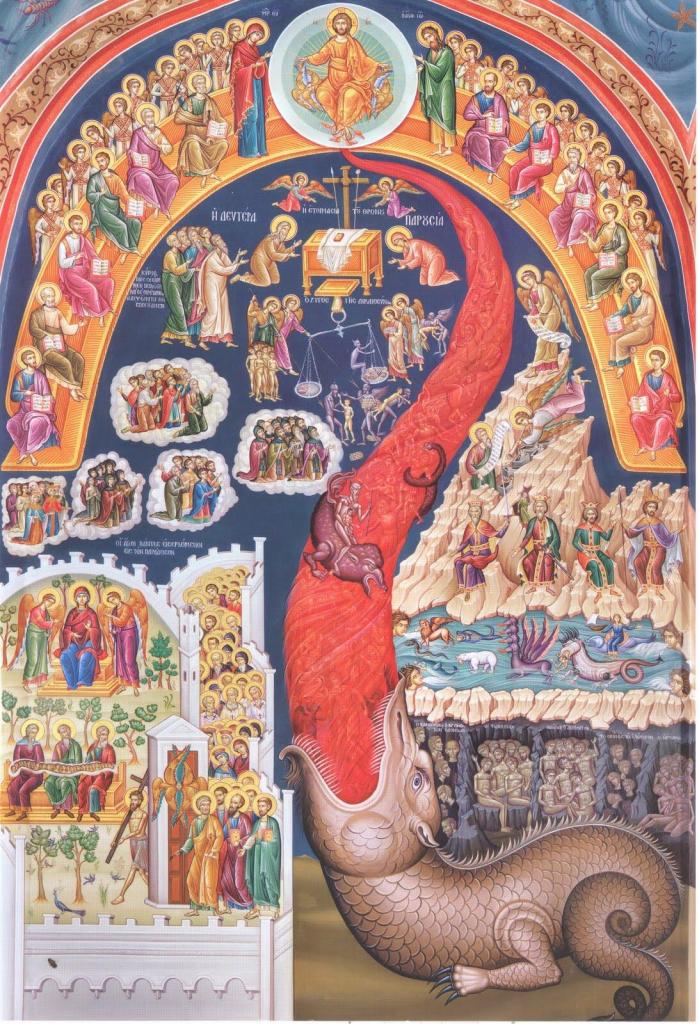
“The Last Judgment” – Meteora, Greece
Question
How do we best harmonize the Bible’s ‘eschatological’ texts? Some described unmitigated judgment and permanent destruction for the majority of the human race, while other passages seem to announce the redemption of everyone in the end. How do we hold both descriptions together? Can we? Or are these really contradictory?
Response
Yes, it’s true: those who pay very close attention to the actual words of Scripture note how difficult it is to reconcile its unmitigated judgment texts with all-encompassing redemption passages.
Currently, I see two thoughtful approaches that take both seriously. I would not regard classic eternal conscious torment among them, ignoring or perverting as it does, the many New Testament statements that foresee the possibility or promise of ultimate redemption.
One solution is to see the two sets of texts as describing two possible paths, neither of which is predetermined. In this model, the judgment of sheep and goats is not a prediction of a certain end but rather, a crossroad set before us today. This “two ways” theme is reminiscent of Psalm 1, continues through the Sermon on the Mount (broad way / narrow way) and culminates in the two cities of Revelation. Instead of forecasting the future, Revelation asks which kingdom we’ll offer our allegiance today: the beastly world empires or the New Jerusalem kingdom of God. In other words, neither the destruction texts nor the inclusion texts describe an inevitable end at all—they are only eschatological in the sense that they plant us in the ‘valley of decision’ today. In that sense, the judgment and salvation described are not contradictory texts at all—they are mutually exclusive paths that lie before us. Distilled to their bottom line, they say to us, “Choose you this day…”
The second approach is to read these texts as descriptions of consecutive eras across the grand narrative of redemption. The “ages” described in Scripture include (i) “this present evil age” (Eph. 6), (ii) “the age to come” (aionion) and (iii) “the end of the ages” (or simply “the end,” described in 1 Cor. 15:23-28). [Note: for Christ-followers, in a sense, “the end of the ages has come” – 1 Cor. 10:11, Heb. 6:5). The “age to come,” in this view, is a time of judgment and restoration, where the cosmos is in process and all things are being summed up in Christ. Thus, any of the final judgment and destruction texts are slotted during or at the outset of “the age to come.” The “age to come” includes the dismantling of the old world system, the purification of humanity and “the restoration of all things” where Christ “makes all things new.” The so-called “universalist” or “ultimate redemption” passages anticipate “the end of the ages,” when that work is complete, all evil ceases and God is “all and in all.” Said another way, judgment and restoration are penultimate and age-bound (2ndlast) and then redemption is ultimate and eternal.
For my part, I believe these texts can and perhaps must be read in both ways. That is, the way of destruction and the way of life both start today, with real-life choices and their consequences. But also, the drama of redemption is heading somewhere, through judgment and to salvation. Both these realities seem to be intrinsic to the two types of texts in question, without spinning or negating either of them.
Previous Post

January 21, 2020
"Is the Spiritual Realm more Real than the Natural?" Brad Jersak
Next Post
February 2, 2020 Q&R with Brad Jersak - "Does God Ever 'Intervene' in Natural Law?
Browse Our Archives
Select a Category Uncategorized
Select a Month April 2020 March 2020 February 2020 January 2020 December 2019 November 2019 October 2019 September 2019
Follow Us!
TAKE THE
Religious Wisdom Quiz
What does the name "Samuel" mean?
Select your answer to see how you score.
Saved by God Sent by God Heard by God Gifted by God
Related posts from Brad Jersak
Where I Found Belonging - Brad Jersak
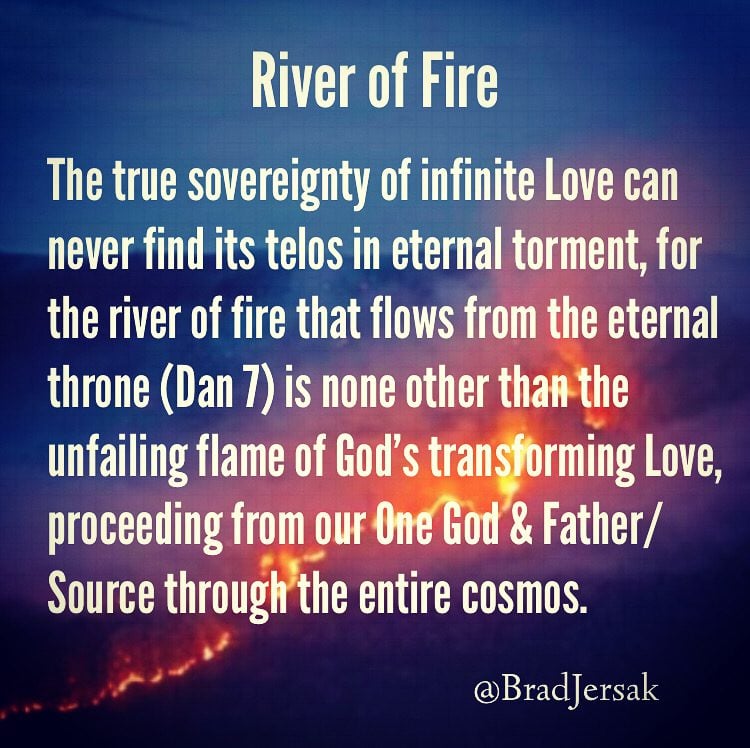
The River of Fire: the Sovereignty of Infinite...

Is Humanity the Real Plague? (Spoiler—No) - Brad...

The Covid-19 Reset: Dark Clouds, Silver Linings &...
TRENDING AT PATHEOS Progressive Christian

Why Christians Have a Sacred Duty to Vote:...
The Bible offers strong support for the sacred duty to vote. Here...

What Being a Modern-Day Apostle Means to Me
In my last column, I discussed the ins and outs of modern-day...

Did Ancient China Once Worship the God of...
Across human history, a common thread weaves through the origins of the...

Love Your Neighbor – Including Earth-Kin: Lev. 19,...
God’s command to love your neighbor means acting in an ethical and...

Lead a Church Study of “Jesus and Lao...
Guest writer Jack Thomas (The Irreverent Reverend) reflects on leading his church...

Principles for Understanding the Apostolic Ministry Today
Whenever people discover that my formal ministry title is "apostle," as in...
view all Progressive Christian blogs
Ad-Free & Subscriber Log-In Subscription Support
- About Us
- 2026 Calendar
- Videos
- Podcasts
- Library of World Religions
- Faith In Media Tracker
- Advertise With Us
- Write for Us
- Privacy Policy
- Terms of Service
- Do Not Sell My Data
- Contact Us
- Radiant Digital
- Manage Newsletter Subscriptions
- Unsubscribe From Notifications
- Sitemap
Copyright 2008-2026, Patheos. All rights reserved.
Subscription Support Ad-Free & Subscriber Log-In
Follow Patheos