
BuddhistCatholicContemplativeEvangelicalGeneral ChristianHinduJewishLatter-day SaintMuslimNew VisionsProgressive Christian
Beliefs
- Buddhist
- Catholic
- Contemplative
- Evangelical
- General Christian
- Hindu
- Jewish
- Latter-day Saint
- More Voices
- Muslim
- New Visions
- Pagan
- Progressive Christian
Topics
- Religion News
- Food and Religion
- Sports and Religion
- Religious Art
- Religious Music and Entertainment
- Religious Events
- History and Religion
- Style and Religion
- Politics and Religion
- Women in Religion
- Recreation Outdoors and Religion
- Business Finance and Religion
- Careers Workplace and Religion
- Education and Religion
- Family Parenting and Religion
- Health Fitness and Religion
- Home and Religion
- Relationships and Religion
- Technology and Religion
- Travel and Religion
Columnists
- Buddhist Columnists
- Business Finance and Religion Columnists
- Careers Workplace and Religion Columnists
- Catholic Columnists
- Contemplative Columnists
- Education and Religion Columnists
- Evangelists Columnists
- Family Parenting and Religion Columnists
- General Christian Columnists
- Health Fitness and Religion Columnists
- Hindu Columnists
- History and Religion Columnists
- Home and Religion Columnists
- Jewish Columnists
- More Voices Columnists
- Latter Day Columnists
- Muslim Columnists
- New Visions Columnists
- Nonreligious Columnists
- Pagan Columnists
- Politics and Religion Columnists
- Progressive Columnists
- Recreation Outdoors and Religion Columnists
- Relationships and Religion Columnists
- Religion News Columnists
- Religious Art Columnists
- Religious Events Columnists
- Religious Music and Entertainment Columnists
- Sports and Religion Columnists
- Style and Religion Columnists
- Technology and Religion Columnists
- Travel and Religion Columnists
- Women in Religion Columnists
Resource Library
- 2026 Calendar
- Library of World Religions
- The 100 Most Holy Places on Earth
- Patheos Answers
- Podcasts
- Videos
- Faith Leaders Database
- Anglican Episcopalian
- Bahai
- Baptist
- Buddhism
- Christianity
- Confucianism
- Eastern Orthodoxy
- Hinduism
- Holiness and Pentecostal
- ISKCON
- Islam
- Judaism
- Lutheran
- Methodist
- The Church of Jesus Christ of Latter-day Saints
- New Age
- Paganism
- Presbytarian and Reformed
- Protestantism
- Religion Behind the Scenes
- Roman Catholic
- Scientology
- Shia Islam
- Sikhism
- Sufism
- Sunni Islam
- Taoism
- Zen
- See all religions
Research Tools
 Ad-Free & Subscriber Log-In Subscription Support
Ad-Free & Subscriber Log-In Subscription Support
Follow Patheos 

- Trending:
- Forgiveness
- |
- Marriage
- |
- Consciousness
- |
- Death Penalty
- |
- Election
- |
- Halloween
 Brad Jersak
- Home
- Progressive Christian
- Q & R: Reading Romans without courtroom lenses – Brad Jersak
Q & R: Reading Romans without courtroom lenses – Brad Jersak
Last updated on: November 2, 2019 at 9:24 am by Brad Jersak
Q & R: Reading Romans without courtroom lenses – Brad Jersak 2019-10-23T10:29:34-07:00 Brad Jersak
Patheos Explore the world's faith through different perspectives on religion and spirituality! Patheos has the views of the prevalent religions and spiritualities of the world.
 Question
I’ve been reading through Romans and am just having a hard time *not* seeing consistent affirmations of PSA (penal substitutionary atonement) and the forensic view of “justification” and “righteousness.” But I’m aware that this is because of my background, and I’m trying to unlearn it. I know that you’re able to read Romans in a completely different way and I’d like to learn how to do that.
I’m aware of some concepts, like N.T. Wright’s “New Perspective,” but have a hard time seeing them as I actually handle the text. So I was wondering if you have recommendations that would help me handle Romans differently?
Response
The issue is the very powerful juridical lens that redefines Romans’ key words through the courtroom metaphor. As long as you assume those definitions, you won’t really be able to shake loose from the juridical or contractual models. For example:
Wrath: In the juridical model, wrath is when God punishes our sin. Is that how Paul describes it?
No, in his apostolic mind, Paul contrasts wrath as the wages of sin vis-a-vis grace as the free gift of God. Wrath, for Paul, is the way sin harms us, infects us, binds us. It is the very consequences from which God seeks to rescue us. Yes, Christ comes as Judge, but not first in the modern legal sense, but more in the biblical Jewish sense of Deliverer (see the book of Judges).
Justification: In the juridical model, justification is usually reduced to a verdict of “not guilty” declared by God after Jesus has been punished for your guilt in your stead. You were guilty, God punished Jesus for your guilt, now you are not guilty. Is that how Paul sees it?
No, in his apostolic mind, justification is about restoration or rebalancing–it we want a modern metaphor, why not think about how we justify margins of a document. For Paul, justification is far more than an abstract legal declaration in some heavenly courtroom. It is about establishing God’s kingdom on earth and restoring a shalomic community in which the Gentiles are now included in God’s blessings. To justify is literally “to make right.” How? By punishment? No, by the mercy and forgivness of God revealed on the Cross when we crucified his Son, when God raised him to life and when he enthroned him as Prince of Peace.
Righteousness: In the juridical model, righteousness is this imputed status where God considers you not guilty because he sees Christ’s righteous life instead of your sin, regardless of one’s actual life. Because God already punished your sins in Christ, you can be declared holy without ever needing to participate in the empowering grace that transforms us.
In Paul’s apostolic mind, righteousness (also translated just or justice) is who God is and what the grace of the Holy Spirit is doing in us through faith. It’s the righteousness not just imputed but imparted to disciples growing in love through the indwelling grace of Christ-in-us that is transforming us into Christlike people from the inside out. A faith orientation of trust in and surrender to the loving care of God opens our hands and hearts to his righteousness IN us (not OUT there somewhere in a gnostic legal transaction).
Redemption: In the juridical model, redemption is transactional. It’s a payment through violence that allows God to withhold our deserved punishment (since he already did that to Jesus). What a reduction of the term mercy! IF, that is, you accept it. If not, you still have to be punished (double indemnity!) OR he didn’t really die for you (limited atonement).
In Paul’s apostolic mind, words like redemption and ransom are rooted in his Jewish backstory, where through the Moses, God redeems, ransoms or delivers Israel out of bondage to Pharaoh in Egypt. Moses didn’t pay Pharaoh to redeem God’s people; he actually plundered Pharaoh’s gold and some of his people. For Paul, redemption not paying off God with death; it is God’s rescue mission, whereby Christ enters our abyss to free us from bondage to death and leading us into life.
Reconciliation: In the juridical model, reconciliation is that after you accept that Jesus was punished instead of you, you’re now welcome into God’s kingdom. That is far from the apostolic gospel as laid out in Romans.
In Paul’s mind, reconciliation (and new covenant) is not contractual or transactional. It is how Christ renews our relationship with God in the classical biblical metaphor of a spousal relationship! It’s the wayward Bride coming home. When you read covenant, don’t think contract — think patriarchal care or marital relationship. Reconciliation is coming home as Hosea’s wife did or as the Prodigal son did. The ministry of Christ was to bring humanity back to God in him, despite our enmity at the Cross.
All of that to say, I think the first step in reading Romans rightly is letting go of the late-coming definitions of lawyers who force-fit Paul’s words into their theological puzzle so we can rediscover the terms Paul used in light of their Jewish biblical backstory of redemption, where the Exodus and Exile become archetypes for what God in Christ has done for the whole world.
Previous Post

October 28, 2019
The Finished Work (before, during & after the Cross) - Brad Jersak
Next Post

November 4, 2019 Q & R: A Question about "Ultimate Redemption"
Browse Our Archives
Select a Category Uncategorized
Select a Month April 2020 March 2020 February 2020 January 2020 December 2019 November 2019 October 2019 September 2019
Follow Us!
TAKE THE
Religious Wisdom Quiz
What does Jesus say about storing up treasures on earth?
Select your answer to see how you score.
Only store in banks Do not, because they are temporary Store as much as possible Treasure is godliness
Related posts from Brad Jersak
Where I Found Belonging - Brad Jersak
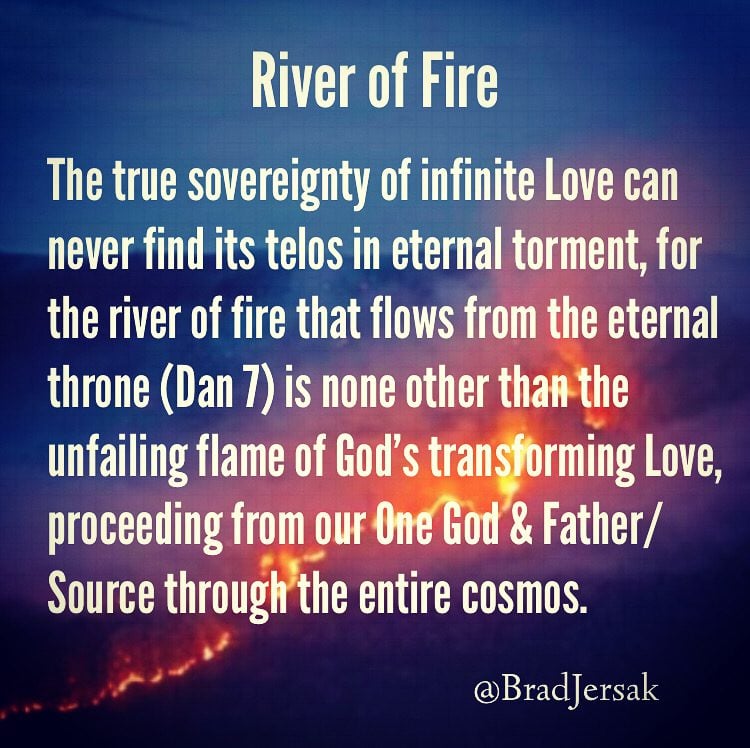
The River of Fire: the Sovereignty of Infinite...

Is Humanity the Real Plague? (Spoiler—No) - Brad...

The Covid-19 Reset: Dark Clouds, Silver Linings &...
TRENDING AT PATHEOS Progressive Christian

Why Christians Have a Sacred Duty to Vote:...
The Bible offers strong support for the sacred duty to vote. Here...

What Being a Modern-Day Apostle Means to Me
In my last column, I discussed the ins and outs of modern-day...

Did Ancient China Once Worship the God of...
Across human history, a common thread weaves through the origins of the...

Love Your Neighbor – Including Earth-Kin: Lev. 19,...
God’s command to love your neighbor means acting in an ethical and...

Lead a Church Study of “Jesus and Lao...
Guest writer Jack Thomas (The Irreverent Reverend) reflects on leading his church...

Principles for Understanding the Apostolic Ministry Today
Whenever people discover that my formal ministry title is "apostle," as in...
view all Progressive Christian blogs
Ad-Free & Subscriber Log-In Subscription Support
- About Us
- 2026 Calendar
- Videos
- Podcasts
- Library of World Religions
- Faith In Media Tracker
- Advertise With Us
- Write for Us
- Privacy Policy
- Terms of Service
- Do Not Sell My Data
- Contact Us
- Radiant Digital
- Manage Newsletter Subscriptions
- Unsubscribe From Notifications
- Sitemap
Copyright 2008-2026, Patheos. All rights reserved.
Subscription Support Ad-Free & Subscriber Log-In
Follow Patheos