
BuddhistCatholicContemplativeEvangelicalGeneral ChristianHinduJewishLatter-day SaintMuslimNew VisionsProgressive Christian
Beliefs
- Buddhist
- Catholic
- Contemplative
- Evangelical
- General Christian
- Hindu
- Jewish
- Latter-day Saint
- More Voices
- Muslim
- New Visions
- Pagan
- Progressive Christian
Topics
- Religion News
- Food and Religion
- Sports and Religion
- Religious Art
- Religious Music and Entertainment
- Religious Events
- History and Religion
- Style and Religion
- Politics and Religion
- Women in Religion
- Recreation Outdoors and Religion
- Business Finance and Religion
- Careers Workplace and Religion
- Education and Religion
- Family Parenting and Religion
- Health Fitness and Religion
- Home and Religion
- Relationships and Religion
- Technology and Religion
- Travel and Religion
Columnists
- Buddhist Columnists
- Business Finance and Religion Columnists
- Careers Workplace and Religion Columnists
- Catholic Columnists
- Contemplative Columnists
- Education and Religion Columnists
- Evangelists Columnists
- Family Parenting and Religion Columnists
- General Christian Columnists
- Health Fitness and Religion Columnists
- Hindu Columnists
- History and Religion Columnists
- Home and Religion Columnists
- Jewish Columnists
- More Voices Columnists
- Latter Day Columnists
- Muslim Columnists
- New Visions Columnists
- Nonreligious Columnists
- Pagan Columnists
- Politics and Religion Columnists
- Progressive Columnists
- Recreation Outdoors and Religion Columnists
- Relationships and Religion Columnists
- Religion News Columnists
- Religious Art Columnists
- Religious Events Columnists
- Religious Music and Entertainment Columnists
- Sports and Religion Columnists
- Style and Religion Columnists
- Technology and Religion Columnists
- Travel and Religion Columnists
- Women in Religion Columnists
Resource Library
- 2026 Calendar
- Library of World Religions
- The 100 Most Holy Places on Earth
- Patheos Answers
- Podcasts
- Videos
- Faith Leaders Database
- Anglican Episcopalian
- Bahai
- Baptist
- Buddhism
- Christianity
- Confucianism
- Eastern Orthodoxy
- Hinduism
- Holiness and Pentecostal
- ISKCON
- Islam
- Judaism
- Lutheran
- Methodist
- The Church of Jesus Christ of Latter-day Saints
- New Age
- Paganism
- Presbytarian and Reformed
- Protestantism
- Religion Behind the Scenes
- Roman Catholic
- Scientology
- Shia Islam
- Sikhism
- Sufism
- Sunni Islam
- Taoism
- Zen
- See all religions
Research Tools
 Ad-Free & Subscriber Log-In Subscription Support
Ad-Free & Subscriber Log-In Subscription Support
Follow Patheos 

- Trending:
- Forgiveness
- |
- Marriage
- |
- Consciousness
- |
- Death Penalty
- |
- Election
- |
- Halloween
 Born Again Witch
- Home
- Pagan
- Relationships and Religion
- The Broken People
The Broken People
Last updated on: January 7, 2016 at 3:42 pm by Annika Mongan
The Broken People 2016-01-07T15:42:54-07:00 Annika Mongan
Patheos Explore the world's faith through different perspectives on religion and spirituality! Patheos has the views of the prevalent religions and spiritualities of the world.
“But she’s so Broken. Kaputt! Broken!” That’s what I’m told as I talk about the struggles of a friend. She’s considered one The Broken People. The implication is that the lives of The Broken People are full of suffering. Sad and tragic lives. But we’re not like them. We feel compassion and we shake our heads. They must have made bad choices. They must have refused the healing that could be theirs if they joined us Whole People. Some of them will, but most won’t, so we continue to shake our heads, so kaputt, we say, so unlike us, so in need of salvation. Our hearts ache for them. We love them as Jesus loves us, but often we do so from a safe distance.
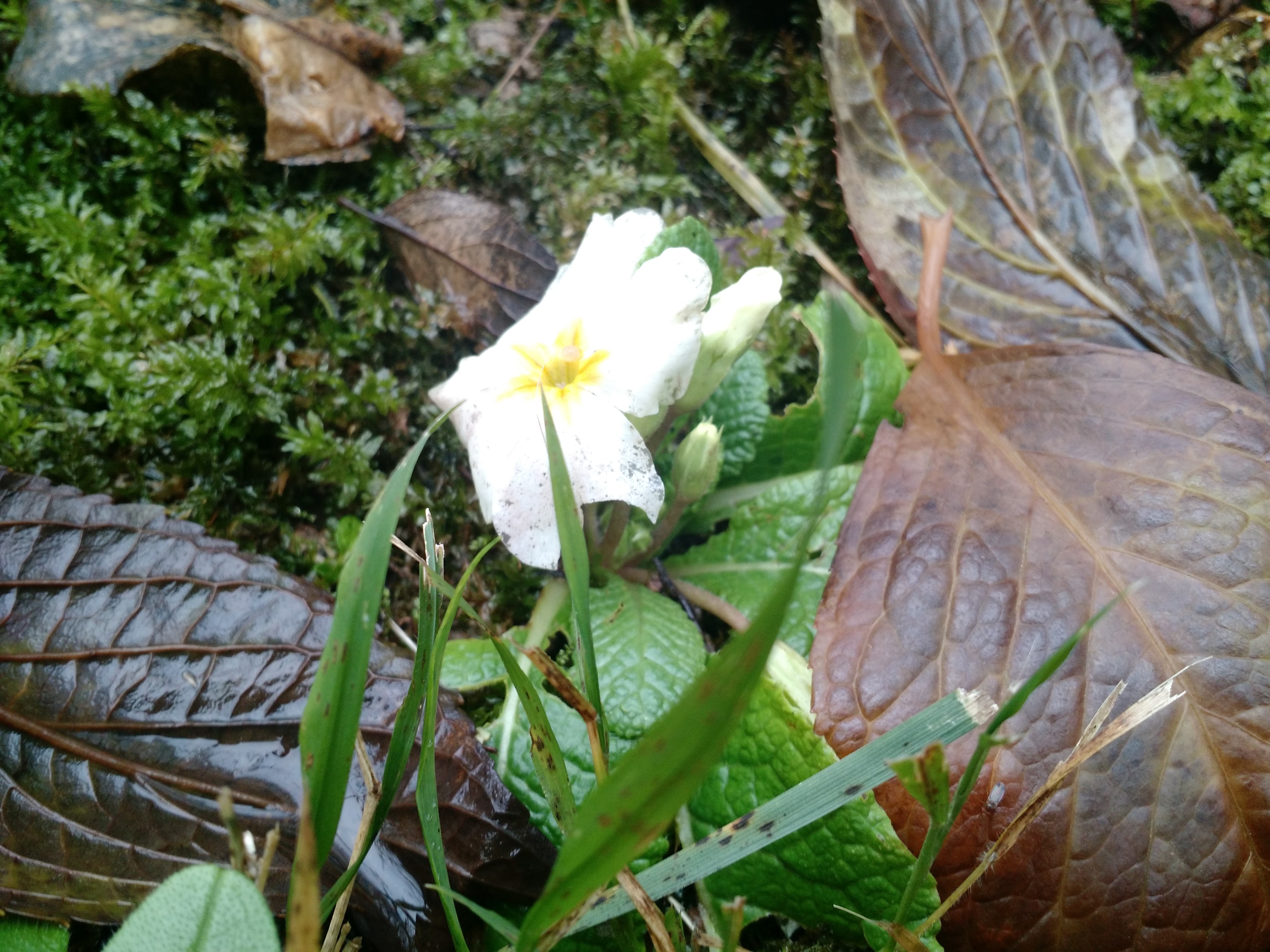
A primrose growing in the front yard in Germany in January. It shouldn’t be here until March, but it is beautiful nonetheless.
I’m back in Germany, surrounded by old patterns and old memories. It’s causing me to revisit old stories, old interpretations, old ways of looking at the world. I haven’t heard anyone referred to as kaputt in a long time, and up until now I had never given it a second thought. Now I feel the need to untangle the word, the ideas behind it, the worldview I once took for granted.
Growing up I heard the word kaputt applied to people often. Sometimes it went with a sad shake of the head, sometimes with a resigned shrug, and sometimes a sense of derision. I came to see kaputt as a derogatory term for The Others. Those who didn’t grow up in a Whole Christian family as I did, those who were not like us but should be and could be if they believed as we did.
The Broken People were more complicated than we were. You couldn’t predict their actions as easily. They acted out their pain, that’s why therapists were for Broken People. Although what they really needed was Jesus, not human psychology. They could convert, thus leaving their place among the Broken People and join us Saved People. It would make them be less complicated.
Kaputt, kaputt, kaputt. Now I hear the word again, applied to my community and friends. The implication is, I shouldn’t associate with them as much. If that’s my calling and my mission, sure, but then they’re my ministry not my community. It’s OK to reach out to them. It’s not OK to be one of them.
“Ich bin auch kaputt,” I say. I am broken, too. My words meet a wall of silence. “I am! I carry around baggage from years of abuse, and I am Broken but I am healing.” I’m not one of the Whole People anymore. I never really was.
They don’t want to hear that. You’re not broken, I am told. Not in that way. You were raised in a Christian family. If only I came back to Jesus, surrounded myself with Christian people, I wouldn’t have to be with the Broken People anymore. They’re not denying that I’ve been hurt, but they’re saying that I am going about healing the wrong way. If only I made better choices, Christian choices, I could go back to the place of Wholeness in which I was raised.
I let these implications sink in. We’ve had this conversation before, but I’ve never been able to take a step back and reflect. I take a moment to think about who The Broken People really are. They are the ones from whom I learned the concept of privilege. My most important lesson came from Elena Rose who spoke about privilege at a panel discussion (listen to it here! It’s well worth every minute.) Elena lacks a multitude of privileges that American society values. When she introduced herself to the panel, she summarized all of the ways in which she was Other by saying “I am a monster”.*

Artwork at a healing spa. The journey into healing is never a perfect circle, always a spiral.
I was appalled when I heard her choose that phrase. She shouldn’t have used that word for herself. I really wished she hadn’t. I was offended. I thought about most conservative and judgmental times, and even back then, I would have never called anyone a monster. Surely?
I’ve since listened to the panel countless times. Eventually I was introduced to Elena in person and came to appreciate her as one of the most beautiful and wise persons I have ever met. More than ever, I couldn’t understand why she would chose to use such an ugly word for herself in order to make a point. But today, when I heard someone say the word kaputt and I saw the look on their face. It’s that look of pity and disgust and compassion and the sincere hope that they too will be saved.
Isn’t this how we’ve always looked at monsters?
Today I’m not trying to get anyone saved anymore. Today I’m with The Broken People. With the monsters, if you will. “Ich bin auch kaputt,” I say again. I, too, am one of The Broken People. The monsters. And I’m OK with that. I don’t need to be saved from who I have become. I am grateful for the life I live now. It’s true that much in me has been broken, but I am healing. Not in spite of The Broken People, but because of them, because of us, together.
I can’t help but notice how different my community today looks from the ones in my past. My community has become much more diverse. The reasons for why we don’t fit into mainstream society are plenty. Ironically, we look a lot like the crowd that surrounded Jesus in his day. Friend of sinners, he was called, friend of Broken People, friend of monsters. Not the Jesus churches taught me to see, but the one I loved when I was a little child.
Another piece has snapped into place for me. This is what I traveled to Germany for. To find my roots, to retrace my journey, to integrate my past. The desire to go back, so strong in the year of my divorce, was always based on an illusion. It has faded over the years, and only rarely ever flickers into existence anymore.
I’m enjoying spending time with my family and childhood friends. We look through old photo albums, retell the stories we all have heard a hundred times or more. This is all a part of who I am. But I’m also starting to feel a little homesick. Homesick for my community of Broken People who sit with me through bouts of depression, who call me out on my dysfunction, but don’t expect me to be whole.
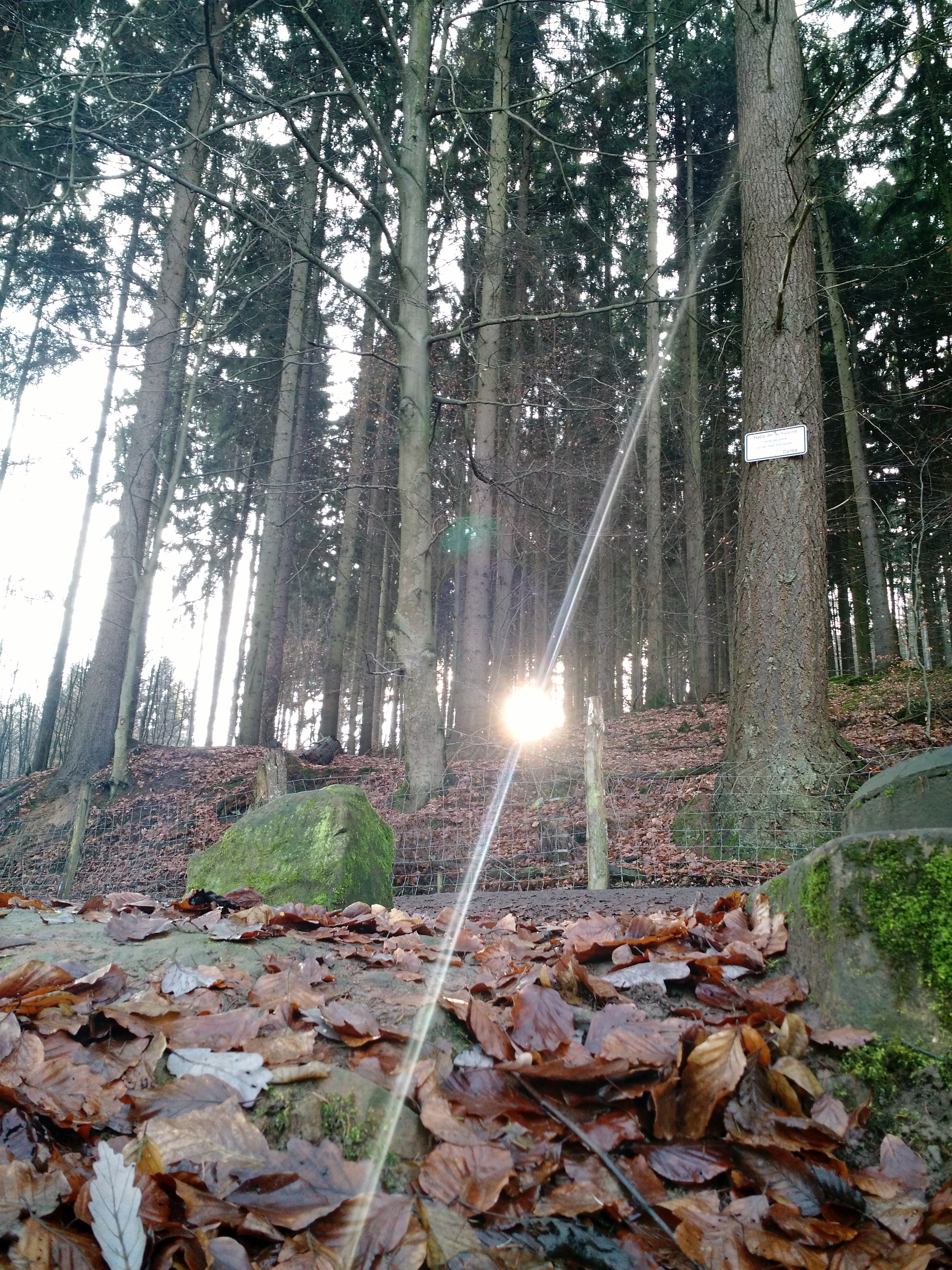
Sun low on the horizon near my favorite spring
I’m watching the light return and the sun traveling a touch higher above the horizon. Soon it will be time to say goodbye to the home in which I grew up and return to the home in which I am now growing. In a moment I will meet my oldest childhood friend and we’ll peruse more photo albums. But until he shows up, I think back upon our Winter Solstice ritual in which we danced the Spiral. A community of Broken People locking eyes with strangers and loved ones, and singing together, as I am singing now:
Forget your perfect offering
Ring the bells that still can ring
There is a crack in everything
That’s how the light gets in
That’s how the light gets in
* Elena is writing a whole book on this idea and I couldn’t be more excited. It’s still in the works, but you can follow her on Twitter and catch one of her offerings at PantheaCon 2016.
Previous Post
December 28, 2015
This Is Integration
Next Post

January 22, 2016 Tea With an 88-year Old Crone
Browse Our Archives
Select a Category Uncategorized
Select a Month June 2016 May 2016 April 2016 March 2016 February 2016 January 2016 December 2015 November 2015 October 2015 September 2015 August 2015
Follow Us!
TAKE THE
Religious Wisdom Quiz
Who was the first king of the northern kingdom of Israel?
Select your answer to see how you score.
Rehoboam Jeroboam Omri Ahab
Related posts from Born Again Witch
My Complicated Relationship with Ostara, Easter, and Basil
A Jesus Freak Priestessing To A Witch
Advent, Integration, And Metaphorical Pregnancy
TRENDING AT PATHEOS Pagan

I was recently chatting with someone on Instagram. She asked me what...

While there are many people who share their results, the end of...

On July 23, I saw Christopher Nolan's The Odyssey which is Homer’s...

As I write this two big events have just finished up. One...

Restoring the Watershed of Divine Love
Perhaps cooperation is not something we manufacture through legislation, ideology, or moral...

Many UUs don’t pray because of bad experiences in a previous religion,...
view all Pagan blogs
Ad-Free & Subscriber Log-In Subscription Support
- About Us
- 2026 Calendar
- Videos
- Podcasts
- Library of World Religions
- Faith In Media Tracker
- Advertise With Us
- Write for Us
- Privacy Policy
- Terms of Service
- Do Not Sell My Data
- Contact Us
- Radiant Digital
- Manage Newsletter Subscriptions
- Unsubscribe From Notifications
- Sitemap
Copyright 2008-2026, Patheos. All rights reserved.
Subscription Support Ad-Free & Subscriber Log-In
Follow Patheos