
BuddhistCatholicContemplativeEvangelicalGeneral ChristianHinduJewishLatter-day SaintMuslimNew VisionsProgressive Christian
Beliefs
- Buddhist
- Catholic
- Contemplative
- Evangelical
- General Christian
- Hindu
- Jewish
- Latter-day Saint
- More Voices
- Muslim
- New Visions
- Pagan
- Progressive Christian
Topics
- Religion News
- Food and Religion
- Sports and Religion
- Religious Art
- Religious Music and Entertainment
- Religious Events
- History and Religion
- Style and Religion
- Politics and Religion
- Women in Religion
- Recreation Outdoors and Religion
- Business Finance and Religion
- Careers Workplace and Religion
- Education and Religion
- Family Parenting and Religion
- Health Fitness and Religion
- Home and Religion
- Relationships and Religion
- Technology and Religion
- Travel and Religion
Columnists
- Buddhist Columnists
- Business Finance and Religion Columnists
- Careers Workplace and Religion Columnists
- Catholic Columnists
- Contemplative Columnists
- Education and Religion Columnists
- Evangelists Columnists
- Family Parenting and Religion Columnists
- General Christian Columnists
- Health Fitness and Religion Columnists
- Hindu Columnists
- History and Religion Columnists
- Home and Religion Columnists
- Jewish Columnists
- More Voices Columnists
- Latter Day Columnists
- Muslim Columnists
- New Visions Columnists
- Nonreligious Columnists
- Pagan Columnists
- Politics and Religion Columnists
- Progressive Columnists
- Recreation Outdoors and Religion Columnists
- Relationships and Religion Columnists
- Religion News Columnists
- Religious Art Columnists
- Religious Events Columnists
- Religious Music and Entertainment Columnists
- Sports and Religion Columnists
- Style and Religion Columnists
- Technology and Religion Columnists
- Travel and Religion Columnists
- Women in Religion Columnists
Resource Library
- 2026 Calendar
- Library of World Religions
- The 100 Most Holy Places on Earth
- Patheos Answers
- Podcasts
- Videos
- Faith Leaders Database
- Anglican Episcopalian
- Bahai
- Baptist
- Buddhism
- Christianity
- Confucianism
- Eastern Orthodoxy
- Hinduism
- Holiness and Pentecostal
- ISKCON
- Islam
- Judaism
- Lutheran
- Methodist
- The Church of Jesus Christ of Latter-day Saints
- New Age
- Paganism
- Presbytarian and Reformed
- Protestantism
- Religion Behind the Scenes
- Roman Catholic
- Scientology
- Shia Islam
- Sikhism
- Sufism
- Sunni Islam
- Taoism
- Zen
- See all religions
Research Tools
 Ad-Free & Subscriber Log-In Subscription Support
Ad-Free & Subscriber Log-In Subscription Support
Follow Patheos 

- Trending:
- Forgiveness
- |
- Marriage
- |
- Consciousness
- |
- Death Penalty
- |
- Election
- |
- Halloween
 Bodhisattva Road
- Home
- Buddhist
- Suffering: The Broken Wheel
Suffering: The Broken Wheel
Last updated on: June 8, 2024 at 1:36 pm by Daniel Scharpenburg
Suffering: The Broken Wheel 2024-05-16T15:12:55-05:00 Daniel Scharpenburg
Patheos Explore the world's faith through different perspectives on religion and spirituality! Patheos has the views of the prevalent religions and spiritualities of the world.
“The seed of suffering in you may be strong, but don’t wait until you have no more suffering before allowing yourself to be happy.” -Thich Nhat Hanh
if you’d rather listen to a talk on this subject, click here: Suffering
Life is full of suffering. That is a foundational teaching in the Buddhist tradition. That teaching hasn’t always resonated with me. “Suffering” feels like a really big word. When I think of that word, I think of being tortured or abused or something. But the suffering we’re talking about is often more of a quiet desperation. We have expectations and the world doesn’t meet them all the time. That makes us unhappy. But the world will never meet our expectations. We also suffer because we don’t see the world clearly. We’re confused and deluded and that stops us from reaching our potential.

The word we’re translating as “suffering” is “dukkha”. It’s been translated as suffering for hundreds of years now, so that’s not likely to change. But I want to think of it in a bit of a different way. In the original language dukkha has connotations of being off track. A metaphor that is used to define this word is “like an ox cart with a broken wheel”. I don’t really know what an ox cart is, so I want to extend that analogy to make it shopping cart instead.
Sometimes you go to the grocery store and you get a shopping cart. The wheel on the cart is a little bit messed up. Maybe it sticks once in a while, or it wobbles a little. It makes the shopping experience a little bit more unpleasant. It’s not so unpleasant that you’ll go back and get another one, but it’s bad enough that you know it’s happening and you wish it would stop.
That’s life. Things are a little bit off sometimes. This will never stop coming and going. Sometimes life feels like a cart with a broken wheel. Sometimes it feels like a cart with two or three broken wheels. That is the meaning of suffering.
The Buddha identified three kinds of suffering. They are:
1) The suffering of suffering
2) The suffering of change
3) The all pervasive suffering of everything composite.
The Suffering of Suffering is defined by Khentrul Lodro Thaye in ‘The Power of Mind’ as: “Any experience that is unpleasant, unwanted, or painful. Not only physical pain but also mental unhappiness.” This also includes not getting what we want. We have a sort of sense of entitlement, I think. We can get mad at the whole world when events don’t unfold in a way that corresponds to our desires.
The Suffering of Change represents our wish to hold onto things. Happiness doesn’t last. When we get what we want, sometimes we’re obsessed with thinking about it coming to an end, because everything comes to an end. We suffer when we lose the things we like having and when pleasant circumstances change. We think that if we just get this or that aspect of life figured out, then we’ll have permanent and lasting happiness. Happiness doesn’t last.
The All-Pervasive Suffering of Everything Composite is inherent in everything.
Khentrul Lodro Thaye describes this as: “Not a direct sensation of pleasure or pain but instead the inherent conditions of suffering within each appearance.”
This is the underlying suffering that doesn’t come and go. It’s an underlying sense of discomfort that is with us. This discomfort exists because we cling to our self-obsession and we aren’t reaching out potential for wisdom and compassion.
So, as I said above, life is a broken wheel that’s messing up our day. But, here’s the thing: that wheel is not a problem unless I decide it’s a problem. I have the power in this situation, although it often feels like I don’t.
Khentrul Lodro Thaye says, “There isn’t a thing called suffering that exists outside of ourselves. Our way of relating to the objects we perceive causes us to suffer.”
It’s empowering if I can change the situation. Pain is inevitable because life is hard. But we can at least learn to manage the way we tend to make our pain worse. I have a great capacity to escalate my own suffering. I suspect that you do too. So let’s make sure we’re working to train our minds so we can learn to stop escalating all the time.
========================================
click the bell for a guided meditation:

About Daniel Scharpenburg
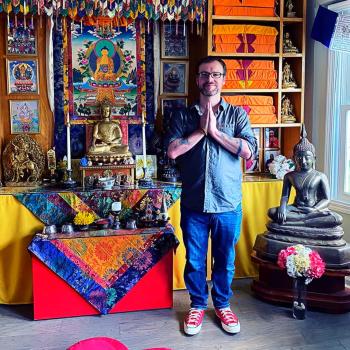
Daniel Scharpenburg (Gegan Kelsang Dakpa) is a Buddhist Meditation Teacher. Daniel completed Meditation Instructor Training under Lama Chuck Stanford at the Rime Buddhist Center in 2011. He volunteers at the Rime Buddhist Center as a Class Facilitator and Meditation Lead. He was given the title “Gegan” or teacher and he has taken Bodhisattva Vows. Daniel also ordained as a Zen Priest in the Five Mountain Zen Order with Ven. Wonji Dharma in the Korean Zen Tradition. You can read more about the author here.
Previous Post

June 1, 2024
Karma
Next Post
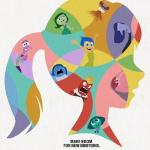
June 15, 2024 The Dharma I Learned From Inside Out 2
Browse Our Archives
Select a Category 37 Practices blog bodhisattva book review boundless heart buddha buddhism buddhism for beginners compass of zen compassion dhammapada dharma emptiness Faith in Mind fearless heart han shan impermanence inspiration interfaith koans life Lojong mahayana meditation mind training mirror of zen movie review nagarjuna news questions recording song of mind steps to the great perfection suffering sutras suttas Uncategorized vajrayana video videos zen
Select a Month July 2024 June 2024 May 2024 February 2024 January 2024 December 2023 October 2023 September 2023 August 2023 July 2023 June 2023 December 2022 November 2022 October 2022 September 2022 August 2022 July 2022 June 2022 May 2022 March 2022 February 2022 January 2022 September 2021 August 2021 May 2021 April 2021 March 2021 February 2021 January 2021 December 2020 November 2020 August 2020 June 2020 May 2020 August 2019 March 2019 December 2018 November 2018 October 2018 September 2018 August 2018 July 2018 June 2018 May 2018 April 2018 March 2018 February 2018 January 2018 December 2017 November 2017 October 2017 September 2017 August 2017 July 2017 June 2017 May 2017 April 2017 March 2017 February 2017 January 2017 December 2016 October 2016 August 2016 July 2016 June 2016 May 2016 April 2016 March 2016
Follow Us!
TAKE THE
Religious Wisdom Quiz
Who was the first king of the northern kingdom of Israel?
Select your answer to see how you score.
Ahab Omri Rehoboam Jeroboam
Support this
Column


Related posts from Bodhisattva Road
The Tenfold Virtuous Path (feat. Nagarjuna)

Nagarjuna's Six Things to Recall
The Buddha on Doubt and Free Inquiry
The Questions of Naga King Sagara
TRENDING AT PATHEOS Buddhist

On Taking Refuge in the Dharma
(Here I continue the feature of sharing talks and essays by teachers...

(Continuing my intention to share talks and essays by other members of Empty...
The Subtle Art of Bowing: A Dharma Discourse
(This presentation was first offered by my dear friend Dharma Holder Tom...

Internal Family Systems Can Heal you Mentally &...
How IFS Helped Me Stop Fighting Myself Internal Family Systems (IFS) is...

The Bible No One Spoke About: A Family’s...
A mysterious family Bible, unspoken faith, and a journey from curiosity to...

How Uncertainty Can Transform Your Life in 2025
Embracing Uncertainty: A New Year’s Resolution for the Brave As 2025 approaches,...
view all Buddhist blogs
Ad-Free & Subscriber Log-In Subscription Support
- About Us
- 2026 Calendar
- Videos
- Podcasts
- Library of World Religions
- Faith In Media Tracker
- Advertise With Us
- Write for Us
- Privacy Policy
- Terms of Service
- Do Not Sell My Data
- Contact Us
- Radiant Digital
- Manage Newsletter Subscriptions
- Unsubscribe From Notifications
- Sitemap
Copyright 2008-2026, Patheos. All rights reserved.
Subscription Support Ad-Free & Subscriber Log-In
Follow Patheos