
BuddhistCatholicContemplativeEvangelicalGeneral ChristianHinduJewishLatter-day SaintMuslimNew VisionsProgressive Christian
Beliefs
- Buddhist
- Catholic
- Contemplative
- Evangelical
- General Christian
- Hindu
- Jewish
- Latter-day Saint
- More Voices
- Muslim
- New Visions
- Pagan
- Progressive Christian
Topics
- Religion News
- Food and Religion
- Sports and Religion
- Religious Art
- Religious Music and Entertainment
- Religious Events
- History and Religion
- Style and Religion
- Politics and Religion
- Women in Religion
- Recreation Outdoors and Religion
- Business Finance and Religion
- Careers Workplace and Religion
- Education and Religion
- Family Parenting and Religion
- Health Fitness and Religion
- Home and Religion
- Relationships and Religion
- Technology and Religion
- Travel and Religion
Columnists
- Buddhist Columnists
- Business Finance and Religion Columnists
- Careers Workplace and Religion Columnists
- Catholic Columnists
- Contemplative Columnists
- Education and Religion Columnists
- Evangelists Columnists
- Family Parenting and Religion Columnists
- General Christian Columnists
- Health Fitness and Religion Columnists
- Hindu Columnists
- History and Religion Columnists
- Home and Religion Columnists
- Jewish Columnists
- More Voices Columnists
- Latter Day Columnists
- Muslim Columnists
- New Visions Columnists
- Nonreligious Columnists
- Pagan Columnists
- Politics and Religion Columnists
- Progressive Columnists
- Recreation Outdoors and Religion Columnists
- Relationships and Religion Columnists
- Religion News Columnists
- Religious Art Columnists
- Religious Events Columnists
- Religious Music and Entertainment Columnists
- Sports and Religion Columnists
- Style and Religion Columnists
- Technology and Religion Columnists
- Travel and Religion Columnists
- Women in Religion Columnists
Resource Library
- 2026 Calendar
- Library of World Religions
- The 100 Most Holy Places on Earth
- Patheos Answers
- Podcasts
- Videos
- Faith Leaders Database
- Anglican Episcopalian
- Bahai
- Baptist
- Buddhism
- Christianity
- Confucianism
- Eastern Orthodoxy
- Hinduism
- Holiness and Pentecostal
- ISKCON
- Islam
- Judaism
- Lutheran
- Methodist
- The Church of Jesus Christ of Latter-day Saints
- New Age
- Paganism
- Presbytarian and Reformed
- Protestantism
- Religion Behind the Scenes
- Roman Catholic
- Scientology
- Shia Islam
- Sikhism
- Sufism
- Sunni Islam
- Taoism
- Zen
- See all religions
Research Tools
 Ad-Free & Subscriber Log-In Subscription Support
Ad-Free & Subscriber Log-In Subscription Support
Follow Patheos 

- Trending:
- Forgiveness
- |
- Marriage
- |
- Consciousness
- |
- Death Penalty
- |
- Election
- |
- Halloween
 Bodhisattva Road
- Home
- Buddhist
- Intentions and the Four Immeasurables
Intentions and the Four Immeasurables
Last updated on: January 28, 2022 at 10:58 am by Daniel Scharpenburg
Intentions and the Four Immeasurables 2022-01-28T10:58:21-05:00 Daniel Scharpenburg
Patheos Explore the world's faith through different perspectives on religion and spirituality! Patheos has the views of the prevalent religions and spiritualities of the world.
I’m going to share with you a meditation prayer that we recite at the Rime Center. I started reciting it in all my meditations at home as well. It goes like this:
“May all beings be endowed with happiness;
May all beings be free from suffering;
May all beings never be separated from happiness;
And may all beings abide in equanimity,
Undisturbed by the eight worldly concerns.”
This is how we set our intention to cultivate what is called “the four immeasurables.”
I used to think these kinds of things were silly. But setting an intention is important. It motivates and inspires us. It reminds us what’s important. In my opinion we all spend much of our lives on auto-pilot. Living in a more intentional way is a good thing. When we set our intentions we are helping ourselves to remember what direction we’re trying to go in. In this case we are inclining ourselves toward having open hearts.
In ‘A Fearless Heart’ Thupten Jinpa says, “When we set an intention in the morning, we’re making a choice about what kind of day we want to have. We’re taking life into our own hands instead of waiting for it to happen to us.”
This set of virtues is called “immeasurable” because it’s said to be a list of things that you can never have too much of. They are: loving-kindness, compassion, sympathetic joy, and equanimity.
Thupten Jinpa goes on to say, “We all have these qualities; they’re part of – the best parts of – being human.”
All of these are about wishing it for all beings. That can be hard. It’s easy for us to wish for our own happiness and the happiness of our friends and family. This is much more broad. We are called to cultivate the wish for all beings to have these things because that will build a better world. It’s easy to say, “No one gets left out” but that can be very hard to really embody. If we suggest everyone is deserving of kindness and compassion, this can be a tough thing for us to relate to. Every one of us stops and thinks, “Even that person?” if we’re really reflecting on this. And the answer is yes, even that person. Opening your heart helps you…and everyone else.
May all beings be endowed with happiness
This is what we call loving-kindness. Some prefer the term loving-friendliness and some just call it kindness. The original word is Metta. Jinpa calls it, “The pure wish for someone to be happy.”
May all beings be free from suffering
This is compassion. I imagine some people wonder “what’s the difference between kindness and compassion?” This is it. Loving-kindness is wanting others to be happy. Compassion is wanting others to not suffer. They are not far apart, but they’re a little different. Kindness is wanting good things to happen to people. Compassion is wanting bad things to not happen. The original word is Karuna. Jinpa says, “Our concern, if it comes from genuine compassion, is based on the recognition that, just like I do, this person wishes to be free from suffering.” and also, “In the Tibetan tradition we recognize compassion as both the highest spiritual ideal and the highest expression of our humanity.” This is what makes me like the Tibetan tradition.
May all beings never be separated from happiness
This is sympathetic joy. What if we can really be happy when someone else succeeds? I’m not talking about when we just say empty words like, “I’m happy for you,” because that’s what you’re supposed to say. What if we can take real joy at someone’s success? And I’m also not talking about just your kids or your partner. What if we can apply this kind of joy to everyone? Then there will be no end to where we can feel joy. The original word is Mudita. Jinpa says it is, “Experiencing happiness at someone else’s happiness and good fortune.” To me this is probably the most challenging one of the four to really reflect on and embody.
And may all beings abide in equanimity, undisturbed by the eight worldly concerns.
This is equanimity. It’s our ability to weather the storms of life, to keep it together when things are falling apart. It’s that quality that stops you from freaking out and falling to the floor when there are setbacks in life, as there are for everyone. The original word is Upekkha. Jinpa describes it as, “Staying calm no matter what life throws at us – pleasure and pain, likes and dislikes, praise and blame, fame and disrepute – and it lets us relate to everyone as human beings, beyond the categories of friend, foe, or stranger. With equanimity we are free from the habitual forces of expectation and apprehension that make us vulnerable to over-excitation and disappointment.” Those pairs he listed are called ‘the eight worldly concerns.’ The point of reflecting on those is that we can get carried away by being blamed too much, of course, but we can also get carried away by being praised too much. Equanimity is what helps us keep an even mind whether things are going very well or very badly.
So, these are the four immeasurables. Learning to cultivate these four qualities helps us to open our hearts and deepen our relationships to ourselves and others. They’re sometimes called ‘divine abodes’ which is not a term I like that much. But it does convey that they are considered important things to cultivate.
Previous Post

January 27, 2022
The Courage to Open Your Heart
Next Post
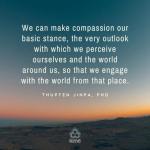
February 1, 2022 Bodhisattva Road
Browse Our Archives
Select a Category 37 Practices blog bodhisattva book review boundless heart buddha buddhism buddhism for beginners compass of zen compassion dhammapada dharma emptiness Faith in Mind fearless heart han shan impermanence inspiration interfaith koans life Lojong mahayana meditation mind training mirror of zen movie review nagarjuna news questions recording song of mind steps to the great perfection suffering sutras suttas Uncategorized vajrayana video videos zen
Select a Month July 2024 June 2024 May 2024 February 2024 January 2024 December 2023 October 2023 September 2023 August 2023 July 2023 June 2023 December 2022 November 2022 October 2022 September 2022 August 2022 July 2022 June 2022 May 2022 March 2022 February 2022 January 2022 September 2021 August 2021 May 2021 April 2021 March 2021 February 2021 January 2021 December 2020 November 2020 August 2020 June 2020 May 2020 August 2019 March 2019 December 2018 November 2018 October 2018 September 2018 August 2018 July 2018 June 2018 May 2018 April 2018 March 2018 February 2018 January 2018 December 2017 November 2017 October 2017 September 2017 August 2017 July 2017 June 2017 May 2017 April 2017 March 2017 February 2017 January 2017 December 2016 October 2016 August 2016 July 2016 June 2016 May 2016 April 2016 March 2016
Follow Us!
TAKE THE
Religious Wisdom Quiz
Who was Moses' wife?
Select your answer to see how you score.
Miriam Zipporah Rachel Leah
Support this
Column


Related posts from Bodhisattva Road

Love and Compassion (recorded talk)


The Awakened Heart (recorded talk)

TRENDING AT PATHEOS Buddhist

On Taking Refuge in the Dharma
(Here I continue the feature of sharing talks and essays by teachers...

(Continuing my intention to share talks and essays by other members of Empty...
The Subtle Art of Bowing: A Dharma Discourse
(This presentation was first offered by my dear friend Dharma Holder Tom...

Internal Family Systems Can Heal you Mentally &...
How IFS Helped Me Stop Fighting Myself Internal Family Systems (IFS) is...

The Bible No One Spoke About: A Family’s...
A mysterious family Bible, unspoken faith, and a journey from curiosity to...

How Uncertainty Can Transform Your Life in 2025
Embracing Uncertainty: A New Year’s Resolution for the Brave As 2025 approaches,...
view all Buddhist blogs
Ad-Free & Subscriber Log-In Subscription Support
- About Us
- 2026 Calendar
- Videos
- Podcasts
- Library of World Religions
- Faith In Media Tracker
- Advertise With Us
- Write for Us
- Privacy Policy
- Terms of Service
- Do Not Sell My Data
- Contact Us
- Radiant Digital
- Manage Newsletter Subscriptions
- Unsubscribe From Notifications
- Sitemap
Copyright 2008-2026, Patheos. All rights reserved.
Subscription Support Ad-Free & Subscriber Log-In
Follow Patheos