
BuddhistCatholicContemplativeEvangelicalGeneral ChristianHinduJewishLatter-day SaintMuslimNew VisionsProgressive Christian
Beliefs
- Buddhist
- Catholic
- Contemplative
- Evangelical
- General Christian
- Hindu
- Jewish
- Latter-day Saint
- More Voices
- Muslim
- New Visions
- Pagan
- Progressive Christian
Topics
- Religion News
- Food and Religion
- Sports and Religion
- Religious Art
- Religious Music and Entertainment
- Religious Events
- History and Religion
- Style and Religion
- Politics and Religion
- Women in Religion
- Recreation Outdoors and Religion
- Business Finance and Religion
- Careers Workplace and Religion
- Education and Religion
- Family Parenting and Religion
- Health Fitness and Religion
- Home and Religion
- Relationships and Religion
- Technology and Religion
- Travel and Religion
Columnists
- Buddhist Columnists
- Business Finance and Religion Columnists
- Careers Workplace and Religion Columnists
- Catholic Columnists
- Contemplative Columnists
- Education and Religion Columnists
- Evangelists Columnists
- Family Parenting and Religion Columnists
- General Christian Columnists
- Health Fitness and Religion Columnists
- Hindu Columnists
- History and Religion Columnists
- Home and Religion Columnists
- Jewish Columnists
- More Voices Columnists
- Latter Day Columnists
- Muslim Columnists
- New Visions Columnists
- Nonreligious Columnists
- Pagan Columnists
- Politics and Religion Columnists
- Progressive Columnists
- Recreation Outdoors and Religion Columnists
- Relationships and Religion Columnists
- Religion News Columnists
- Religious Art Columnists
- Religious Events Columnists
- Religious Music and Entertainment Columnists
- Sports and Religion Columnists
- Style and Religion Columnists
- Technology and Religion Columnists
- Travel and Religion Columnists
- Women in Religion Columnists
Resource Library
- 2026 Calendar
- Library of World Religions
- The 100 Most Holy Places on Earth
- Patheos Answers
- Podcasts
- Videos
- Faith Leaders Database
- Anglican Episcopalian
- Bahai
- Baptist
- Buddhism
- Christianity
- Confucianism
- Eastern Orthodoxy
- Hinduism
- Holiness and Pentecostal
- ISKCON
- Islam
- Judaism
- Lutheran
- Methodist
- The Church of Jesus Christ of Latter-day Saints
- New Age
- Paganism
- Presbytarian and Reformed
- Protestantism
- Religion Behind the Scenes
- Roman Catholic
- Scientology
- Shia Islam
- Sikhism
- Sufism
- Sunni Islam
- Taoism
- Zen
- See all religions
Research Tools
 Ad-Free & Subscriber Log-In Subscription Support
Ad-Free & Subscriber Log-In Subscription Support
Follow Patheos 

- Trending:
- Forgiveness
- |
- Marriage
- |
- Consciousness
- |
- Death Penalty
- |
- Election
- |
- Halloween
 Bodhisattva Road
- Home
- Buddhist
- 37 Practices: Don’t Say Anything
37 Practices: Don’t Say Anything
Last updated on: January 26, 2018 at 8:01 am by Daniel Scharpenburg
37 Practices: Don’t Say Anything 2018-01-12T13:55:53-05:00 Daniel Scharpenburg
Patheos Explore the world's faith through different perspectives on religion and spirituality! Patheos has the views of the prevalent religions and spiritualities of the world.
This text “the 37 practices of a Bodhisattva” is a concise text written by a Tibetan teacher in the 14th century named Togme Zangpo who was a member of the Sakya lineage. It’s a summary of how we should behave as we are on the path to awakening. It’s a Tibetan Mahayana teaching.
31
If you don’t go into your own confusion,
You may just be a materialist in practitioner’s clothing.
Constantly go into your own confusion
And put an end to it — this is the practice of a bodhisattva
This is a practice of looking deep within ourselves. Once we reach a certain point in the practice, we can’t keep lying to ourselves about who we are anymore. We have to face ourselves with complete honesty. Only then can we see things as they really are.
We need to look within to see if we’re doing what we need to do, instead of just looking outward to see what others are doing. If we’re not really paying attentino to what we’re doing and why we’re doing it, then we probably aren’t trying very hard.
32
You undermine yourself when you react emotionally and
Grumble about the imperfections of other bodhisattvas.
Of the imperfections of those who have entered the Great Way,
Don’t say anything — this is the practice of a bodhisattva.
When we talk about the faults of others we are reinforcing duality. We are suggesting that we are better than them. You’re moving away from a good practice of the Dharma if you’re always finding fault in other people practicing.
I think there’s a cliche of people going to church and judging the clothes that other families are wearing, as in “we need to wear our Sunday best so we look better than them.” That’s the kind of view we’re talking about here.
We can’t pull ourselves up by tearing others down.
This doesn’t mean we can’t make suggestions for how someone could be doing better, as long as those suggestions are constructive and helpful. This verse isn’t about trying to help. It’s just about destructive criticism.
33
When you squabble with others about status and rewards,
You undermine learning, reflection, and meditation.
Let go of any investment in your family circle
Or the circle of those who support you — this is the practice of a bodhisattva.
Don’t get attached to titles and status.
If we think too much about being the number one student or having the best reputation at the temple, that isn’t helpful to us. I’m reminded of the story of Shantideva.
Shantideva was a monk that lived alongside many many other monks in a big monastery. He developed a kind of reputation. The other monks thought he wasn’t trying very hard. That he was just using life in the monastery as an excuse to not go into the world and work. They thought he didn’t really care about the Dharma at all.
So they played a trick on him. They set him up for failure by asking that he give a teaching. And Shantideva agreed to do it. He went before all of the assembled monks and preached The Way of the Bodhisattva, a text that is now revered throughout Buddhism. They were all blown away by his great insight. And then he left the monastery, never to return.
The point of this story is this: Shantideva didn’t care about his bad reputation. He wasn’t squabbling about status and rewards. He was just living in the monastery and practicing.
34
Abusive language upsets others
And undermines the ethics of a bodhisattva.
So, don’t upset people or
Speak abusively — this is the practice of a bodhisattva.
Just be nice with your words. This is Right Speech.
Right Speech can sometimes be the most difficult part of the Eightfold Path.
In its simplest form, Right Speech can be defined as not using language to harm ourselves or others. Easier said than done. How often do we say things that hurt people’s feelings? How often do we gossip or tell little white lies?
Too often.
And this doesn’t just apply to Buddhist practice. All religious traditions seem to emphasize honest and positive communication. So, this is a case where talking about a fundamental part of Buddhist practice can be of benefit to everyone.
So, here are some guidelines to keep us on track.
1) Tell the truth.
Don’t tell a falsehood. Just as importantly, don’t tell lies by omission. There is far too much dishonesty in the world. If we were all just honest with one another the world would be a very different place. Dishonesty is an attack on trust between individuals.
2) Be compassionate in your speech.
Like we were told as kids. If you can’t say something nice, don’t say anything at all. We should use our voices to bring kindness into the world.
3) Encourage others.
Sometimes just an encouraging word can bring endless joy to someone. If you see the opportunity to encourage someone, do it.
4) Be helpful.
Our words can help others in many ways. We can explain things they want to learn or just spread positivity and kindness.
Too often we use communication to tear each other down. Verbal attacks are much too common. We can just use our words for kindness.
35
When reactive emotions acquire momentum, it’s hard to make remedies work.
A person in attention wields remedies like weapons,
Crushing reactive emotions such as craving
As soon as they arise — this is the practice of a bodhisattva.
This is using mindfulness and alertness to avoid getting ourselves into trouble. It’s seeing something we really want, but realizing in the moment that we shouldn’t go after it. Mindfulness and alertness are usually thought of as passive things that we’re cultivating. Here they are described like weapons that crush our weaknesses.
36
In short, in everything you do,
Know what is happening in your mind.
By being constantly present and aware
You bring about what helps others — this is the practice of a bodhisattva.
If we can just be here now, we can suffer less and help others more. That’s the fundamental teaching here.
Just be here.
37
To dispel the suffering of beings without limit,
With wisdom freed from the three spheres
Direct all the goodness generated by these efforts
To awakening — this is the practice of a bodhisattva.
This is a dedication of merit. It’s purpose is to remind us that we aren’t doing this practice for ourselves, but for the benefit of all beings.
Thank you for going through this text with me.
It ends with the following very humble verse:
Following the teachings of the holy ones
On what is written in the sutras, tantras, and commentaries,
I set out these thirty-seven practices of a bodhisattva
For those who intend to train in this path.Because I have limited intelligence and little education,
These verses are not the kind of poetry that delights the learned.
But because I relied on the teachings of the sutras and the revered
I am confident that The Practices of a Bodhisattva is sound.However, because it’s hard for a person with limited intelligence like me
To fathom the depths of the great waves of the activity of bodhisattvas,
I ask the revered to tolerate
Any mistakes — contradictions, non sequiturs, and such.From the goodness of this work, may all beings,
Through the supreme mind that is awake to what is ultimately and apparently true,
Not rest in any limiting position — existence or peace:
May they be like Lord All Seeing.Tokmé, the monk, a teacher of scripture and logic, composed this text in a cave near the town of Ngülchu Rinchen for his own and others’ benefit.
Previous Post
January 24, 2018
37 Practices: The Perfections
Next Post
January 29, 2018 Practicing Enlightenment
Browse Our Archives
Select a Category 37 Practices blog bodhisattva book review boundless heart buddha buddhism buddhism for beginners compass of zen compassion dhammapada dharma emptiness Faith in Mind fearless heart han shan impermanence inspiration interfaith koans life Lojong mahayana meditation mind training mirror of zen movie review nagarjuna news questions recording song of mind steps to the great perfection suffering sutras suttas Uncategorized vajrayana video videos zen
Select a Month July 2024 June 2024 May 2024 February 2024 January 2024 December 2023 October 2023 September 2023 August 2023 July 2023 June 2023 December 2022 November 2022 October 2022 September 2022 August 2022 July 2022 June 2022 May 2022 March 2022 February 2022 January 2022 September 2021 August 2021 May 2021 April 2021 March 2021 February 2021 January 2021 December 2020 November 2020 August 2020 June 2020 May 2020 August 2019 March 2019 December 2018 November 2018 October 2018 September 2018 August 2018 July 2018 June 2018 May 2018 April 2018 March 2018 February 2018 January 2018 December 2017 November 2017 October 2017 September 2017 August 2017 July 2017 June 2017 May 2017 April 2017 March 2017 February 2017 January 2017 December 2016 October 2016 August 2016 July 2016 June 2016 May 2016 April 2016 March 2016
Follow Us!
TAKE THE
Religious Wisdom Quiz
How old was David when he became king over Israel?
Select your answer to see how you score.
25 years old 30 years old 20 years old 40 years old
Support this
Column


Related posts from Bodhisattva Road
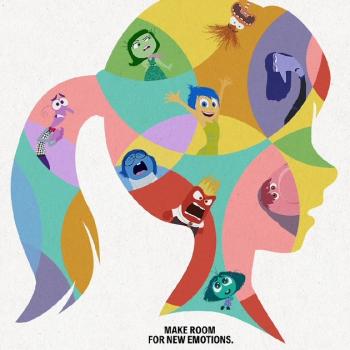
The Dharma I Learned From Inside Out 2
Make Your Life Meaningful (Dharma Talk)

Attachment, Hatred, and the Darkness of Unknowing
TRENDING AT PATHEOS Buddhist

On Taking Refuge in the Dharma
(Here I continue the feature of sharing talks and essays by teachers...

(Continuing my intention to share talks and essays by other members of Empty...
The Subtle Art of Bowing: A Dharma Discourse
(This presentation was first offered by my dear friend Dharma Holder Tom...

Internal Family Systems Can Heal you Mentally &...
How IFS Helped Me Stop Fighting Myself Internal Family Systems (IFS) is...

The Bible No One Spoke About: A Family’s...
A mysterious family Bible, unspoken faith, and a journey from curiosity to...

How Uncertainty Can Transform Your Life in 2025
Embracing Uncertainty: A New Year’s Resolution for the Brave As 2025 approaches,...
view all Buddhist blogs
Ad-Free & Subscriber Log-In Subscription Support
- About Us
- 2026 Calendar
- Videos
- Podcasts
- Library of World Religions
- Faith In Media Tracker
- Advertise With Us
- Write for Us
- Privacy Policy
- Terms of Service
- Do Not Sell My Data
- Contact Us
- Radiant Digital
- Manage Newsletter Subscriptions
- Unsubscribe From Notifications
- Sitemap
Copyright 2008-2026, Patheos. All rights reserved.
Subscription Support Ad-Free & Subscriber Log-In
Follow Patheos