
BuddhistCatholicContemplativeEvangelicalGeneral ChristianHinduJewishLatter-day SaintMuslimNew VisionsProgressive Christian
Beliefs
- Buddhist
- Catholic
- Contemplative
- Evangelical
- General Christian
- Hindu
- Jewish
- Latter-day Saint
- More Voices
- Muslim
- New Visions
- Pagan
- Progressive Christian
Topics
- Religion News
- Food and Religion
- Sports and Religion
- Religious Art
- Religious Music and Entertainment
- Religious Events
- History and Religion
- Style and Religion
- Politics and Religion
- Women in Religion
- Recreation Outdoors and Religion
- Business Finance and Religion
- Careers Workplace and Religion
- Education and Religion
- Family Parenting and Religion
- Health Fitness and Religion
- Home and Religion
- Relationships and Religion
- Technology and Religion
- Travel and Religion
Columnists
- Buddhist Columnists
- Business Finance and Religion Columnists
- Careers Workplace and Religion Columnists
- Catholic Columnists
- Contemplative Columnists
- Education and Religion Columnists
- Evangelists Columnists
- Family Parenting and Religion Columnists
- General Christian Columnists
- Health Fitness and Religion Columnists
- Hindu Columnists
- History and Religion Columnists
- Home and Religion Columnists
- Jewish Columnists
- More Voices Columnists
- Latter Day Columnists
- Muslim Columnists
- New Visions Columnists
- Nonreligious Columnists
- Pagan Columnists
- Politics and Religion Columnists
- Progressive Columnists
- Recreation Outdoors and Religion Columnists
- Relationships and Religion Columnists
- Religion News Columnists
- Religious Art Columnists
- Religious Events Columnists
- Religious Music and Entertainment Columnists
- Sports and Religion Columnists
- Style and Religion Columnists
- Technology and Religion Columnists
- Travel and Religion Columnists
- Women in Religion Columnists
Resource Library
- 2026 Calendar
- Library of World Religions
- The 100 Most Holy Places on Earth
- Patheos Answers
- Podcasts
- Videos
- Faith Leaders Database
- Anglican Episcopalian
- Bahai
- Baptist
- Buddhism
- Christianity
- Confucianism
- Eastern Orthodoxy
- Hinduism
- Holiness and Pentecostal
- ISKCON
- Islam
- Judaism
- Lutheran
- Methodist
- The Church of Jesus Christ of Latter-day Saints
- New Age
- Paganism
- Presbytarian and Reformed
- Protestantism
- Religion Behind the Scenes
- Roman Catholic
- Scientology
- Shia Islam
- Sikhism
- Sufism
- Sunni Islam
- Taoism
- Zen
- See all religions
Research Tools
 Ad-Free & Subscriber Log-In Subscription Support
Ad-Free & Subscriber Log-In Subscription Support
Follow Patheos 

- Trending:
- Forgiveness
- |
- Marriage
- |
- Consciousness
- |
- Death Penalty
- |
- Election
- |
- Halloween
 Bodhisattva Road
- Home
- Buddhist
- 37 Practices: Let it Go
37 Practices: Let it Go
Last updated on: January 29, 2018 at 10:00 am by Daniel Scharpenburg
37 Practices: Let it Go 2018-01-29T10:00:04-05:00 Daniel Scharpenburg
Patheos Explore the world's faith through different perspectives on religion and spirituality! Patheos has the views of the prevalent religions and spiritualities of the world.
This text “the 37 practices of a Bodhisattva” is a concise text written by a Tibetan teacher in the 14th century named Togme Zangpo who was a member of the Sakya lineage. It’s a summary of how we should behave as we are on the path to awakening. It’s a Tibetan Mahayana teaching.
21
Sensual pleasures are like salty water:
The deeper you drink, the thirstier you become.
Any object that you attach to,
Right away, let it go — this is the practice of a bodhisattva.
Worldly pleasures, those things we’re attached to that we constantly try to get more of, can never really satisfy us. Because our desires are unlimited, there can never really be enough.
This is called the poison of greed.
It’s our tendency toward selfishness. Our desire, attachment and yearning for happiness and satisfaction from external sources. It is our impulse to always want more. We want the objects of our desire, regardless of what those are, to bring us permanent satisfaction so we can feel complete. It helps to think about the accumulation of wealth. Money is made up of numbers and numbers never end, so we can chase that forever if we are obsessed with how much is in our bank account.
When we believe that our fulfillment is dependent on what we have, then we come to realize that we don’t really get the same satisfaction we were expecting. We always want more. Greed can affect our relationships, our jobs, and everything else.
Greed can also manifest as a lack of generosity.
Thinking about what we could have steals a lot of our happiness.
22
Whatever arises in experience is your own mind.
Mind itself is free of any conceptual limitations.
Know that and don’t generate
Subject-object fixations — this is the practice of a bodhisattva.
Everything we see is not as it really is, but through a filter of our perception. We have conceptual limitations that prevent us from seeing the whole picture and we fixate on duality, the difference between subject and object.
We have to come to understanding that we aren’t seeing things as they really are.
The western mystic Anais Nin said, “We don’t see things as they are. We see things as we are.”
This corresponds to the poison of delusion.
Delusion is our confusion and our misperception of reality. This is our lack of ability to understand the nature of things as they are—free of our labels and preconceptions. Under delusion we aren’t in harmony with the world around.
Without right perception, we don’t understand the way things are interdependent and impermanent. Because of this we are always looking outside ourselves for satisfaction. Because of our delusion we don’t understand our true nature.
The teachings of the Buddha tell us that our true nature is *enlightened—*that this will be realized if we can just see through our layers of ignorance.
23
When you come across something you enjoy,
Though beautiful to experience, like a summer rainbow,
Don’t take it as real.
Let go of attachment — this is the practice of a bodhisattva.
Everything is fleeting. This applies to both the things we like and the things we don’t like. Ikkyu called this world a fleeting dream, something we can’t hold on to. I think that’s important. If we think of the things we want as permanent, then we will suffer when we try to hold onto them. Nothing is permanent.
The description of the summer rainbow is important here. A rainbow is beautiful and it looks like something that really exists, but if we go try to grab it we won’t be able to. It has no solidity. It’s an illusion.
The best way to rid ourselves of attachment to these objects is to just understand that they aren’t real and permanent.
24
All forms of suffering are like dreaming that your child has died.
Taking confusion as real wears you out.
When you run into misfortune,
Look at it as confusion — this is the practice of a bodhisattva.
This is the reverse. We want to get rid of things. I like to think of that old cliche, “This too shall pass.” Good conditions and states of mind will come and go. Bad conditions and states of mind will come and go too. Sometimes when we’re in a bad state of mind we tend to cling to it, thinking it will last forever. But of course it won’t. Nothing will.
This corresponds to the poison of aversion.
Aversion is our anger, aversion toward things we don’t want, whether that be unpleasant people, circumstances, or even toward ourselves. It can manifest as anger, but also as impatience, ill-will, annoyance and hostility. We habitually resist and avoid feelings, circumstances, and people that we don’t like. We really want everything in our lives to be pleasant. This is nothing but a reinforcement of our illusion of duality and separation. Hatred puts us in a cycle of always finding something wrong.
When we are carrying aversion, our minds are frantic. We can’t be calm. We have a very easy time getting obsesses with whatever conflicts we are in. We can also have a conflict within, a hatred for our own feelings that we don’t like. With aversion we create enemies out of those around us and out of ourselves.
—————————————————————————–

Daniel Scharpenburg is a meditation instructor and dharma teacher in Kansas City. He regularly gives teachings through the Open Heart Project, the largest virtual mindfulness community in the world.
Find out more about Daniel on his website and connect with him on Facebook.
Previous Post
January 19, 2018
37 Practices: Subdue Your Own Mind
Next Post
January 24, 2018 37 Practices: The Perfections
Browse Our Archives
Select a Category 37 Practices blog bodhisattva book review boundless heart buddha buddhism buddhism for beginners compass of zen compassion dhammapada dharma emptiness Faith in Mind fearless heart han shan impermanence inspiration interfaith koans life Lojong mahayana meditation mind training mirror of zen movie review nagarjuna news questions recording song of mind steps to the great perfection suffering sutras suttas Uncategorized vajrayana video videos zen
Select a Month July 2024 June 2024 May 2024 February 2024 January 2024 December 2023 October 2023 September 2023 August 2023 July 2023 June 2023 December 2022 November 2022 October 2022 September 2022 August 2022 July 2022 June 2022 May 2022 March 2022 February 2022 January 2022 September 2021 August 2021 May 2021 April 2021 March 2021 February 2021 January 2021 December 2020 November 2020 August 2020 June 2020 May 2020 August 2019 March 2019 December 2018 November 2018 October 2018 September 2018 August 2018 July 2018 June 2018 May 2018 April 2018 March 2018 February 2018 January 2018 December 2017 November 2017 October 2017 September 2017 August 2017 July 2017 June 2017 May 2017 April 2017 March 2017 February 2017 January 2017 December 2016 October 2016 August 2016 July 2016 June 2016 May 2016 April 2016 March 2016
Follow Us!
TAKE THE
Religious Wisdom Quiz
How should Christians respond to insults?
Select your answer to see how you score.
Fight back Bless those who curse you Insult in return Ignore always
Support this
Column


Related posts from Bodhisattva Road
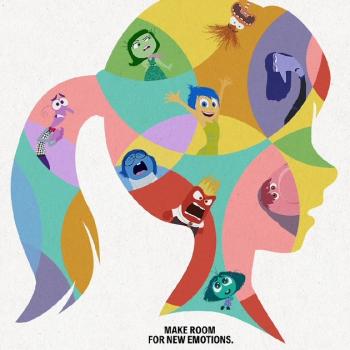
The Dharma I Learned From Inside Out 2

Make Your Life Meaningful (Dharma Talk)

Attachment, Hatred, and the Darkness of Unknowing
TRENDING AT PATHEOS Buddhist

On Taking Refuge in the Dharma
(Here I continue the feature of sharing talks and essays by teachers...

(Continuing my intention to share talks and essays by other members of Empty...
The Subtle Art of Bowing: A Dharma Discourse
(This presentation was first offered by my dear friend Dharma Holder Tom...

Internal Family Systems Can Heal you Mentally &...
How IFS Helped Me Stop Fighting Myself Internal Family Systems (IFS) is...

The Bible No One Spoke About: A Family’s...
A mysterious family Bible, unspoken faith, and a journey from curiosity to...

How Uncertainty Can Transform Your Life in 2025
Embracing Uncertainty: A New Year’s Resolution for the Brave As 2025 approaches,...
view all Buddhist blogs
Ad-Free & Subscriber Log-In Subscription Support
- About Us
- 2026 Calendar
- Videos
- Podcasts
- Library of World Religions
- Faith In Media Tracker
- Advertise With Us
- Write for Us
- Privacy Policy
- Terms of Service
- Do Not Sell My Data
- Contact Us
- Radiant Digital
- Manage Newsletter Subscriptions
- Unsubscribe From Notifications
- Sitemap
Copyright 2008-2026, Patheos. All rights reserved.
Subscription Support Ad-Free & Subscriber Log-In
Follow Patheos