
BuddhistCatholicContemplativeEvangelicalGeneral ChristianHinduJewishLatter-day SaintMuslimNew VisionsProgressive Christian
Beliefs
- Buddhist
- Catholic
- Contemplative
- Evangelical
- General Christian
- Hindu
- Jewish
- Latter-day Saint
- More Voices
- Muslim
- New Visions
- Pagan
- Progressive Christian
Topics
- Religion News
- Food and Religion
- Sports and Religion
- Religious Art
- Religious Music and Entertainment
- Religious Events
- History and Religion
- Style and Religion
- Politics and Religion
- Women in Religion
- Recreation Outdoors and Religion
- Business Finance and Religion
- Careers Workplace and Religion
- Education and Religion
- Family Parenting and Religion
- Health Fitness and Religion
- Home and Religion
- Relationships and Religion
- Technology and Religion
- Travel and Religion
Columnists
- Buddhist Columnists
- Business Finance and Religion Columnists
- Careers Workplace and Religion Columnists
- Catholic Columnists
- Contemplative Columnists
- Education and Religion Columnists
- Evangelists Columnists
- Family Parenting and Religion Columnists
- General Christian Columnists
- Health Fitness and Religion Columnists
- Hindu Columnists
- History and Religion Columnists
- Home and Religion Columnists
- Jewish Columnists
- More Voices Columnists
- Latter Day Columnists
- Muslim Columnists
- New Visions Columnists
- Nonreligious Columnists
- Pagan Columnists
- Politics and Religion Columnists
- Progressive Columnists
- Recreation Outdoors and Religion Columnists
- Relationships and Religion Columnists
- Religion News Columnists
- Religious Art Columnists
- Religious Events Columnists
- Religious Music and Entertainment Columnists
- Sports and Religion Columnists
- Style and Religion Columnists
- Technology and Religion Columnists
- Travel and Religion Columnists
- Women in Religion Columnists
Resource Library
- 2026 Calendar
- Library of World Religions
- The 100 Most Holy Places on Earth
- Patheos Answers
- Podcasts
- Videos
- Faith Leaders Database
- Anglican Episcopalian
- Bahai
- Baptist
- Buddhism
- Christianity
- Confucianism
- Eastern Orthodoxy
- Hinduism
- Holiness and Pentecostal
- ISKCON
- Islam
- Judaism
- Lutheran
- Methodist
- The Church of Jesus Christ of Latter-day Saints
- New Age
- Paganism
- Presbytarian and Reformed
- Protestantism
- Religion Behind the Scenes
- Roman Catholic
- Scientology
- Shia Islam
- Sikhism
- Sufism
- Sunni Islam
- Taoism
- Zen
- See all religions
Research Tools
 Ad-Free & Subscriber Log-In Subscription Support
Ad-Free & Subscriber Log-In Subscription Support
Follow Patheos 

- Trending:
- Forgiveness
- |
- Marriage
- |
- Consciousness
- |
- Death Penalty
- |
- Election
- |
- Halloween
 Black, White and Gray
-
About the Authors
- Home
- Evangelical
- Seeking the Sacred?
Seeking the Sacred?
Last updated on: April 2, 2016 at 10:35 am by Margarita A. Mooney
Seeking the Sacred? 2016-04-02T10:35:59-05:00 Margarita A. Mooney
Patheos Explore the world's faith through different perspectives on religion and spirituality! Patheos has the views of the prevalent religions and spiritualities of the world.
How do people seek the sacred? For a recent project, I interviewed 26 young adults in 10 different states about hardships they had faced. I asked how those hardships influenced their close relationships and their beliefs in God. I was surprised by how many spiritual experiences I heard about that were outside of traditional religious practices. Even people who weren’t sure they believed in God, who had stopped going to church, or who had never attended church, talked about feeling a presence bigger than themselves. Many people said that they sometimes cried out to that presence, begging for help, even if they couldn’t name what that presence was. People who would not pray for themselves sometimes prayed for loved ones in distress. Others talked about experiences of transcendence–feeling part of something bigger than oneself–when walking in nature or creating art.
Is it possible (or helpful) to go beyond our regular survey categories asking people about attendance at church or belief in God, and ask them to think about seeking the sacred in a variety of ways? I think Emile Durkheim goes perhaps too far in defining the sacred as the group worshipping itself. Anything that creates group identity, according to Durkheim’s definition, can be sacred. Sports teams and fans may build passionate group identities. But do they connect people to a transcendent reality? I think not.
 Rather than equating group identity and sacredness, psychologist Ken Pargament has a more compelling definition of how people seek the sacred. In my interviews, it was clear that people saw things as sacred because those things connected them to something bigger than themselves, something bigger than any collective group. Something truly “other.” Something capable of acting in this world, but not of this world.
Too often in the social sciences, we adopt a Durkheimian position that sacred practices have secular cognates. But Ken Pargament argues that spirituality can provide things secular psychology or psychotherapy do not. Spirituality can help us answer questions like how to come to terms with our limits as human beings. Spirituality can give a different meaning to concepts like forgiveness and love. Even if spirituality contributes to something like healing from addiction, Pargament cautions we should not try to explain away religion in terms of its human function. Spirituality is a different, and a higher, dimension of human potential.
“Spirituality helps people come to terms with human limitations. It offers solutions to problems that are merely substitutes for secular solutions, including those that psychologists often advocate. In response to the unfathomable and uncontrollable, it speaks a language that is relatively unfamiliar to psychology. We hear words such as “forbearance,” “faith,” “suffering,” “compassion,” “transformation,” “transcendence,” “sacredness,” “hope,” “surrender,” “love,” and “forgiveness.” These words should not be dismissed as merely soft and sentimental, for they embody deep yearnings, powerful emotions, and more generally a different way of viewing the world. Through the spiritual lens, people can see their lives in a broad, transcendent perspective; they can discern deeper truths in ordinary and extraordinary experiences; and they can locate timeless values that offer grounding and direction in shifting times and circumstances. Through the spiritual lens, problems take on a different character and distinctive solutions appear; answers to seemingly unanswerable questions, support when other sources of support are unavailable, and new sources of value and significance when old dreams are no longer viable. Spirituality then, represents a distinctive resource for living, one particularly well suited to the struggle with human limitations and finitude. By bringing the spiritual dimension into the helping process, psychotherapists could tap more fully into this reservoir of hope and source of solutions to life’s most profound problems,” (Pargament, Spirituality Integrated Psychotherapy, P. 12).
Spirituality, whether one practices a traditional religion or not, can be understood as searching for the sacred. Understood this way, spirituality is a quest, not an outcome. The quest for the sacred is seeking to be in relationship to a reality outside of one’s self that is boundless and in some sense, ultimate. To the extent we see the objects of art and culture as an expression of a transcendent reality or a way for one to enter into relationship with that transcendent reality, creating and contemplating art and culture can be sacred.
 Psychologist Lisa Miller further argues that seeing the sacred as a relationship with the transcendent requires shifting away from seeing the person as the center of reality. When we acknowledge that things outside of us “touch our lives, inform our decisions, heal us and guide our human activities…we are free from an egocentric prison of ontological centrality” (Lisa Miller, Introduction, Oxford Handbook of Psychology and Spirituality, p. 2).
Contrary to the implicit assumption of much modern psychology, people are not the center of reality. People interact with a reality that exists independent of their consciousness of it. Miller challenges the Enlightenment tendency to think of a person dominating or controlling his or her environment; she sees people as interacting with their environment but never mastering it. I agree with Miller that psychology (and I’d say sociology) would be better if they moved past the exclusive focus on the empirical and mechanical. Rather, we should acknowledged that people experience themselves as beings living in a universe “propelled by ultimate intention.” (Lisa Miller, Conclusion, Oxford Handbook of Psychology and Spirituality, p. 612) People’s actions are therefore not just aimed at attaining goals or achieving excellence. Human action also needs to be understood in terms of aligning the intention in our actions with “the ultimate powerful intention throughout the universe” (Lisa Miller, Conclusion, Oxford Handbook of Psychology and Spirituality, p. 613).
The people I interviewed had religious experiences that point to just this spirituality described by Pargament and Miller: connecting to something outside of oneself, something capable of impacting one’s life. It is something that connects one to oneself and oneself to others across space and time; and of course, it is something that connects one to that ultimate, boundless reality, whether that be God, spirits, or even art.
The lived religious tradition in sociology has long emphasized that spiritual practices often occur outside of traditional religious spaces. For example, Nancy Ammerman’s recent book Sacred Stories, Spiritual Tribes is a beautiful written and ambitious project documenting how 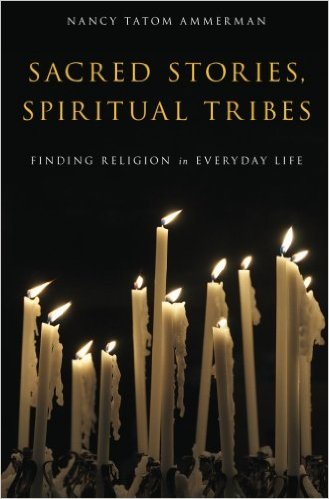
people find the sacred at work, at home, or nearly anywhere.
I find the work of Ammerman, Pargament and Miller to be compelling. But my question then becomes: What can we say is not a sacred practice? By including the love of art as sacred, am I going too far? I think as long as I maintain Pargament’s qualification that the sacred practice has to be understood as relating oneself to a transcendent other–not just to other humans–we can say that the love of art can be sacred. I share a passion for college basketball’s March Madness NCAA Tournament with millions of other Americans. But I do not see March Madness as a sacred practice because it does not link me to the transcendent.
Regardless of the terminology I end up using, it is clear to me that the people I interviewed do not see themselves as the creators of this world. They do not see themselves as alone in this world. They do not see this world as entirely mechanical and material. They see the world as having a mysterious origin–not mysterious because it the origin of the world absolutely unknowable, but mysterious because the origin of the world is greater than what our limited minds can fully grasp. Sacred practices represent that mystery that is also a reality we want to engage with.
Previous Post

March 29, 2016
Teaching Sociology at Princeton Theological Seminary
Next Post
April 13, 2016 Critical Realism and Sociological Research Methods Webinar April 28th
Browse Our Archives
Select a Category Amy Reynolds Becky Hsu Brad Wright critical realism George Yancey Gerardo Marti Jeremy Rhodes Jerry Park John Schmalzbauer Margarita Mooney Mark Regnerus Nicolette Manglos positive sociology Richard Flory Robert Woodberry Uncategorized
Select a Month April 2017 August 2016 April 2016 March 2016 February 2016 January 2016 December 2015 November 2015 October 2015 September 2015 August 2015 July 2015 June 2015 May 2015 April 2015 March 2015 February 2015 January 2015 December 2014 November 2014 October 2014 September 2014 August 2014 July 2014 June 2014 May 2014 April 2014 March 2014 February 2014 January 2014 December 2013 November 2013 October 2013 September 2013 August 2013 July 2013 June 2013 May 2013 April 2013 March 2013 February 2013 January 2013 December 2012 November 2012 October 2012 September 2012 August 2012 July 2012 June 2012 May 2012 April 2012 March 2012 February 2012 January 2012 December 2011 November 2011 October 2011
Follow Us!
TAKE THE
Religious Wisdom Quiz
Who said, "The Lord gave, and the Lord has taken away; blessed be the name of the Lord"?
Select your answer to see how you score.
Solomon Job David Moses
Related posts from Black, White and Gray

Using Critical Realism to Teach the Fundamentals of...

Incorporating Critical Realism into Research Methods Classes

5 Great Articles Using Critical Realism in Social...

Books on Critical Realism and Sociological Research Methods
TRENDING AT PATHEOS Evangelical

The REST of Your Life: A Creative Wrestles...
This week I had a conversation with a good friend from church....

How the author of the world's best hymn...
I've been working with John Newton for a while now. This makes...

Long before this Lectio Divina, Psalm 130 - the song - started...

What About the Trees? Another Living Parable
After I finished writing the last article about falling leaves as a...

Why Classical Education Is a Conversation, Not a...
Come and Read: Joy in Classical Education When I was a little...

Cornell University has received a great deal of negative publicity and intense...
view all Evangelical blogs
Ad-Free & Subscriber Log-In Subscription Support
- About Us
- 2026 Calendar
- Videos
- Podcasts
- Library of World Religions
- Faith In Media Tracker
- Advertise With Us
- Write for Us
- Privacy Policy
- Terms of Service
- Do Not Sell My Data
- Contact Us
- Radiant Digital
- Manage Newsletter Subscriptions
- Unsubscribe From Notifications
- Sitemap
Copyright 2008-2026, Patheos. All rights reserved.
Subscription Support Ad-Free & Subscriber Log-In
Follow Patheos