
BuddhistCatholicContemplativeEvangelicalGeneral ChristianHinduJewishLatter-day SaintMuslimNew VisionsProgressive Christian
Beliefs
- Buddhist
- Catholic
- Contemplative
- Evangelical
- General Christian
- Hindu
- Jewish
- Latter-day Saint
- More Voices
- Muslim
- New Visions
- Pagan
- Progressive Christian
Topics
- Religion News
- Food and Religion
- Sports and Religion
- Religious Art
- Religious Music and Entertainment
- Religious Events
- History and Religion
- Style and Religion
- Politics and Religion
- Women in Religion
- Recreation Outdoors and Religion
- Business Finance and Religion
- Careers Workplace and Religion
- Education and Religion
- Family Parenting and Religion
- Health Fitness and Religion
- Home and Religion
- Relationships and Religion
- Technology and Religion
- Travel and Religion
Columnists
- Buddhist Columnists
- Business Finance and Religion Columnists
- Careers Workplace and Religion Columnists
- Catholic Columnists
- Contemplative Columnists
- Education and Religion Columnists
- Evangelists Columnists
- Family Parenting and Religion Columnists
- General Christian Columnists
- Health Fitness and Religion Columnists
- Hindu Columnists
- History and Religion Columnists
- Home and Religion Columnists
- Jewish Columnists
- More Voices Columnists
- Latter Day Columnists
- Muslim Columnists
- New Visions Columnists
- Nonreligious Columnists
- Pagan Columnists
- Politics and Religion Columnists
- Progressive Columnists
- Recreation Outdoors and Religion Columnists
- Relationships and Religion Columnists
- Religion News Columnists
- Religious Art Columnists
- Religious Events Columnists
- Religious Music and Entertainment Columnists
- Sports and Religion Columnists
- Style and Religion Columnists
- Technology and Religion Columnists
- Travel and Religion Columnists
- Women in Religion Columnists
Resource Library
- 2026 Calendar
- Library of World Religions
- The 100 Most Holy Places on Earth
- Patheos Answers
- Podcasts
- Videos
- Faith Leaders Database
- Anglican Episcopalian
- Bahai
- Baptist
- Buddhism
- Christianity
- Confucianism
- Eastern Orthodoxy
- Hinduism
- Holiness and Pentecostal
- ISKCON
- Islam
- Judaism
- Lutheran
- Methodist
- The Church of Jesus Christ of Latter-day Saints
- New Age
- Paganism
- Presbytarian and Reformed
- Protestantism
- Religion Behind the Scenes
- Roman Catholic
- Scientology
- Shia Islam
- Sikhism
- Sufism
- Sunni Islam
- Taoism
- Zen
- See all religions
Research Tools
 Ad-Free & Subscriber Log-In Subscription Support
Ad-Free & Subscriber Log-In Subscription Support
Follow Patheos 

- Trending:
- Forgiveness
- |
- Marriage
- |
- Consciousness
- |
- Death Penalty
- |
- Election
- |
- Halloween
 Black, White and Gray
-
About the Authors
- Home
- Evangelical
- Virtue and Vulnerability
Virtue and Vulnerability
Last updated on: November 20, 2015 at 11:35 am by Margarita A. Mooney
Virtue and Vulnerability 2015-11-20T11:35:29-05:00 Margarita A. Mooney
Patheos Explore the world's faith through different perspectives on religion and spirituality! Patheos has the views of the prevalent religions and spiritualities of the world.
This post was originally published on my homepage, margaritamooney.com, on September 3, 2015.
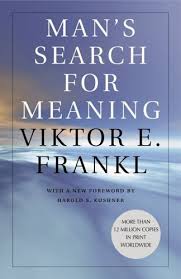
Is Viktor Frankl’s life a story of resilience or vulnerability? It’s both, I think. Frankl survived the Nazi concentration camps and went on to an influential career as a psychiatrist and writer. Yet, he never forgot how his experiences of pain and suffering formed his own social ethic. As he writes in the epilogue entitled “The Case for a Tragic Optimism”, added to the 1984 edition his famous memoir, Man’s Search for Meaning:
“After all, “saying yes to life in spite of everything,” …presupposes that life is potentially meaningful under any conditions, even those which are most miserable. And this in turn presupposes the human capacity to creatively turn life’s negative aspects into something positive or constructive. In other words, what matters is to make the best of any given situation. “The best,” however, is that which in Latin is called optimum—hence the reason I speak of a tragic optimism, that is, an optimism in the face of tragedy and in view of the human potential which at its best always allows for: (1) turning suffering into a human achievement and accomplishment; (2) deriving from guilt the opportunity to change oneself for the better; and (3) deriving from life’s transitoriness an incentive to take responsible action.”
Similarly, in a paper I’m working on, I explained how I learned that resilience and vulnerability aren’t opposites: they often go together. I’m particularly interested in further developing the important point that resilience and vulnerability aren’t only about personal outcomes, but about how our experiences of suffering form a calling to take responsible action for others–our close kin, neighbors, countrymen and women, and complete strangers. Frankl modeled this ethic in his own life, and taught the same ethic in his psychiatric profession. I admire Frankl because he sought to live a coherent ethic in his professional and personal life, not separating out his theories from how he lived his own life. Many social scientists fall into the trap of using theories of human nature–such as humans are driven by self-interest, status, and power–that they would never apply to their own behaviors.
You can hear more about my thoughts on virtue and vulnerability in this presentation I gave in July at the International Association of Critical Realism Annual Meetings held at the University of Notre Dame.
Click her to hear my talk “Vulnerabilty and Virtue.”
The abstract of my paper is below. If you would like to read a draft of this paper, please email me.
Abstract for Margarita Mooney, “Vulnerability and Virtue”:
This paper is part of a larger book about the lived experiences of 26 young adults who have experienced traumatic life events. This paper uses 4 of the 26 life history interviews to show how critical realism provides a better metatheoretical framework to understand the complex causality behind experiences of mental health disorders and addiction I encountered in my interviews. I draw on virtue ethics and realist hermeneutics to argue that social science approaches to mental health and addiction should not stop at analyzing their causes or treatments, but need to ask about the moral purpose that guides people’s lives. I further argue that overlooking that vulnerability is an enduring part of the human condition has limited the ability of social science to adequately understand the struggles of people with mental illness and addiction.
Because my interviews elicited narratives that connect events and emotions across time, these narratives illustrate the complex, contingent and conjunctural nature of causality that is often overlooked in many approaches to mental health and addiction. As with any method, the knowledge gained from interviews is limited and potentially fallible. But rather than falling into skepticisms about our ability to access reality through interviews, I maintain a realist stance towards lived experiences without necessarily assuming all experiences can be treated as facts. Interviews challenge those of us with a certain kind of authority as researchers to not simply jettison what people say as fallible and explain their lives with our own theories. Taking seriously what people say about their experiences of the world is one important way science advances because people can challenge the frameworks of science we use. For example, my interviews led me to question whether resilience and vulnerability are two opposite ends of a spectrum or can exist alongside one another. Because interviews reveal the complex causal forces in any person’s life, they remind us that scientific explanations should not be reductionistic. The interviews I conducted combined a scientific approach (selecting interviewees based on criteria of theoretical interest, developing a questionnaire based on theoretical expectations) and a humanistic, artistic, and highly interactive, dramatic approach about each person’s unique meanings and interior struggles.
Previous Post

November 14, 2015
Are Non- Religious Children Really More Altruistic?
Browse Our Archives
Select a Category Amy Reynolds Becky Hsu Brad Wright critical realism George Yancey Gerardo Marti Jeremy Rhodes Jerry Park John Schmalzbauer Margarita Mooney Mark Regnerus Nicolette Manglos positive sociology Richard Flory Robert Woodberry Uncategorized
Select a Month April 2017 August 2016 April 2016 March 2016 February 2016 January 2016 December 2015 November 2015 October 2015 September 2015 August 2015 July 2015 June 2015 May 2015 April 2015 March 2015 February 2015 January 2015 December 2014 November 2014 October 2014 September 2014 August 2014 July 2014 June 2014 May 2014 April 2014 March 2014 February 2014 January 2014 December 2013 November 2013 October 2013 September 2013 August 2013 July 2013 June 2013 May 2013 April 2013 March 2013 February 2013 January 2013 December 2012 November 2012 October 2012 September 2012 August 2012 July 2012 June 2012 May 2012 April 2012 March 2012 February 2012 January 2012 December 2011 November 2011 October 2011
Follow Us!
TAKE THE
Religious Wisdom Quiz
What does Proverbs say about quick-tempered people?
Select your answer to see how you score.
They cause trouble They are wise They are always respected They make peace
Related posts from Black, White and Gray

Using Critical Realism to Teach the Fundamentals of...

Incorporating Critical Realism into Research Methods Classes

5 Great Articles Using Critical Realism in Social...

Books on Critical Realism and Sociological Research Methods
TRENDING AT PATHEOS Evangelical

The REST of Your Life: A Creative Wrestles...
This week I had a conversation with a good friend from church....

How the author of the world's best hymn...
I've been working with John Newton for a while now. This makes...

Long before this Lectio Divina, Psalm 130 - the song - started...

What About the Trees? Another Living Parable
After I finished writing the last article about falling leaves as a...

Why Classical Education Is a Conversation, Not a...
Come and Read: Joy in Classical Education When I was a little...

Cornell University has received a great deal of negative publicity and intense...
view all Evangelical blogs
Ad-Free & Subscriber Log-In Subscription Support
- About Us
- 2026 Calendar
- Videos
- Podcasts
- Library of World Religions
- Faith In Media Tracker
- Advertise With Us
- Write for Us
- Privacy Policy
- Terms of Service
- Do Not Sell My Data
- Contact Us
- Radiant Digital
- Manage Newsletter Subscriptions
- Unsubscribe From Notifications
- Sitemap
Copyright 2008-2026, Patheos. All rights reserved.
Subscription Support Ad-Free & Subscriber Log-In
Follow Patheos