
BuddhistCatholicContemplativeEvangelicalGeneral ChristianHinduJewishLatter-day SaintMuslimNew VisionsProgressive Christian
Beliefs
- Buddhist
- Catholic
- Contemplative
- Evangelical
- General Christian
- Hindu
- Jewish
- Latter-day Saint
- More Voices
- Muslim
- New Visions
- Pagan
- Progressive Christian
Topics
- Religion News
- Food and Religion
- Sports and Religion
- Religious Art
- Religious Music and Entertainment
- Religious Events
- History and Religion
- Style and Religion
- Politics and Religion
- Women in Religion
- Recreation Outdoors and Religion
- Business Finance and Religion
- Careers Workplace and Religion
- Education and Religion
- Family Parenting and Religion
- Health Fitness and Religion
- Home and Religion
- Relationships and Religion
- Technology and Religion
- Travel and Religion
Columnists
- Buddhist Columnists
- Business Finance and Religion Columnists
- Careers Workplace and Religion Columnists
- Catholic Columnists
- Contemplative Columnists
- Education and Religion Columnists
- Evangelists Columnists
- Family Parenting and Religion Columnists
- General Christian Columnists
- Health Fitness and Religion Columnists
- Hindu Columnists
- History and Religion Columnists
- Home and Religion Columnists
- Jewish Columnists
- More Voices Columnists
- Latter Day Columnists
- Muslim Columnists
- New Visions Columnists
- Nonreligious Columnists
- Pagan Columnists
- Politics and Religion Columnists
- Progressive Columnists
- Recreation Outdoors and Religion Columnists
- Relationships and Religion Columnists
- Religion News Columnists
- Religious Art Columnists
- Religious Events Columnists
- Religious Music and Entertainment Columnists
- Sports and Religion Columnists
- Style and Religion Columnists
- Technology and Religion Columnists
- Travel and Religion Columnists
- Women in Religion Columnists
Resource Library
- 2026 Calendar
- Library of World Religions
- The 100 Most Holy Places on Earth
- Patheos Answers
- Podcasts
- Videos
- Faith Leaders Database
- Anglican Episcopalian
- Bahai
- Baptist
- Buddhism
- Christianity
- Confucianism
- Eastern Orthodoxy
- Hinduism
- Holiness and Pentecostal
- ISKCON
- Islam
- Judaism
- Lutheran
- Methodist
- The Church of Jesus Christ of Latter-day Saints
- New Age
- Paganism
- Presbytarian and Reformed
- Protestantism
- Religion Behind the Scenes
- Roman Catholic
- Scientology
- Shia Islam
- Sikhism
- Sufism
- Sunni Islam
- Taoism
- Zen
- See all religions
Research Tools
 Ad-Free & Subscriber Log-In Subscription Support
Ad-Free & Subscriber Log-In Subscription Support
Follow Patheos 

- Trending:
- Forgiveness
- |
- Marriage
- |
- Consciousness
- |
- Death Penalty
- |
- Election
- |
- Halloween
 Black, White and Gray
-
About the Authors
- Home
- Evangelical
- Deliver Us From Evil
Deliver Us From Evil
Last updated on: September 24, 2013 at 11:07 pm by Amy Reynolds
Deliver Us From Evil 2013-09-24T23:07:06-05:00 Amy Reynolds
Patheos Explore the world's faith through different perspectives on religion and spirituality! Patheos has the views of the prevalent religions and spiritualities of the world.
There have been a number of tragedies recently in our world. In Nairobi, Kenya recent attacks at the upscale Westgate mall by terrorist group Al-Shabaab injured close to 200 people and 67 were reported murdered. In Peshawar, Pakistan, at least 60 Christians were killed outside a church by suicide bombers this past Sunday. In Washington, D.C., a U.S. citizen and former navy reservist murdered twelve people at the Navy Yard.
The United States is considering military actions towards Syria after the use chemical warfare by the government; the nerve agent sarin was used near Damascus, and left at least 1300 dead and 3600 people displaying neurological symptoms. This attack comes after two years of a civil war that has left around 100,000 dead in the country. Here, the perpetrators are both “legitimate” government actors and rebel forces.
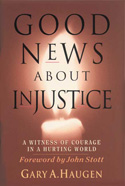 One of the goals of those perpetuating the violence—whether an individual, a terrorist group, or a government—was to invoke fear. One response of those in power has been to try and take away the power these violent actors have. One of the central premises that Gary Haugen argues in The Good News about Injustice (InterVarsity Press, 1999) is that those perpetrating injustice have to be stopped, and if they continue to have power, the abuse will also continue.
However, another response in these instances mentioned above has been to characterize the perpetrators as a special kind of evil. The incidents above are clearly horrific, as are a number of “normal” events that occur habitually—the marrying off of young girls in forced marriages, the shooting and deaths of young people in many U.S cities, and forced human trafficking that occurs around the world. Yet recognizing the evil in these acts, and the need to stop those perpetrating evil, is different than categorizing these actors as human outliers in their capacity for evil.
 The cause of these horrific events is more complex that evil people triumphing over good people. In Ordinary Men: Reserve Police Battalion 101 and the Final Solution in Poland (Harper Collins, 1998), Christopher Browning considers why Nazi soldiers were involved in the killing and bloodshed of the Holocaust. In seeing the “normal” character of many of these men (whose interviews he consults), one of the book’s disturbing conclusions is the evil that “normal” people can commit and rationalize.
I’ve been rereading Seymour Lipset’s Continental Divide: The Values and Institutions of the United States and Canada (Routledge, 1990). Even as this book is 23 years old, he makes some assessments about the U.S. ideology that still prove useful, and helpful to me in understanding a national tendency to want to see people as evil or good.
The American Protestant religious ethos has assumed, in practice if not in theology, the perfectibility of humanity and an obligation to avoid sin, while the churches whose followers have predominated in Europe, Canada, and Australia have accepted the inherent weakness of people, their inability to escape sin and error, and the need for the church to be forgiving and protecting (79)
Since Lipset wrote this book, America waged a war where the talk of the “axis of evil” became prominent in national rhetoric. In contrast to “evil,” stands those who are on the side of what is good and just. As Lipset writes a couple of pages earlier, “Protestant propensity for moralistic crusades has been expressed in various efforts to reform the rest of the world by war” (77); these wars are often framed as good guys against bad guys.
What does it look like to see the evil in these atrocities, to fight for justice and to stop abuse and violence, yet to also recognize the complexity of why people commit these crimes? These incidents are connected to larger societal stories about political power and alliances, provision of the state, and beliefs about the value of different people based on demographics.
What does it mean to be a part of the fight against evil in this world (a desire, I suspect, many of us have)? As I reflect upon this, I realize I have more questions than answers. As Christians, I believe it requires recognizing that all of us are sinners and capable of great evil. It calls us to be a Church that walks with those who are suffering, and offers healing to those who are mourning. It means protecting those who are being exploited or abused. It challenges us to serve as a prophetic voice against injustice—not only obvious violent acts, but also the ways systems are also part of that violence.
Previous Post

September 22, 2013
Science and the Questioning of Our Biases
Next Post
October 5, 2013 Christian Privilege?
Browse Our Archives
Select a Category Amy Reynolds Becky Hsu Brad Wright critical realism George Yancey Gerardo Marti Jeremy Rhodes Jerry Park John Schmalzbauer Margarita Mooney Mark Regnerus Nicolette Manglos positive sociology Richard Flory Robert Woodberry Uncategorized
Select a Month April 2017 August 2016 April 2016 March 2016 February 2016 January 2016 December 2015 November 2015 October 2015 September 2015 August 2015 July 2015 June 2015 May 2015 April 2015 March 2015 February 2015 January 2015 December 2014 November 2014 October 2014 September 2014 August 2014 July 2014 June 2014 May 2014 April 2014 March 2014 February 2014 January 2014 December 2013 November 2013 October 2013 September 2013 August 2013 July 2013 June 2013 May 2013 April 2013 March 2013 February 2013 January 2013 December 2012 November 2012 October 2012 September 2012 August 2012 July 2012 June 2012 May 2012 April 2012 March 2012 February 2012 January 2012 December 2011 November 2011 October 2011
Follow Us!
TAKE THE
Religious Wisdom Quiz
Who said, "Lord, increase our faith!"?
Select your answer to see how you score.
Paul John Peter The disciples
Related posts from Black, White and Gray

Saving the Market: Harry Potter, Churches, and Globalization

The Personal and the Political: Violence in our...

Women in Leadership National Study: A First Glance

Economic Choices, the Media, and Racism
TRENDING AT PATHEOS Evangelical

The REST of Your Life: A Creative Wrestles...
This week I had a conversation with a good friend from church....

How the author of the world's best hymn...
I've been working with John Newton for a while now. This makes...

Long before this Lectio Divina, Psalm 130 - the song - started...

What About the Trees? Another Living Parable
After I finished writing the last article about falling leaves as a...

Why Classical Education Is a Conversation, Not a...
Come and Read: Joy in Classical Education When I was a little...

Cornell University has received a great deal of negative publicity and intense...
view all Evangelical blogs
Ad-Free & Subscriber Log-In Subscription Support
- About Us
- 2026 Calendar
- Videos
- Podcasts
- Library of World Religions
- Faith In Media Tracker
- Advertise With Us
- Write for Us
- Privacy Policy
- Terms of Service
- Do Not Sell My Data
- Contact Us
- Radiant Digital
- Manage Newsletter Subscriptions
- Unsubscribe From Notifications
- Sitemap
Copyright 2008-2026, Patheos. All rights reserved.
Subscription Support Ad-Free & Subscriber Log-In
Follow Patheos