
BuddhistCatholicContemplativeEvangelicalGeneral ChristianHinduJewishLatter-day SaintMuslimNew VisionsProgressive Christian
Beliefs
- Buddhist
- Catholic
- Contemplative
- Evangelical
- General Christian
- Hindu
- Jewish
- Latter-day Saint
- More Voices
- Muslim
- New Visions
- Pagan
- Progressive Christian
Topics
- Religion News
- Food and Religion
- Sports and Religion
- Religious Art
- Religious Music and Entertainment
- Religious Events
- History and Religion
- Style and Religion
- Politics and Religion
- Women in Religion
- Recreation Outdoors and Religion
- Business Finance and Religion
- Careers Workplace and Religion
- Education and Religion
- Family Parenting and Religion
- Health Fitness and Religion
- Home and Religion
- Relationships and Religion
- Technology and Religion
- Travel and Religion
Columnists
- Buddhist Columnists
- Business Finance and Religion Columnists
- Careers Workplace and Religion Columnists
- Catholic Columnists
- Contemplative Columnists
- Education and Religion Columnists
- Evangelists Columnists
- Family Parenting and Religion Columnists
- General Christian Columnists
- Health Fitness and Religion Columnists
- Hindu Columnists
- History and Religion Columnists
- Home and Religion Columnists
- Jewish Columnists
- More Voices Columnists
- Latter Day Columnists
- Muslim Columnists
- New Visions Columnists
- Nonreligious Columnists
- Pagan Columnists
- Politics and Religion Columnists
- Progressive Columnists
- Recreation Outdoors and Religion Columnists
- Relationships and Religion Columnists
- Religion News Columnists
- Religious Art Columnists
- Religious Events Columnists
- Religious Music and Entertainment Columnists
- Sports and Religion Columnists
- Style and Religion Columnists
- Technology and Religion Columnists
- Travel and Religion Columnists
- Women in Religion Columnists
Resource Library
- 2026 Calendar
- Library of World Religions
- The 100 Most Holy Places on Earth
- Patheos Answers
- Podcasts
- Videos
- Faith Leaders Database
- Anglican Episcopalian
- Bahai
- Baptist
- Buddhism
- Christianity
- Confucianism
- Eastern Orthodoxy
- Hinduism
- Holiness and Pentecostal
- ISKCON
- Islam
- Judaism
- Lutheran
- Methodist
- The Church of Jesus Christ of Latter-day Saints
- New Age
- Paganism
- Presbytarian and Reformed
- Protestantism
- Religion Behind the Scenes
- Roman Catholic
- Scientology
- Shia Islam
- Sikhism
- Sufism
- Sunni Islam
- Taoism
- Zen
- See all religions
Research Tools
 Ad-Free & Subscriber Log-In Subscription Support
Ad-Free & Subscriber Log-In Subscription Support
Follow Patheos 

- Trending:
- Forgiveness
- |
- Marriage
- |
- Consciousness
- |
- Death Penalty
- |
- Election
- |
- Halloween
 Black, White and Gray
-
About the Authors
- Home
- Evangelical
- Theology, Silence, and Action
Theology, Silence, and Action
Last updated on: August 6, 2013 at 9:44 am by Amy Reynolds
Theology, Silence, and Action 2013-08-06T09:44:31-05:00 Amy Reynolds
Patheos Explore the world's faith through different perspectives on religion and spirituality! Patheos has the views of the prevalent religions and spiritualities of the world.
I recently returned from a two-week seminar in Brazil with the Nagel Institute and Calvin College, where I spent time in Rio, Brasilia, and Manaus (Amazon) with a number of Brazilian scholars, as well as Christian college professors from the USA. Given this opportunity, I hope to be able to spend some time in future blogs sharing some of this experience.
 As in the United States, evangelicals can be found supporting a number of political causes across the spectrum. We had the opportunity to talk with evangelicals playing a key role in different political parties (social democrats, the labor party, communist groups), some involved in women’s movements, and others who were committed community activists. I was struck by how connected theology was with activism for these leaders, as well as my peers in the seminar.
As a sociologist, I was also intrigued by the role of the sociologist within society, and within the church. Let’s just say the situation in Brazil is different than the United States. Sociology was seen as important and relevant for society (and the church). Several of the Christians I I met were sociologists and pastors, or sociologists and activists. Former President Lula de Silva was a sociologist. As I commented on last year (after attending CLADE V, the FTL conference in Costa Rica), evangelicals seem to use the social sciences in interaction with theology in more integrated ways than we do in the United States. Sociology shapes the way that they make sense of their context.
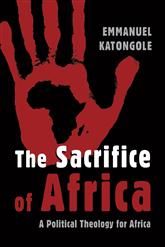
While in Brazil, I was reading Katongole’s book, The Sacrifice of Africa: A Political Theology for Africa (Eerdmans, 2010). Katongole is a priest from Uganda who has been integral with reconciliation programs at both Duke and Notre Dame. One thesis in The Sacrifice of Africa is that political institutions and most of the ‘modern’ states in Africa were created out of a foundation of violence, and violence is part of their core. He enunciates the theology that was (and is) at play:
that these [African lives] are not unique, precious sacred lives; these are Africans, mere bodies to be used, mere masses to be exploited. That this theological claim has come to be widely assumed is obvious from the casualness with which the wastage of African lives is accepted. For a new future to take shape in African, the wanton sacrificing of African lives would have to be confronted-no, interrupted—by a different story and its accompanying practices in which the sacredness, the preciousness, the unviability, and the dignity of African lives are foregrounded? (p.17)
For many Christians around the world, theology is recognized to be contextual. There is a recognition that theology must speak to the social issues and society in which it is embedded; to be silent is also a form of speech. One of the favorite songs of our Brazilian group was “Xote da Vitoria,” which speaks of the violence that will not win within society; of a God who will overcome, and of people who join with God in that march.
The words of Katongole continue to occupy my mind as I ask myself about what it means for US evangelicals (myself included) to think more critically about the context of our theologies. As I read and re-read his thoughts about the sacrificing of African lives and the casualness with which it is accepted by society, I cannot help but think about how our society continues to accept the loss of young African-American lives with casualness as well. While the Trayvon Martin case has garnered much attention, there are far too many cases where similarities exist. I leave for Florida tomorrow to visit my family, thinking about Trayvon and the case of Roy Middleton – an African-American man shot at his own car, who was apparently mistaken as a burglar by neighbors. I think of the case of Jordan Davis, a teen who was shot in his car at a gas station. As I sit here in Chicago, I reflect of the number of youth, many African-American, who die to gun violence, and the families who have lost multiple children to gun violence, and the lack of serious attention and outrage at this situation. I think of the Chicago Public Schools, which continues to be under resourced.
As a church, what does it mean to speak out on the devaluing of life that much of US society has accepted? In response to the Trayvon Martin verdict, as well as the recent Supreme Court verdict on the Voting Rights Act, Lisa Sharon Harper wrote an excellent blog at Sojourners about the ways we are moving backwards, legally, when it comes to civil rights for non-whites in our society. It is outrageous.
Both Jerry Park and George Yancey have offered some thoughts on this site about how we engage in talks about racism and recent events, especially within the church. We need to ask what these cases (and our responses) reveal about our underlying theologies about the value of all life. What theology exists in our own churches when we fail to proclaim (in word and action and presence) the dignity, the sacredness, and the preciousness of all lives—whether those in our neighborhood, in places throughout the United States, or countries across an ocean? What theology do I profess when I remain silent when violence takes life? What would it mean to truly proclaim that dignity?
Previous Post

August 3, 2013
Can George Zimmerman lead to a Productive Conversation on Race?
Next Post
August 7, 2013 Robert Bellah Memorial at the American Sociological Association
Browse Our Archives
Select a Category Amy Reynolds Becky Hsu Brad Wright critical realism George Yancey Gerardo Marti Jeremy Rhodes Jerry Park John Schmalzbauer Margarita Mooney Mark Regnerus Nicolette Manglos positive sociology Richard Flory Robert Woodberry Uncategorized
Select a Month April 2017 August 2016 April 2016 March 2016 February 2016 January 2016 December 2015 November 2015 October 2015 September 2015 August 2015 July 2015 June 2015 May 2015 April 2015 March 2015 February 2015 January 2015 December 2014 November 2014 October 2014 September 2014 August 2014 July 2014 June 2014 May 2014 April 2014 March 2014 February 2014 January 2014 December 2013 November 2013 October 2013 September 2013 August 2013 July 2013 June 2013 May 2013 April 2013 March 2013 February 2013 January 2013 December 2012 November 2012 October 2012 September 2012 August 2012 July 2012 June 2012 May 2012 April 2012 March 2012 February 2012 January 2012 December 2011 November 2011 October 2011
Follow Us!
TAKE THE
Religious Wisdom Quiz
I saw a vision of four living creatures with four faces—human, lion, ox, and eagle—beside wheels within wheels. Who witnessed this?
Select your answer to see how you score.
Isaiah Daniel Ezekiel John
Related posts from Black, White and Gray

Why I am Supporting the American Solidarity Party...

Christianophobia and Racism - The Similarities

Christianophobia and Racism - The Differences

TRENDING AT PATHEOS Evangelical

The REST of Your Life: A Creative Wrestles...
This week I had a conversation with a good friend from church....

How the author of the world's best hymn...
I've been working with John Newton for a while now. This makes...

Long before this Lectio Divina, Psalm 130 - the song - started...

What About the Trees? Another Living Parable
After I finished writing the last article about falling leaves as a...

Why Classical Education Is a Conversation, Not a...
Come and Read: Joy in Classical Education When I was a little...

Cornell University has received a great deal of negative publicity and intense...
view all Evangelical blogs
Ad-Free & Subscriber Log-In Subscription Support
- About Us
- 2026 Calendar
- Videos
- Podcasts
- Library of World Religions
- Faith In Media Tracker
- Advertise With Us
- Write for Us
- Privacy Policy
- Terms of Service
- Do Not Sell My Data
- Contact Us
- Radiant Digital
- Manage Newsletter Subscriptions
- Unsubscribe From Notifications
- Sitemap
Copyright 2008-2026, Patheos. All rights reserved.
Subscription Support Ad-Free & Subscriber Log-In
Follow Patheos