
BuddhistCatholicContemplativeEvangelicalGeneral ChristianHinduJewishLatter-day SaintMuslimNew VisionsProgressive Christian
Beliefs
- Buddhist
- Catholic
- Contemplative
- Evangelical
- General Christian
- Hindu
- Jewish
- Latter-day Saint
- More Voices
- Muslim
- New Visions
- Pagan
- Progressive Christian
Topics
- Religion News
- Food and Religion
- Sports and Religion
- Religious Art
- Religious Music and Entertainment
- Religious Events
- History and Religion
- Style and Religion
- Politics and Religion
- Women in Religion
- Recreation Outdoors and Religion
- Business Finance and Religion
- Careers Workplace and Religion
- Education and Religion
- Family Parenting and Religion
- Health Fitness and Religion
- Home and Religion
- Relationships and Religion
- Technology and Religion
- Travel and Religion
Columnists
- Buddhist Columnists
- Business Finance and Religion Columnists
- Careers Workplace and Religion Columnists
- Catholic Columnists
- Contemplative Columnists
- Education and Religion Columnists
- Evangelists Columnists
- Family Parenting and Religion Columnists
- General Christian Columnists
- Health Fitness and Religion Columnists
- Hindu Columnists
- History and Religion Columnists
- Home and Religion Columnists
- Jewish Columnists
- More Voices Columnists
- Latter Day Columnists
- Muslim Columnists
- New Visions Columnists
- Nonreligious Columnists
- Pagan Columnists
- Politics and Religion Columnists
- Progressive Columnists
- Recreation Outdoors and Religion Columnists
- Relationships and Religion Columnists
- Religion News Columnists
- Religious Art Columnists
- Religious Events Columnists
- Religious Music and Entertainment Columnists
- Sports and Religion Columnists
- Style and Religion Columnists
- Technology and Religion Columnists
- Travel and Religion Columnists
- Women in Religion Columnists
Resource Library
- 2026 Calendar
- Library of World Religions
- The 100 Most Holy Places on Earth
- Patheos Answers
- Podcasts
- Videos
- Faith Leaders Database
- Anglican Episcopalian
- Bahai
- Baptist
- Buddhism
- Christianity
- Confucianism
- Eastern Orthodoxy
- Hinduism
- Holiness and Pentecostal
- ISKCON
- Islam
- Judaism
- Lutheran
- Methodist
- The Church of Jesus Christ of Latter-day Saints
- New Age
- Paganism
- Presbytarian and Reformed
- Protestantism
- Religion Behind the Scenes
- Roman Catholic
- Scientology
- Shia Islam
- Sikhism
- Sufism
- Sunni Islam
- Taoism
- Zen
- See all religions
Research Tools
 Ad-Free & Subscriber Log-In Subscription Support
Ad-Free & Subscriber Log-In Subscription Support
Follow Patheos 

- Trending:
- Forgiveness
- |
- Marriage
- |
- Consciousness
- |
- Death Penalty
- |
- Election
- |
- Halloween
 Black, White and Gray
-
About the Authors
- Home
- Evangelical
- Religion and Income Inequality: The Paradox of the South
Religion and Income Inequality: The Paradox of the South
Last updated on: August 1, 2013 at 11:34 am by Jerry Park
Religion and Income Inequality: The Paradox of the South 2013-08-01T11:34:47-05:00 Jerry Park
Patheos Explore the world's faith through different perspectives on religion and spirituality! Patheos has the views of the prevalent religions and spiritualities of the world.
Originally posted in the Huffington Post: 7/29/13
By: Julie J. Park
The New York Times recently reported on a new study by economists from Harvard and UC Berkeley on income mobility across the country. The research team found stark differences by geographical region, with the odds of moving to a different income bracket being lowest in the southeast and higher in major metropolitan areas. They identified four broad factors in areas that contribute to income mobility: mixed-income neighborhoods, two-parent households, better schools, and higher rates of civic engagement, “including membership in religious and community groups.”

Why religion? There are numerous reasons, but I’d like to highlight one in particular: Religious communities as a source of social capital. As Robert Putnam addressed in Bowling Alone, religious institutions such as churches, synagogues, and mosques bring people together in a way that strengthens community life. This is vital in a society that is increasingly fragmented. This connectedness likely affects income mobility via social capital—the relationships and relational networks that lend themselves to the exchange of knowledge and resources. For instance, in a religious community, people might form relationships that lead to helpful information about finding a job, navigating social services, or starting a business. Rich relational networks also have payoffs for education, which has natural dividends for income mobility. Being involved in a religious community gives kids the opportunity to have multiple adults in their lives who are invested in their well-being, as documented by sociologist James Coleman and others. These overlapping social relationships (e.g., knowing an adult from the neighborhood, but also attending mosque with them) can reinforce social norms that are beneficial for educational outcomes.
Another perk is that social capital networks can help people access valuable information that can help them navigate the educational system, which has particular dividends for low-income students. In a study of first-year college students, I found that Korean American low-income youth had a particularly high rate of taking SAT preparatory classes. Taking SAT prep was higher for Korean Americans who identified as Protestant, and I suggested that these students are able to access information about applying to college through social networks in economically diverse immigrant churches.
Such social connections can potentially happen in any type of civic organization (and the Harvard/Berkeley study highlights the role of membership in non-religious community groups), but religious institutions tend to be relatively enduring. They often provide a joint social service function, especially among immigrant populations, and can provide rhetorical frameworks that help people endure through difficult times (“Remember Moses wandering through the desert…”).
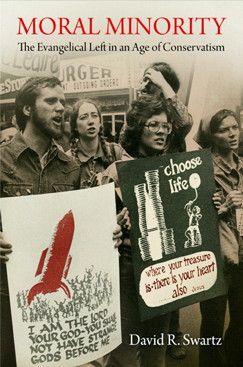
 Given all of the benefits of religious involvement, why is income mobility lowest in the South, given its high religiosity? As a social scientist, I am curious to know whether there is something different about religion in the South, or is it that the other elements that boost income mobility (two parent households, mixed-income neighborhoods, good schools) are somehow lagging in the South? Or is it some combination of all of the above? One hypothesis might be that Southerners are more likely to worship in megachurches, which might be less likely to foster the social relationships and networks that contribute to income mobility. A map of megachurches in the U.S. provides some evidence that there are more megachurches in the South, but we need more research on the social interactions that take place in these churches to draw any conclusions. Another idea is that White evangelical and fundamentalist Christians, a prominent Southern demographic, tend to support individualist explanations and solutions for inequality. This trend is documented by Michael Emerson and Christian Smith in their book Divided by Faith. By individualist, I mean “pull yourself up by the bootstraps” versus questioning whether there are bootstraps there to begin with. This tendency may lead to diminished support for government spending—not just federal, but also state and local—on schools and other policy initiatives that could enhance income mobility. I recommend David Swartz’s The Moral Minority for a fascinating read on the political diversity of evangelicals.
 Overall the causes for low income mobility in the South and elsewhere are difficult to isolate because they are most likely interconnected: In the South, high religiosity likely has some positive dividends for income mobility, but the effects may be blunted by other ramifications of religious practice and belief. Naturally there is diversity both within and between religious traditions. There is no neat and tidy answer for the pervasiveness of income inequality, but understanding how religion affects people’s beliefs about the solutions needed to strengthen families, schools, and neighborhoods is a critical part of the puzzle.
Julie J. Park is an assistant professor of education at the University of Maryland, College Park. She is the author of When Diversity Drops: Race, Religion, and Affirmative Action in Higher Education (Rutgers University Press). This post was originally posted on Huffington Post.
Previous Post

July 31, 2013
Goodbye, Robert Bellah
Next Post
August 3, 2013 Remembering Robert Bellah
Browse Our Archives
Select a Category Amy Reynolds Becky Hsu Brad Wright critical realism George Yancey Gerardo Marti Jeremy Rhodes Jerry Park John Schmalzbauer Margarita Mooney Mark Regnerus Nicolette Manglos positive sociology Richard Flory Robert Woodberry Uncategorized
Select a Month April 2017 August 2016 April 2016 March 2016 February 2016 January 2016 December 2015 November 2015 October 2015 September 2015 August 2015 July 2015 June 2015 May 2015 April 2015 March 2015 February 2015 January 2015 December 2014 November 2014 October 2014 September 2014 August 2014 July 2014 June 2014 May 2014 April 2014 March 2014 February 2014 January 2014 December 2013 November 2013 October 2013 September 2013 August 2013 July 2013 June 2013 May 2013 April 2013 March 2013 February 2013 January 2013 December 2012 November 2012 October 2012 September 2012 August 2012 July 2012 June 2012 May 2012 April 2012 March 2012 February 2012 January 2012 December 2011 November 2011 October 2011
Follow Us!
TAKE THE
Religious Wisdom Quiz
What does the name "Abraham" mean?
Select your answer to see how you score.
Strong leader Father of many Shelter Blessed man
Related posts from Black, White and Gray

Saving the Market: Harry Potter, Churches, and Globalization


Race Talk in Colorblind Churches

TRENDING AT PATHEOS Evangelical

The REST of Your Life: A Creative Wrestles...
This week I had a conversation with a good friend from church....

How the author of the world's best hymn...
I've been working with John Newton for a while now. This makes...

Long before this Lectio Divina, Psalm 130 - the song - started...

What About the Trees? Another Living Parable
After I finished writing the last article about falling leaves as a...

Why Classical Education Is a Conversation, Not a...
Come and Read: Joy in Classical Education When I was a little...

Cornell University has received a great deal of negative publicity and intense...
view all Evangelical blogs
Ad-Free & Subscriber Log-In Subscription Support
- About Us
- 2026 Calendar
- Videos
- Podcasts
- Library of World Religions
- Faith In Media Tracker
- Advertise With Us
- Write for Us
- Privacy Policy
- Terms of Service
- Do Not Sell My Data
- Contact Us
- Radiant Digital
- Manage Newsletter Subscriptions
- Unsubscribe From Notifications
- Sitemap
Copyright 2008-2026, Patheos. All rights reserved.
Subscription Support Ad-Free & Subscriber Log-In
Follow Patheos