
BuddhistCatholicContemplativeEvangelicalGeneral ChristianHinduJewishLatter-day SaintMuslimNew VisionsProgressive Christian
Beliefs
- Buddhist
- Catholic
- Contemplative
- Evangelical
- General Christian
- Hindu
- Jewish
- Latter-day Saint
- More Voices
- Muslim
- New Visions
- Pagan
- Progressive Christian
Topics
- Religion News
- Food and Religion
- Sports and Religion
- Religious Art
- Religious Music and Entertainment
- Religious Events
- History and Religion
- Style and Religion
- Politics and Religion
- Women in Religion
- Recreation Outdoors and Religion
- Business Finance and Religion
- Careers Workplace and Religion
- Education and Religion
- Family Parenting and Religion
- Health Fitness and Religion
- Home and Religion
- Relationships and Religion
- Technology and Religion
- Travel and Religion
Columnists
- Buddhist Columnists
- Business Finance and Religion Columnists
- Careers Workplace and Religion Columnists
- Catholic Columnists
- Contemplative Columnists
- Education and Religion Columnists
- Evangelists Columnists
- Family Parenting and Religion Columnists
- General Christian Columnists
- Health Fitness and Religion Columnists
- Hindu Columnists
- History and Religion Columnists
- Home and Religion Columnists
- Jewish Columnists
- More Voices Columnists
- Latter Day Columnists
- Muslim Columnists
- New Visions Columnists
- Nonreligious Columnists
- Pagan Columnists
- Politics and Religion Columnists
- Progressive Columnists
- Recreation Outdoors and Religion Columnists
- Relationships and Religion Columnists
- Religion News Columnists
- Religious Art Columnists
- Religious Events Columnists
- Religious Music and Entertainment Columnists
- Sports and Religion Columnists
- Style and Religion Columnists
- Technology and Religion Columnists
- Travel and Religion Columnists
- Women in Religion Columnists
Resource Library
- 2026 Calendar
- Library of World Religions
- The 100 Most Holy Places on Earth
- Patheos Answers
- Podcasts
- Videos
- Faith Leaders Database
- Anglican Episcopalian
- Bahai
- Baptist
- Buddhism
- Christianity
- Confucianism
- Eastern Orthodoxy
- Hinduism
- Holiness and Pentecostal
- ISKCON
- Islam
- Judaism
- Lutheran
- Methodist
- The Church of Jesus Christ of Latter-day Saints
- New Age
- Paganism
- Presbytarian and Reformed
- Protestantism
- Religion Behind the Scenes
- Roman Catholic
- Scientology
- Shia Islam
- Sikhism
- Sufism
- Sunni Islam
- Taoism
- Zen
- See all religions
Research Tools
 Ad-Free & Subscriber Log-In Subscription Support
Ad-Free & Subscriber Log-In Subscription Support
Follow Patheos 

- Trending:
- Forgiveness
- |
- Marriage
- |
- Consciousness
- |
- Death Penalty
- |
- Election
- |
- Halloween
 Black, White and Gray
-
About the Authors
- Home
- Evangelical
- I Just Wanted to Thank You for Teaching me about Well-Being
I Just Wanted to Thank You for Teaching me about Well-Being
Last updated on: July 10, 2013 at 7:38 am by Margarita A. Mooney
I Just Wanted to Thank You for Teaching me about Well-Being 2013-07-10T07:38:49-05:00 Margarita A. Mooney
Patheos Explore the world's faith through different perspectives on religion and spirituality! Patheos has the views of the prevalent religions and spiritualities of the world.
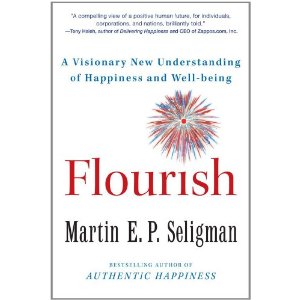
Laying on her bathroom floor sobbing, my former student cried out, “I have low-well being…My PERMA is shot to hell!” She then dragged herself up and wrote me an email entitled “I just wanted to thank you” and thanked me me for being the only professor who ever taught her what her well-being is. Sara’s email [I changed her name for confidentiality] astounded me for how it expresses how much many young adults–even high-achieving ones –struggle to build strong relationships, find meaning in their lives, and do work that is engaging. Sara’s determination to make positive changes in her life also amazed me–in fact, writing a gratitude note was a tip we learned from Martin Seligman’s Flourish. When we read Gretchen Rubin’s Happiness Project, I asked students to blog about their own gratitude journal and see what difference it made in their happiness, and Sara has kept up this practice.
Here’s the email:
“Dear Professor Mooney,
First, let me thank you for an amazing class last semester. I’m really sad that you’ll be leaving UNC. I don’t think I’ve enjoyed any other class at UNC as much as I enjoyed yours. Anyways, I wanted to let you know how much of an impact you had on me last semester, and not just my well-being but my life. I’ve never met someone as passionate as you are and you’ve inspired me to find something I am passionate about and that I love doing. I hope to also make a career out of it, but we will have to see about that when the times comes.
On Monday night, I returned to Chapel Hill from a vacation to Boston and New York. I actually got back on Saturday but took an extra day off my internship to do some things that I had been putting off during the entire month of May. Anyways, when I got back to Chapel Hill I felt so bad…almost miserable. It was a feeling I felt like I couldn’t shake. The next thing I know, I’m on my bathroom floor in tears… This is weird for me because I’m not one to cry. I don’t see the point in it and once I cry about one thing I could cry for hours…so I just avoid it. But this time, I couldn’t avoid it or stop it or pep myself up. I sat there trying to figure out why I was so unhappy…probably the most unhappy I’ve been in a really long time. I realized I was unhappy because of where I am and what I’m doing. I feel forced to do a lot of the things I am doing right now, I have a lot of financial stress, and at a time when I need family and friends the most I am isolated from them because of my responsibilities here. In the middle of this fit, I screamed out “well-being, I have low well-being.” And that’s the truth. My PERMA is shot to hell, among other things and I could go into further detail about why I’m unhappy, but I think you’ll take my word for it.
The point I’m really trying to make is that I wouldn’t know what PERMA was if it wasn’t for you. And that is what I wrote in my gratitude journal last night. I’m not any happier today than I was Monday, but I can identify why. I can also take myself back to your class and bring small bouts of joy and inspiration. So I just wanted to thank you again for teaching about things that you care about and making it easy for your students to care too. Yale is so lucky to have you. I hope your summer is going well and wish you the best of luck at Yale.”
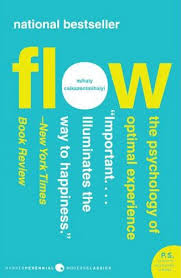 What is the well-being Sara is missing? Martin Seligman uses the acronym of PERMA to describe his theory of well-being, identifying 5 things necessary (in some measure) for a fulfilling life: Positive emotions, strong Relationships, Engagement (flow), Meaning and Achievement. As a recent college graduate from a top public university and with an internship upon graduation, she is high on achievement. But her problems are ones I heard many students express. Sara’s work is not meaningful, and does not provide for flow. To make it worse, she’s far away from her social support network. She’s financially strapped. And although she doesn’t mention it in the email, a close friend of hers died over spring break.
As part of my current research project, I will be interviewing young adults all across the United States who, like Sara, have high levels of stress but nonetheless have a positive outlook on life (such as being grateful and having a sense of purpose, and are altruistic (such as volunteering time or donating money). We will be using data from the National Study of Youth and Religion, which has followed nearly 3,000 youth from all over the US for the last 10 years. We know about their relationship with parents as teenagers, their religious lives, their friendships, and numerous elements of PERMA.
So much of sociology is about inequality but I’m interested in resilience–people who are high on PERMA despite having had difficulties in life. Sociology often presumes that high-achievers in school are doing all right, but achievement is only one dimension of well-being. One can be successful in the eyes of the world but miserable inside. Finally, sociology rarely studies downward mobility–people who have lots of opportunities but don’t take advantage of them. We have already analyzed survey data to find people who fit into these different groups, and we plan to interview some from each group. What distinguishes resilient people from those whose lives are on a downward trajectory–either because of financial stress, illness, a death of a loved one, or for no discernible reason? We think that strong relationships with family, friends and God can not only help people cope with stress, but make life’s purpose clearer. So one could be going through hard times but have a sense of determination.
Could it be that well-being is knowing where you want to go, even if you aren’t there yet? Sara’s first paper for my class was on Christian Smith’s forthcoming book on flourishing, in which he describes flourishing as having a life-project. Sara was particularly intrigued by the element of time in Smith’s theory: flourishing is a life-time pursuit made up of baby steps, like sending a gratitude email and making a resolution to pursue a dream. Sara’s email reminded me that perhaps as professors, mentors and friends we need to not only tell youth to finish school, but teach them more about what a fulfilling life is, and yes, even show them how to get there through our own passion for our work and our own willingness to forge meaningful relationships with people around us.
Thank you, Sara, for helping me understand the young people I teach and write about, and for your positive example of determination. You’ll get your PERMA soon. For those of you who want to increase your PERMA, you can start by taking the character strengths test on the website of the University of Pennsylvania’s Positive Psychology Center. I scored lowest on appreciation of beauty, so I visited Yale’s art museum 3 times my first week of work here. And I went out of the way to visit friends and family nearby, and I kept up a regular writing routine, which helps both my achievement and my flow. One can’t have too much PERMA, right?
Next Post

July 16, 2013 Race Talk in Colorblind Churches
Browse Our Archives
Select a Category Amy Reynolds Becky Hsu Brad Wright critical realism George Yancey Gerardo Marti Jeremy Rhodes Jerry Park John Schmalzbauer Margarita Mooney Mark Regnerus Nicolette Manglos positive sociology Richard Flory Robert Woodberry Uncategorized
Select a Month April 2017 August 2016 April 2016 March 2016 February 2016 January 2016 December 2015 November 2015 October 2015 September 2015 August 2015 July 2015 June 2015 May 2015 April 2015 March 2015 February 2015 January 2015 December 2014 November 2014 October 2014 September 2014 August 2014 July 2014 June 2014 May 2014 April 2014 March 2014 February 2014 January 2014 December 2013 November 2013 October 2013 September 2013 August 2013 July 2013 June 2013 May 2013 April 2013 March 2013 February 2013 January 2013 December 2012 November 2012 October 2012 September 2012 August 2012 July 2012 June 2012 May 2012 April 2012 March 2012 February 2012 January 2012 December 2011 November 2011 October 2011
Follow Us!
TAKE THE
Religious Wisdom Quiz
What did Hannah bring annually for Samuel when he lived at the Tabernacle?
Select your answer to see how you score.
A candle A staff A robe A crown
Related posts from Black, White and Gray

Using Critical Realism to Teach the Fundamentals of...

Incorporating Critical Realism into Research Methods Classes

5 Great Articles Using Critical Realism in Social...

Books on Critical Realism and Sociological Research Methods
TRENDING AT PATHEOS Evangelical

The REST of Your Life: A Creative Wrestles...
This week I had a conversation with a good friend from church....

How the author of the world's best hymn...
I've been working with John Newton for a while now. This makes...

Long before this Lectio Divina, Psalm 130 - the song - started...

What About the Trees? Another Living Parable
After I finished writing the last article about falling leaves as a...

Why Classical Education Is a Conversation, Not a...
Come and Read: Joy in Classical Education When I was a little...

Cornell University has received a great deal of negative publicity and intense...
view all Evangelical blogs
Ad-Free & Subscriber Log-In Subscription Support
- About Us
- 2026 Calendar
- Videos
- Podcasts
- Library of World Religions
- Faith In Media Tracker
- Advertise With Us
- Write for Us
- Privacy Policy
- Terms of Service
- Do Not Sell My Data
- Contact Us
- Radiant Digital
- Manage Newsletter Subscriptions
- Unsubscribe From Notifications
- Sitemap
Copyright 2008-2026, Patheos. All rights reserved.
Subscription Support Ad-Free & Subscriber Log-In
Follow Patheos