
BuddhistCatholicContemplativeEvangelicalGeneral ChristianHinduJewishLatter-day SaintMuslimNew VisionsProgressive Christian
Beliefs
- Buddhist
- Catholic
- Contemplative
- Evangelical
- General Christian
- Hindu
- Jewish
- Latter-day Saint
- More Voices
- Muslim
- New Visions
- Pagan
- Progressive Christian
Topics
- Religion News
- Food and Religion
- Sports and Religion
- Religious Art
- Religious Music and Entertainment
- Religious Events
- History and Religion
- Style and Religion
- Politics and Religion
- Women in Religion
- Recreation Outdoors and Religion
- Business Finance and Religion
- Careers Workplace and Religion
- Education and Religion
- Family Parenting and Religion
- Health Fitness and Religion
- Home and Religion
- Relationships and Religion
- Technology and Religion
- Travel and Religion
Columnists
- Buddhist Columnists
- Business Finance and Religion Columnists
- Careers Workplace and Religion Columnists
- Catholic Columnists
- Contemplative Columnists
- Education and Religion Columnists
- Evangelists Columnists
- Family Parenting and Religion Columnists
- General Christian Columnists
- Health Fitness and Religion Columnists
- Hindu Columnists
- History and Religion Columnists
- Home and Religion Columnists
- Jewish Columnists
- More Voices Columnists
- Latter Day Columnists
- Muslim Columnists
- New Visions Columnists
- Nonreligious Columnists
- Pagan Columnists
- Politics and Religion Columnists
- Progressive Columnists
- Recreation Outdoors and Religion Columnists
- Relationships and Religion Columnists
- Religion News Columnists
- Religious Art Columnists
- Religious Events Columnists
- Religious Music and Entertainment Columnists
- Sports and Religion Columnists
- Style and Religion Columnists
- Technology and Religion Columnists
- Travel and Religion Columnists
- Women in Religion Columnists
Resource Library
- 2026 Calendar
- Library of World Religions
- The 100 Most Holy Places on Earth
- Patheos Answers
- Podcasts
- Videos
- Faith Leaders Database
- Anglican Episcopalian
- Bahai
- Baptist
- Buddhism
- Christianity
- Confucianism
- Eastern Orthodoxy
- Hinduism
- Holiness and Pentecostal
- ISKCON
- Islam
- Judaism
- Lutheran
- Methodist
- The Church of Jesus Christ of Latter-day Saints
- New Age
- Paganism
- Presbytarian and Reformed
- Protestantism
- Religion Behind the Scenes
- Roman Catholic
- Scientology
- Shia Islam
- Sikhism
- Sufism
- Sunni Islam
- Taoism
- Zen
- See all religions
Research Tools
 Ad-Free & Subscriber Log-In Subscription Support
Ad-Free & Subscriber Log-In Subscription Support
Follow Patheos 

- Trending:
- Forgiveness
- |
- Marriage
- |
- Consciousness
- |
- Death Penalty
- |
- Election
- |
- Halloween
 Black, White and Gray
-
About the Authors
- Home
- Evangelical
- Flow: Let’s Get Serious about Leisure
Flow: Let’s Get Serious about Leisure
Last updated on: June 5, 2013 at 9:48 am by Margarita A. Mooney
Flow: Let’s Get Serious about Leisure 2013-06-05T09:48:31-05:00 Margarita A. Mooney
Patheos Explore the world's faith through different perspectives on religion and spirituality! Patheos has the views of the prevalent religions and spiritualities of the world.
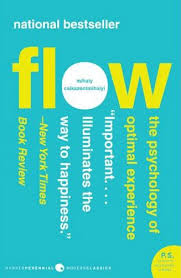 Do you take your leisure seriously? If not, you aren’t going to get flow which I described last week. Contrary to popular belief, flow is not the easy-peasy feeling you get when plopping down on the couch to watch an old movie or the NBA Finals. Flow also is not the exclusive property of musical or spiritual virtuosos who seem to just forget the world around them as they wrap themselves in beauty or prayer. Flow happens when your work or leisure expand your consciousness, producing and optimal psychological state fundamental to happiness.
Why do we need to be serious about flow? Positive psychologist Martin Seligman convinced me that if you don’t get flow most days, you probably will never be happy. Mihalyi Csikszentmihalyi, the author of Flow: The Psychology of Optimal Experience, states that if you know how to flow, you can expect to be happy practically no matter what, including during times of serious adversity.
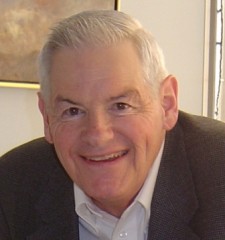
Robert Stebbins
In reply to my blog last week, I heard from a leading sociologist who studies leisure, Robert A. Stebbins of the University of Calgary, whose researched has focused on ‘serious leisure’, ‘casual leisure’, ‘project-based leisure’ and ‘optimal leisure’. Stebbins properly cautioned not to think of flow as just another name for leisure, pointing out in his email that “most leisure activities allow for instances of flow, but that flow is only part of what their participants experience.”
In the November 2010 issue of the Leisure Studies Association Newsletter, Stebbins lists the 8 components of flow as defined by Csikszentmihalyi and examines how various forms of leisure do or do not meet those conditions of flow. In order to meet Csikszentmihalyi’s idea of flow, an activity must meet these 8 criteria:
1. sense of competence in executing the activity;
2. requirement of concentration;
3. clarity of goals of the activity;
4. immediate feedback from the activity;
5. sense of deep, focused involvement in the activity;
6. sense of control in completing the activity;
7. loss of self-consciousness during the activity;
8. sense of time is truncated during the activity.
One important ‘serious leisure activity’ that does not meet the strict critiera for flow is what Stebbins calls the liberal arts hobbies. What is serious leisure? Stebbins defines serious leisure as:
“Serious leisure is the systematic pursuit of an amateur, hobbyist, or volunteer activity sufficiently substantial, interesting, and fulfilling for the participant to find a (leisure) career there acquiring and expressing a combination of its special skills, knowledge, and experience” (Stebbins, LSA newsletter, November 2010).
Surfing or volunteering is certainly leisure, but it’s not serious leisure by Stebbins’s definition. What are liberal arts hobbies, which is serious leisure? According to Stebbins, in liberal arts hobbies, “their goal is acquisition of a body of knowledge and understanding of, for example, one or more arts, sports, foods, beverages, languages, cultures, histories, sciences, philosophies or literary traditions.” Liberal arts hobbies are not mastered for another purpose; the topic is pursued as an end in and of itself.
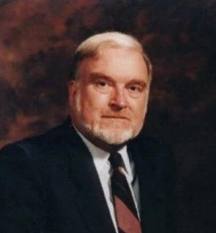
Mihaly Csikszentmihalyi
For example, my father collected 2,000 books in his lifetime on a variety of specialized topics, including chess, archeology, classical music and languages. Whenever I traveled to a foreign country, my father asked me to bring him chess books written in foreign languages. Although he was an avid chess player, my dad didn’t want to learn about chess in different languages so he could compete with someone from another country. Rather, he just found immense enjoyment studying languages and chess together—something that really puzzled me until I read about flow. My father definitely was what Stebbins calls a liberal arts hobbyist, and he had what Csikszentmihalyi calls an autotelic personality, understood as someone with a innate curiosity to master things just for their own sake and the ability to concentrate on those things for long periods of time.
The range of topics my father studied always amazed me; now I realize it wasn’t just the topics he studied which interested him but the experience of gathering knowledge as an end in and of itself which fascinated my father. My father also knew the difference between serious and causal leisure, as he would often tell me with a big smile and excitement in his eyes, “Let’s turn off the TV and do math.” In teaching me algebra when I was 6, my dad not only taught me math, he taught me to enjoy the pursuit of knowledge as an end in its own right, which may be what led me to become an academic.
However, as Stebbins rightly points out, liberal arts hobbies don’t require control (component #6 in Csikszentmihalyi’s definition of flow). Hence, Stebbins cautions that not all leisure should be called flow. Stebbins also points out that causal leisure, such as aerobics and game playing, may not be complex enough for flow.
Even if not all leisure is flow, could it be that leisure (in all its forms) is one important building block of flow? Although I can see the need to get serious about our leisure, we can’t be too serious about our flow all the time, can we? Doesn’t casual leisure build up the capacity for serious leisure?
Take together, Csikszentmihalyi’s concept of flow and Stebbins’s concept of serious leisure, such as liberal arts hobbies, reassures me that my own passion for being a professor stems from a desire to know and master a topic just because I enjoy it. I’ve always thought that being a professor was a vocation, even though to some it seems like a vacation because I enjoy it so much.
Previous Post

June 4, 2013
The Church, Immigration, and Advocacy
Next Post

June 14, 2013 Hmong, Indian, What’s the Difference?
Browse Our Archives
Select a Category Amy Reynolds Becky Hsu Brad Wright critical realism George Yancey Gerardo Marti Jeremy Rhodes Jerry Park John Schmalzbauer Margarita Mooney Mark Regnerus Nicolette Manglos positive sociology Richard Flory Robert Woodberry Uncategorized
Select a Month April 2017 August 2016 April 2016 March 2016 February 2016 January 2016 December 2015 November 2015 October 2015 September 2015 August 2015 July 2015 June 2015 May 2015 April 2015 March 2015 February 2015 January 2015 December 2014 November 2014 October 2014 September 2014 August 2014 July 2014 June 2014 May 2014 April 2014 March 2014 February 2014 January 2014 December 2013 November 2013 October 2013 September 2013 August 2013 July 2013 June 2013 May 2013 April 2013 March 2013 February 2013 January 2013 December 2012 November 2012 October 2012 September 2012 August 2012 July 2012 June 2012 May 2012 April 2012 March 2012 February 2012 January 2012 December 2011 November 2011 October 2011
Follow Us!
TAKE THE
Religious Wisdom Quiz
What does "Gideon" mean in Hebrew?
Select your answer to see how you score.
Redeemer Hewer Warrior God is my Strength
Related posts from Black, White and Gray

Using Critical Realism to Teach the Fundamentals of...

Incorporating Critical Realism into Research Methods Classes

5 Great Articles Using Critical Realism in Social...

Books on Critical Realism and Sociological Research Methods
TRENDING AT PATHEOS Evangelical

The REST of Your Life: A Creative Wrestles...
This week I had a conversation with a good friend from church....

How the author of the world's best hymn...
I've been working with John Newton for a while now. This makes...

Long before this Lectio Divina, Psalm 130 - the song - started...

What About the Trees? Another Living Parable
After I finished writing the last article about falling leaves as a...

Why Classical Education Is a Conversation, Not a...
Come and Read: Joy in Classical Education When I was a little...

Cornell University has received a great deal of negative publicity and intense...
view all Evangelical blogs
Ad-Free & Subscriber Log-In Subscription Support
- About Us
- 2026 Calendar
- Videos
- Podcasts
- Library of World Religions
- Faith In Media Tracker
- Advertise With Us
- Write for Us
- Privacy Policy
- Terms of Service
- Do Not Sell My Data
- Contact Us
- Radiant Digital
- Manage Newsletter Subscriptions
- Unsubscribe From Notifications
- Sitemap
Copyright 2008-2026, Patheos. All rights reserved.
Subscription Support Ad-Free & Subscriber Log-In
Follow Patheos