
BuddhistCatholicContemplativeEvangelicalGeneral ChristianHinduJewishLatter-day SaintMuslimNew VisionsProgressive Christian
Beliefs
- Buddhist
- Catholic
- Contemplative
- Evangelical
- General Christian
- Hindu
- Jewish
- Latter-day Saint
- More Voices
- Muslim
- New Visions
- Pagan
- Progressive Christian
Topics
- Religion News
- Food and Religion
- Sports and Religion
- Religious Art
- Religious Music and Entertainment
- Religious Events
- History and Religion
- Style and Religion
- Politics and Religion
- Women in Religion
- Recreation Outdoors and Religion
- Business Finance and Religion
- Careers Workplace and Religion
- Education and Religion
- Family Parenting and Religion
- Health Fitness and Religion
- Home and Religion
- Relationships and Religion
- Technology and Religion
- Travel and Religion
Columnists
- Buddhist Columnists
- Business Finance and Religion Columnists
- Careers Workplace and Religion Columnists
- Catholic Columnists
- Contemplative Columnists
- Education and Religion Columnists
- Evangelists Columnists
- Family Parenting and Religion Columnists
- General Christian Columnists
- Health Fitness and Religion Columnists
- Hindu Columnists
- History and Religion Columnists
- Home and Religion Columnists
- Jewish Columnists
- More Voices Columnists
- Latter Day Columnists
- Muslim Columnists
- New Visions Columnists
- Nonreligious Columnists
- Pagan Columnists
- Politics and Religion Columnists
- Progressive Columnists
- Recreation Outdoors and Religion Columnists
- Relationships and Religion Columnists
- Religion News Columnists
- Religious Art Columnists
- Religious Events Columnists
- Religious Music and Entertainment Columnists
- Sports and Religion Columnists
- Style and Religion Columnists
- Technology and Religion Columnists
- Travel and Religion Columnists
- Women in Religion Columnists
Resource Library
- 2026 Calendar
- Library of World Religions
- The 100 Most Holy Places on Earth
- Patheos Answers
- Podcasts
- Videos
- Faith Leaders Database
- Anglican Episcopalian
- Bahai
- Baptist
- Buddhism
- Christianity
- Confucianism
- Eastern Orthodoxy
- Hinduism
- Holiness and Pentecostal
- ISKCON
- Islam
- Judaism
- Lutheran
- Methodist
- The Church of Jesus Christ of Latter-day Saints
- New Age
- Paganism
- Presbytarian and Reformed
- Protestantism
- Religion Behind the Scenes
- Roman Catholic
- Scientology
- Shia Islam
- Sikhism
- Sufism
- Sunni Islam
- Taoism
- Zen
- See all religions
Research Tools
 Ad-Free & Subscriber Log-In Subscription Support
Ad-Free & Subscriber Log-In Subscription Support
Follow Patheos 

- Trending:
- Forgiveness
- |
- Marriage
- |
- Consciousness
- |
- Death Penalty
- |
- Election
- |
- Halloween
 Black, White and Gray
-
About the Authors
- Home
- Evangelical
- “No More Choices, Please!”
“No More Choices, Please!”
Last updated on: May 1, 2013 at 7:15 am by Margarita A. Mooney
“No More Choices, Please!” 2013-05-01T07:15:43-05:00 Margarita A. Mooney
Patheos Explore the world's faith through different perspectives on religion and spirituality! Patheos has the views of the prevalent religions and spiritualities of the world.
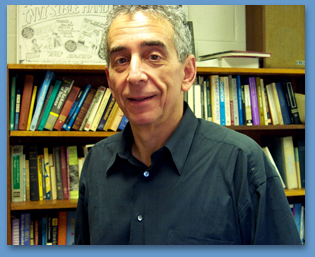
Barry Schwartz
Have you ever felt overwhelmed at the number of choices to buy a salad dressing at the grocery store? Have you ever failed to choose a health care or retirement option just because, well, there were so many options that you couldn’t pick one? Have you ever searched and searched for the perfect pair of shoes, the best dress for a special event, or a new car, and then made a choice but still felt like maybe you could have found something even better?
If you answered “yes’ to any of these questions, then you are suffering from what Swarthmore psychology professor Barry Schwartz calls “The Paradox of Choice.” As he recounts in this TED lecture, Schwartz suffered so much agony when buying a pair of jeans that he decided to write a whole book explaining how Americans mistakenly think that more choices means more freedom and that more freedom means more well-being.
One of the first-year students in my positive sociology seminar wrote a review of Schwartz’s book The Paradox of Choice: Why More is Less, and to my amazement my students were so persuaded by his arguments about the negative effects of too many choices on our well-being that they all shouted in a chorus at the end of class, “No more choices, please! Save us from our misery!”
One student admitted (somewhat embarrassed) that she was having trouble picking out her new glasses. She had already taken 3 female friends with her to pick out new frames; but still feeling unsatisfied, she invited 3 male friends. This same student lamented how others’ inability to choose made her miserable, “I mean, I really hate it when a guy asks me out on a date and then asks me to choose where to go!” Another student chimed in, “My stepmother always wants to buy me the perfect Christmas gift. So we go shopping for days and days and I pick out lots of things I like. But she can’t make a choice, so I end up getting nothing even though I told her I really, really wanted something!” A third student said, “No one wants to make plans when we go out with our friends because no one wants to be responsible if we don’t have fun.”
After our engaging class discussion, the student who had led the class discussion asked me, “So do you want to read this draft and discuss it on Monday? Or do you want me to revise it over the weekend and send you a new draft before we meet to discuss it?” My immediate reaction was to say, “Whichever you choose.” But when her face sunk, I quickly realized I was doing what Schwartz calls abdicating authority–when a professional such a doctor or a professor won’t tell a patient or student what to do. I corrected myself saying, “You want me to tell you what to do, don’t you?” and she nodded her head.”So why don’t you outline some revisions you think you could make, and we can discuss this draft and your plan for revision on Monday.”
Schwartz offers three main reasons for the paradox that having so many choices makes us unhappy: 1) Paralysis. We have so many options we don’t pick any of them. Just ask yourself–when was the last time you went to the store to buy something supposedly simple, like dishwashing liquid, and felt so overwhelmed by the choices you just walked out of the stores? 2) Opportunity Costs. When we have seemingly endless options, we find it hard to be satisfied with what we do choose. Even worse, when do make a choice, we can always come up with an ‘imagined alternative’ that reduces our satisfaction with even our good decisions. Regret, not happiness, goes up when we have too many choices. 3) Escalation of Expectations. Even if we objectively make a better choice than we could have before we had so many choices, we feel worse. Why? Well, those shoes I bought last week may be the best pair I’ve ever had, but with so many great shoes at Nordstrom’s, Macy’s, and on-line how do I know I got my dream shoes, the absolutely perfect pair of shoes I want to wear until the end of my life? To explain this regret-at-having-it-so-good-we-feel-worse, Schwartz quips in his TED lecture, “Everything was better when everything was worse.” We have become such perfectionists that we are never pleasantly surprised by what we have.

Margaret Archer
Much research in psychology, sociology and particular economics falls into this problem: our concept of the human person is a being who uses his or her reason to satisfy his or her preferences (i.e., the utility-maximizing rational choice actor). Sociologist Margaret Archer, in her book Being Human: The Problem of Agency, argues that satisfying preferences is not the same as satisfying the person. The human person, Archer persuasively argues, is driven by ultimate concerns, such as concerns for love, beauty and truth. We can’t satisfy those concerns no matter how many choices we have, as human persons ultimately are capable of imagining a better, happier, more beautiful world than any choice we have in front of us, an imaginative power Archer argues is key to positive social transformation.
Perhaps the most important lesson my students learned in positive sociology, as they told me, is that the the human person finds deep satisfaction through strong relationships with others and by having a deep sense of meaning in which one’s purpose in this life is tied to a larger narrative. Deciding where to go out on Friday, where to go out on a date, what glasses to buy, and what classes to take makes my students unhappy rather than happy. Given that I had never taught positive psychology or positive sociology before, my students ended the semester pleasantly surprised with what they got, probably because they had no idea what to expect and because they learned had many practical lessons for how to be happier.
Previous Post

April 30, 2013
Unethical Wealth
Next Post
May 2, 2013 Are We Losing the Young? Evangelicals by Age Since 1972 (Part II)
Browse Our Archives
Select a Category Amy Reynolds Becky Hsu Brad Wright critical realism George Yancey Gerardo Marti Jeremy Rhodes Jerry Park John Schmalzbauer Margarita Mooney Mark Regnerus Nicolette Manglos positive sociology Richard Flory Robert Woodberry Uncategorized
Select a Month April 2017 August 2016 April 2016 March 2016 February 2016 January 2016 December 2015 November 2015 October 2015 September 2015 August 2015 July 2015 June 2015 May 2015 April 2015 March 2015 February 2015 January 2015 December 2014 November 2014 October 2014 September 2014 August 2014 July 2014 June 2014 May 2014 April 2014 March 2014 February 2014 January 2014 December 2013 November 2013 October 2013 September 2013 August 2013 July 2013 June 2013 May 2013 April 2013 March 2013 February 2013 January 2013 December 2012 November 2012 October 2012 September 2012 August 2012 July 2012 June 2012 May 2012 April 2012 March 2012 February 2012 January 2012 December 2011 November 2011 October 2011
Follow Us!
TAKE THE
Religious Wisdom Quiz
Who touched Jesus' cloak and was healed of bleeding?
Select your answer to see how you score.
A woman in the crowd Martha Jairus' daughter A centurion
Related posts from Black, White and Gray

Using Critical Realism to Teach the Fundamentals of...

Incorporating Critical Realism into Research Methods Classes

5 Great Articles Using Critical Realism in Social...

Books on Critical Realism and Sociological Research Methods
TRENDING AT PATHEOS Evangelical

The REST of Your Life: A Creative Wrestles...
This week I had a conversation with a good friend from church....

How the author of the world's best hymn...
I've been working with John Newton for a while now. This makes...

Long before this Lectio Divina, Psalm 130 - the song - started...

What About the Trees? Another Living Parable
After I finished writing the last article about falling leaves as a...

Why Classical Education Is a Conversation, Not a...
Come and Read: Joy in Classical Education When I was a little...

Cornell University has received a great deal of negative publicity and intense...
view all Evangelical blogs
Ad-Free & Subscriber Log-In Subscription Support
- About Us
- 2026 Calendar
- Videos
- Podcasts
- Library of World Religions
- Faith In Media Tracker
- Advertise With Us
- Write for Us
- Privacy Policy
- Terms of Service
- Do Not Sell My Data
- Contact Us
- Radiant Digital
- Manage Newsletter Subscriptions
- Unsubscribe From Notifications
- Sitemap
Copyright 2008-2026, Patheos. All rights reserved.
Subscription Support Ad-Free & Subscriber Log-In
Follow Patheos