
BuddhistCatholicContemplativeEvangelicalGeneral ChristianHinduJewishLatter-day SaintMuslimNew VisionsProgressive Christian
Beliefs
- Buddhist
- Catholic
- Contemplative
- Evangelical
- General Christian
- Hindu
- Jewish
- Latter-day Saint
- More Voices
- Muslim
- New Visions
- Pagan
- Progressive Christian
Topics
- Religion News
- Food and Religion
- Sports and Religion
- Religious Art
- Religious Music and Entertainment
- Religious Events
- History and Religion
- Style and Religion
- Politics and Religion
- Women in Religion
- Recreation Outdoors and Religion
- Business Finance and Religion
- Careers Workplace and Religion
- Education and Religion
- Family Parenting and Religion
- Health Fitness and Religion
- Home and Religion
- Relationships and Religion
- Technology and Religion
- Travel and Religion
Columnists
- Buddhist Columnists
- Business Finance and Religion Columnists
- Careers Workplace and Religion Columnists
- Catholic Columnists
- Contemplative Columnists
- Education and Religion Columnists
- Evangelists Columnists
- Family Parenting and Religion Columnists
- General Christian Columnists
- Health Fitness and Religion Columnists
- Hindu Columnists
- History and Religion Columnists
- Home and Religion Columnists
- Jewish Columnists
- More Voices Columnists
- Latter Day Columnists
- Muslim Columnists
- New Visions Columnists
- Nonreligious Columnists
- Pagan Columnists
- Politics and Religion Columnists
- Progressive Columnists
- Recreation Outdoors and Religion Columnists
- Relationships and Religion Columnists
- Religion News Columnists
- Religious Art Columnists
- Religious Events Columnists
- Religious Music and Entertainment Columnists
- Sports and Religion Columnists
- Style and Religion Columnists
- Technology and Religion Columnists
- Travel and Religion Columnists
- Women in Religion Columnists
Resource Library
- 2026 Calendar
- Library of World Religions
- The 100 Most Holy Places on Earth
- Patheos Answers
- Podcasts
- Videos
- Faith Leaders Database
- Anglican Episcopalian
- Bahai
- Baptist
- Buddhism
- Christianity
- Confucianism
- Eastern Orthodoxy
- Hinduism
- Holiness and Pentecostal
- ISKCON
- Islam
- Judaism
- Lutheran
- Methodist
- The Church of Jesus Christ of Latter-day Saints
- New Age
- Paganism
- Presbytarian and Reformed
- Protestantism
- Religion Behind the Scenes
- Roman Catholic
- Scientology
- Shia Islam
- Sikhism
- Sufism
- Sunni Islam
- Taoism
- Zen
- See all religions
Research Tools
 Ad-Free & Subscriber Log-In Subscription Support
Ad-Free & Subscriber Log-In Subscription Support
Follow Patheos 

- Trending:
- Forgiveness
- |
- Marriage
- |
- Consciousness
- |
- Death Penalty
- |
- Election
- |
- Halloween
 Black, White and Gray
-
About the Authors
- Home
- Evangelical
- Unethical Wealth
Unethical Wealth
Last updated on: April 30, 2013 at 1:59 pm by Amy Reynolds
Unethical Wealth 2013-04-30T13:59:51-05:00 Amy Reynolds
Patheos Explore the world's faith through different perspectives on religion and spirituality! Patheos has the views of the prevalent religions and spiritualities of the world.
Last week, the Pew Research Center released a report showing wealth has dropped for the bottom 93% of Americans, but for those with wealth levels over about $890,000, wealth has risen by an average of 28% in the last two years. As the economy starts to recover, it’s clear who is winning and who is losing ground.
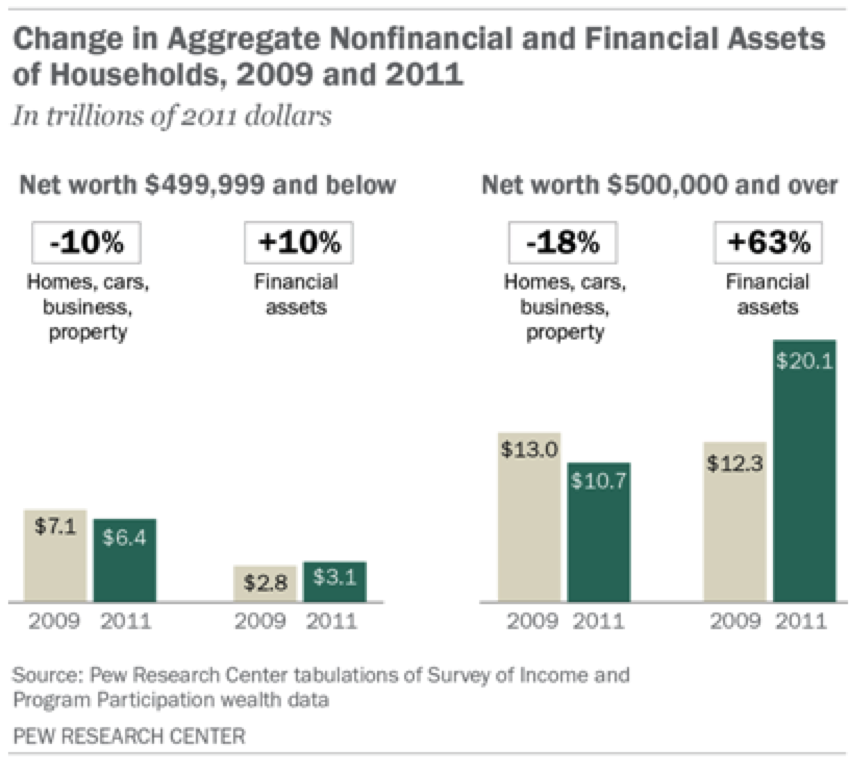
Globally, inequality between countries seems to be decreasing, although it’s increasing within countries—and overall. And one of the biggest drivers of the growth of inequality is the growth in wealth of those with the highest incomes.
Elsewhere I’ve blogged about some of the problems with inequality in terms of social and economic outcomes. An opinion piece by Sean Reardon in the NYT shows that educational outcomes are becoming more divergent for the upper and lower classes, within the United States. While school funding is not the key issue he highlights, it’s part of the story. In Philadelphia, public schools are looking at cuts of 25%—this translates into the removal of counselors and programs, and increasing class sizes above 30.
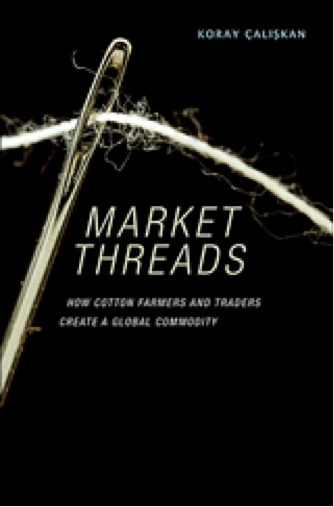
In the classes I teach on social change and globalization, students leave class discouraged many days. We spent one session focused on the conditions and power held by many workers involved in different commodities around the world. We discussed coffee (John Talbot,’s Grounds for Agreement), maize (Elizabeth Fitting’s The Struggle for Maize), tomatoes (Deborah Bardnt’s Tangled Routes), and cotton (Koray Caliskan’s Market Threads). The story of the lack of power held by workers in each of these commodity trades is a consistent theme, and one that can be a struggle to engage.
Sometimes I hear students talking about ethical business or business as mission. I’d love to see these conversations intersect more with those on issues of inequality. Many conceptions of ethical business often revolve around principles like giving back, not cheating, or refusing to actively exploit others. Yet we rarely think about the distribution of profits, or how businesses and actors are contributing (or challenging) the growing inequality in power held by people around the world.
While many are not thinking in those terms, others area, and I want to highlight one of those cases. I recently had an article published in Latin American Research Review, where I describe the ways some Central American coffee actors think about ethical business practices. They had both a broader view of what ethical commitments mean, as well as a more integrated understanding of how issues of power and the Gospel are intertwined.
While these evangelicals gave money to their community, and volunteered time to mentoring youth, that was not the central way they practiced social responsibility. They prioritized increasing the value-added nature of work done by coffee farmers. They did this through agricultural training, but also by challenging some current market structures and dynamics. As one of the leaders suggested, the way they demonstrated their faith was to “introduce values—Christian values, Christian ethics, transparency, and stewardship.” For them, this meant recognizing that current business practices accepted in the coffee sector had to be challenged.
Giving to those in need may just exacerbate high power and wealth differentials. It’s no surprise that these same actors I interviewed in Central America were critical of US Christian responses to give aid to farmers instead of simply paying higher prices for a product. For them, to be ethical meant to think about transforming the ways business worked. In my next research project, I’m gathering data to look at how the over $2.3 billion per year from U.S. religious humanitarian organizations is spent in dealing with poverty, and how common (or uncommon) this example from Central America is. As inequality levels continue to rise, and power becomes more concentrated in the hands of a few, Christians need to be thinking more critically about what it means to engage in ethical practices in our economy.
Previous Post

April 26, 2013
Faith and Ethnicity in West, TX
Next Post
May 1, 2013 "No More Choices, Please!"
Browse Our Archives
Select a Category Amy Reynolds Becky Hsu Brad Wright critical realism George Yancey Gerardo Marti Jeremy Rhodes Jerry Park John Schmalzbauer Margarita Mooney Mark Regnerus Nicolette Manglos positive sociology Richard Flory Robert Woodberry Uncategorized
Select a Month April 2017 August 2016 April 2016 March 2016 February 2016 January 2016 December 2015 November 2015 October 2015 September 2015 August 2015 July 2015 June 2015 May 2015 April 2015 March 2015 February 2015 January 2015 December 2014 November 2014 October 2014 September 2014 August 2014 July 2014 June 2014 May 2014 April 2014 March 2014 February 2014 January 2014 December 2013 November 2013 October 2013 September 2013 August 2013 July 2013 June 2013 May 2013 April 2013 March 2013 February 2013 January 2013 December 2012 November 2012 October 2012 September 2012 August 2012 July 2012 June 2012 May 2012 April 2012 March 2012 February 2012 January 2012 December 2011 November 2011 October 2011
Follow Us!
TAKE THE
Religious Wisdom Quiz
What did Elijah call down from heaven to defeat the prophets of Baal?
Select your answer to see how you score.
Fire Rain Water Wind
Related posts from Black, White and Gray

Saving the Market: Harry Potter, Churches, and Globalization

The Personal and the Political: Violence in our...

Women in Leadership National Study: A First Glance

Economic Choices, the Media, and Racism
TRENDING AT PATHEOS Evangelical

The REST of Your Life: A Creative Wrestles...
This week I had a conversation with a good friend from church....

How the author of the world's best hymn...
I've been working with John Newton for a while now. This makes...

Long before this Lectio Divina, Psalm 130 - the song - started...

What About the Trees? Another Living Parable
After I finished writing the last article about falling leaves as a...

Why Classical Education Is a Conversation, Not a...
Come and Read: Joy in Classical Education When I was a little...

Cornell University has received a great deal of negative publicity and intense...
view all Evangelical blogs
Ad-Free & Subscriber Log-In Subscription Support
- About Us
- 2026 Calendar
- Videos
- Podcasts
- Library of World Religions
- Faith In Media Tracker
- Advertise With Us
- Write for Us
- Privacy Policy
- Terms of Service
- Do Not Sell My Data
- Contact Us
- Radiant Digital
- Manage Newsletter Subscriptions
- Unsubscribe From Notifications
- Sitemap
Copyright 2008-2026, Patheos. All rights reserved.
Subscription Support Ad-Free & Subscriber Log-In
Follow Patheos