
BuddhistCatholicContemplativeEvangelicalGeneral ChristianHinduJewishLatter-day SaintMuslimNew VisionsProgressive Christian
Beliefs
- Buddhist
- Catholic
- Contemplative
- Evangelical
- General Christian
- Hindu
- Jewish
- Latter-day Saint
- More Voices
- Muslim
- New Visions
- Pagan
- Progressive Christian
Topics
- Religion News
- Food and Religion
- Sports and Religion
- Religious Art
- Religious Music and Entertainment
- Religious Events
- History and Religion
- Style and Religion
- Politics and Religion
- Women in Religion
- Recreation Outdoors and Religion
- Business Finance and Religion
- Careers Workplace and Religion
- Education and Religion
- Family Parenting and Religion
- Health Fitness and Religion
- Home and Religion
- Relationships and Religion
- Technology and Religion
- Travel and Religion
Columnists
- Buddhist Columnists
- Business Finance and Religion Columnists
- Careers Workplace and Religion Columnists
- Catholic Columnists
- Contemplative Columnists
- Education and Religion Columnists
- Evangelists Columnists
- Family Parenting and Religion Columnists
- General Christian Columnists
- Health Fitness and Religion Columnists
- Hindu Columnists
- History and Religion Columnists
- Home and Religion Columnists
- Jewish Columnists
- More Voices Columnists
- Latter Day Columnists
- Muslim Columnists
- New Visions Columnists
- Nonreligious Columnists
- Pagan Columnists
- Politics and Religion Columnists
- Progressive Columnists
- Recreation Outdoors and Religion Columnists
- Relationships and Religion Columnists
- Religion News Columnists
- Religious Art Columnists
- Religious Events Columnists
- Religious Music and Entertainment Columnists
- Sports and Religion Columnists
- Style and Religion Columnists
- Technology and Religion Columnists
- Travel and Religion Columnists
- Women in Religion Columnists
Resource Library
- 2026 Calendar
- Library of World Religions
- The 100 Most Holy Places on Earth
- Patheos Answers
- Podcasts
- Videos
- Faith Leaders Database
- Anglican Episcopalian
- Bahai
- Baptist
- Buddhism
- Christianity
- Confucianism
- Eastern Orthodoxy
- Hinduism
- Holiness and Pentecostal
- ISKCON
- Islam
- Judaism
- Lutheran
- Methodist
- The Church of Jesus Christ of Latter-day Saints
- New Age
- Paganism
- Presbytarian and Reformed
- Protestantism
- Religion Behind the Scenes
- Roman Catholic
- Scientology
- Shia Islam
- Sikhism
- Sufism
- Sunni Islam
- Taoism
- Zen
- See all religions
Research Tools
 Ad-Free & Subscriber Log-In Subscription Support
Follow Patheos 

- Trending:
- Advent
- |
- Forgiveness
- |
- Thanksgiving
- |
- Election
- |
- Seasonal Holidays
- |
- Marriage
 Black, White and Gray
-
About the Authors
- Home
- Evangelical
- Conversations with Robert Bellah
Conversations with Robert Bellah
Last updated on: August 7, 2013 at 11:54 am by Margarita A. Mooney
Conversations with Robert Bellah 2013-08-07T11:54:00-05:00 Margarita A. Mooney
Patheos Explore the world's faith through different perspectives on religion and spirituality! Patheos has the views of the prevalent religions and spiritualities of the world.
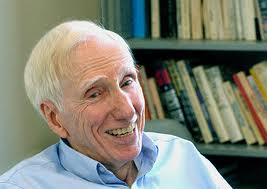
Robert Bellah
Sitting in his office perched above the hills in Berkeley, California, yesterday I got to meet one of the legends of sociology: Robert Bellah. Among other accomplishments, Bellah’s co-authored book Habits of the Heart from 1985 has sold half a million copies, his essay Civil Religion in America is widely discussed and cited, and his very recent magnum opus Religion in Human Evolution has caused quite a buzz in the academic world. (See the lively discussion of it on the Immanent Frame).
Now in his 80s, Bellah greeted me warmly in his home office. He’s quite tall—around 6 foot 4 inches, and he has a bright smile. His first words were a very personal introduction, saying,
“My wife died about 2 years ago after 61 years of marriage.” During our hour and a half conversation, he must have mentioned his love for his wife at least a half dozen times, telling me, “She really was my other half. I really believe the Biblical narrative that when people get married (at least in good marriages), it really is like a one-flesh union of two people. I felt like half of me was amputated when she died. I couldn’t write for about a year, but I could read. I felt this deep desire to be united with her, but my work, my children, and my grandchildren keep me going.”
Bellah sometimes feels that the popularity of his essay, “Civil Religion in America,” takes attention away from his other important works, even calling that article “that darned piece on civil religion!” However, I explained I assign Bellah’s Civil Religion essay and show students John F. Kennedy’s 1961 Presidential Inaugural Address that Bellah analyzes in “that darned piece!” Although Kennedy does mention “Almighty God” or Bible verses about 5 times in that speech, he refers to the nation as having a sacred mission at least 25 times. As Bellah so aptly describes and Kennedy’s speech perfectly illustrates, our nationality is not just something that gives us rights and responsibilities, our nationality is a moral, sacred belonging. Presidents before and after Kennedy rarely proselytize their particular religion, but they all describe the nation as sacred. Simply showing students that group belonging (like nationality) is not always a matter of personal choice and that those group belongings have powerful moral narratives opens their eyes to how profoundly social human beings are and how human action has a moral dimension.
One concern about his famous civil religion essay, Bellah said, is that readers often do not know he wrote that essay in part motivated by his critique of the U.S. involvement in Vietnam. As Bellah explained,
“I agree, in good Durkheimian fashion, that for Americans the nation is seen as sacred. But that can and often has been interpreted to mean that it cannot be criticized: ‘my country right or wrong.’ Since my essay came out of my deep criticism of American involvement in Vietnam, which was going on at the time, that can’t be what I meant. I was arguing that America’s commitment to an authority higher than the nation meant it should always be criticized when it falls short of those standards.”
Most of my students have only heard the Camelot stories of JFK and have no idea that he escalated the Vietnam War. But a close analysis of his words show exactly what Bellah says: JFK elevates the nation as sacred in part to justify the arms race and the war on communism. American citizens are not just passive recipients of the moral messages of their leaders, we should be ready to criticize those moral messages when needed and actively construct alternative moral identities.
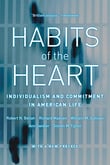 I explained to Bellah how in my current class on positive sociology, I’m trying to get students to understand the moral narratives that underlie many social groups. In one assignment, they have to write about their experience in a group ritual, whether that is the UNC-Duke basketball game, a religious service, a sorority, or another social group with rituals. What activities, symbols, narratives contribute to group identity, moral narratives and collective effervescence? How do their experiences confirm or expand upon our readings from Emile Durkheim and Jonathan Haidt on moral narratives and social rituals?
In their next assignments, my students will use readings from Alexis de Tocqueville’s Democracy in America to analyze how well their experiences at UNC line up with the mission of UNC as explained in its charter. The 1789 charter which created the University of North Carolina begins:
“Whereas in all well-regulated governments it is the indispensable duty of every legislature to consult the happiness of the rising generation and endeavor to fit them for an honorable discharge of the social duties of life, by paying the strictest attention to their education…”
How do Tocqueville’s writings shed light on UNC’s mission statement and the actual community at UNC in students’ own experience? Do voluntary associations such as campus organizations, housing arrangements, clubs, and other social groups at UNC contribute to the well-being of individuals, the state of North Carolina and the nation? Or do they not contribute at all?
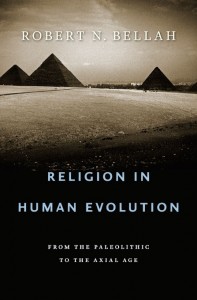 Bellah expressed great concern that today’s generation of college students is so worried about accruing debt and finding jobs when they graduate that they have lost sight of the larger purpose of being a university student. Bellah’s vision of college is not just about acquiring knowledge or gaining a credential: rather, going to college should be a larger introduction to life; college should educate citizens who have a sense of responsibility towards the rest of the world. Bellah fears that today’s social media tools like Facebook provide lots of superficial social contact but little of the group formation that form people’s sense of belonging to a larger world. In fact, in my students’ first essay on happiness, two students wrote convincing papers about how obsessions with Facebook and other social media tools can detract from deep friendship. When you know lots of tidbits about hundreds of people you have never met, and when you are constantly checking everyone’s status updates, how do you form the friendships that will generate practical wisdom and other virtues?
How do we recover a vision of the common good? Bellah told me he had just started reading Catholic teachings on human rights and the common good, beginning with one of the foundational documents of Vatican II, Guadium et spes. Bellah was “utterly blown away” by the Gaudium et spes’s unflinching defense of human dignity combined with a robust vision of social justice. It’s hard, Bellah said, to avoid an individualistic or utilitarian vision of human rights, but Guadium et spes articulates how human rights and the common good reinforce each other. What do I think of Benedict XVI’s social encyclical Caritas in veritate, Bellah asked me?
Since I had previously read numerous of Benedict XVI’s books on Christology, theology, and secularization, I was already familiar with various themes of his thought which appear in Caritas in veritate: that truth is objective rather than relative, and that virtue must be both in the heart and in action. As such, the church’s mission of charity can never be private; the church’s mission of charity is public—it is oriented to the greater good of all, regardless of religious creed. Hence, the state and church are inter-dependent in their work for the common good, something that is hard for people to understand if they think religion must only be a private matter.
I explained to Bellah that English sociologist Margaret Archer has a fantastic essay, “Caritas in veritate and Social Love” (International Journal of Public Theology 5 (2011), pp. 273–295) which is the best integration of sociological insights on human persons and social structures with Catholic reflections on human dignity and the common good. Archer masterfully shows how personal identity and the common good can, under the right conditions, build an ever-expanding civilization of love envisioned in Catholic social teaching.
Since Bellah told me one thing that facilitated his writing of Religion and Human Evolution was email correspondence and friendships with leading experts in fields that are new to him, like biology and animal evolution, I offered to be his email correspondent and friend if he wants to read more about Catholic social teaching. Even if he never takes me up on that offer, I’ll never forget the afternoon I spent in his home office as he reflected on his major intellectual works, the future of American youth, and his six decade long love affair with his wife that was transformed, but not ended, by her death.
Previous Post

March 12, 2013
Contesting the Good News
Next Post

March 15, 2013 Asian and Asian American Catholicism
Browse Our Archives
Select a Category Amy Reynolds Becky Hsu Brad Wright critical realism George Yancey Gerardo Marti Jeremy Rhodes Jerry Park John Schmalzbauer Margarita Mooney Mark Regnerus Nicolette Manglos positive sociology Richard Flory Robert Woodberry Uncategorized
Select a Month April 2017 August 2016 April 2016 March 2016 February 2016 January 2016 December 2015 November 2015 October 2015 September 2015 August 2015 July 2015 June 2015 May 2015 April 2015 March 2015 February 2015 January 2015 December 2014 November 2014 October 2014 September 2014 August 2014 July 2014 June 2014 May 2014 April 2014 March 2014 February 2014 January 2014 December 2013 November 2013 October 2013 September 2013 August 2013 July 2013 June 2013 May 2013 April 2013 March 2013 February 2013 January 2013 December 2012 November 2012 October 2012 September 2012 August 2012 July 2012 June 2012 May 2012 April 2012 March 2012 February 2012 January 2012 December 2011 November 2011 October 2011
Follow Us!
TAKE THE
Religious Wisdom Quiz
Who is the "friend at midnight" in one of Jesus' parables?
Select your answer to see how you score.
A neighbor seeking bread A fisherman An angel A soldier
Related posts from Black, White and Gray

Using Critical Realism to Teach the Fundamentals of...
Incorporating Critical Realism into Research Methods Classes

5 Great Articles Using Critical Realism in Social...

Books on Critical Realism and Sociological Research Methods
TRENDING AT PATHEOS Evangelical

Making Stones Into Bread: Choosing the “Right” Work
I was on my online arts ministry Zoom meeting with the International...

Ukraine’s exhausted Christians face fifth winter of war
By Julian Lukins The full-scale war in Ukraine is taking “a serious...

Russell Brand's Conviction is not anti-Christian Persecution
How do we shed the reputation that the Church is OK with...

Have you ever caught yourself saying, “I’ll do it tomorrow,” or “Now...

Write Your Story: A Great Way to Find...
A few month’s back, my son was scrolling around Facebook and saw...

Throughout history, people have pursued pleasure, possessions, relationships, and success in an...
view all Evangelical blogs
Ad-Free & Subscriber Log-In Subscription Support
- About Us
- 2026 Calendar
- Videos
- Podcasts
- Library of World Religions
- Faith In Media Tracker
- Advertise With Us
- Write for Us
- Privacy Policy
- Terms of Service
- Do Not Sell My Data
- Contact Us
- Radiant Digital
- Manage Newsletter Subscriptions
- Unsubscribe From Notifications
- Sitemap
Copyright 2008-2026, Patheos, part of the Radiant Digital network of media brands. All rights reserved.
Subscription Support Ad-Free & Subscriber Log-In
Follow Patheos