
BuddhistCatholicContemplativeEvangelicalGeneral ChristianHinduJewishLatter-day SaintMuslimNew VisionsProgressive Christian
Beliefs
- Buddhist
- Catholic
- Contemplative
- Evangelical
- General Christian
- Hindu
- Jewish
- Latter-day Saint
- More Voices
- Muslim
- New Visions
- Pagan
- Progressive Christian
Topics
- Religion News
- Food and Religion
- Sports and Religion
- Religious Art
- Religious Music and Entertainment
- Religious Events
- History and Religion
- Style and Religion
- Politics and Religion
- Women in Religion
- Recreation Outdoors and Religion
- Business Finance and Religion
- Careers Workplace and Religion
- Education and Religion
- Family Parenting and Religion
- Health Fitness and Religion
- Home and Religion
- Relationships and Religion
- Technology and Religion
- Travel and Religion
Columnists
- Buddhist Columnists
- Business Finance and Religion Columnists
- Careers Workplace and Religion Columnists
- Catholic Columnists
- Contemplative Columnists
- Education and Religion Columnists
- Evangelists Columnists
- Family Parenting and Religion Columnists
- General Christian Columnists
- Health Fitness and Religion Columnists
- Hindu Columnists
- History and Religion Columnists
- Home and Religion Columnists
- Jewish Columnists
- More Voices Columnists
- Latter Day Columnists
- Muslim Columnists
- New Visions Columnists
- Nonreligious Columnists
- Pagan Columnists
- Politics and Religion Columnists
- Progressive Columnists
- Recreation Outdoors and Religion Columnists
- Relationships and Religion Columnists
- Religion News Columnists
- Religious Art Columnists
- Religious Events Columnists
- Religious Music and Entertainment Columnists
- Sports and Religion Columnists
- Style and Religion Columnists
- Technology and Religion Columnists
- Travel and Religion Columnists
- Women in Religion Columnists
Resource Library
- 2026 Calendar
- Library of World Religions
- The 100 Most Holy Places on Earth
- Patheos Answers
- Podcasts
- Videos
- Faith Leaders Database
- Anglican Episcopalian
- Bahai
- Baptist
- Buddhism
- Christianity
- Confucianism
- Eastern Orthodoxy
- Hinduism
- Holiness and Pentecostal
- ISKCON
- Islam
- Judaism
- Lutheran
- Methodist
- The Church of Jesus Christ of Latter-day Saints
- New Age
- Paganism
- Presbytarian and Reformed
- Protestantism
- Religion Behind the Scenes
- Roman Catholic
- Scientology
- Shia Islam
- Sikhism
- Sufism
- Sunni Islam
- Taoism
- Zen
- See all religions
Research Tools
 Ad-Free & Subscriber Log-In Subscription Support
Ad-Free & Subscriber Log-In Subscription Support
Follow Patheos 

- Trending:
- Forgiveness
- |
- Marriage
- |
- Consciousness
- |
- Death Penalty
- |
- Election
- |
- Halloween
 Black, White and Gray
-
About the Authors
- Home
- Evangelical
- My Happiness Project
My Happiness Project
Last updated on: February 6, 2013 at 11:01 am by Margarita A. Mooney
My Happiness Project 2013-02-06T11:01:52-05:00 Margarita A. Mooney
Patheos Explore the world's faith through different perspectives on religion and spirituality! Patheos has the views of the prevalent religions and spiritualities of the world.
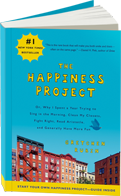 When I first started read Gretchen Rubin’s best-selling book, The Happiness Project, I thought, “Wow, she does a great job of summarizing tons on research on positive psychology in a way that is accessible and engaging. But, I mean, her life is so bourgeois! She has a happy marriage already, two lovely kids, and she lives comfortably in NYC. How applicable is her happiness project to my life or my students’ lives?”
Since I’m teaching some texts from positive psychology this semester, I asked my students to read Rubin’s book and to follow her lead and do their own happiness project. To set a good example, I started my own happiness project. My dubiousness about Rubin faded as I realized two things. First, my own life often sounds (or is) just as bourgeois as Rubin’s. Second, her explanation of research in positive psychology and her practical tips for being happier helped me personally more than I if I had just read her book but not practiced anything new.
For starters, since I’ve had a lot of ups and downs in the last few months, I kept a gratitude journal that focused on relationships—such as meaningful conversations, kind gestures, and warm feelings towards family. I enthusiastically wrote in my journal every night for a week about my friend Laura’s hospitality, my student Samantha’s cheerfulness, and all the people who make my work engaging.
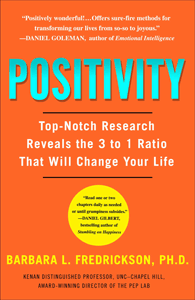 Keeping a gratitude journal about the special people in my life definitely lifted my mood—the downs were still there, but the ups were more frequent. To borrow Barbara Frederickson’s terminology, my gratitude journal increased my attention and appreciation for the positive in my life and hence increased my positivity ratio—the ratio of positive emotions to negative emotions I felt. I didn’t find, however, that my negative emotions went away, but I was more equipped to deal with negative emotions because I had more positive emotions.
Further into Rubin’s book, I was inspired by her heartfelt rendition of the lessons she 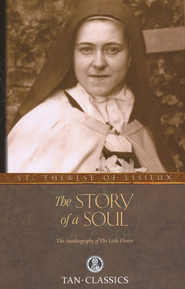 learned from Saint Therese of Lisieux’s autobiography Story of a Soul. Although Saint Therese is one of the most celebrated Catholic saints of recent times, and tons of Catholic writers have extolled her virtuous little way, the big-minded, bourgeois over-achiever in me just didn’t think I was called to holiness through little things. Clearly, as a college professor, I’m called to great things, right? (Oh my God, how bourgeois and self-important I sound when I’m honest about my thoughts!)
Rubin, who is not Catholic and not even particularly spiritual, not only read Saint Therese’s Story of a Soul and loved it, she read 17 biographies of Saint Therese. (If you think I’m exaggerating, she says it on p. 210 of The Happiness Project). Why was Rubin so obsessed with St. Therese? Rubin writes:
“I’d started my happiness project to test my hypothesis that I could become happier by making small changes in my ordinary day. I didn’t want to reject the natural order of my life—by moving to Walden Pond or Antartica, say, or taking a sabbatical from my husband. I wasn’t going give up toilet paper or shopping or experiment with hallucinogens. I’d already switched careers. Surely, I’d hoped, I could change my life without changing my life, by finding more happiness in my own kitchen [emphasis mine]. Everyone’s happiness project is different. Some people might feel the urge to make a radical transformation. I was vicariously exhilarated by these dramatic adventures, but I knew they weren’t the path to happiness for me. I wanted to take little steps to be happier as I lived my ordinary life, and that was very much in the spirit of St. Therese.” (pp. 210-211, The Happiness Project).
Reading Rubin’s words inspired me to the next phase of my gratitude journal: to give thanks for the little things in my life, such as the happiness I find in my kitchen, my living room, or my seemingly unimportant daily activities. The next day, I followed my regular routine: morning prayer, work, lunchtime gym break, shower & change, and back to work, all the while trying to be thankful for little things.
As I settled in for my twice-weekly routine of hairdrying and hairstyling my long, dark, thick and often unruly hair, I realized how anxious and unhappy I normally feel as I assemble all the tools I need to beat my hair into submission and look nice. I lined up my super-duper powerful Italian hairdryer, my boar’s head brush, my Bumble & Bumble heat protection spray, and then pointed a giant fan at me to deflect the heat from the hair dryer from overheating my whole body. “Uggh, this is so time consuming and hard!” I thought (as usual).

“God gave me beautiful hair”
About halfway through the hair-drying ritual, as my hair turned straight and fluffy and started to take shape, I thought, “God gave me beautiful hair. Be thankful for that Margarita!” So for the rest of those 30 minutes under the heat, I just repeated, “God gave me beautiful hair. God gave me beautiful hair.” Funny enough, when I went to my favorite coffee shop a few hours later, someone told me what great hair I have. When I went to Best Buy that night, someone else told me, “You have awesome hair.” My whole life, other people, and especially hairdressers, have told me I have awesome hair because it is thick, voluminous, and will do almost anything you want it to if you have the right tools and enough time. But I had never told myself, “I have great hair,” and given thanks for it.
Here are some other “little” things I gave thanks for this week: the sound of wind and birds in the morning; the smell of coffee; my pink shiny nail polish; my awesome gym and energetic workouts; sitting around a campfire and roasting smores; singing joyfully at Mass; singing the National Anthem at a UNC basketball game (and being especially thankful when I sang “the land of the free”); dancing wildly in the stands at the UNC basketball game to songs like “Welcome to the Jungle,” “Jump, Jump” and “Sweat.”
Okay, so my happiness project does sound rather bourgeois. But my gratitude journal for the “little things” did what Rubin said it would do (according to positive psychology studies): by increasing my awareness of and attention to little things, I enhanced my enjoyment of little things. Rubin and Saint Therese are right: we don’t have to leave our kitchens to find greater happiness. In fact, for most of us, happiness lies precisely in this little trick: really, deeply appreciating the little moments of every day.
Thanks to St. Therese, Rubin, and positive psychology for showing me this insight. Rubin and I do not have the virtuous life of St. Therese, but we can all be happier in the lives we are called to. And if we are happy, then we can spread happiness, and perhaps even become virtuous. Although happiness and virtuousness are not synonymous, virtuousness that is unhappy won’t attract any followers. Just look at Saint Therese, whose virtuous life was undoubtedly a joyful life.
Previous Post

February 4, 2013
Porn Use and Support for Same-Sex Marriage, Part II
Next Post
February 7, 2013 The Power of a Simple Plan, But Should Christians Do It?
Browse Our Archives
Select a Category Amy Reynolds Becky Hsu Brad Wright critical realism George Yancey Gerardo Marti Jeremy Rhodes Jerry Park John Schmalzbauer Margarita Mooney Mark Regnerus Nicolette Manglos positive sociology Richard Flory Robert Woodberry Uncategorized
Select a Month April 2017 August 2016 April 2016 March 2016 February 2016 January 2016 December 2015 November 2015 October 2015 September 2015 August 2015 July 2015 June 2015 May 2015 April 2015 March 2015 February 2015 January 2015 December 2014 November 2014 October 2014 September 2014 August 2014 July 2014 June 2014 May 2014 April 2014 March 2014 February 2014 January 2014 December 2013 November 2013 October 2013 September 2013 August 2013 July 2013 June 2013 May 2013 April 2013 March 2013 February 2013 January 2013 December 2012 November 2012 October 2012 September 2012 August 2012 July 2012 June 2012 May 2012 April 2012 March 2012 February 2012 January 2012 December 2011 November 2011 October 2011
Follow Us!
TAKE THE
Religious Wisdom Quiz
I was breathing out murderous threats, but a blinding light changed everything. I became the greatest missionary the church has known. Who am I?
Select your answer to see how you score.
Barnabas Saul Peter Stephen
Related posts from Black, White and Gray

Using Critical Realism to Teach the Fundamentals of...

Incorporating Critical Realism into Research Methods Classes

5 Great Articles Using Critical Realism in Social...

Books on Critical Realism and Sociological Research Methods
TRENDING AT PATHEOS Evangelical

The REST of Your Life: A Creative Wrestles...
This week I had a conversation with a good friend from church....

How the author of the world's best hymn...
I've been working with John Newton for a while now. This makes...

Long before this Lectio Divina, Psalm 130 - the song - started...

What About the Trees? Another Living Parable
After I finished writing the last article about falling leaves as a...

Why Classical Education Is a Conversation, Not a...
Come and Read: Joy in Classical Education When I was a little...

Cornell University has received a great deal of negative publicity and intense...
view all Evangelical blogs
Ad-Free & Subscriber Log-In Subscription Support
- About Us
- 2026 Calendar
- Videos
- Podcasts
- Library of World Religions
- Faith In Media Tracker
- Advertise With Us
- Write for Us
- Privacy Policy
- Terms of Service
- Do Not Sell My Data
- Contact Us
- Radiant Digital
- Manage Newsletter Subscriptions
- Unsubscribe From Notifications
- Sitemap
Copyright 2008-2026, Patheos. All rights reserved.
Subscription Support Ad-Free & Subscriber Log-In
Follow Patheos