
BuddhistCatholicContemplativeEvangelicalGeneral ChristianHinduJewishLatter-day SaintMuslimNew VisionsProgressive Christian
Beliefs
- Buddhist
- Catholic
- Contemplative
- Evangelical
- General Christian
- Hindu
- Jewish
- Latter-day Saint
- More Voices
- Muslim
- New Visions
- Pagan
- Progressive Christian
Topics
- Religion News
- Food and Religion
- Sports and Religion
- Religious Art
- Religious Music and Entertainment
- Religious Events
- History and Religion
- Style and Religion
- Politics and Religion
- Women in Religion
- Recreation Outdoors and Religion
- Business Finance and Religion
- Careers Workplace and Religion
- Education and Religion
- Family Parenting and Religion
- Health Fitness and Religion
- Home and Religion
- Relationships and Religion
- Technology and Religion
- Travel and Religion
Columnists
- Buddhist Columnists
- Business Finance and Religion Columnists
- Careers Workplace and Religion Columnists
- Catholic Columnists
- Contemplative Columnists
- Education and Religion Columnists
- Evangelists Columnists
- Family Parenting and Religion Columnists
- General Christian Columnists
- Health Fitness and Religion Columnists
- Hindu Columnists
- History and Religion Columnists
- Home and Religion Columnists
- Jewish Columnists
- More Voices Columnists
- Latter Day Columnists
- Muslim Columnists
- New Visions Columnists
- Nonreligious Columnists
- Pagan Columnists
- Politics and Religion Columnists
- Progressive Columnists
- Recreation Outdoors and Religion Columnists
- Relationships and Religion Columnists
- Religion News Columnists
- Religious Art Columnists
- Religious Events Columnists
- Religious Music and Entertainment Columnists
- Sports and Religion Columnists
- Style and Religion Columnists
- Technology and Religion Columnists
- Travel and Religion Columnists
- Women in Religion Columnists
Resource Library
- 2026 Calendar
- Library of World Religions
- The 100 Most Holy Places on Earth
- Patheos Answers
- Podcasts
- Videos
- Faith Leaders Database
- Anglican Episcopalian
- Bahai
- Baptist
- Buddhism
- Christianity
- Confucianism
- Eastern Orthodoxy
- Hinduism
- Holiness and Pentecostal
- ISKCON
- Islam
- Judaism
- Lutheran
- Methodist
- The Church of Jesus Christ of Latter-day Saints
- New Age
- Paganism
- Presbytarian and Reformed
- Protestantism
- Religion Behind the Scenes
- Roman Catholic
- Scientology
- Shia Islam
- Sikhism
- Sufism
- Sunni Islam
- Taoism
- Zen
- See all religions
Research Tools
 Ad-Free & Subscriber Log-In Subscription Support
Ad-Free & Subscriber Log-In Subscription Support
Follow Patheos 

- Trending:
- Forgiveness
- |
- Marriage
- |
- Consciousness
- |
- Death Penalty
- |
- Election
- |
- Halloween
 Black, White and Gray
-
About the Authors
- Home
- Evangelical
- What is “It All” That Slaughter Says Women Can’t Have?
What is “It All” That Slaughter Says Women Can’t Have?
Last updated on: September 29, 2012 at 9:05 pm by Margarita A. Mooney
What is “It All” That Slaughter Says Women Can’t Have? 2012-09-29T21:05:05-05:00 Margarita A. Mooney
Patheos Explore the world's faith through different perspectives on religion and spirituality! Patheos has the views of the prevalent religions and spiritualities of the world.
Part 3 in a series on Women at Work.
Anne Marie Slaugther’s article in the Atlantic, “Why Women Still Can’t Have it All,” begs the question what is “It All?” Although most of her article discusses women having it all (or not having it all) with regards to family and careers, older generations of women were taught that a woman’s place was in the home; a woman couldn’t both have a big career and raise a family. Slaughter’s generation set out to break barriers, reach top posts in universities, law firms and public office, and also have fulfilling family lives.
So, does a big career and a happy family life = “It All”? There is no doubt that many women want a career and family, especially the college-educated women, women with law degrees and women with Ph.D.s, that Slaughter was primarily addressing. My field, sociology, dedicates pages and pages of our publications to studying occupational attainment, educational attainment, family formation and family disruption. We know from the data that not nearly as many people have “It All” as Slaughter defines it as those who would like it.
That said, would those who have “It All” (defined as career + family) be fulfilled? I’m not sure. Wealth, success, and a spouse and kids at home may certainly fulfill many aspirations, but does it fulfill them all? I think not.
My research and teaching recently led me to read work, mostly from philosophy and psychology, that has broadened my definition of what “It All” is. In an advanced social theory class I taught last year, I introduced students to philosopher Martha Nussbaum and her important book Women and Human Development: The Capabilities Approach. Cambridge University Press summarizes the objective of her book, in the following way:
“In this major book Martha Nussbaum, one of the most innovative and influential philosophical voices of our time, proposes a new kind of feminism that is genuinely international, argues for an ethical underpinning to all thought about development planning and public policy, and dramatically moves beyond the abstractions of economists and philosophers to embed thought about justice in the concrete reality of the struggles of poor women. Nussbaum argues that international political and economic thought must be sensitive to gender difference as a problem of justice, and that feminist thought must begin to focus on the problems of women in the third world. Taking as her point of departure the predicament of poor women in India, she shows how philosophy should undergird basic constitutional principles that should be respected and implemented by all governments, and used as a comparative measure of quality of life across nations.”
Whereas Slaughter was writing to women at the top of the economic ladder, Nussbaum addresses a similar question but for poor women around the world. Do women at the top of the economic ladder and women at the bottom want fundamentally different things? I think not. Nussbaum makes a great contribution in enumerating the list of fundamental capabilities that are universal–they cross class, race, and ethnicity. She rejects moral and ethical relativism, arguing forcefully that a just society can’t be relativistic about the goods people want or deserve. For Nussbaum, a feminist, moral relativism too often is used to justify why women not only don’t have “It All” by saying they simply don’t want “It All.” For example, Nussbaum argues that even if poor women don’t know that an education would be good for them, society is obligated to educate women. I couldn’t agree more.
Nussbaum and Slaughter’s works both harken back to an ages-old question addressed by Aristotle: what is the greatest good for human persons? What constitutes flourishing, a full life? Aristotle was clear that material things are necessary but not sufficient for flourishing. For Aristotle, the question is: what would people do as a good in and of itself, not just as a means to another end? In the answer to that question lies a deep truth about human persons.
Although it is certainly true that people strive for material or external things, for Aristotle, those things are really means to the end of eudaimonia, normally translated as flourishing. How does one acquire this end of flourishing? Through the rather difficult process of aligning ones internal motivations and one’s actions. Hence, for Aristotle, eudemonia is found in cultivating virtues, understood as ways of being that lead to ways of acting. He also thus breaks down a bit the means-ends disntiction in action: if the end is a virtuous life, the means must be enacting virtues.
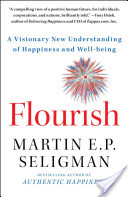 Does that sound too lofty and philosophical, too hard to understand enough to live? If so, don’t worry. I often wonder how to translate good philosophical ideas into good social science. Thankfully, my search has turned up a few tips. The former president of the American Psychological Association, Martin Seligman, published an important theoretically-grounded, empirically-based, book called Flourish that is written to be accessible to all readers and practical. As described in an excellent article about Flourish the New York Times, Seligman laments that many psychologists equate flourishing with happiness, understood as feeling good.
Seligman explains how his decades of research led him to define flourishing, or well-being, in 5 dimensions, which he calls PERMA: a) Positive emotions; b) Engagement; c) Meaning; d) Positive Relationships and e) Accomplishment.
How does this line up with Slaughter’s definition of “It All”? Slaughter seems to be focusing on positive relationships and accomplishment. Seligman’s definition of well-being comes much closer to Aristotle’s understanding of flourishing, though Seligman is clear to state that Aristotle is just one of many influences on his definition. Seligman and Nussbaum, in my view, bring back into focus the big picture: having “It All” must be much more than achievement, marriage and kids. Those things–which are undoubtedly very important–must be embedded in a meaningful life where one’s individual accomplishments are seen as part of a greater whole. Our lives need enjoyment and awe, something we can lose sight of in the quest for the perfect career and perfect family.
One virtue we can all start living is gratitude. Seligman found that people who were grateful to others, grateful to God, felt more positive emotions and had stronger relationships. I fully support those who want to strive to have “It All”, however you may define it, but along the way, let’s not forget to stop and give thanks for what we do have, right now, today, in this moment.
As my work on human flourishing and virtues continues, I hope to share more reflections from philosophy and social science to deepen our understanding of how to have “It All”, or perhaps more importantly, how to be thankful for all we have at this very moment.
Previous Post
July 20, 2012
Building a Better Asian American Survey
Next Post

July 26, 2012 The Case of Mark Regnerus: An Academic Auto-da-Fé
Browse Our Archives
Select a Category Amy Reynolds Becky Hsu Brad Wright critical realism George Yancey Gerardo Marti Jeremy Rhodes Jerry Park John Schmalzbauer Margarita Mooney Mark Regnerus Nicolette Manglos positive sociology Richard Flory Robert Woodberry Uncategorized
Select a Month April 2017 August 2016 April 2016 March 2016 February 2016 January 2016 December 2015 November 2015 October 2015 September 2015 August 2015 July 2015 June 2015 May 2015 April 2015 March 2015 February 2015 January 2015 December 2014 November 2014 October 2014 September 2014 August 2014 July 2014 June 2014 May 2014 April 2014 March 2014 February 2014 January 2014 December 2013 November 2013 October 2013 September 2013 August 2013 July 2013 June 2013 May 2013 April 2013 March 2013 February 2013 January 2013 December 2012 November 2012 October 2012 September 2012 August 2012 July 2012 June 2012 May 2012 April 2012 March 2012 February 2012 January 2012 December 2011 November 2011 October 2011
Follow Us!
TAKE THE
Religious Wisdom Quiz
Who said, "To obey is better than sacrifice"?
Select your answer to see how you score.
David Isaiah Solomon Samuel
Related posts from Black, White and Gray

Using Critical Realism to Teach the Fundamentals of...

Incorporating Critical Realism into Research Methods Classes

5 Great Articles Using Critical Realism in Social...

Books on Critical Realism and Sociological Research Methods
TRENDING AT PATHEOS Evangelical

The REST of Your Life: A Creative Wrestles...
This week I had a conversation with a good friend from church....

How the author of the world's best hymn...
I've been working with John Newton for a while now. This makes...

Long before this Lectio Divina, Psalm 130 - the song - started...

What About the Trees? Another Living Parable
After I finished writing the last article about falling leaves as a...

Why Classical Education Is a Conversation, Not a...
Come and Read: Joy in Classical Education When I was a little...

Cornell University has received a great deal of negative publicity and intense...
view all Evangelical blogs
Ad-Free & Subscriber Log-In Subscription Support
- About Us
- 2026 Calendar
- Videos
- Podcasts
- Library of World Religions
- Faith In Media Tracker
- Advertise With Us
- Write for Us
- Privacy Policy
- Terms of Service
- Do Not Sell My Data
- Contact Us
- Radiant Digital
- Manage Newsletter Subscriptions
- Unsubscribe From Notifications
- Sitemap
Copyright 2008-2026, Patheos. All rights reserved.
Subscription Support Ad-Free & Subscriber Log-In
Follow Patheos