
BuddhistCatholicContemplativeEvangelicalGeneral ChristianHinduJewishLatter-day SaintMuslimNew VisionsProgressive Christian
Beliefs
- Buddhist
- Catholic
- Contemplative
- Evangelical
- General Christian
- Hindu
- Jewish
- Latter-day Saint
- More Voices
- Muslim
- New Visions
- Pagan
- Progressive Christian
Topics
- Religion News
- Food and Religion
- Sports and Religion
- Religious Art
- Religious Music and Entertainment
- Religious Events
- History and Religion
- Style and Religion
- Politics and Religion
- Women in Religion
- Recreation Outdoors and Religion
- Business Finance and Religion
- Careers Workplace and Religion
- Education and Religion
- Family Parenting and Religion
- Health Fitness and Religion
- Home and Religion
- Relationships and Religion
- Technology and Religion
- Travel and Religion
Columnists
- Buddhist Columnists
- Business Finance and Religion Columnists
- Careers Workplace and Religion Columnists
- Catholic Columnists
- Contemplative Columnists
- Education and Religion Columnists
- Evangelists Columnists
- Family Parenting and Religion Columnists
- General Christian Columnists
- Health Fitness and Religion Columnists
- Hindu Columnists
- History and Religion Columnists
- Home and Religion Columnists
- Jewish Columnists
- More Voices Columnists
- Latter Day Columnists
- Muslim Columnists
- New Visions Columnists
- Nonreligious Columnists
- Pagan Columnists
- Politics and Religion Columnists
- Progressive Columnists
- Recreation Outdoors and Religion Columnists
- Relationships and Religion Columnists
- Religion News Columnists
- Religious Art Columnists
- Religious Events Columnists
- Religious Music and Entertainment Columnists
- Sports and Religion Columnists
- Style and Religion Columnists
- Technology and Religion Columnists
- Travel and Religion Columnists
- Women in Religion Columnists
Resource Library
- 2026 Calendar
- Library of World Religions
- The 100 Most Holy Places on Earth
- Patheos Answers
- Podcasts
- Videos
- Faith Leaders Database
- Anglican Episcopalian
- Bahai
- Baptist
- Buddhism
- Christianity
- Confucianism
- Eastern Orthodoxy
- Hinduism
- Holiness and Pentecostal
- ISKCON
- Islam
- Judaism
- Lutheran
- Methodist
- The Church of Jesus Christ of Latter-day Saints
- New Age
- Paganism
- Presbytarian and Reformed
- Protestantism
- Religion Behind the Scenes
- Roman Catholic
- Scientology
- Shia Islam
- Sikhism
- Sufism
- Sunni Islam
- Taoism
- Zen
- See all religions
Research Tools
 Ad-Free & Subscriber Log-In Subscription Support
Ad-Free & Subscriber Log-In Subscription Support
Follow Patheos 

- Trending:
- Forgiveness
- |
- Marriage
- |
- Consciousness
- |
- Death Penalty
- |
- Election
- |
- Halloween
 Black, White and Gray
-
About the Authors
- Home
- Evangelical
- The Opportunity Cost of Cannibalism, A Reflection on Aging
The Opportunity Cost of Cannibalism, A Reflection on Aging
Last updated on: June 8, 2012 at 1:51 pm by Bradley Wright
The Opportunity Cost of Cannibalism, A Reflection on Aging 2012-06-08T13:51:07-05:00 Bradley Wright
Patheos Explore the world's faith through different perspectives on religion and spirituality! Patheos has the views of the prevalent religions and spiritualities of the world.
For reasons that I don’t fully understand, I seem to be getting older every year; in fact, if memory serves, I have yet another birthday coming in the next twelve months. Part of aging for me, and I suppose everyone else, involves reflecting on how I’m changing with age. Of course there are the usual things—knee pain, graying hair, and the accumulation of millions of dollars, but in addition, my prioritization in day-to-day life is changing.
Specifically, I’m becoming more aware of the opportunity costs of what I think and do. Opportunity costs, as I understand them, regard what you are not able to do when you chose a course of action. For example, if a student goes to the bar on a Friday night then on of the opportunity costs is that they are not spending the time studying.
I’ve known the concept of opportunity costs since Econ 1A back in college, but how I’m becoming much more aware of it. As I approach my fiftieth birthday in October (gift registry information to come), somewhere deep inside of me a little voice is letting me know that I have a limited number of work days and evenings and sunny weekends left, so I should probably be careful about how I use them.
My heightened awareness of these costs comes through at different times. Earlier this week, during a summer school class, a student mentioned a recent murder case in which the assailant apparently started to bite into the victim (the “zombie killer”?—don’t care enough to look it up), and several other students excitedly chimed in with what they knew or thought about the case. My first reaction was something along the lines of, “that’s gross,” but my second reaction was thinking what a waste of brain space for anyone to think about, and yet it makes national news. Should we spend our time thinking about such a deed when there are things of beauty or need or promise in their own lives?
Over the past 5-7 years, I have cut back on my television watching such that now we don’t get regular stations (available here only by cable), and I watch maybe two or three episodes or movies a month, with the family, on Netflix. This simple action has freed up much mental and emotional space for things in life that I value more than participating in a rousing discussion of what happened on last night’s reality television show. When I do watch regular television, I’m come away wishing that I had that time back, but, even more so, surprised by how much time I spend thinking about it for the next day or two.
Basically, with age I am starting to be clearer in recognizing and enacting my priorities in life. Perhaps this is analogous to how I handle money. When I’m on a trip or am in some other situation where I have an initial sum of money to last me for a specified period of time, I am more of a spendthrift at the start—thinking that I have plenty—than at the end, when I’m much more careful in how I spend. So, my spending priorities sharpen as I have less money. Maybe same happens with life expectancy?
This probably underlies the transformative power of near-death experiences, where people realize that their days are numbered, so they had better get to what they want now before it’s too late. A friend of my extended family had a grave illness in his teens, and when he survived it against the odds, he decided that it was time to be a cowboy like he had always wanted to be. So, upon graduation, he moved from the East Coast out to Montana and set up shop as a rancher, a life situation that he enjoyed for several decades.
The irony, of course, is that we all have a limited number of days, it’s just our awareness of them that changes. I wish that I could have had a firmer grasp of this when I was younger, but maybe that’s not the nature of youth. Still, I’m glad that I’m getting it now while my knees can still get me around.
Next Post

June 8, 2012 Tracing Your Ancestry? Thank a Mormon!
Browse Our Archives
Select a Category Amy Reynolds Becky Hsu Brad Wright critical realism George Yancey Gerardo Marti Jeremy Rhodes Jerry Park John Schmalzbauer Margarita Mooney Mark Regnerus Nicolette Manglos positive sociology Richard Flory Robert Woodberry Uncategorized
Select a Month April 2017 August 2016 April 2016 March 2016 February 2016 January 2016 December 2015 November 2015 October 2015 September 2015 August 2015 July 2015 June 2015 May 2015 April 2015 March 2015 February 2015 January 2015 December 2014 November 2014 October 2014 September 2014 August 2014 July 2014 June 2014 May 2014 April 2014 March 2014 February 2014 January 2014 December 2013 November 2013 October 2013 September 2013 August 2013 July 2013 June 2013 May 2013 April 2013 March 2013 February 2013 January 2013 December 2012 November 2012 October 2012 September 2012 August 2012 July 2012 June 2012 May 2012 April 2012 March 2012 February 2012 January 2012 December 2011 November 2011 October 2011
Follow Us!
TAKE THE
Religious Wisdom Quiz
Which city did David conquer and make his capital?
Select your answer to see how you score.
Bethel Hebron Jerusalem Gibeon
Related posts from Black, White and Gray

Want to Live Longer? Go to Church

If Physicians Acted Like Sociologists (or, Why We’re...

Marti and Ganiel's The Deconstructed Church: Understanding Emerging...
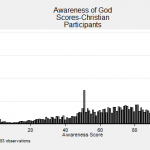
How Christians Vary in their Awareness of God
TRENDING AT PATHEOS Evangelical

The REST of Your Life: A Creative Wrestles...
This week I had a conversation with a good friend from church....

How the author of the world's best hymn...
I've been working with John Newton for a while now. This makes...

Long before this Lectio Divina, Psalm 130 - the song - started...

What About the Trees? Another Living Parable
After I finished writing the last article about falling leaves as a...

Why Classical Education Is a Conversation, Not a...
Come and Read: Joy in Classical Education When I was a little...

Cornell University has received a great deal of negative publicity and intense...
view all Evangelical blogs
Ad-Free & Subscriber Log-In Subscription Support
- About Us
- 2026 Calendar
- Videos
- Podcasts
- Library of World Religions
- Faith In Media Tracker
- Advertise With Us
- Write for Us
- Privacy Policy
- Terms of Service
- Do Not Sell My Data
- Contact Us
- Radiant Digital
- Manage Newsletter Subscriptions
- Unsubscribe From Notifications
- Sitemap
Copyright 2008-2026, Patheos. All rights reserved.
Subscription Support Ad-Free & Subscriber Log-In
Follow Patheos